

What “Round” Actually Means in Cobblestone Specification
Round cobblestone pavers aren’t a single profile — they span a spectrum from fully tumbled river-worn ovals to machine-dressed setts with softened corners and a domed crown. Understanding exactly where on that spectrum your stone falls shapes every downstream decision, from mortar bed depth to joint width. Most specifiers request “round cobblestones” and receive material that sits somewhere in the middle of that range, which is fine until the project calls for vehicle loading or precision drainage gradients.
The geometry of round cobblestone pavers directly affects how compressive load distributes through the surface. A high-crowned dome concentrates load at the contact point and transfers it into the setting bed more efficiently than a flat paver, but it also narrows the effective bearing area underfoot. That trade-off matters more in commercial pedestrian zones than in residential garden paths, and it’s a detail worth resolving with your supplier before truck delivery arrives on site.
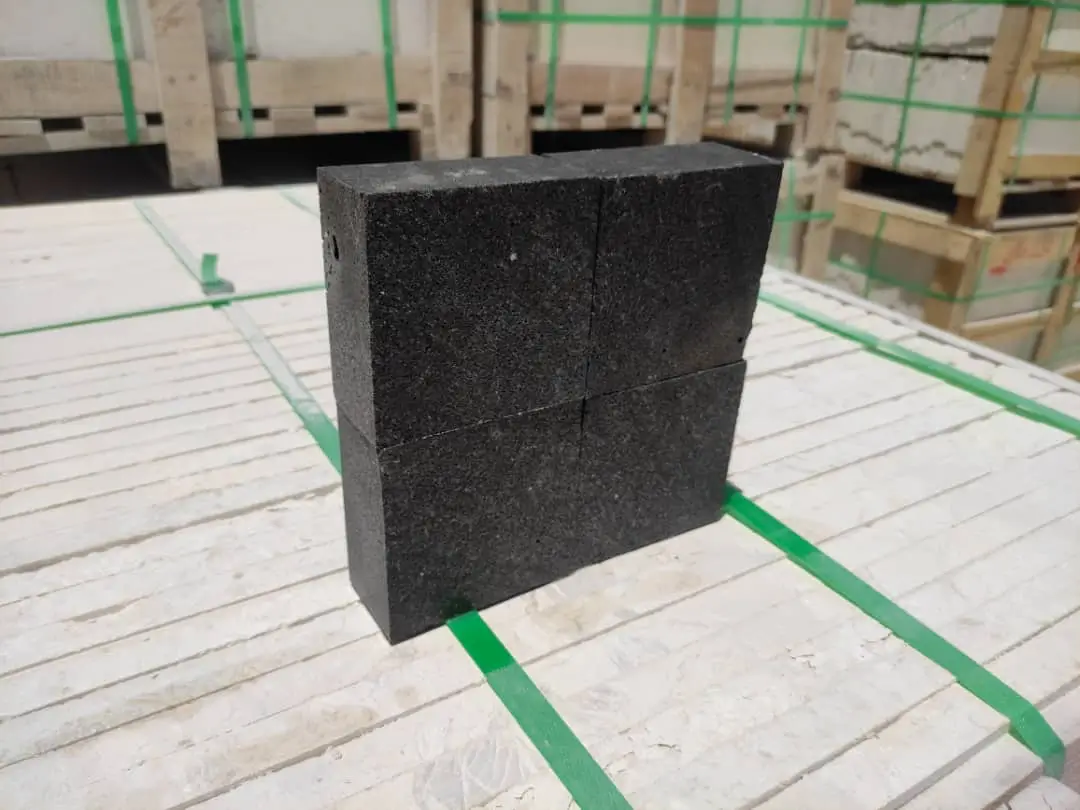
Surface Texture and Finish Options for Round Cobblestones
Your finish selection is the single most influential variable in how round cobblestone pavers perform in wet or shaded conditions. A natural split or thermal finish leaves an open, matte texture with visible mineral relief across the surface. A machine-tumbled finish rounds the arrises and softens the crown further, producing a worn, antique character. A bush-hammered treatment adds a regular peck pattern to the dome without altering the overall rounding geometry. Each of these finishes produces a measurably different surface texture — and texture, not stone type alone, is what ANSI A326.3 evaluates when setting the minimum wet DCOF threshold for pedestrian surfaces.
Here’s what many project managers overlook: the texture depth on a round cobblestone is partly self-created by the geometry. Because the crown sits proud of the joint, surface water sheds laterally toward the joint rather than pooling across the face. That drainage geometry is a physical outcome of the profile, not a performance guarantee — but it does mean that your finish choice compounds with the stone’s rounding to create the final surface character. For any surface where wet performance is a specification concern, request independent DCOF testing against ANSI A326.3 from your supplier rather than relying on finish descriptions alone.
According to Natural Stone Institute granite cobblestone and sett specifications, surface texture and finish selection for setts and cobblestones are critical factors in long-term performance across varied outdoor environments. Pair that technical framework with a clear finish brief to your stone supplier early — changes after warehouse dispatch are costly and time-consuming.
Choosing the Right Stone Type for Round Cobblestones
Granite dominates the round cobblestone market for good reason: its interlocking crystalline structure handles the point loading that a domed profile creates better than most sedimentary alternatives. Basalt offers a comparable density profile with a naturally dark coloration that suits contemporary and minimalist landscape palettes. Limestone rounds are available and attractive in heritage-style settings, but you’ll want to verify absorption characteristics via test report before specifying them in freeze-thaw regions — water ingress into a domed profile can accelerate surface spalling in ways that a flat paver hides until much later.
- Granite rounds — exceptionally durable, highly resistant to abrasion, suits heavy pedestrian and light vehicle applications
- Basalt rounds — dense, fine-grained, dark tonal palette suits modern and minimalist design briefs
- Limestone rounds — warm, earthy character, best suited to sheltered garden paths and dry-climate applications
- Mixed-stone sets — blending granite and basalt rounds in a single palette creates tonal contrast without changing the installation method
The USGS dimension stone data confirms that granite accounts for a substantial portion of domestic cobblestone and sett supply, reflecting its consistent performance record across varied climates. For the broadest material options, including rounds sourced from selected quarries across Turkey and the Middle East, verify warehouse stock well ahead of your installation window — round cobblestone sizing can vary between quarry batches, and confirming uniformity before your truck is loaded prevents costly site returns.
Sizing and Geometry Tolerances That Matter on Site
Round cobblestone pavers are typically sized by their longest axis rather than by a nominal plan dimension the way square setts are. Common supply ranges run from 80 mm to 120 mm across the long axis, with height tolerances that can span 15–20 mm within a single batch from lower-grade sources. That height variation sounds minor until you’re trying to establish a consistent crowned drainage plane across a 40-square-metre courtyard. Your mortar bed or aggregate setting layer has to absorb that variation, and 20 mm of adjustment depth in a compacted bedding layer is at the outer practical limit.
For projects using Citadel Stone rounded setts, the sizing consistency that comes from quarry-level selection rather than wholesale aggregation is the practical difference between a three-day installation and a five-day one. Specifying your tolerances in writing — maximum height variation, minimum and maximum across-axis dimension — gives your supplier a quality benchmark to meet before material leaves the warehouse.
- Request sizing certificates showing measured tolerances for your specific batch, not catalogue averages
- Specify a maximum height variation of ±10 mm for mortar-bed installations, ±8 mm for compacted aggregate beds
- Sort rounds by height on site using a simple gauge board — a 20-minute process that prevents uneven crowns across the finished surface
- Account for joint width variation: the circular plan of each stone means joints are inherently tapered, widening from the crown toward the base
Base Preparation Specific to Round Cobblestone Pavers
Base preparation for round cobblestones differs from flat-paver specification in one important way: the rocking tendency of a domed stone during setting. Before your mortar or compacted aggregate bed has cured or consolidated, a round stone will pivot under foot pressure, causing it to tilt and disturb adjacent units. A stiffer bedding mix than you’d use for flat pavers reduces this problem significantly — a semi-dry mortar rather than a fluid bed gives the stone a shoulder to seat against while maintaining the setting flexibility you need for height adjustment.
Your aggregate sub-base depth should follow standard load-bearing calculations for the application, but add 50–75 mm of additional compaction depth compared to a flat-sett installation. The point-load concentration from a domed crown transfers more stress into the sub-base at each stone contact, particularly under pedestrian traffic. For vehicle areas, consult a structural engineer for sub-base specification — round cobblestone pavers in driveways require geotextile separation layers and a compacted roadbase that flat pavers in the same application do not always demand.
Jointing and Drainage Considerations for Rounded Profiles
The tapered joint geometry of round cobblestone pavers creates a natural channel network at the surface — wider at the top, narrowing toward the bedding layer. This geometry makes polymeric sand jointing more complex than with square setts: standard polymeric sand tends to bridge the wide surface opening without fully filling the joint depth, leaving voids that compact over the first season. A fine-grade jointing compound or dry mortar pointed from above gives better penetration into the tapered void.
Drainage planning for round cobblestone surfaces benefits from the self-shedding crown profile, but you still need a minimum 1:80 cross-fall across the installation plane to move surface water reliably toward collection points. In landscaped settings — particularly where the cobblestones transition into planted borders or gravel mulch areas — a perimeter edge restraint with a drainage channel set 15–20 mm below the cobblestone crown prevents water from backing up against soft landscape elements. The ASLA cobblestone and block paving landscape design guidance highlights permeable jointing as a practical option where site drainage requires it — open-graded jointing compounds allow infiltration through the joint network while maintaining surface stability.
Design Integration: How Round Cobblestones Work Across Landscape Styles
The textural character of round cobblestone pavers makes them one of the more versatile hardscape elements across very different design traditions. In formal colonial or Georgian-influenced garden schemes, a consistent single-stone-type round cobblestone in grey granite reads as a heritage courtyard surface — particularly when the joint pattern is set in a fan or radial arc. In contemporary minimalist landscapes, a basalt round in a grid-jointed field with tight tolerances creates a clean, dark ground plane that recedes visually and lets planting become the focal element.
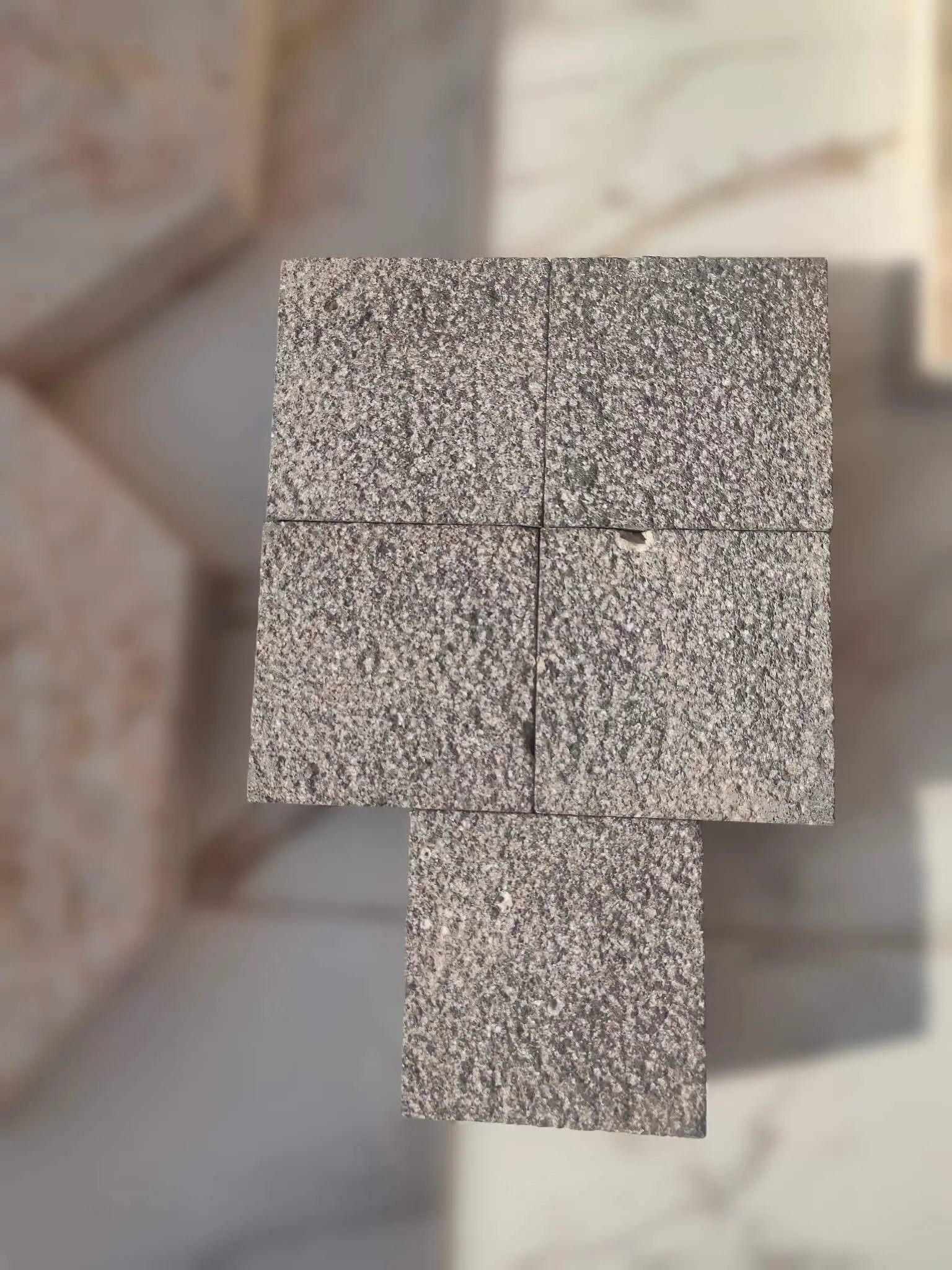
Desert xeriscaping and dry Mediterranean garden schemes pair particularly well with warm-toned limestone or sandstone rounds set in open-graded crushed aggregate — the rounded form echoes the natural river-cobble aesthetic that those planting styles reference. Tropical garden designs often use basalt or dark granite rounds as contrast elements against broad-leafed planting, where the stone’s density and dark tone anchor a composition that might otherwise feel too soft. Color palette matching between round cobblestones and surrounding wall stone, coping, or gravel mulch is the step that elevates a competent installation into a considered landscape design.
- Grey granite rounds — versatile across heritage, traditional, and transitional landscape styles
- Warm buff or honey limestone rounds — natural fit for Mediterranean, colonial, and xeriscaped settings
- Black or dark basalt rounds — favoured in contemporary, minimalist, and tropical garden design briefs
- Mixed-tone blends — effective for informal garden paths where pattern variation is the design intent
According to USGS cobblestone and granite sett dimension stone data, granite remains the dominant natural stone in cobblestone supply nationally — a reflection of both its performance credentials and the breadth of tonal options available across quarry sources.
Ordering, Logistics, and Lead-Time Planning
Round cobblestone pavers ship by weight, not by pallet count, because the irregular geometry prevents efficient stacking. Your truck load calculations should use actual bulk density figures from your supplier rather than assuming the same yield-per-tonne you’d expect from flat-sawn setts. A tonne of 100 mm granite rounds covers considerably less area than a tonne of 30 mm limestone tiles, and the difference compounds quickly on larger projects.
Citadel Stone maintains warehouse stock of round cobblestone pavers in multiple stone types, which typically reduces lead times to one to two weeks on standard sizing. For bespoke sizing or colour-matched blends across multiple stone types, allow four to six weeks from confirmed order to truck delivery. Build that buffer into your project schedule before mobilising groundwork contractors — base preparation that sits open waiting for stone delivery on a tight site is a preventable cost.
Expert Summary
Round cobblestone pavers reward careful specification at every stage — from confirming sizing tolerances and finish type with your supplier before the warehouse order is placed, to detailing the bedding mix and joint compound on site. The geometry that gives them their visual character also introduces variables that flat-paver installations don’t share: height variation management, tapered joint filling, and the rocking tendency during setting all require deliberate responses in your method statement. Get those details right, and round cobblestone delivers a surface with decades of service life and a visual depth that manufactured alternatives can’t replicate.
As you plan your broader hardscape palette, complementary stone formats can strengthen the overall design. warm-toned red cobblestone options offer a related hardscape dimension worth considering alongside your round cobblestone selection, particularly where a tonal contrast or accent border is part of the design brief. Citadel Stone draws round cobblestone pavers from premium quarries in Turkey and the broader Middle East region for uniform sizing.
Related reading: Thin Cobblestone Pavers Explained: Pros, Limits & Uses · belgian cobblestone pavers · Cobblestone vs Pavers: Key Differences Explained.