

Paver walkway ideas that hold up to real foot traffic start with one decision most homeowners underestimate — the sett size relative to path width. A 4×4-inch cobblestone sett on a 36-inch walkway creates a very different visual rhythm than a 6×9-inch piece, and that rhythm either anchors your landscape or fights it. The geometry matters as much as the material, and getting both right separates a walkway that photographs well on day one from one that still looks intentional after two decades of use.
Why Cobblestone Works for Walkways
Cobblestone has been used in pedestrian pathways for centuries, and its longevity isn’t accidental — it’s a function of how the material handles load distribution. Each sett acts as an independent unit, which means localized settlement in your sub-base doesn’t translate into cracked spans the way monolithic concrete does. You get a forgiving, repairable system rather than a rigid one.
The surface texture also plays a role that goes beyond aesthetics. Tumbled or rough-split finishes create small variations in the walking plane that help with drainage and affect how water sheets off the surface. According to Natural Stone Institute granite cobblestone specifications, the natural cleft and irregular face on traditional setts perform well in outdoor pedestrian environments where surface finish directly influences long-term walkability. That’s the kind of detail worth factoring into your finish selection before you lock in a pattern.
Pattern Ideas That Shape Walkway Character
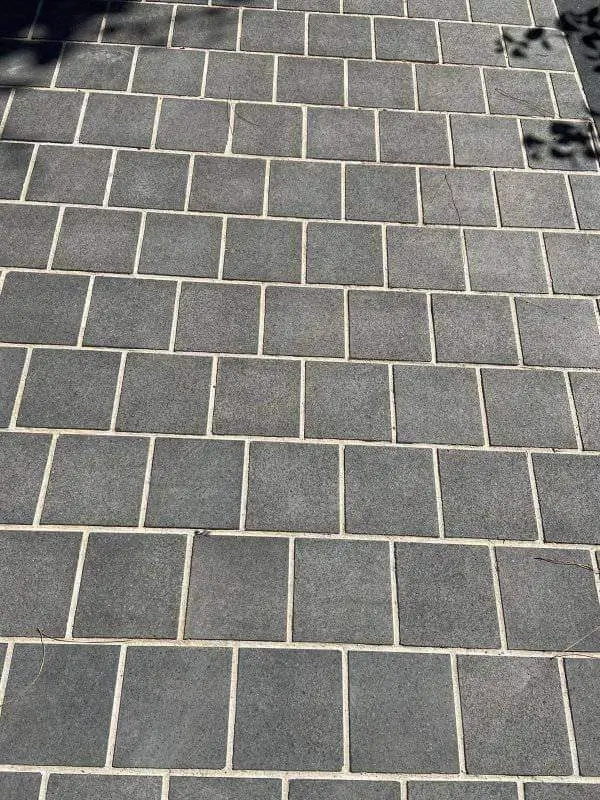
Your paver walkway ideas should start with a pattern decision, because the laying bond determines everything from material waste to how the path reads at distance. Here are the patterns worth considering for cobblestone applications:
- Running bond (offset half-lap): flows naturally along a straight or gently curving path, minimizes cuts at edges, and reads cleanly from any angle
- Herringbone at 45 degrees: adds visual complexity and is often specified for high-traffic walkways because the interlocking geometry resists lateral creep under foot load
- Fan or fan-wedge (sett fanning): suits curved approaches and creates a sense of arrival — requires a mix of sett widths or tapered cuts to maintain consistent joint width on the arc
- Random or cobbled mosaic: uses variable sett sizes within a 60–80mm thickness range, giving a historic European street aesthetic, though it demands more skilled setting labor
- Soldier course border with field fill: defines the walkway edge with a linear row of setts set lengthwise, then fills the interior field with your chosen bond — a classic detail that also reinforces edge containment
The pattern you choose will also affect your cut ratio. Herringbone typically generates 10–15% more waste cuts at borders than running bond. Factor that into your material order before anything leaves the warehouse.
Material and Finish Selection for Cobblestone Walkways
Granite setts remain the benchmark for outdoor cobblestone walkways — exceptionally durable under pedestrian load and highly resistant to freeze-thaw cycling in regions where ground temperature swings below freezing. Basalt setts offer a darker, more uniform palette and similarly robust field performance. Limestone cobbles bring warmth and a softer visual character, though they benefit from sealing in high-rainfall environments where sustained moisture absorption becomes a concern.
Finish selection is the variable that most directly affects how your walkway performs underfoot. Tumbled finishes round the arris edges and produce a naturally weathered face — they shed standing water quickly because the slight surface irregularity breaks surface tension. Sawn-face setts are crisper and more contemporary but benefit from a light bush-hammer or thermal treatment if slip performance under wet conditions is a design priority for your site. Per ASLA guidance on permeable stone paving surfaces, surface finish and joint configuration are the primary variables affecting how outdoor stone walkways manage rainfall runoff. The finish, not a number, is the specification to focus on — reference ANSI A326.3 for wet dynamic coefficient of friction evaluation when your project requires formal documentation.
For projects where you want to browse curated sett options, Citadel Stone walkway setts covers a range of materials and sizes that work across residential and commercial path applications.
Base Preparation and Structural Requirements
Your walkway’s long-term performance has more to do with what’s under the setts than the setts themselves. Here’s where building code requirements and structural depth specifications matter — and where many paver walkway ideas stall at the detail phase.
- Frost line depth is the starting point in freeze-thaw regions: your compacted aggregate base must extend below the local frost line to prevent heave cycles from displacing the sett surface — this varies by geography and is governed by local building code, not a universal specification
- A typical residential pedestrian walkway requires a minimum 4-inch compacted crushed aggregate base in frost-free zones; freeze-thaw regions commonly specify 6–8 inches or deeper depending on frost line data from your local authority
- Edge restraint is non-negotiable: without a continuous rigid restraint — concrete haunching, steel or plastic edging pinned at 12-inch intervals — your herringbone or running bond field will creep outward over years of thermal cycling and foot load
- Bedding sand depth for sett work should be consistent at 1–1.5 inches compacted, not a variable filler layer — inconsistent bedding produces a rocking sett surface within two seasons
- For walkways crossing clay-heavy soils, a geotextile separation fabric between the subgrade and aggregate base prevents fines migration that gradually compromises base depth over time
Some jurisdictions require a permit for permanent hardscaping over a certain square footage — check with your local building authority before committing to design. Seismic zones may also carry additional sub-base compaction requirements for any paved surface adjacent to structures. The International Building Code Chapter 5 addresses exterior hardscape in relation to structural adjacency, and your local code office will confirm whether your walkway design triggers any formal review.
The Cobblestone Road Aesthetic for Residential Paths
Cobblestone roads carry a visual authority that translates remarkably well to residential scale — the material reads as permanent, grounded, and deliberate in a way that poured concrete simply doesn’t. You can borrow from that aesthetic without recreating a full-width cobblestone road by narrowing your path to 36–42 inches, using a tighter sett size (60×60mm or 80×80mm), and letting the joint pattern do the visual work.
The joint width between setts also shapes character. Tight-jointed dry-laid work with kiln-dried sand produces a refined, stable surface with minimal vegetation establishment in the joints. Wider joints — 12–18mm — filled with stabilized jointing compound create a more relaxed landscape feel and handle slight differential movement more gracefully on paths that wind through garden planting areas. Your project’s maintenance expectation should drive that decision as much as aesthetics.
Ordering and Logistics for Cobblestone Walkway Projects
Material calculations for a cobblestone path project need to account for cuts, pattern waste, and edge soldier courses separately. A common approach: calculate your field area in square feet, add 8–12% for pattern waste (more for diagonal herringbone), then calculate your linear edge separately and add that quantity to the field order. Treating them as one flat calculation almost always leaves you short.
Citadel Stone ships cobblestone setts to project sites nationwide, with warehouse stock in common sizes typically available for dispatch on short lead times — important to confirm before you schedule your installation crew. Truck delivery logistics are worth thinking through early: cobblestone pallets are dense and heavy, so confirm access for a standard delivery truck before your order is placed. Narrow residential paths or gated entries may require a smaller delivery vehicle or a crane offload, and arranging that at the ordering stage saves significant schedule disruption.
According to USGS dimension stone production data, granite remains the dominant material in cobblestone and sett applications nationally — supply chains are well-established, which generally supports reliable warehouse availability for standard sizes. That said, specialty sizes or custom tumbled finishes may carry longer lead times from our selected quarries, so confirm availability before finalizing your installation timeline.
Design Ideas for Garden and Landscape Walkways
Consider how the walkway interacts with planting at its edges — this is one of the most overlooked aspects of paver walkway ideas for garden settings. A soldier course in a contrasting material (dark granite border to a lighter limestone field, for example) creates a visual frame that also reinforces the structural edge. The border sett can be set slightly proud of the field — by 2–3mm — to guide water away from any adjacent planting beds.
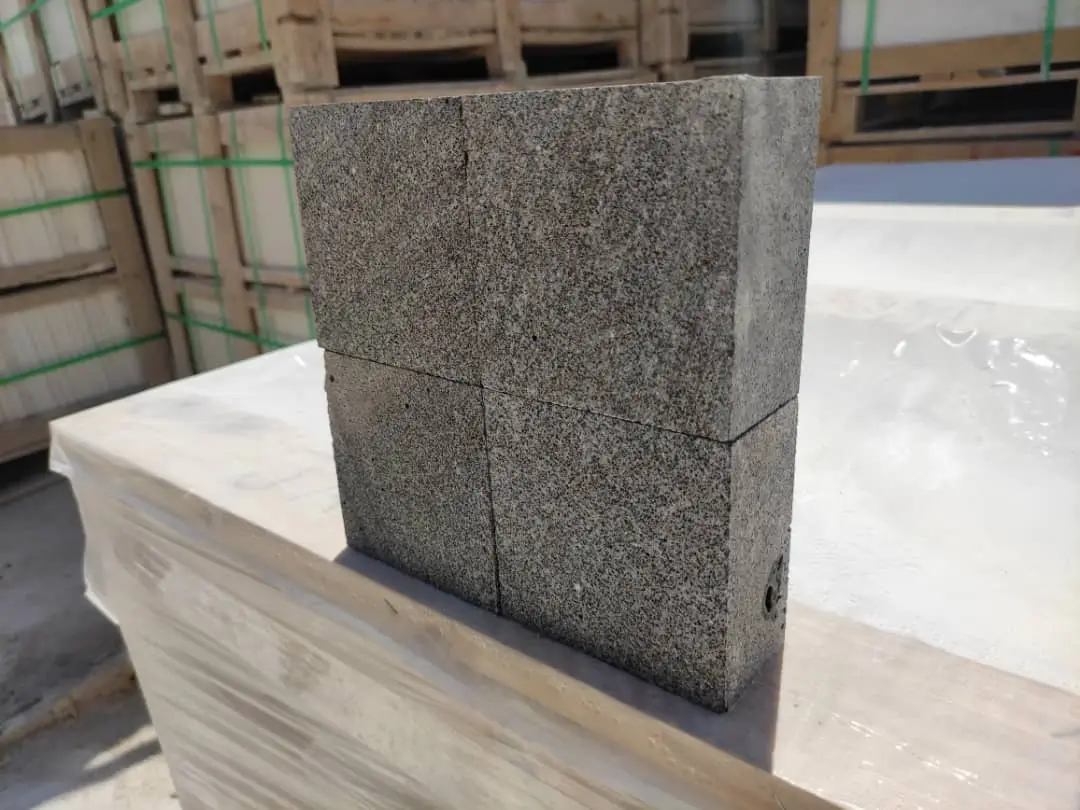
For garden paths that curve through naturalistic planting, you have two realistic options: tapered setts that allow a consistent joint width on the curve radius (more material cost, cleaner result), or rectangular setts cut on site at each course change (more labor, lower material premium). The curve radius determines which approach is practical — anything tighter than an 8-foot radius on a 4-inch sett generally requires tapered pieces to avoid wedge-shaped joints that widen unacceptably on the outside of the arc.
- Stepping stone integration: embed individual large-format cobblestone slabs at 24-inch intervals through low groundcover, framed by smaller setts at the edges — creates a layered depth that reads well in naturalistic garden designs
- Level changes: use a full-width sett step at grade transitions, with the riser face formed by a soldier row of setts set vertically — this keeps the material language consistent throughout the path
- Lighting integration: recessed ground lights sit naturally between sett courses; plan conduit routes before base compaction, not after
Parting Guidance
The decisions that define a successful cobblestone walkway project aren’t made at installation — they’re made during specification. Pattern, base depth, frost line compliance, edge restraint, and finish selection are all locked in before a single sett hits the ground, and getting them right means the installation holds its character through decades of use rather than requiring intervention within the first few winters. Your paver walkway ideas deserve that level of pre-construction attention.
As you move from design into material planning, related hardscape surfaces can inform how you approach adjoining areas of your property. cobblestone driveway selection guidance covers how the same material family performs under vehicle load — useful context if your walkway connects to or extends from a vehicular surface. Stone for nationwide projects ships from Citadel Stone in curated size blends suited to garden path layouts.
Related reading: cobblestone paver patterns · patio paver edging ideas · cobblestone pavers for patio.