

Belgian cobblestone pavers carry a dimensional tolerance story that most buyers miss entirely — and it’s the one that determines whether your jointing sand stays put through three winters or washes out after the first hard rain. The block geometry, specifically the ratio of bed depth to face width, governs how interlock loads distribute across your sub-base, and getting that ratio wrong by even half an inch cascades into settlement patterns that are expensive to correct after the fact. Understanding that relationship before you place an order is the difference between a specification that holds and one that keeps calling you back.
What Belgian Cobblestone Pavers Actually Are
The term gets used loosely in the market, so let’s be precise. True Belgian cobblestone pavers — sometimes called Belgian block or belgian cobble pavers in trade shorthand — are natural stone units with a characteristic roughly rectangular profile, typically cut or dressed from granite, basalt, or quartzite. They differ from purely rounded river cobbles in that they have at least one relatively flat face and consistent bed depth, making them stackable, jointed, and load-distributable. The block face is intentionally textured rather than polished, which speaks directly to pavement function rather than aesthetics.
Historically, these blocks paved streets across northern Europe for centuries, and the dimensional discipline that emerged from that era is exactly what makes them suitable for heavy-use applications today. You’re working with a geometry that has been load-tested by actual traffic for generations — that’s real-world performance data that no laboratory test fully replicates. When you source authentic Belgian-style block, you’re buying into that geometry, not just the look.
The cobblestone block format — roughly 4″ × 4″ × 4″ to 4″ × 8″ × 4″ in common ranges — is deliberately sized to allow manual or mechanical installation without specialized lifting equipment. Larger cobblestone slab formats exist but behave differently structurally, requiring thicker beds and different edge restraint systems. Know which format your project calls for before you start comparing prices.
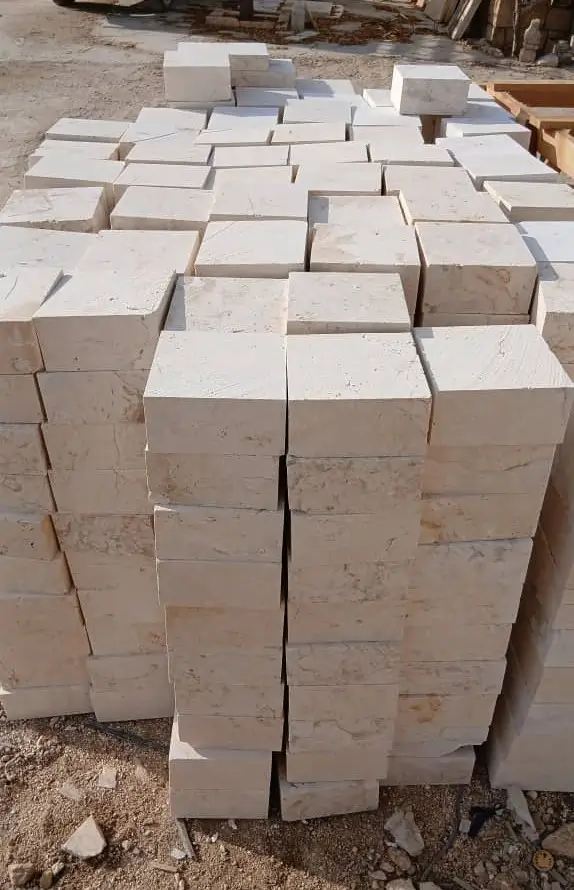
Material Choices Within the Category
Not every Belgian cobblestone paver is the same stone, and that distinction matters more than most buyers realize at the selection stage. Granite dominates the category for good reason — its dense crystalline structure makes it exceptionally durable in freeze-thaw environments where the repeated expansion and contraction of moisture inside pores would degrade softer stone over time. Basalt is the other strong performer, with a fine grain structure that resists abrasion effectively in high-traffic driveways and pedestrian plazas.
Quartzite occupies a middle ground — harder than limestone but with a cleavage plane that can create more irregular faces during cutting, which some designers embrace as authentic character and others find problematic for precise joint alignment. Limestone cobblestone block pavers exist and work well in milder climates, but their higher absorption rate makes them a careful choice for regions with repeated hard freezes.
- Granite block — highest density, low absorption, best for driveways and heavy vehicle zones
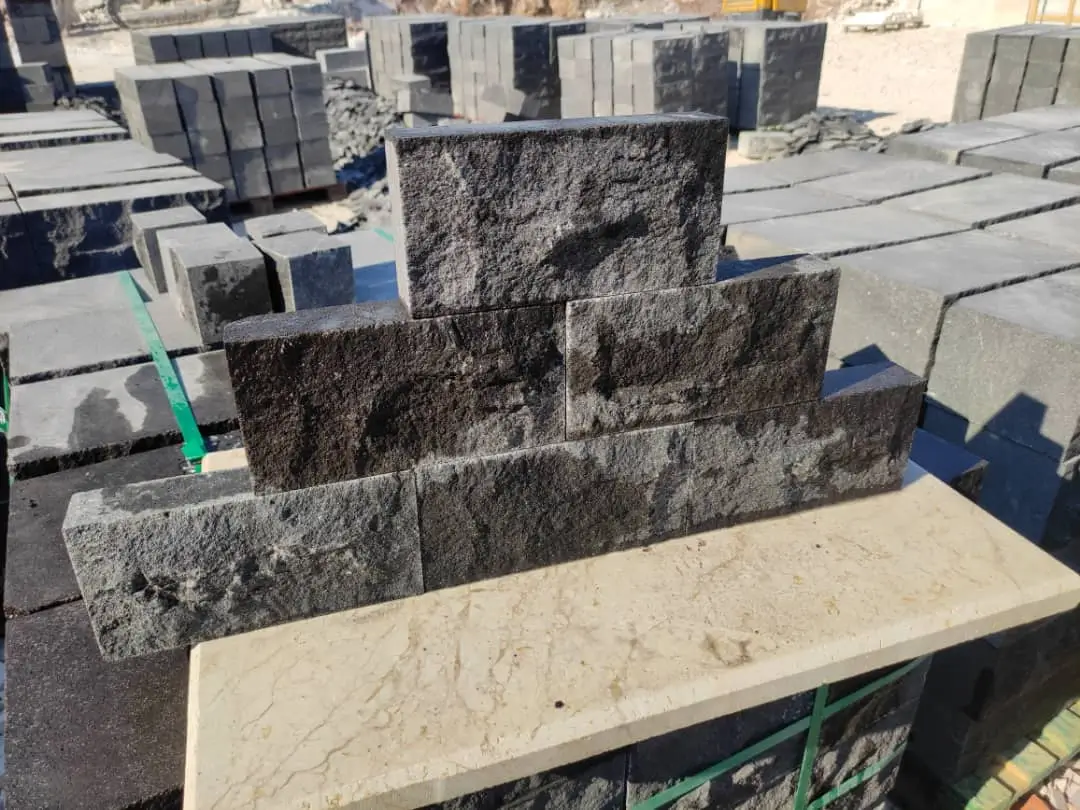
- Basalt block — excellent abrasion resistance, dark tonal range, strong performer in wet climates
- Quartzite block — hard and distinctive, variable face texture, verify absorption before freeze-thaw exposure
- Limestone block — warmer visual palette, good for pedestrian zones in moderate climates, requires sealing in wet regions
According to Natural Stone Institute granite specifications, granite dimension stone used in paving applications is evaluated across compressive strength, absorption, and abrasion resistance criteria — all of which are relevant when you’re selecting Belgian block for high-stress surfaces. Request the test report for the specific material you’re buying, not just the generic stone type.
Size and Dimensional Standards — Reading the Spec Sheet
Belgian cobblestone pavers ship in standard sizes, but “standard” spans a wider range than concrete paver buyers expect. The common designations you’ll encounter are Small Sett (roughly 4″ × 4″ × 4″), Medium Sett (4″ × 6″ × 4″ or 4″ × 8″ × 4″), and Large Sett (6″ × 8″ × 4″ to 6″ × 9″ × 5″). Each size class creates a different surface texture density — tighter joints with small setts, more open pattern expression with large formats.
Bed depth consistency matters as much as face dimension. Your sub-base calculation assumes a specific stone thickness; if blocks in the same pallet range from 3.5″ to 4.5″ in depth, you’re screed-adjusting constantly on site, which slows the installation considerably and compromises final surface plane consistency. Ask specifically for graded stock — material sorted within a tight tolerance band — rather than mixed-depth material that happens to share the same face dimensions.
- Confirm bed depth tolerance before ordering — graded batches hold tighter than ungraded field stone
- Face dimension variation of ±0.25″ is workable; greater variation forces inconsistent joint widths
- Sett depth to face width ratio ideally falls between 1:1 and 1.25:1 for optimal interlock performance
- Oversized units within a batch create high spots that rock under point loads — inspect pallet samples on delivery
Base Preparation: The Variable That Decides Longevity
Here’s what most specifiers undervalue: the Belgian cobblestone paver is only as good as the compacted aggregate system beneath it. The block itself has structural integrity to spare — the failure point in the vast majority of problem installations is differential settlement in the base, not stone breakage. Your aggregate base depth should account for expected load class, native soil drainage characteristics, and frost depth in your climate zone.
For residential driveways in moderate climates, a 6″ compacted aggregate base beneath a 1″ bedding layer is a reasonable starting point. In freeze-thaw regions, extend that to 8″–10″ and pay close attention to the bedding sand gradation — angular sand compacts better and resists lateral migration more effectively than rounded river sand. In clay-heavy soils, consider a geotextile fabric between native soil and aggregate to prevent fines migration into the base over time.
The USGS dimension stone production and use data documents how granite sett and cobblestone paving has maintained function across a wide range of infrastructure applications — which reflects the material’s structural capacity, but that capacity only expresses itself when the sub-base provides consistent, uniform support. No stone compensates for inadequate base preparation.
For pedestrian-only applications — courtyard paths, garden walks, entry plazas — you can reduce base depth modestly, but don’t eliminate the compacted aggregate layer entirely in favor of a sand-only bed. Freeze-thaw cycling will heave a sand-only installation in northern climates within a few seasons, and the labor cost to re-set those blocks exceeds any savings from the reduced base material.
Pattern Laying and Jointing for Belgian Block
The running bond, fan pattern, and random coursed layouts each create different structural behavior, not just different visual effects. A running bond perpendicular to traffic direction maximizes load distribution across joints — this is the layout used historically for carriage and vehicle roads for exactly that reason. Fan patterns, while visually striking in courtyard applications, require more cuts at the perimeter and generate more material waste.
Joint width for Belgian cobblestone pavers typically runs wider than for cut paving stone — 0.5″ to 0.75″ is common — and that joint needs to be filled with either polymeric sand or dry-set mortar depending on application. Polymeric sand is the default for residential and light commercial; it locks under moisture activation and resists ant intrusion and washout. For heavy vehicle applications or sites with significant surface drainage velocity, a dry-set mortar joint provides more resistance to displacement.
The ASLA cobblestone and block paving landscape design guidance addresses the environmental dimension of open-jointed cobblestone paving — wide joints with permeable fill allow surface water infiltration, reducing runoff load on storm systems. This is genuinely relevant when your project is subject to stormwater management requirements, since a well-jointed cobblestone surface can contribute meaningfully to site permeability calculations.
Seasonal Installation Timing for Belgian Block
Seasonal timing affects Belgian cobblestone paver installations more than most buyers expect, particularly when polymeric sand or mortar jointing is involved. The activation window for polymeric sand is temperature-dependent — most products specify an ambient temperature above 32°F and surface temperature above 40°F for the water-activation step to work correctly. Install at temperatures outside that window and you risk incomplete polymer bonding, which means joint material that looks set but hasn’t fully cured and will wash out during the first significant rain event.
Late spring through early autumn represents the most reliable installation window in most of the country. Morning installation work during summer months is preferable for jointing stages — surface temperatures climb rapidly by midday in direct sun, and high surface temperatures accelerate moisture evaporation during the polymeric sand activation step before the polymer has time to cross-link properly. Schedule your jointing work for morning hours and plan for shade if the surface will be in direct sun.
- Avoid jointing work when rain is forecast within 24 hours — premature wetting disrupts polymeric sand cure
- Cold-weather installation of the stone itself is feasible, but defer jointing until temperatures are stable above 40°F
- In freeze-thaw climates, late-season installations risk the first freeze occurring before joints have fully cured — allow at least two weeks of above-freezing temperatures post-installation
- Morning work windows (7 a.m. to noon) minimize surface temperature extremes during jointing and are worth scheduling deliberately
- Mortar-jointed installations have a tighter temperature window than polymeric sand — consult the mortar manufacturer’s data sheet for minimum placement and curing temperatures
The base preparation and stone-setting phases are far more forgiving of temperature variation than the jointing phase. A common approach on larger projects is to complete base and setting work in one season and then pause, completing final jointing once spring temperatures stabilize. This sequencing often produces better joint quality than rushing to finish late in the season.
Sealing Belgian Cobblestone Pavers: When It Helps and When It Doesn’t
Sealing recommendations for Belgian cobblestone pavers depend heavily on the stone type and application context. Dense granite block in a well-drained driveway application genuinely doesn’t need sealing for performance reasons — the material’s absorption rate is low enough that staining and moisture penetration are not significant concerns. Sealing granite cobblestone is primarily an aesthetic decision: a penetrating sealer will deepen the color slightly and make oil staining easier to clean, but it’s not protecting the stone from structural harm.
Limestone and softer quartzite block are different. These materials benefit from penetrating sealer application before the installation sees traffic, particularly in climates where de-icing salts will be applied in winter. Salt-driven spalling in softer stone is a real failure mode — the sealer slows moisture and dissolved salt ingress into the pore structure, extending service life meaningfully. Reapply every three to five years depending on traffic volume and exposure.
At Citadel Stone, we recommend clarifying sealer requirements with your stone supplier before ordering, because the right answer differs by material. What works for granite block is not necessarily right for limestone block in the same climate, and applying a film-forming sealer to rough-textured cobblestone can create a surface that is difficult to maintain as the film wears unevenly.
Sourcing and Logistics: What to Verify Before You Order
Belgian cobblestone pavers move in large, heavy pallets — typically 1,500 to 2,500 lbs per pallet depending on unit size and pallet configuration. Your truck access planning should account for this before you commit to a delivery date. A standard flatbed delivery requires a reasonably clear run to the drop point; if your site has restricted access, overhead clearance issues, or a long carry from the street, factor that into your logistics planning early. Forklift offload is standard at the warehouse stage, but site offload may require a crane truck if the installation zone is set back from road access.
Lead times from warehouse stock vary by material and color. Common grey granite block typically ships within one to two weeks from available inventory. Less common materials — specific basalt profiles, quartzite in particular dimensions — may require a longer lead from our selected quarries. Confirm stock status and lead time before finalizing your project schedule, especially if you have a concrete sub-base pour or landscaping coordination that depends on the stone arriving on a specific date.
For projects requiring a volume match across multiple phases, order your full quantity in a single batch where possible. Natural stone varies in color between quarry cuts, and a second order placed six months later will rarely be an exact visual match to the first. Holding extra material in warehouse storage is a better risk management strategy than placing a matched reorder and discovering the new batch reads noticeably different on site. Our technical team can help you calculate batch quantities that include a reasonable overage buffer — typically 8% to 10% for a Belgian block installation with cutting losses.
You can explore the full selection of Citadel Stone belgian setts to review available dimensions, materials, and current warehouse stock before finalizing your project quantities.
Common Specification Mistakes to Avoid
The specification errors that cause the most problems with Belgian cobblestone paver projects cluster around a few predictable areas. Catching them at the specification stage costs nothing; correcting them after installation is expensive.
- Specifying block by face dimension only, without locking in bed depth tolerance — leads to screeding chaos on site
- Underestimating edge restraint requirements — Belgian block will migrate laterally without a robust continuous restraint; plastic landscape edging is not adequate for vehicle zones
- Using the wrong bedding sand gradation — rounded masonry sand migrates; angular concrete sand holds position under cyclic load
- Skipping a compaction pass after jointing — joint sand needs to be vibrated down into the joint before the surface is opened to traffic
- Over-relying on mortar for a flexible pavement system — if you want the ability to remove and reset individual blocks for utility access, mortar jointing eliminates that advantage
- Ordering without confirming quarry batch consistency — two pallets from different cuts can read as distinctly different tones in daylight
One detail that often gets overlooked in residential projects is drainage slope. Belgian cobblestone pavers in a flat or nearly flat configuration will pond water at the joints, which accelerates joint sand displacement and, in freeze-thaw climates, creates repeated ice-expansion stress at joint faces. Maintain a minimum 1.5% cross-slope on all paved areas, and verify that slope is built into the sub-base, not just the bedding layer — the sub-base controls the finished grade.
Getting Belgian Cobblestone Paver Specifications Right
Belgian cobblestone pavers reward specification precision. The material itself is exceptionally durable — granite and basalt block have demonstrated decades of service life under real vehicle and pedestrian loads — but that durability only delivers when you’ve matched block geometry to sub-base design, planned jointing for the right temperature window, and locked in dimensional consistency before your first pallet arrives on site. The buyers who get the best outcomes are the ones who treat material selection and logistics planning as equally important as laying pattern and finish choice.
Your project timeline should build in a realistic lead time buffer, confirm truck access to your drop zone early, and sequence jointing work around morning temperature windows and a clear weather forecast. These aren’t small operational details — they directly affect the quality of the finished installation. As you develop your specification, related hardscape considerations may also inform your decisions; thin cobblestone pavers for lower-profile applications covers an alternative format worth understanding if your project has load or thickness constraints that the standard sett depth doesn’t accommodate.
Citadel Stone supplies Belgian block nationally, which means your project isn’t limited by regional distributor stock or local yard availability. We quarry, template, manufacture, and handle the material directly, and our warehouse inventory lets most standard orders ship within standard lead windows rather than waiting on extended import cycles. Belgian block from Citadel Stone arrives in graded batches, drawn direct from quarries in Turkey, the Mediterranean, and beyond.
Related reading: cobblestone paver patterns · driveway paver edging · Choosing Cobblestone Pavers for Your Patio.