What Travertine Countertops Actually Cost
Travertine countertops carry a price range that surprises most buyers — not because the material is expensive, but because the spread between low and high estimates is wide enough to change the entire budget calculation for a kitchen renovation. Material costs typically run between $40 and $100 per square foot installed, but that number shifts considerably based on slab grade, surface finish, edge profile complexity, and how far the stone has traveled from quarry to fabrication shop. You’ll want to get your arms around each cost variable before locking in a budget, because the gap between a $55-per-square-foot project and an $85-per-square-foot project is almost never about the stone itself — it’s about the decisions made around it.
Slab Grade and Surface Finish Pricing
The single biggest lever on travertine countertop pricing is slab grade. Commercial-grade travertine — heavier voids, less consistent veining, more color variation within a single slab — typically wholesales for $8 to $18 per square foot before fabrication. Premium and select grades with tight, consistent fill and uniform cream or walnut tones can reach $25 to $45 per square foot at the slab stage alone. That difference compounds quickly once fabrication and installation labor get added to the line item.
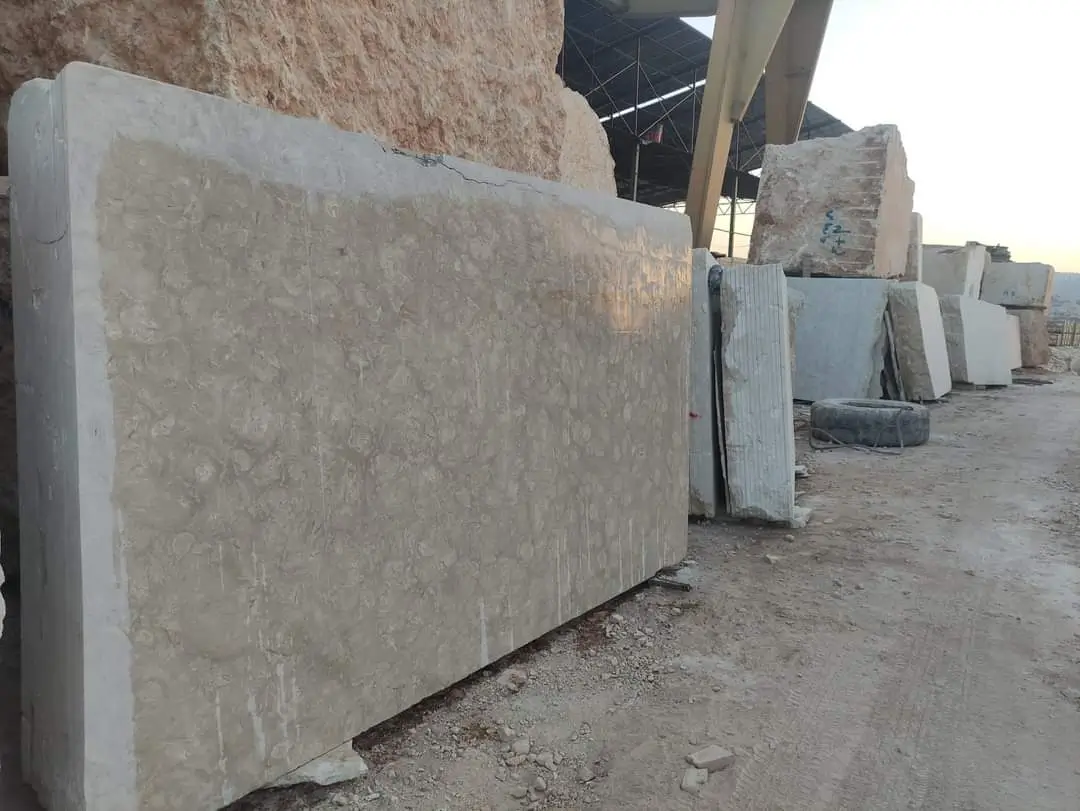
Surface finish is the second major cost driver. A honed finish, which delivers the matte, low-sheen surface most designers specify for kitchens, is the industry baseline — it adds minimal cost over raw slab pricing. Filled and honed is the most common specification for a slab of travertine used as a countertop because it closes the natural voids before honing, creating a smooth, workable surface that handles daily kitchen use without harboring bacteria in open pores. Polished travertine costs slightly more to produce and requires more precise fabrication tolerances, so expect a $3 to $8 per square foot premium. Unfilled travertine is rarely appropriate for countertops — the open voids trap liquids and debris at a rate that makes maintenance impractical.
- Commercial grade, filled and honed: $40–$60 per square foot installed
- Premium grade, filled and honed: $65–$85 per square foot installed
- Select or Noce grade, polished finish: $80–$100+ per square foot installed
- Edge profiles (ogee, dupont, waterfall) add $15–$35 per linear foot to fabrication cost
- Cutouts for sinks and cooktops typically add $150–$300 per opening
Fabrication Costs and What Drives Them
Fabrication is where travertine for countertops diverges sharply from harder igneous stones like granite. Travertine’s calcium carbonate composition — which sits at roughly 3 on the Mohs hardness scale — means it cuts and profiles more quickly than granite, but it also demands more careful handling during the process. Filled voids can crack if a blade runs too hot, and the edge profiling on travertine requires slower passes to avoid chipping the fill material at the transition zones. Most fabricators price travertine work at a slight premium over granite despite the faster cut times, specifically because of the higher rejection rate for slabs that show void migration or fill separation mid-fabrication.
Expect fabrication to add $25 to $45 per square foot to your material cost, depending on shop capacity, regional labor rates, and edge complexity. A simple eased edge on a straightforward kitchen layout sits at the low end. A full waterfall island with mitered corners and integrated drainboard detailing will approach the top of that range or exceed it. According to Natural Stone Institute travertine properties and outdoor suitability, travertine’s absorption characteristics and fill behavior directly influence the fabrication protocols shops must follow — a detail that separates experienced fabricators from generalists.
How Freight and Sourcing Affect Your Total Cost
Your total project cost for travertine countertops is more sensitive to freight distance and sourcing chain than most buyers realize. Travertine slabs are heavy — a typical 2cm slab at 60 inches by 110 inches weighs roughly 180 to 220 pounds depending on density — and that weight makes truck freight a meaningful line item, not a rounding error. If your fabrication shop sources slabs directly from an importer with warehouse inventory close to your project location, you might pay $150 to $300 in freight per slab. If the stone has to cross two distribution points — say, from a port warehouse to a regional distributor and then to your shop — that can reach $400 to $600 per slab before the truck even reaches the fabricator’s dock.
Travertine sourced from Middle East quarries — specifically the classic cream and walnut varieties most common in American kitchens — tends to carry slightly higher landed costs than Turkish travertine, but the material quality and fill consistency at the premium grade tier is generally more reliable. That sourcing difference rarely shows up as a line item on your quote; it’s embedded in the slab price your fabricator quotes you. Asking your supplier whether the stone came through a single-step import or a multi-tier distribution chain is a legitimate procurement question that can help you understand whether there’s margin to negotiate on material cost.
- Single-step import (direct importer to fabricator): lowest freight overhead
- Multi-tier distribution adds 8–15% to effective slab cost in many markets
- Labor markets in high-cost metros add $10–$20 per square foot to fabrication rates
- Remote project locations can increase truck delivery costs by $300–$800 over metro rates
- Warehouse stock availability affects lead time — in-stock slabs avoid 6–10 week import delays
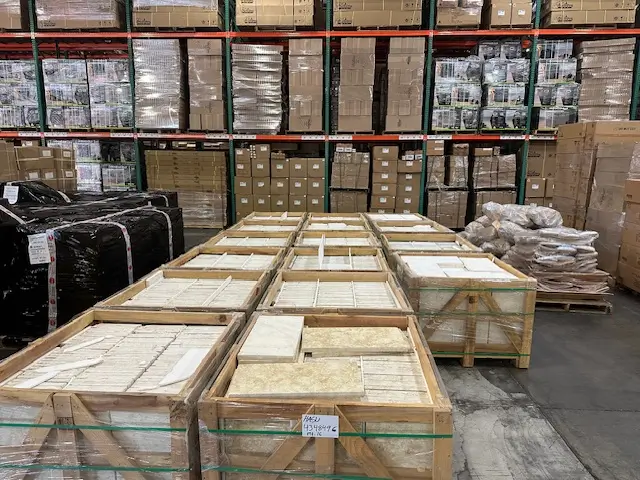
At Citadel Stone, we maintain warehouse inventory of travertine slabs in multiple grades and finishes, which typically compresses lead times to one to two weeks compared to the extended import cycle that custom-order projects face. That lead time difference has real value when a renovation is on a contractor schedule.
Travertine for Backsplash: Coordinating Cost Across Surfaces
Many kitchen projects combine travertine countertops with travertine for backsplash to create a continuous material language through the space. The cost structure for backsplash work is fundamentally different — you’re typically specifying tile format rather than slab format, which changes both the material and labor math. Travertine tile for backsplash applications runs $6 to $22 per square foot depending on format size, finish, and grade. Installation labor for backsplash tile adds $12 to $20 per square foot, putting the all-in cost for a travertine backsplash at roughly $18 to $42 per square foot depending on your market.
The coordination challenge is matching the fill treatment and finish between your countertop slab and your backsplash tile. A filled and honed countertop paired with an unfilled tumbled tile backsplash creates a deliberate textural contrast that works well in rustic or Mediterranean-influenced kitchens. Pairing filled and honed countertops with filled and honed subway-format tiles reads more transitional and contemporary. Specify the fill treatment explicitly in your purchase order for both surfaces — vague finish descriptions are the most common source of material-matching disputes between countertop fabricators and tile installers on the same project. You can review detailed format and finish options through Citadel Stone travertine slabs to confirm grade and surface treatment before committing to a specification.
Thickness and Structural Requirements
Travertine countertops are most commonly supplied in 2cm (¾ inch) and 3cm (1¼ inch) nominal thicknesses. The thickness choice affects both material cost and installation requirements in ways that ripple through the total project budget. A 3cm slab of travertine is self-supporting across standard cabinet spans without requiring a plywood substrate — that removes $3 to $6 per square foot from installation labor cost and eliminates the lead time and material cost of the substrate itself. A 2cm slab requires a continuous plywood underlayment, which adds those costs back in and introduces a seam-alignment variable that careful fabricators account for in their layout planning.
For most kitchen countertop applications, 3cm is the professional default — it’s dimensionally stable, handles the point loads of heavy cookware without flexing, and eliminates the substrate conversation entirely. The per-square-foot material cost of 3cm runs roughly $8 to $15 higher than 2cm at the slab stage, but that premium is almost always recovered in reduced installation labor and substrate material cost. According to ASTM C1527 travertine dimension stone standard specifications, travertine countertop stone should meet minimum thickness tolerances and breaking strength thresholds — specifications your fabricator should verify before accepting slabs from any supplier.
- 2cm slabs: lower material cost, requires plywood substrate, adds installation complexity
- 3cm slabs: higher material cost, no substrate required, cleaner edge profiles
- Laminated 2cm edges (two layers bonded at the edge) mimic 3cm aesthetically at lower cost
- Minimum 1½-inch overhang for seating areas requires cantilever support on 2cm
- Island spans over 60 inches should use 3cm regardless of budget considerations
Sealing, Maintenance, and Long-Term Cost of Ownership
The honest cost conversation about travertine countertops includes the ongoing maintenance budget, not just the installation price. Travertine’s calcium carbonate composition makes it reactive to acidic substances — citrus juice, wine, vinegar, and many common kitchen cleaners will etch the surface over time, dulling the honed finish in the areas that see the most use. Etching is a chemical reaction, not a sealing failure, which means that even a properly sealed slab will show etch marks from acid exposure. Understanding this distinction before you specify the material is more valuable than any cost estimate.
Penetrating sealer application should be budgeted at initial installation and repeated every 18 to 36 months depending on kitchen use intensity. Professional sealer application runs $1.50 to $3.00 per square foot, or you can maintain it yourself with a quality impregnating sealer for roughly $40 to $80 in product cost per application. Re-honing to address accumulated etch marks — which many travertine countertop owners do every five to eight years — runs $8 to $18 per square foot through a stone restoration specialist. Factor those numbers into your total cost of ownership over a 20-year horizon, and travertine for countertops remains highly competitive with engineered alternatives when the installed cost is comparable. The USGS limestone and travertine natural mineral formation data confirms the calcium carbonate mineralogy that drives both travertine’s aesthetic character and its maintenance requirements — understanding the geology helps set realistic performance expectations from day one.
Value Engineering Travertine Countertop Projects
There are several legitimate ways to reduce total project cost without compromising the result. Selecting commercial-grade travertine over premium grade is the most impactful — the voids are more pronounced and the color variation is wider, but in a filled and honed finish, most of that variation reads as natural character rather than defect. Specifying a simple eased or beveled edge profile instead of a complex ogee or dupont removes $15 to $25 per linear foot from fabrication cost without affecting function or durability.
Limiting the travertine countertop to the perimeter runs and using a different material — or a different stone grade — on the island reduces overall spend while keeping the visual impact of the material in the most prominent locations. You can also reduce backsplash complexity by specifying travertine for backsplash in a 4×4 or 3×6 format instead of large-format tiles or custom mosaic patterns, which cuts both material and labor cost substantially. What you should not value-engineer is the fabricator — an experienced shop that handles natural stone daily will produce a result that a general countertop shop cannot match, and the cost differential is rarely more than 10 to 15 percent for meaningful quality and execution differences.
- Choose commercial grade over premium to save $10–$20 per square foot on material
- Specify eased or beveled edges instead of complex profiles to save $15–$25 per linear foot
- Limit stone to perimeter runs, use alternate material on island to reduce total square footage
- Use standard tile formats for backsplash rather than custom mosaic to reduce labor cost
- Verify warehouse stock before scheduling — last-minute slab sourcing adds cost and delay
Decision Points
Budgeting travertine countertops accurately comes down to a sequence of decisions that build on each other — and the order in which you make them determines how much control you have over the final number. Grade comes first, because it sets the ceiling and floor on material cost. Thickness comes second, because it affects both material and installation variables. Edge profile and finish come third, because they determine fabrication complexity. Sourcing comes last — but it’s often where the biggest cost surprises hide, particularly when freight distance and warehouse availability haven’t been verified before a contractor schedule is locked in.
You’ll get the most accurate budget by walking through those four decisions with your fabricator and your stone supplier before signing a contract, not after. The difference between a well-specified travertine countertop project and a cost-overrun situation almost always traces back to assumptions made about material availability and freight that weren’t confirmed at the outset. As you plan the full scope of your kitchen, other stone surfaces — tile formats, floor patterns, and transitions — also benefit from early specification. For a closer look at how tile format decisions affect room composition, tile layout patterns for large-format stone covers how Citadel Stone materials perform across a range of format and pattern combinations. Sourced from established quarry partners across multiple continents, Citadel Stone offers travertine countertops in filled and honed surfaces for kitchens.
Related reading: 18×18 floor tile patterns · 18×18 Tile Buyer’s Guide: Choosing the Right Fit · 18×18 Floor Tile: How to Pick the Right Format.