

What the Colour Difference Actually Tells You
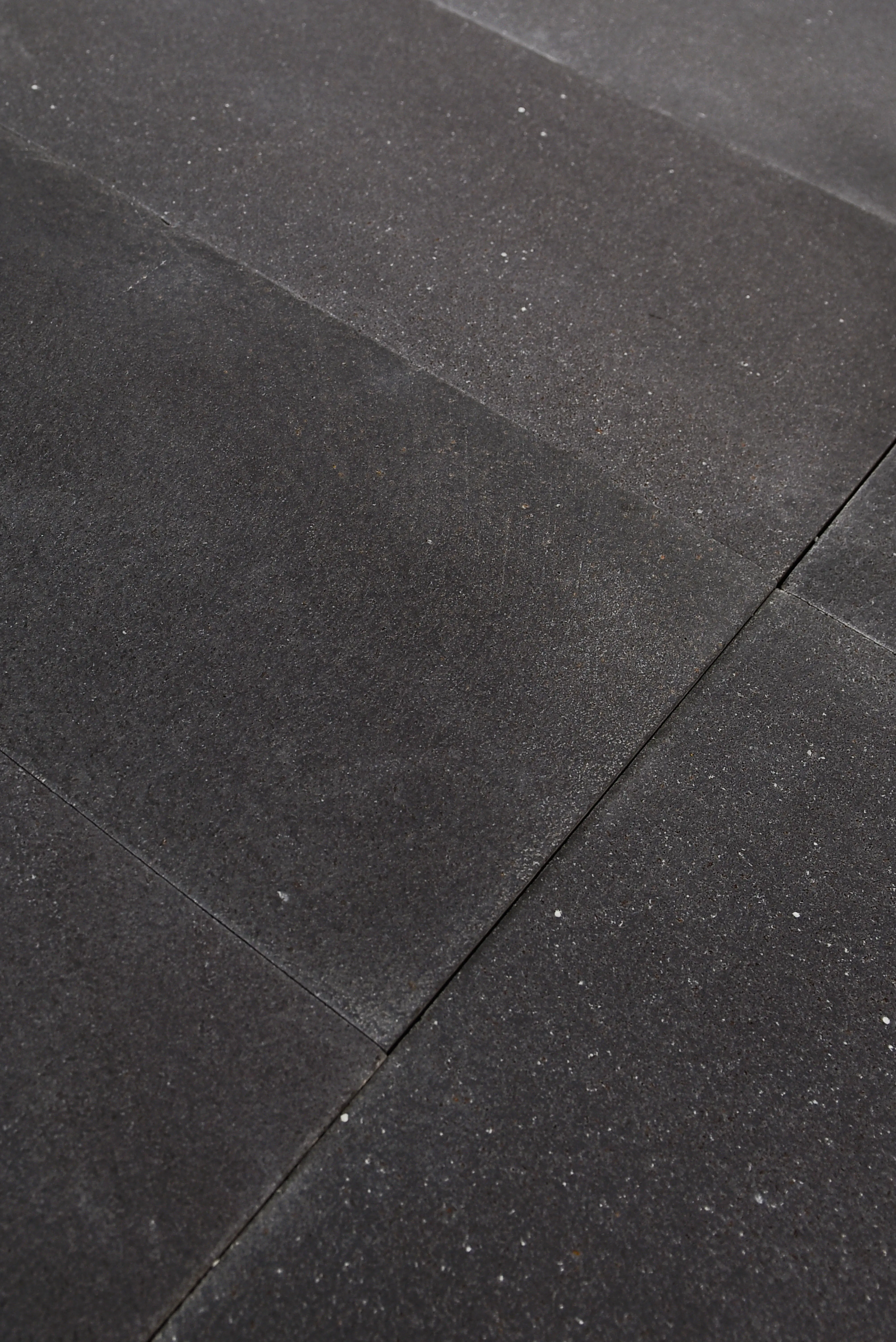
Jura blue limestone’s tone sits in a cooler, more silvery register than most buyers anticipate from catalogue images — a distinction that matters as soon as you place full-slab samples under your project’s actual lighting conditions. The blue-grey cast comes from iron and manganese compounds distributed through the calcium carbonate matrix, and the distribution is uneven enough that you’ll notice variance from slab to slab — not a flaw, but a geological signature. Bateig blue, quarried in the Novelda basin of Spain, carries a warmer grey-beige undertone with fine fossil inclusions that read as subtle cream speckling in raking light. Both materials are marketed under the broad “blue limestone” label, which creates genuine confusion at the specification stage.
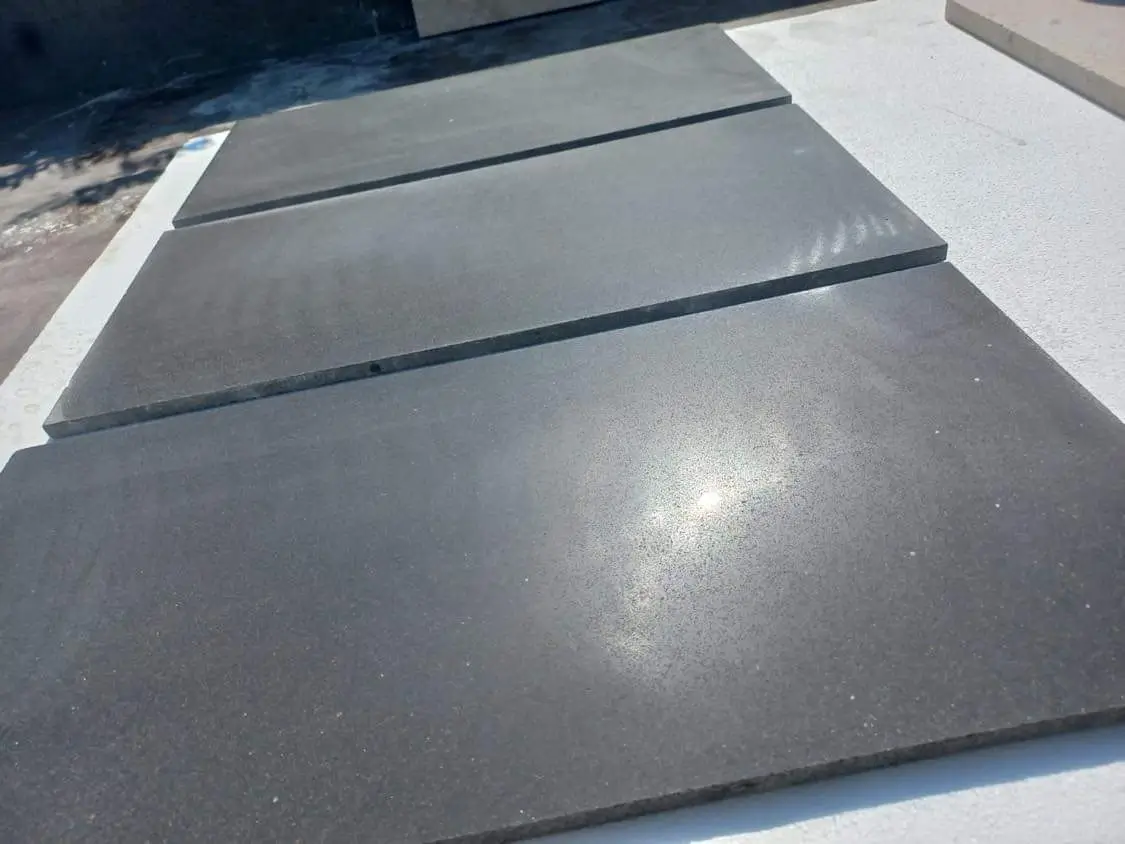
The distinction matters practically. Projects that need a cool, contemporary palette — think polished interior floors or sleek outdoor terraces — will read differently under the same light source depending on which stone you choose. Bateig leans warmer and coordinates more naturally with beige and sand tones. Jura blue limestone reads crisper against white joints and dark metal fixtures. Getting this wrong at the selection stage means costly replacement, so take the time to review full-slab samples under your project’s actual lighting conditions rather than relying on small chips.
Mineralogy and Density Compared
Jura blue limestone originates from upper Jurassic formations in Bavaria and is classified as a dense, low-porosity micritic limestone. Its bulk density typically falls between 2,600 and 2,680 kg/m³, with water absorption rates well below 0.5% — performance characteristics that make it genuinely suitable for high-traffic and exterior applications. According to NSI limestone technical specifications, low-absorption limestones in this class demonstrate superior stain resistance and reduced susceptibility to freeze-thaw deterioration compared to higher-porosity alternatives.
Bateig blue presents a slightly more porous profile, typically showing water absorption between 0.5% and 1.2% depending on the specific bed layer quarried. Its density sits around 2,550–2,620 kg/m³. That difference sounds marginal, but it has real consequences for outdoor performance in climates where temperatures cycle significantly between seasons or even between day and night.
- Jura blue limestone water absorption: typically under 0.5% — suitable for demanding exterior exposures
- Bateig blue water absorption: 0.5%–1.2% — still manageable outdoors with proper sealing protocols
- Compressive strength for jura blue: commonly exceeds 150 MPa, making it one of the harder dense limestones available
- Bateig blue compressive strength: typically in the 90–120 MPa range — adequate for most paving and cladding loads
- Both materials meet standard dimensional stone requirements under relevant ASTM classifications
Freeze-Thaw Performance and Thermal Cycling
Here’s where the density gap between the two stones becomes consequential. In environments where temperatures cycle repeatedly across the freezing threshold — not just in winter but in high-altitude locations where morning frost follows afternoon heat — the lower absorption rate of jura blue limestone gives it a meaningful durability advantage. Water that infiltrates stone pores expands approximately 9% on freezing, generating internal pressures that, over hundreds of cycles, initiate micro-cracking. A stone absorbing under 0.5% moisture has far less water available to expand than one absorbing 1.2%.
Thermal expansion coefficients for both materials are broadly similar — dense limestones typically expand at approximately 5–8 × 10⁻⁶ per °C — but the absolute range of temperature swing matters more than the coefficient alone. Projects in freeze-thaw regions where the diurnal temperature swing routinely exceeds 20°C place greater cumulative fatigue stress on joints and bedding than those in stable maritime climates. Bateig blue can perform well in moderate freeze-thaw zones when sealed properly and laid on a flexible bed system with correctly specified movement joints. But if your project sits in a high-altitude or inland continental exposure with frequent cycling, jura blue limestone’s lower porosity is the more defensible specification. According to USGS limestone composition data, denser micritic limestones consistently show lower susceptibility to weathering than their more porous counterparts in the same calcium carbonate group.
Finish Options and How They Affect Appearance
Both stones are commonly available in honed and sawn finishes, with polished jura blue limestone increasingly specified for interior flooring where its cool grey tone creates a striking monolithic effect. The honed finish on jura blue reveals the stone’s tight grain clearly — you’ll see the mineral banding more distinctly than on a sawn surface. Bateig blue in honed form shows its fossil inclusions more prominently, which suits projects where textural character is valued over uniformity.
Brushed and antique finishes are available for both, though bateig blue’s slightly softer surface responds well to brushing and develops a pleasantly worn aesthetic that suits informal garden terraces. Jura blue limestone brushed carries a crisper, less rustic appearance because the underlying stone is denser and resists the brushing process more uniformly. For a close look at how these finishes translate to specific tile formats and surface variations, our jura and bateig tiles show both materials across the full finish range available at Citadel Stone.
Thickness and Structural Specification
Standard specifications most commonly reference 20mm and 30mm nominal thicknesses for paving applications, with 30mm becoming the standard recommendation for vehicular-rated areas. Jura blue limestone’s high compressive strength means 20mm panels handle pedestrian loads comfortably when bedded correctly, but don’t underspec thickness in areas where point loading from furniture legs, trolleys, or planters creates concentrated stress. Bateig blue follows similar guidance but warrants the more conservative 30mm specification in exposed exterior applications, given its slightly lower compressive strength.
- Interior flooring on screed beds: 20mm acceptable for both stones in residential applications
- Exterior terraces with pedestrian traffic only: 20mm jura, 30mm bateig recommended
- Vehicular or mixed-use areas: 30mm minimum for jura blue limestone, 40mm for bateig in heavy-duty contexts
- Pool surrounds and wet areas: 20–30mm with textured or honed finish — avoid polished finishes in wet zones
- Cladding panels: thickness depends on fixing system; consult structural engineer for panels exceeding 600mm in any dimension
Sourcing and Supply Considerations
Jura blue limestone is quarried from established Bavarian operations, which provides relative consistency in colour tone and block size availability. Bateig blue originates from well-documented quarries in Spain’s Alicante region, where production volumes are substantial and colour matching across large project orders is generally reliable. Both stones differ fundamentally from limestone sourced from Middle East quarries, which tends to exhibit warmer buff and cream tones rather than the cool blue-grey palette these two European materials deliver.
Lead times matter more than many buyers anticipate. Citadel Stone maintains warehouse inventory across both jura and bateig formats, which typically allows fulfilment within two to three weeks for standard sizes — considerably faster than custom import timelines that can stretch to eight weeks or more. Confirm warehouse stock levels before finalising your project schedule, particularly for large orders where colour batch consistency across multiple pallets is a specification requirement. Truck delivery logistics for full pallet orders should be coordinated at least one week in advance to ensure appropriate site access is available.
Where Nova Blue Limestone Fits This Comparison
Buyers researching jura and bateig often encounter nova blue limestone as a third option. Nova blue is a Turkish limestone with a cooler, more consistent blue-grey tone than bateig but a warmer cast than jura’s crisp silvery hue. Its porosity sits broadly in the bateig range, and nova blue limestone tends to be more price-competitive than jura blue limestone on a per-square-metre basis. The trade-off is that nova blue shows more tonal variation across production batches, which can create challenges for large projects requiring strict colour uniformity. For projects where budget is a factor but the cool blue aesthetic is non-negotiable, nova blue limestone warrants evaluation — but request samples from the specific batch allocated to your order rather than relying on standard showroom chips.
The broader category of cheap black slabs, often compared to blue limestone in online searches, represents a different material family entirely — typically basalt or dark granite — and serves different functional and aesthetic purposes. If deep charcoal or near-black tones are your target, cheap black slabs are worth separate evaluation, but they don’t belong in the same comparison framework as jura, bateig, or nova blue.
Installation and Jointing Requirements
Dense limestones like jura blue limestone require movement joints at intervals that account for both thermal expansion and substrate movement. The general specification is expansion joints every 4–5 metres in exterior applications, reducing to every 3–4 metres where the diurnal temperature range is large. Don’t rely on generic tile contractor rules here — jura blue’s density means it transfers rather than absorbs thermal stress, so joint design carries more structural importance than it would with a softer stone. Bateig blue, being marginally more porous, has slightly more capacity to absorb minor stress without cracking at the slab face, but the jointing specification shouldn’t be relaxed significantly on that basis alone.
- Use a flexible cement-based adhesive rated for natural stone (C2TE or equivalent) — avoid rigid adhesives outdoors
- Minimum 95% adhesive contact coverage on the tile back for exterior applications — this is non-negotiable for frost-exposed areas
- Grout selection should allow movement — avoid rigid cementitious grouts in joints wider than 3mm outdoors
- Seal both stones prior to grouting to prevent grout haze penetrating the surface pores
- For bateig blue, apply a penetrating impregnating sealer rated for porous limestones — a surface-only sealer won’t provide adequate protection at 1% absorption levels
According to the Britannica limestone characteristics overview, calcium carbonate stones respond to both mechanical stress and chemical exposure differently from siliceous materials, which reinforces why correct adhesive and grout selection is critical rather than simply defaulting to standard ceramic tile products.
Cost, Value, and Long-Term Maintenance
Jura blue limestone commands a price premium over bateig blue, and the gap is meaningful — typically 20–35% higher on a per-square-metre basis depending on format and finish. That premium reflects both the material’s superior density and the quarrying complexity of Bavarian Jurassic formations compared to Alicante basin operations. Whether that premium is justified depends entirely on the project’s exposure conditions and design intent. For an interior floor in a controlled environment, bateig blue delivers excellent aesthetics at a lower cost and the performance gap narrows considerably. For a high-altitude exterior terrace with aggressive freeze-thaw cycling, the jura blue specification is worth the additional investment.
Maintenance requirements are broadly similar. Both stones benefit from biennial resealing in exterior applications and annual resealing in high-traffic interior settings. Jura blue limestone’s lower absorption means staining penetrates more slowly, giving you more time to respond to spills — a practical advantage in hospitality and commercial settings. At Citadel Stone, we recommend patch-testing any cleaning product on a discrete off-cut before applying it to installed stone, because even dilute acidic cleaners will etch calcium carbonate surfaces regardless of their density rating.
Final Considerations
The jura blue limestone versus bateig blue decision ultimately comes down to three variables: exposure severity, budget, and the specific colour tone your design requires. Neither stone is a compromise — both are legitimate, well-proven materials used in demanding projects across commercial and residential contexts. Jura blue wins on density, freeze-thaw resilience, and the crispness of its cool blue-grey palette. Bateig blue wins on cost, availability in large format sizes, and the warmer fossil-rich character that suits informal or Mediterranean-style schemes. Your project’s environmental exposure and design intent should drive the final call, not price alone.
As you expand your blue limestone research, it’s worth understanding how other stones in this colour family perform under similar conditions — Lagos blue limestone performance guide covers a West African limestone that occupies a distinct position in the blue-grey palette and brings its own specification considerations. Tile from Citadel Stone ships in honed jura and bateig finishes, letting buyers weigh tone and texture side by side.
Related reading: blue limestone problems and fixes · Blue Limestone vs Bluestone Slab Compared · limestone quarry blue pavers.