

Blue limestone problems and fixes sit at the intersection of material science and field reality — and the gap between what a spec sheet promises and what you find on-site six months after installation is often wider than most project managers anticipate. The most persistent issues with blue limestone don’t usually stem from inferior stone; they trace back to mismatched sealing schedules, inadequate base preparation, or finish selections that weren’t evaluated against actual site conditions. Understanding the root cause of each failure mode is what separates a clean remediation from an expensive reinstall.
Why Blue Limestone Develops Problems
Blue limestone is a sedimentary carbonate material with moderate to high porosity — typically ranging from 3% to 8% open pore volume depending on quarry origin. That porosity is both its aesthetic asset and its primary vulnerability. The interconnected pore network that gives the material its characteristic tonal depth also creates pathways for water infiltration, mineral migration, and organic staining. According to NSI limestone specifications, limestone varieties in this density range require proactive moisture management to maintain long-term surface integrity.
Your site’s drainage geometry matters more than almost any other variable at this stage. Installations that hold even 2–4mm of standing water against the surface for extended periods after rain will accelerate efflorescence and edge spalling significantly faster than well-drained equivalents. Before diagnosing any blue limestone problem, map your drainage flow across the entire installation — low points and blocked joints tell you where to focus first.
Efflorescence: Causes and Treatment
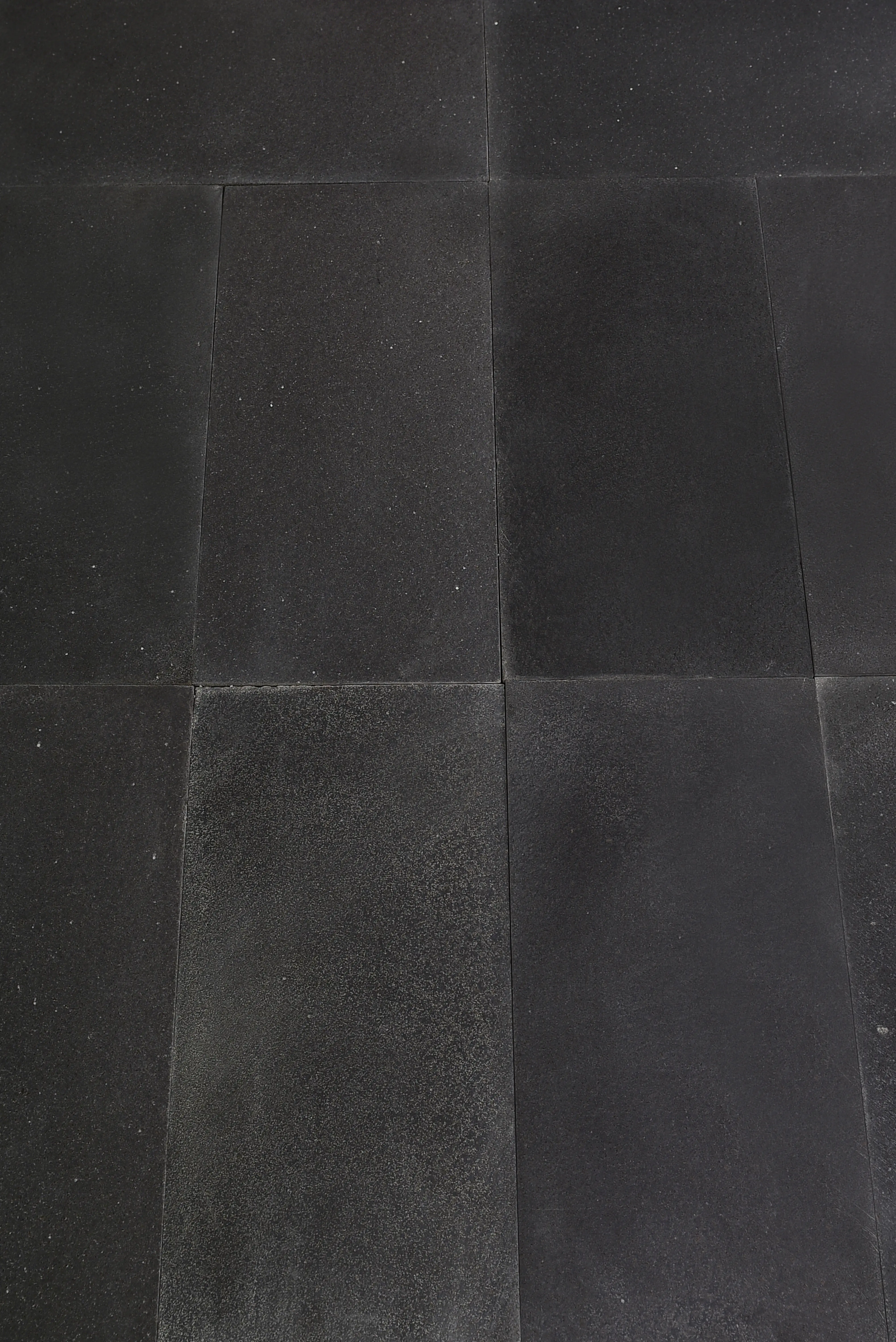
Efflorescence is the most common complaint in blue limestone troubleshooting, and it’s almost always misdiagnosed at first. That white crystalline haze forming on your slab surface isn’t damage to the stone itself — it’s soluble salts being drawn up through the pore structure by capillary action and deposited as the moisture evaporates at the surface. The source of those salts is usually the setting bed or sub-base, not the limestone.
Treating efflorescence starts with identifying whether it’s primary or secondary. Primary efflorescence appears within the first three months of installation as residual construction moisture works its way out — this typically self-resolves with surface washing and improved ventilation. Secondary efflorescence is the persistent type, driven by an ongoing moisture source beneath the stone, and it won’t stop until you address that source directly.
- Dry-brush the surface first — never wet the efflorescence before you’ve removed loose crystalline deposits mechanically
- Apply a diluted pH-neutral limestone cleaner at a 1:10 ratio, not acidic concrete cleaners which will etch the carbonate surface
- Check the mortar bed moisture content before reinstating the slab — if it’s reading above 75% RH at depth, you need to resolve the sub-base drainage before resealing
- For persistent secondary efflorescence, lifting and relaying with a breathable polymer-modified mortar bed typically resolves the cycle permanently
Surface Spalling and Edge Chipping
Spalling in blue limestone troubleshooting scenarios almost always has one of three causes: freeze-thaw cycling in saturated pores, mechanical impact at thin or unsupported edges, or acid contact from cleaning products or environmental sources. Distinguishing between them early saves significant diagnostic time. Freeze-thaw spalling produces a characteristic dish-shaped delamination from the surface face, while acid etching creates uniform surface roughening without the depth profile.
For freeze-thaw regions, your specification should have accounted for stone thickness and absorbed moisture levels before winter. The pore saturation threshold is the critical metric — limestone at or above 85% pore saturation going into a freeze cycle will generate internal pressures that exceed the material’s tensile strength. USGS geological data on limestone composition and carbonate rock formation confirms that calcium carbonate matrices in this density range are susceptible to progressive delamination when thermal cycling occurs at high moisture content.
- Immediate fix: remove spalled fragments, undercut the recess to a clean edge, fill with colour-matched hydraulic lime mortar, and feather to surface level
- For edge chipping at butt joints, epoxy stone adhesive in a colour-matched formulation can restore the profile if the chip is less than 15mm
- Medium-term: reseal the entire field with a penetrating silane-siloxane sealer rated for the stone’s tested absorption coefficient — not a topical film former
- Long-term prevention requires ensuring your installation achieves positive drainage of at least 1:80 fall across the full surface
Colour Fading and UV Exposure Effects
Here’s what most specifiers don’t factor in until they’re dealing with a complaint call: blue limestone’s characteristic steel-blue tone is partly dependent on the oxidation state of iron compounds within the matrix, and sustained UV exposure triggers photochemical bleaching that permanently shifts the surface colour toward grey-buff. This process accelerates significantly in fully exposed installations with no overhead shade — it’s not reversible through cleaning or resealing once the surface minerals have been photo-oxidised.
The UV angle in blue limestone problems and fixes is one of the least documented issues in standard specification guidance. A fresh slab from quarries in the Middle East or European sources will display that rich blue-grey tone almost immediately after installation — but without appropriate UV protection, you’ll see measurable colour shift within 18 to 36 months on south-facing fully exposed surfaces. Selecting a UV-stabilised penetrating sealer rather than a standard silicone product makes a meaningful difference to the rate of colour change.
- Reapply UV-stabilised penetrating sealer every 18–24 months on fully sun-exposed installations — not the 36-month cycle that’s common for sheltered surfaces
- A honed finish exhibits more stable colour retention under UV than a sawn finish because the refined surface is less porous and absorbs less photo-reactive moisture
- Avoid film-forming topical sealers in high-UV zones — they yellow and chalk under sustained sun exposure, creating an additional remediation task
- For installations already showing UV-driven colour shift, a mineral-based stone colour enhancer can partially restore depth, though it won’t return the stone to its original specification tone
The interaction between UV exposure and the sealing schedule is the most commonly overlooked aspect of long-term appearance retention. For deeper technical and specification support on this material, blue limestone guidance from Citadel Stone covers sealing frequency, finish selection, and sourcing considerations in detail.
Joint Failure and Sand Loss
Polymeric jointing sand failure is responsible for more blue limestone paving remediation work than almost any other single cause. The symptoms are visible and progressive: sand washout at edges, weed intrusion within 12 months, stone movement, and ultimately lippage that creates trip hazards and accelerates edge chipping. The root cause is almost always inadequate initial compaction or a polymeric sand product that wasn’t rated for the joint width being used.
Standard polymeric sand performs well in joints between 3mm and 15mm. Wider joints — common in irregular blue limestone formats — require a different binder system, typically a resin-modified compound that maintains cohesion without depending on the narrow joint geometry for structural lock. If you’re seeing sand loss in joints wider than 15mm, the product specification was wrong from the start, not the installation method.
- Remove all failed jointing material to full depth with a joint raking tool — don’t just top-dress over compromised sand
- Blow out dust and debris with compressed air before applying new material
- Select polymeric sand rated for your specific joint width — read the technical data sheet, not just the packaging
- Compact the new sand in two lifts: first pass at 50% fill depth, second at full depth, then activate per manufacturer’s instructions
- For areas with chronic joint sand loss due to surface water velocity, a mortar pointing approach using NHL 3.5 natural hydraulic lime offers superior resistance to washout
Staining: Identification and Removal
Blue limestone staining falls into four primary categories, and each requires a chemically different remediation approach. Applying the wrong treatment — especially acidic cleaners on calcium carbonate surfaces — converts a stain problem into a surface damage problem that’s significantly harder to resolve. The Britannica reference on limestone formation and characteristics helps explain why the carbonate matrix is particularly reactive to acidic cleaning agents, making product selection critical.
Your first step in any stain diagnosis is a simple water droplet test on the stained area. If the stain changes colour or contrast when wet, it’s oil-based or organic and will respond to poultice treatment. If the stain shows no change when wet, it’s likely mineral-based — rust, manganese, or calcium deposit — and requires a specific chelating agent rather than a general-purpose cleaner.
- Organic stains (algae, mould, leaf tannin): alkaline cleaner at pH 10–12, scrub, rinse, followed by biocide treatment for recurrence prevention
- Oil and grease stains: mineral spirits poultice drawn up over 24 hours with a diatomaceous earth mix, then remove and rinse
- Rust staining from steel fixings or furniture: oxalic acid formulation at 3% concentration — test on an inconspicuous area first, do not exceed contact time specified
- White calcium deposits from hard water: a pH-neutral descaler rather than vinegar or dilute acid — the acid margin of error on limestone is extremely narrow
Structural Movement and Lippage
Lippage — the height differential between adjacent slabs — above 2mm becomes a functional and safety issue rather than just an aesthetic one. In blue limestone paving, lippage develops from three main sources: thermal movement in the mortar bed, differential settling in the sub-base, or slabs that were laid with insufficient mortar contact area (typically below 80% bed coverage). Identifying which mechanism is driving the movement determines whether the fix is a targeted relay or a full-bed remediation.
Thermal movement in mortared installations gets underestimated more than almost any other variable. Blue limestone exhibits a coefficient of thermal expansion in the range of 5–8 × 10⁻⁶/°C — and across a large format slab in a sun-exposed installation, that translates to measurable dimensional change across a daily heating and cooling cycle. Installations without adequate expansion joints at perimeter restraints and intermediate control positions at 4–5m centres will accumulate stress that eventually manifests as bedding failure and lippage.
Sourcing Quality and Specification Consistency
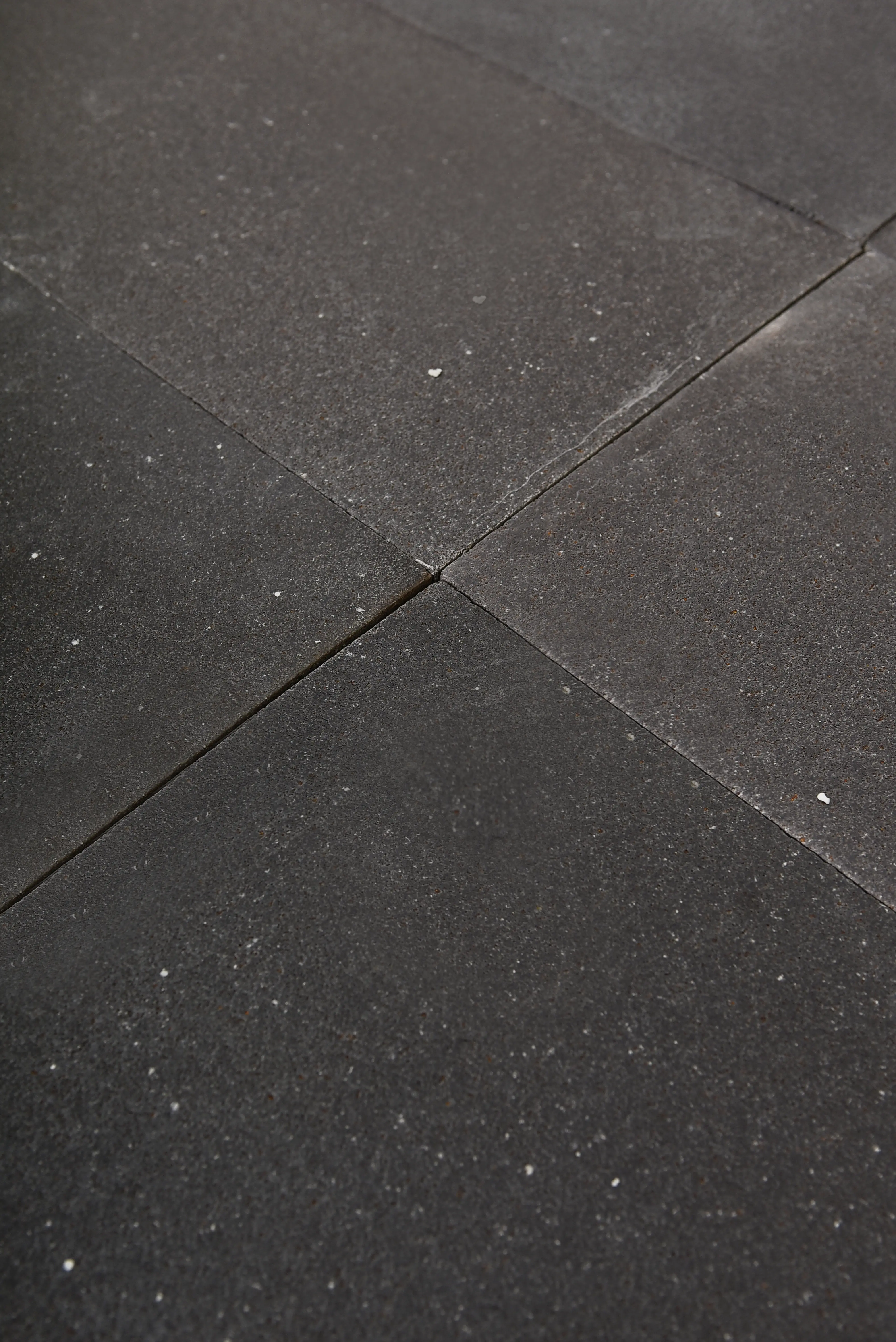
A significant proportion of blue limestone problems and fixes trace back to material variability between batches rather than any installation error. Blue limestone sourced from Middle East quarries and from European quarries carries meaningfully different density, porosity, and colour saturation characteristics — and if your project receives slabs from two different quarry sources within the same order, you’ll see finish and weathering differences that no remediation treatment will fully harmonise.
At Citadel Stone, we quality-check each consignment for thickness tolerance, surface finish consistency, and colour banding before it leaves the warehouse — because batch-to-batch variation is one of the most common causes of post-installation complaints that incorrectly get attributed to poor workmanship. Specifying blue limestone by quarry source, density grade, and finish type in your project documents — not just by colour name — is the single most effective risk reduction step available at the procurement stage. Citadel Stone ships blue limestone paving nationwide, and our team can advise on stock availability and lead times before you commit to a project programme.
- Request a calibration tolerance certificate with each delivery — thickness variation beyond ±1.5mm in 20mm nominal material creates unavoidable lippage in direct-bond installations
- Inspect the truck delivery on arrival against the approved sample — refuse slabs that show colour banding outside the agreed range before they go to site
- Keep 5–8% overage in the warehouse from the original batch to allow for breakage repair and future localised replacement with matching material
- For Irish blue limestone specifically, verify the quarry depth the stone was sourced from — shallower-bed material typically shows more colour variation and slightly lower density than deep-bed stone. Irish blue limestone sourced from deeper beds also tends to display the richer tonal consistency that specifiers and installers prefer for large-format paving runs
Parting Guidance
The majority of blue limestone problems and fixes become significantly more straightforward once you shift from symptom treatment to root-cause diagnosis. Efflorescence, staining, spalling, and colour fade all have predictable origins — and the remediation protocols described above address those origins rather than masking surface appearance temporarily. Your sealing schedule, sub-base drainage geometry, and jointing material specification are the three variables that determine whether your installation performs well over a 20–25 year service life or generates recurring maintenance calls within the first five years. For complementary hardscape specification considerations — particularly if your project includes darker paving elements alongside blue limestone — black block paving installation details covers a related dimension of natural stone driveway and paving specification worth reviewing alongside your current project scope. Uneven weathering across a blue limestone patio often points to inconsistent sealing rather than stone quality — Citadel Stone recommends a full strip-and-reseal approach in such cases.
Related reading: pavers with black border ideas · blue limestone rock geology · blue limestone types compared.