

Compressive strength tells you more about blue sandstone versus blue limestone than any catalogue description ever will — and that single data point cascades into every other specification decision you’ll make for an outdoor paving project. Blue sandstone typically registers compressive strength in the 8,000–12,000 PSI range depending on quarry source and bed orientation, while dense blue limestone commonly exceeds 14,000 PSI and can reach 18,000 PSI in tighter-grained formations. That gap matters when you’re specifying for heavy point loads, vehicular traffic, or installations where storm debris becomes a recurring impact hazard. Understanding where blue sandstone vs blue limestone diverge structurally — not just visually — puts you in a far stronger position before a single paver ships from the warehouse.
Material Origins and What Composition Means for Performance
Blue sandstone is a sedimentary rock formed from compacted quartz grains bonded by silica, iron oxide, or calcium carbonate cement. The blue-grey colouration comes from mineral content variation during deposition, and that same variation means no two quarry runs look or behave identically. The grain structure you’re working with creates a naturally textured surface that locks underfoot — which is a genuine performance advantage in wet conditions, not just a cosmetic observation.
Blue limestone, by contrast, forms from compressed marine sediment — primarily calcite and aragonite — under sustained pressure over geological timescales. The result is a denser, more uniform material with a characteristic blue-grey palette that skews cooler and more consistent across slabs. Its crystalline matrix gives it higher flexural strength than sandstone of equivalent thickness, which becomes significant when you’re specifying spans across voids, drainage channels, or cantilevered pool coping. According to NSI limestone properties and specifications, the calcite-dominant composition of limestone directly influences its absorption, abrasion resistance, and long-term surface stability.
Surface Texture, Finish Options, and Slip Resistance
Your finish selection has more structural consequence than most specifiers initially give it credit for. Blue sandstone’s granular structure means even a sawn cut retains micro-texture, which is what wet dynamic coefficient of friction testing under ANSI A326.3 is there to verify. A sawn blue sandstone surface retains useful micro-texture in wet conditions — specify against the ANSI A326.3 wet DCOF threshold (0.42) for outdoor pedestrian areas.
Blue limestone’s story is different. In its honed state, blue limestone can drop to COF values near 0.50 in wet conditions — acceptable for some applications, but a specification risk on pool decks, ramps, or any surface where drainage pooling is possible. You’ll need to specify either a flamed, bushhammered, or sandblasted finish to bring wet-condition performance up to a safe range. That finish decision also affects long-term maintenance cycles, because textured limestone surfaces hold particulate matter more readily than smooth ones and require more frequent pressure washing to maintain safe COF values over time.
- Sawn blue sandstone: useful wet texture — suitable for most outdoor applications without additional texturing
- Flamed blue limestone: coarser still — the preferred finish for pool surrounds and commercial pedestrian zones
- Honed blue limestone: noticeably smoother — acceptable only for covered or well-drained interior-grade applications
- Sandblasted blue sandstone: the most texture of the four — optimal for step treads, ramps, and high-traffic commercial entries
The finish specification is also where your climate context enters the picture. In freeze-thaw regions, a heavily textured surface — whether sandstone or limestone — retains ice longer in shaded zones, which creates a secondary slip hazard that a smooth, quick-draining surface profile sometimes avoids. It’s a trade-off you need to weigh against the wet-traction requirement.
Porosity, Water Absorption, and Long-Term Weathering
Porosity is where these two materials diverge most sharply, and it’s the variable that drives sealing schedules, jointing specifications, and long-term maintenance costs. Blue sandstone’s interconnected pore structure typically yields water absorption rates of 3–7% by weight — a meaningful range that depends heavily on whether you’re working with a tighter silica-cemented stone or a more open iron-oxide-cemented variant. High-absorption sandstone draws water into its grain matrix and, under freeze-thaw cycling, experiences internal crystallisation stress that progressively compromises the cement bond between grains.
Blue limestone from Middle East quarries typically presents absorption rates of 0.5–2.5% — denser material that moves water through surface runoff rather than absorbing it deeply. That lower absorption rate translates directly to greater resistance to freeze-thaw spalling and staining, which is why you’ll see blue limestone dominating specification lists for high-end residential projects in regions with genuine seasonal frost. The geological composition behind this difference is well-documented in USGS data on limestone formation and composition, which confirms the calcite matrix’s role in limiting pore connectivity compared to sandstone’s granular bonding structure.
- Blue sandstone absorption 3–7%: requires penetrating sealer application every 12–18 months in exposed conditions
- Blue limestone absorption 0.5–2.5%: sealer reapplication cycle typically extends to 24–36 months
- High-absorption sandstone in freeze-thaw regions: specify minimum 1.25-inch thickness to provide adequate material mass against spalling pressure
- Blue limestone in salt-exposure environments: check calcium carbonate reactivity with de-icing salts before specifying for areas where road salt is commonly applied
Structural Performance Under Wind Load and Storm Conditions
Storm events and sustained wind loads test jointing systems and edge restraints in ways that static load calculations don’t fully capture. Wind-driven rain carries particulate that works into joints over time, and the mechanical pressure of gusting wind against exposed paving edges — particularly on elevated terraces, pool decks, and roof terraces — creates lateral stress that your edge restraint specification must address regardless of which material you choose.
Blue limestone’s higher density — typically 165–170 lbs/ft³ versus blue sandstone’s 140–150 lbs/ft³ — gives it better resistance to displacement under wind uplift conditions when pavers are dry-laid over compacted aggregate. The additional mass keeps individual units in contact with their bedding layer under negative pressure events — a detail that matters on open, elevated sites. For thin-format blue sandstone (under 1.25 inches), wind uplift risk is significant enough that a mortar-bedded installation becomes the safer specification rather than a dry-laid one.
- Elevated terraces: specify mortar-bedded installation for blue sandstone under 30mm nominal thickness regardless of wind exposure rating
- Edge restraint for dry-laid blue limestone: steel or concrete edging pinned at 18-inch centres holds density advantage against lateral wind force
- Joint integrity under wind-driven rain: specify polymer-modified joint sand for all blue sandstone versus blue limestone dry-laid installations — standard kiln-dried sand migrates under sustained directional wind exposure
- Hail impact resistance: blue limestone’s denser crystalline structure resists surface pitting from hail impact better than open-grained sandstone — a relevant consideration for exposed horizontal surfaces in storm-prone regions
- Impact from storm debris: blue sandstone’s quartz grain matrix is less prone to sharp-edged fracture on impact than limestone, which can develop clean cleavage lines under concentrated blows
Your edge restraint specification also determines how joint sand migrates over the installation’s life. In any situation where wind-driven rain is a recurring event, joints that lose sand progressively undermine the bedding layer’s lateral support — which accelerates differential settlement. Polymer-modified sand, installed and vibrated to 95% joint capacity at initial installation, holds its position under these conditions far better than conventional kiln-dried alternatives.
Thickness Specification and Load-Bearing Requirements
Specifying the right thickness for blue sandstone versus blue limestone pavers isn’t a simple chart lookup — it’s a calculation that combines the material’s flexural strength, your expected point loads, and the bedding system you’re using. Blue limestone’s higher flexural strength means you can often achieve equivalent load performance with a thinner slab, which has real implications for logistics: lighter slabs, lower truck freight costs per square foot, and easier field handling.
A 30mm (1.18-inch) blue limestone slab over a well-compacted 4-inch aggregate base handles residential pedestrian loads comfortably, with adequate reserve for occasional vehicle overhang on driveway borders. Achieving equivalent performance with blue sandstone typically requires stepping up to 40mm (1.57 inches) — a 25% mass increase that adds up over large-format installations. Your truck delivery tonnage calculation needs to account for this, because the difference between 30mm and 40mm material across a 2,000-square-foot project area is a meaningful weight delta that affects freight scheduling.
- Pedestrian-only residential patio: 30mm blue limestone or 40mm blue sandstone over 4-inch compacted aggregate
- Pool deck with occasional maintenance vehicle access: 40mm blue limestone or 50mm blue sandstone over 6-inch aggregate
- Driveway border or vehicular-rated zone: 50mm blue limestone minimum — blue sandstone not typically recommended for repeated axle-load zones
- Roof terrace or structural deck overlay: consult structural engineer — neither material is self-supporting across spans without adequate substrate
Colour Consistency, Aesthetic Variation, and Project Matching
Colour consistency is the specification variable that generates the most post-installation client complaints — and it’s one area where blue sandstone and blue limestone behave very differently from each other. Blue sandstone’s banded iron-oxide and mineral variations mean you’ll see warm brown undertones, rust veining, and tonal variation from slab to slab within the same quarry batch. That variation reads beautifully in informal garden settings and traditional landscape schemes, but it requires active layout management on-site: dry-laying and blending from multiple packs before committing to mortar or bedding.
Blue limestone presents a markedly different palette — cooler, more consistent blue-grey tones with subtle fossil patterning that adds visual interest without dramatic colour swings between adjacent units. Selected quarries from the Middle East produce blue limestone with exceptional colour uniformity within production batches, making it the preferred choice for contemporary minimalist designs, commercial plazas, and formal garden layouts where tonal consistency across large areas matters. USGS dimension stone research confirms that limestone’s tighter mineral composition directly contributes to this lower colour variance compared to sandstone’s more heterogeneous grain chemistry.
Your design intent determines which characteristic is an advantage. For a naturalistic cottage garden pathway with plantings bleeding into the paving edges, blue sandstone’s tonal variation feels appropriate and intentional. For a seamless pool deck that frames a reflective water feature, blue limestone’s consistency delivers the clean visual result the design requires. Knowing which story the project is telling before the order is placed is the decision that separates a smooth installation from a costly remediation.
Base Preparation and Installation Variables for Both Materials
The base system under your paving is where most long-term failures originate — and blue sandstone versus blue limestone have different sensitivities to base movement. Blue sandstone, with its higher absorption and granular matrix, is more sensitive to differential settlement caused by base moisture variation. If your sub-base contains clay pockets or poor drainage geometry, blue sandstone will telegraph that movement as lippage within the first two freeze-thaw cycles. Clean crushed aggregate with a well-graded particle size distribution and positive drainage fall throughout the sub-base — not just at the surface — is non-negotiable for all natural stone paving systems.
Blue limestone tolerates minor differential settlement better due to its higher density and lower absorption, but its crystalline structure means it’s less forgiving of point stress from poorly bedded spots. Any void beneath a blue limestone slab becomes a stress concentration point under impact load — storm debris, dropped equipment, or recreational impact can cause a clean fracture across the slab face if full contact with the bedding layer isn’t achieved. Full-coverage mortar bedding or screeded sand-cement semi-dry bed installation, rather than spot bedding, is the correct approach for both materials in demanding applications. For blue sandstone paving and blue limestone pavers, you should explore Citadel Stone paving stone options to compare thickness grades and finish specifications before finalising your base design.
- Sub-base depth: minimum 4 inches compacted crushed aggregate for pedestrian applications, 6–8 inches for mixed or vehicular use
- Bedding layer: 1-inch screeded grit sand or semi-dry sand-cement (6:1 mix) for full coverage contact
- Drainage fall: minimum 1:80 gradient away from structures — increase to 1:60 for high-absorption blue sandstone in wet climates
- Thermal expansion joints: every 12–15 linear feet for blue limestone, every 10–12 feet for blue sandstone in exposed installations
- Joint width: 8–12mm for natural stone outdoor paving — allows for thermal movement without unit contact under peak summer temperatures
Maintenance, Sealing Protocols, and Long-Term Care
Your long-term maintenance commitment differs meaningfully between these two materials, and setting that expectation accurately at specification stage prevents costly misalignment with clients or building owners. Blue sandstone’s higher porosity means an initial penetrating sealer application is non-negotiable — applying it within 28 days of installation, once any residual moisture from the bedding system has fully dried, locks the surface against early staining from organic material, iron run-off from adjacent metalwork, and oil transfer from foot traffic. Skipping that first application is the single most common cause of permanent staining complaints on blue sandstone installations.
Blue limestone’s lower absorption means a penetrating sealer still adds meaningful protection — particularly against acid-based cleaning products that attack calcite — but the first application deadline is less critical. A broader installation window of 60–90 days is available before surface exposure creates meaningful contamination risk on a dense blue limestone surface. Reapplication cycles also differ: plan for annual assessment and biennial resealing on blue sandstone in exposed conditions, versus a more relaxed 3-year cycle for dense blue limestone. Both materials benefit from ph-neutral cleaning products exclusively — avoid anything acid-based on limestone and anything alkaline-heavy on sandstone without testing a small hidden area first. The Natural Stone Institute’s technical guidance on natural stone paving durability standards provides the industry framework for sealer selection and maintenance scheduling that professional specifiers reference when writing maintenance specifications.
- Blue sandstone initial seal: penetrating silane-siloxane sealer, applied within 28 days of installation on fully dried surface
- Blue limestone initial seal: penetrating impregnator, apply within 60–90 days — check manufacturer data for calcite-compatible formulation
- Annual maintenance: ph-neutral stone cleaner, low-pressure wash at 1,000–1,500 PSI maximum — higher pressure erodes joint sand and opens surface pores
- Resealing triggers: water absorption test — if surface absorbs a few drops within 60 seconds rather than beading, resealing is due regardless of the calendar schedule
Ordering, Logistics, and Project Planning Considerations
Your project timeline needs to account for material availability, warehouse stock levels, and truck delivery constraints that differ between blue sandstone and blue limestone. Blue limestone from Middle East quarries is a consistently high-volume product with predictable warehouse stock cycles — lead times from confirmed order to site delivery typically run 1–3 weeks when stock is available in country. Blue sandstone availability varies more by season and batch, with some colour profiles carrying 8–12 week import lead times if warehouse stock is depleted.
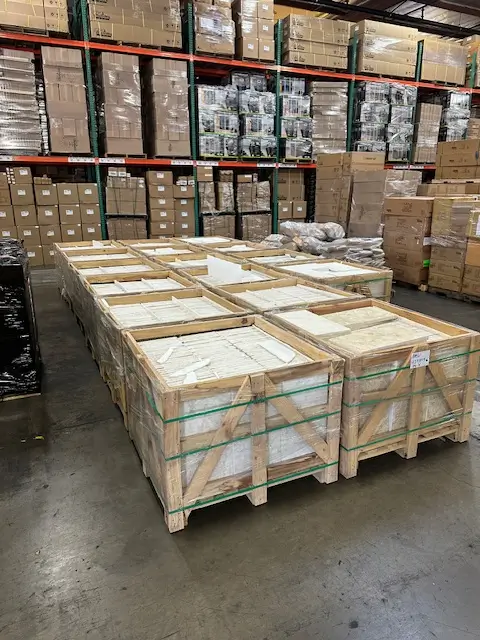
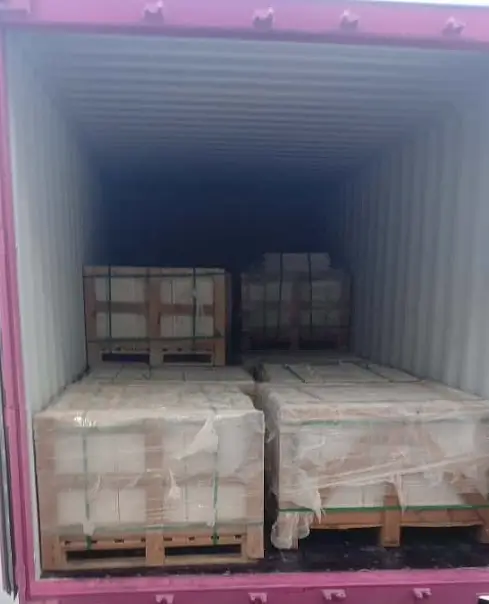
At Citadel Stone, we maintain ongoing warehouse inventory of both materials in multiple thickness grades, which means specifiers can confirm stock availability before locking in project milestone dates rather than working on assumed lead times. Ordering 10–15% overage on blue sandstone is standard practice — colour matching replacement units from a second batch is notoriously difficult given the tonal variation inherent in the material. Blue limestone replacement matching is more reliable, but ordering an overage buffer is still recommended for any project that may require future repairs. Your truck delivery access also shapes order size: full-pallet loads on a flat-bed truck are the most cost-efficient delivery format for both materials, but narrow site access may require smaller split deliveries that affect per-unit freight cost.
- Order overage — blue sandstone: 12–15% above net area requirement for colour matching and cut waste
- Order overage — blue limestone: 8–10% above net area requirement
- Truck access check: confirm minimum 10-foot clearance width and load bearing for the delivery vehicle before scheduling — warehouse pallets for natural stone typically run 2,200–3,300 lbs each
- Batch consistency: request the same quarry batch reference for all material on a single project — split batch deliveries are the leading cause of tonal mismatch complaints
Making the Right Call: Blue Sandstone vs Blue Limestone
The blue sandstone vs blue limestone decision ultimately comes down to three intersecting factors: the structural demand of your application, your slip-resistance requirements, and your tolerance for maintenance commitment. Blue limestone wins on density, compressive strength, colour consistency, and lower absorption — making it the default choice for pool decks, formal terraces, and any project where performance margin and visual uniformity both matter. Blue sandstone earns its place in naturalistic settings, traditional landscape schemes, and applications where its inherent surface texture provides slip resistance without requiring a specialised finish treatment. Both materials perform reliably when base preparation, jointing, and sealing specifications are executed correctly — and both underperform when those foundational details are rushed or value-engineered away. As you plan the broader scope of your hardscape project, it’s worth noting that other natural stone formats can complement either paving choice — exploring Yorkshire stone slab characteristics and uses provides useful context on how traditional sedimentary stone formats perform across comparable applications. Where pool surrounds demand slip resistance, blue sandstone’s grainy texture often outperforms blue limestone’s smoother face — a distinction Citadel Stone helps specifiers navigate.
Related reading: blue limestone rock geology · blue limestone types compared.