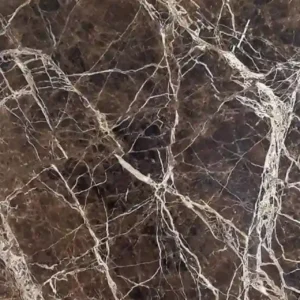
Pricing momentum in the wholesale marble slabs market shifts faster than most buyers anticipate — and the gap between a good bulk deal and an overpriced one often comes down to specification detail, not negotiation skill. Understanding how slab grading, thickness tolerances, bundle composition, and logistical lead times interact gives you genuine leverage when you’re sourcing wholesale marble slabs at volume. Most buyers focus on the per-square-foot number and miss the three or four variables that determine whether that number actually holds through delivery and installation.
How Wholesale Marble Slab Pricing Actually Works
The unit price you see on a wholesale quote rarely tells the full story. Slab dimensions, bundle configurations, and freight terms all affect your true landed cost. A $28-per-square-foot quote on 120″ × 65″ slabs from Middle East quarries looks compelling until you realize the bundle contains a 15% mix of narrower offcuts that don’t work for your counter runs.
Here’s what most buyers miss: wholesale pricing tiers are typically structured around container volumes, not square footage alone. A full 20-foot container holds roughly 350–450 square feet of 3 cm slab depending on slab size and bundle density. Dropping below that threshold — say, ordering 200 square feet — often means you’re paying a less-favorable blended rate even if the quoted price looks similar. Your purchasing decision should account for this container math before you commit.
- Standard bundle sizes range from 180 to 260 square feet per bundle for most slab formats
- Price breaks typically occur at full-bundle, half-container, and full-container thresholds
- FOB versus CIF pricing can shift your landed cost by 8–14% depending on origin and port destination
- Currency fluctuation clauses in international purchase agreements can affect final invoice by 3–6%
- Quarry-direct pricing versus distributor-held inventory carry different lead time profiles
Slab Grading: What the Letters Mean in Practice
Grade A, Grade B, and Commercial Grade classifications sound straightforward until you’re standing in a warehouse reviewing actual slabs. The grading thresholds vary by origin country, quarry operator, and even the individual production batch. What a Middle East quarry calls Grade A may include veining density and shade variation that a European quarry would classify as Grade B — and both are technically within industry tolerance.
Your specification should define grading criteria in measurable terms, not just letter grades. According to NSI marble grades and technical specifications, dimension stone classification considers absorption, density, compressive strength, and abrasion resistance — not just visual consistency. When sourcing wholesale marble slabs for high-visibility applications like feature walls or countertops, requesting the corresponding ASTM test data alongside the grade designation protects you from ambiguity.
- Grade A: minimal pitting, consistent veining, tight color range — suitable for polished countertop and vanity applications
- Grade B: minor natural fissures and shade variation — acceptable for flooring, wall cladding, and less critical applications
- Commercial Grade: includes more pronounced natural movement and possible filled repairs — appropriate for high-use floor fields where variation reads as character
- Always request photographic slab documentation before committing to large wholesale volumes
- Lot consistency matters more than grade for large-run projects — two Grade A lots from different production runs can show significant shade shift
At Citadel Stone, we inspect slab bundles for lot consistency before they leave our warehouse, which means you’re not discovering shade mismatches after a truck has delivered to your jobsite. That quality checkpoint — comparing bundle-to-bundle within the same order — is where we add value that a simple price comparison doesn’t capture.
Thickness Selection: 2 cm Versus 3 cm for Your Application
Thickness choice in wholesale marble slabs isn’t just a structural question — it’s a specification decision that affects fabrication yield, shipping weight, and total project cost simultaneously. The 2 cm format weighs roughly 12–13 pounds per square foot, while 3 cm comes in at 18–19 pounds per square foot. That difference becomes significant when you’re calculating truck payload capacity for large delivery volumes or when your installation substrate has load constraints.
For countertop and vanity applications, 3 cm is the standard that eliminates the need for lamination. With 2 cm slabs, fabricators typically laminate a mitered edge strip to achieve the visual depth of a thicker slab — adding both labor cost and a seam risk at the edge profile. For flooring and wall cladding, 2 cm often performs identically to 3 cm when the substrate is properly prepared, and the weight savings simplify installation logistics considerably.
- 3 cm slab: countertops, vanities, exterior cladding subject to impact loading
- 2 cm slab: interior flooring, wall tile, lightweight cladding on engineered substrates
- 1.2 cm format: growing in availability for ultra-lightweight wall applications and furniture fabrication
- Thickness tolerance: verify ± 1 mm tolerance across the slab face — inconsistency causes lippage during installation
- Rectified versus natural-edge slabs: rectified slabs simplify bookmatching but add processing cost to the wholesale price
Sourcing Channels: Direct Quarry Versus Distributor Inventory
The decision between quarry-direct purchasing and distributor-held wholesale marble slabs involves trade-offs that don’t resolve cleanly in either direction. Direct quarry procurement through selected quarries from the Middle East or European sources offers the lowest per-unit cost and access to custom lot specifications — but lead times of 10–16 weeks are standard, and minimum order quantities typically start at full-container volumes. That timeline works for phased commercial projects but rarely suits residential schedules.
Distributor-held inventory at a domestic warehouse compresses your lead time to days rather than months. You trade some per-unit savings for schedule certainty, which on a fast-moving project is often the correct economic decision. The break-even point depends on your carrying cost of capital, project buffer time, and the premium the distributor charges over direct-import pricing — typically 12–22% for domestic-warehouse sourcing.
For the sourcing detail on specific marble varieties and thickness configurations currently in stock, Citadel Stone marble sourcing provides current inventory and specification data across multiple marble families. Verifying warehouse stock levels before finalizing your project schedule is a step that prevents the most common sourcing-related delays.
Thermal Cycling and Freeze-Thaw Performance in Marble
Marble’s thermal expansion coefficient sits at approximately 7.3 × 10⁻⁶ per °F — a figure that matters significantly when specifying wholesale marble slabs for exterior applications in regions where temperature swings between day and night exceed 40°F. That kind of thermal cycling, common in continental climates and high-elevation sites, creates cumulative micro-stress at joints and adhesive interfaces that compounds over years rather than appearing immediately.
Freeze-thaw cycling introduces a separate but related risk. Marble’s water absorption rate, typically 0.1–0.4% for dense Carrara-type material, remains low enough for most exterior applications — but the joint material between slabs absorbs at much higher rates. When that joint material saturates and freezes, the expansive pressure (roughly 2,000 PSI from ice formation) works against the slab edge rather than the slab face. Your expansion joint specification should account for a minimum coefficient of 1/8″ per 10 linear feet for exterior marble installations subject to meaningful freeze-thaw cycles.
According to ASTM C503 marble building stone specification, exterior-grade marble must meet minimum compressive strength, absorption, and flexural strength thresholds specifically designed to predict performance under cyclic loading. Requesting the C503 compliance certificate from your wholesale supplier is a standard quality gate that separates field-proven material from specification risk.
- Day-night temperature swings above 35°F: increase expansion joint frequency by 20–25%
- Freeze-thaw regions: specify joint sealants with Shore A hardness between 25–35 for adequate elasticity
- Exterior floor slabs: slope specification of 1/8″ per foot minimum prevents water pooling at joints
- Honed finishes perform better than polished in freeze-thaw environments — micro-texture reduces ice-adhesion shear stress
- Resealing exterior marble every 18–24 months maintains the moisture barrier that limits freeze-thaw infiltration
Bundle Inspection: What to Verify Before You Accept Delivery
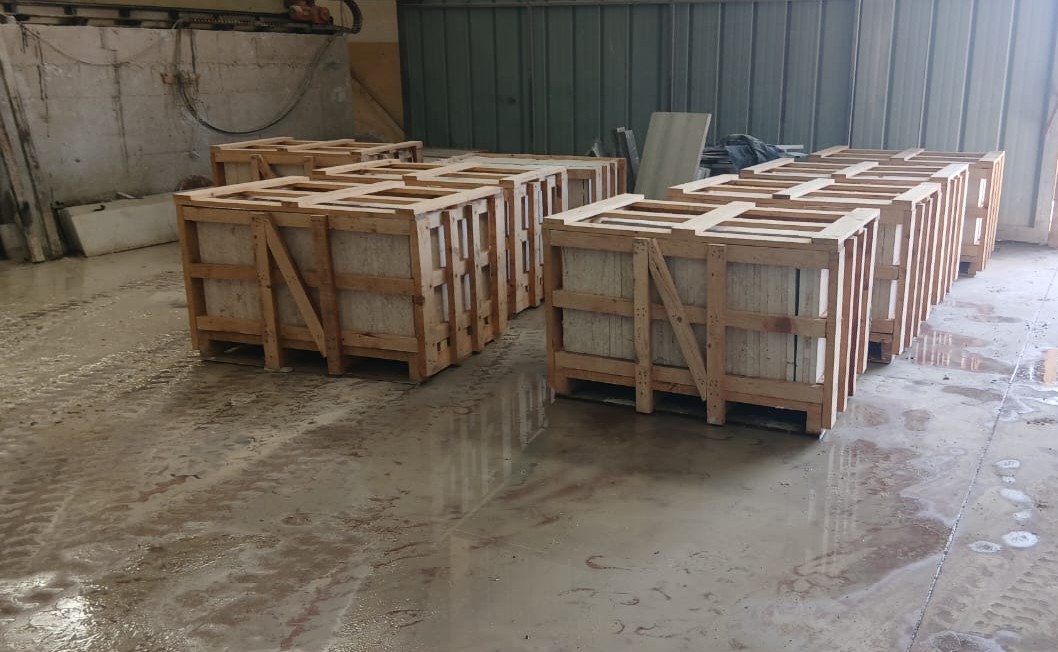
Accepting a wholesale marble slab delivery without a structured inspection protocol is how projects absorb material losses that no one planned for. The percentage of slabs with pre-existing cracks, corner chips, or surface defects in a typical wholesale bundle ranges from 3–8% — and without documentation at delivery, that loss becomes your cost rather than the supplier’s.
Your inspection checklist should work through each slab systematically. Flex testing — applying light hand pressure to the midspan of each slab while it’s in the A-frame rack — identifies through-cracks that visual inspection misses in polished material. Any slab that deflects or produces a dull thud rather than a clear ring should be flagged immediately before the truck leaves your facility. Documenting with photographs tied to specific bundle positions creates the evidence trail needed for credit claims.
- Check diagonal corners for impact chips that occur during crating and transit
- Verify finish consistency across the full slab face under raking light — polished surfaces show processing scratches under oblique illumination
- Measure thickness at four points per slab — center and three edges — to confirm ± 1 mm tolerance compliance
- Confirm shade consistency against your approved sample before the truck is released
- Document any natural fissures with their location and approximate length for fabricator awareness
- Count total pieces and calculate actual square footage against the packing list — bundle overage and shortage both occur in wholesale shipments
Lead Times and Project Scheduling for Bulk Marble Orders
The single most expensive mistake in wholesale marble procurement is treating lead time as a buffer rather than a hard constraint. Domestic warehouse inventory ships in 3–7 business days under standard logistics conditions. Import orders from Middle East quarries or European sources require 10–18 weeks from confirmed purchase order to warehouse receipt — and that timeline assumes no port congestion, customs holds, or production delays at the quarry level.
Your project schedule should build backward from the installation window, not forward from the purchase order date. Factor in fabrication time after slab delivery — 2–4 weeks for countertop fabrication in typical production queues — and you’ll often find that an import order needs to be placed before design drawings are finalized. That’s not unusual; it’s the reality of working with natural stone at wholesale volumes.
Citadel Stone maintains standing inventory of core marble families in our warehouse, which compresses the sourcing timeline for standard specifications to within the same week. For custom lot orders requiring specific quarry selection from Middle East quarries, our technical team coordinates directly with the source to manage production scheduling against your project milestones.
- Domestic warehouse stock: 3–7 business days to ship, depending on freight mode
- Import direct: 10–18 weeks from confirmed PO, with 2–3 weeks of variance typical
- Fabrication queue time: add 2–4 weeks for countertop and custom profiles post-delivery
- Always confirm warehouse stock levels in writing — verbal availability confirmations don’t prevent inventory from being allocated to another order
- Build a 2-week material float into your schedule for any wholesale marble slab order — natural stone production variability makes this a practical necessity
Working with Marble Wholesale Suppliers: What to Ask
The quality of your sourcing relationship with marble wholesale suppliers determines more than just pricing — it affects lot consistency, shade matching across re-orders, and responsiveness when something goes wrong mid-project. Suppliers who can answer specific technical questions without hesitation are demonstrating operational knowledge; those who redirect every technical query to a sales sheet are showing you the limits of their expertise.
Your first conversation with any marble wholesale suppliers should include questions about their quality control process between quarry and warehouse, their return and credit policy for defective material, and their lot-matching capability for phased projects. A supplier who can’t guarantee lot consistency across a split delivery spanning two months is a genuine risk for large commercial projects where shade continuity matters.
According to NSI fabrication standards and certification, professional-grade stone suppliers follow documented quality and fabrication protocols that go well beyond basic dimensional checks. Asking your supplier which certifications or standards their operation aligns with gives you meaningful signal about their operational discipline.
- Ask for the origin quarry name and region — vague answers suggest the supplier doesn’t have direct quarry relationships
- Request ASTM test certificates for the specific lot you’re purchasing, not generic product data sheets
- Confirm whether the supplier holds bonded insurance on material in transit — this affects your risk exposure during delivery
- Clarify whether pricing is fixed at order confirmation or subject to adjustment at time of shipping
- Establish the process for re-ordering from the same lot if additional material is needed — some wholesale operations can match lots for up to 90 days, others cannot
Final Considerations for Wholesale Marble Slabs
Buying wholesale marble slabs successfully comes down to compressing the gap between what a quote promises and what arrives on your jobsite. The buyers who consistently get strong outcomes — material that matches approved samples, arrives on schedule, and performs across its intended lifespan — are the ones who treat sourcing as a specification exercise rather than a price-comparison exercise. They define grading criteria in measurable terms, verify thickness tolerances at delivery, build realistic lead times into their project schedules, and maintain a running quality log across their supplier relationships.
The thermal and freeze-thaw performance considerations covered earlier aren’t peripheral details — for any exterior application in a climate with meaningful temperature cycling, they belong in the specification document from the first draft. Getting joint spacing, sealant selection, and surface finish right at the specification stage costs nothing; correcting those decisions after installation costs significantly. The same discipline applies to your sourcing decisions: defining what you need precisely, confirming it in writing, and verifying it at delivery creates a repeatable process that scales across projects.
As you build out your natural stone sourcing strategy, related material decisions can inform how you think about value and performance across different applications. how discount stone pricing actually works is worth reviewing alongside your wholesale marble evaluation — understanding where real savings come from, versus where corner-cutting shows up later, applies directly to any natural stone purchase at volume. Marble slabs from Citadel Stone arrive in standard two-centimeter and three-centimeter thicknesses to suit both counters and vanities.
Related reading: Choosing Slate Slabs: Flooring, Hearths & Paving · Natural Stone Paving Slab Cost: What Drives Price · Buying Used Marble Slabs: Spot Hidden Damage First.