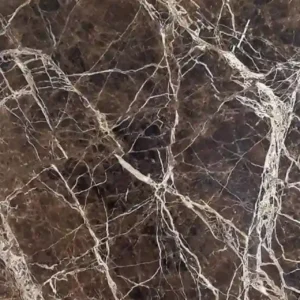
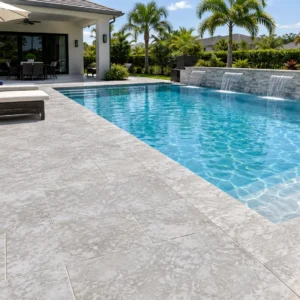
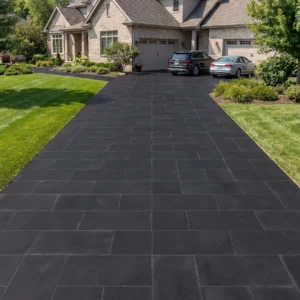
The veining pattern is the single most reliable field indicator separating Carrara vs Calacatta marble slabs — but it’s far from the only specification variable that matters once you’re deep into a project. Carrara runs cooler, with fine grey veining distributed across a white-to-blue-grey ground, while Calacatta delivers bold, sweeping veins on a whiter, creamier background. What most specifiers undervalue is how dramatically each marble behaves differently under long-term UV exposure in sun-drenched installations, and how that distinction compounds over a ten-year maintenance cycle.
Visual Character: Ground Color and Veining Explained
Your first specification decision comes down to ground color and vein drama. Carrara marble presents a blue-white to mid-grey background with feathery, linear grey veins that read as quiet elegance — sophisticated without demanding attention. Calacatta, by contrast, tends toward a brighter, almost pure white ground with thick, irregular veins that shift from gold to deep grey. The two marbles are often confused in photographs, but side by side on a warehouse slab rack, the difference is immediate and unmistakable.
Here’s what often gets overlooked in the selection phase: Calacatta veining is far less predictable across a run of slabs. You can order thirty slabs and see significant variation from the first to the last. Carrara’s veining, while variable, moves within a narrower visual range, which makes large continuous installations — think floor-to-ceiling wall cladding or expansive countertops — easier to control aesthetically without book-matching every single slab. For projects requiring consistent field coverage, Carrara marble slabs for sale at comparable grades will almost always deliver tighter lot-to-lot matching than equivalent Calacatta.
- Carrara ground color: blue-white to soft mid-grey, consistent across most grades
- Calacatta ground color: bright white to warm cream, often with golden undertones
- Carrara veins: fine, feathery, predominantly grey, relatively uniform distribution
- Calacatta veins: bold, sweeping, irregular, ranging from pale grey to deep charcoal with gold accents
- Calacatta slab-to-slab variation: high — book-matching and sequential selection strongly recommended
- Carrara slab-to-slab variation: moderate — easier to match in large field installations
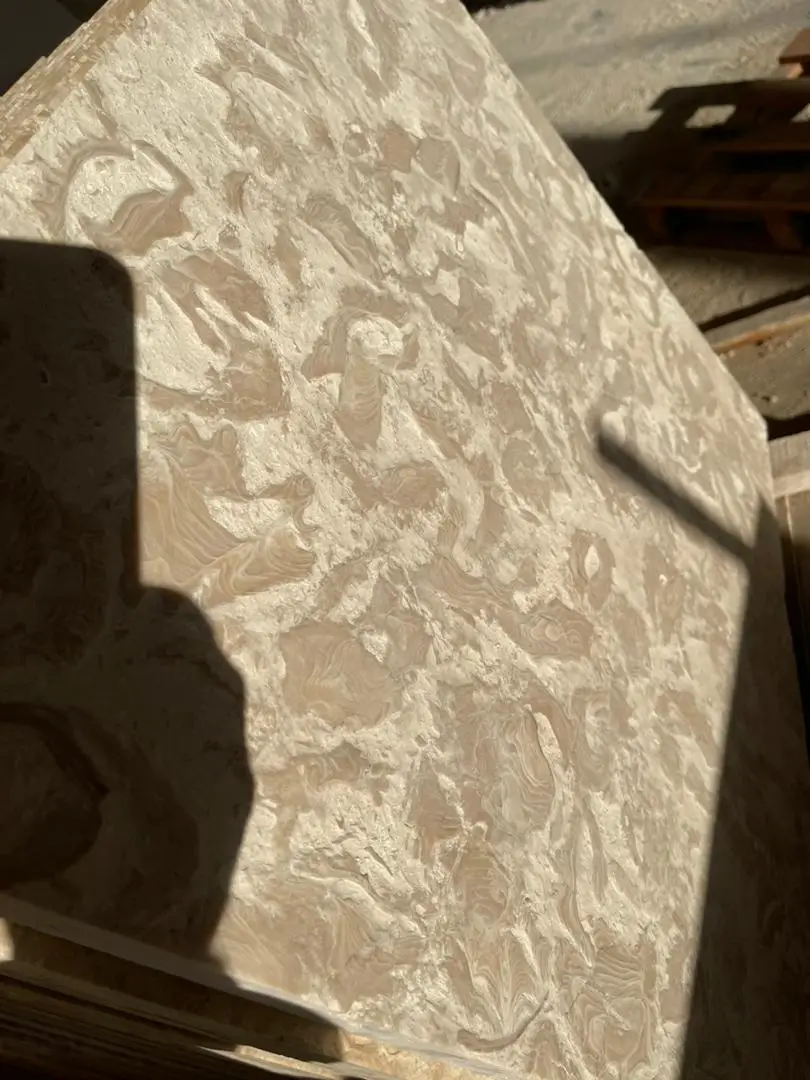
Origin, Quarry Geology, and What It Means for Your Slab
Both marbles originate from the Apuan Alps in the Tuscany region of Italy — geographically close enough that they share similar metamorphic origins, yet geologically distinct enough to produce markedly different aesthetics and physical properties. Carrara marble has been quarried continuously for over two thousand years, supplying sculptors, architects, and builders across the ancient and modern worlds. The sheer volume of Carrara extraction means supply consistency is far higher than Calacatta, and that directly affects pricing, warehouse availability, and lead time.
Calacatta comes from more restricted quarry zones within the same mountain range, with far lower yield per extraction cycle. The rarity isn’t marketing — it’s geological. The specific mineral conditions that produce Calacatta’s bright white ground and dramatic veining occur in limited seams, and those seams don’t produce commercial volumes consistently. This is why Calacatta commands a price premium that can run two to five times Carrara pricing for comparable slab dimensions and finish. According to NSI marble grade specifications, veining intensity and ground brightness are primary grading factors that directly correlate with rarity and value in Italian marble.
At Citadel Stone, we source both materials with direct attention to quarry documentation and grade certification — because the market carries a significant volume of misrepresented Carrara sold as Calacatta, particularly in lower-cost slab lines. Your specification should always request quarry certificates and cross-reference slab characteristics against verified grade standards before committing to a large purchase.
Physical Properties and Performance Data
The geological similarity between these two marbles means their physical performance data occupies overlapping ranges — but the differences matter in demanding applications. Both are calcium carbonate-based metamorphic stones, making them susceptible to acid etching from citrus, vinegar, and even carbonated water. You’ll need to specify an appropriate penetrating sealer regardless of which marble you select, but the porosity profiles diverge in ways that affect sealing frequency and product selection.
- Compressive strength: Carrara averages 13,000–17,000 PSI; Calacatta ranges similarly but varies with vein density
- Water absorption: both typically fall below 0.5% for A-grade slabs — confirm with supplier test data
- Flexural strength: Calacatta’s bold veining creates micro-structural discontinuities that can reduce modulus of rupture in vein-heavy zones — factor this into countertop overhang calculations
- Hardness: Mohs 3–4 for both — significantly softer than granite, requiring traffic management in high-wear installations
- Thermal expansion: approximately 5 × 10⁻⁶ per °F — expansion joints remain mandatory in exterior applications
- Acid sensitivity: both etch readily at pH below 5.5 — kitchen countertop applications require explicit client education
The ASTM C503 marble building stone specification sets minimum physical thresholds covering compressive strength, absorption, and flexural strength — use it as your baseline acceptance criteria when reviewing slab test documentation from any supplier.
UV Exposure, Color Retention, and Exterior Use Considerations
Specifying Carrara vs Calacatta marble slabs for sun-exposed exterior applications requires a different decision framework than interior use. UV radiation acts on the calcium carbonate matrix and any organic mineral inclusions in the stone, causing progressive color shift over years rather than months. Carrara’s cooler grey ground tends to weather toward a slightly warmer, yellowed tone under prolonged direct sun — subtle, but visible after five or more years without resealing. Calacatta’s bright white ground is more vulnerable to this yellowing effect, particularly in slabs with higher resin content used during fabrication to stabilize open veining.
Finish selection plays a critical role in UV resilience. A honed finish on exterior Calacatta reduces surface gloss degradation, which is one of the more noticeable early signs of UV damage — polished surfaces lose their reflectance as the crystalline surface layer microscopically degrades. For outdoor wall cladding or terraced paving in high-UV zones, a brushed or leathered finish also performs better long-term because it starts with a matte character that doesn’t register UV-driven dulling the way a mirror-polished surface does.
- Penetrating impregnating sealers (silane-siloxane based) outperform topical sealers in UV-exposed applications
- Resealing schedule for exterior marble: every 18–24 months in high-UV climates, annually for pool surrounds
- Calacatta slabs with resin-filled veins require UV-stable resin or they’ll yellow at vein lines within 2–3 seasons outdoors
- Carrara’s grey veining masks early UV-driven discoloration better than Calacatta’s contrasting dark veins on white ground
- Avoid solvent-based topical sealers outdoors — they trap moisture and accelerate surface spalling under thermal cycling
Finish Options and Application Suitability
Your finish decision shapes how each marble performs across its installed life. Polished Calacatta is the canonical interior luxury surface — countertops, feature walls, bathroom vanities — and the reflective surface amplifies that bold veining into something genuinely dramatic. But polished marble in wet or food-preparation environments demands explicit client acknowledgment of maintenance requirements, because etching on a polished surface is immediately visible as a dull patch against the surrounding mirror finish.
Honed finishes on both Carrara and Calacatta deliver better practical performance in most residential and commercial applications. The matte surface hides minor etching between maintenance cycles, and its coefficient of friction increases meaningfully — relevant for bathroom floors and any installation where wet-surface slip risk is a real factor. For exterior Carrara marble slabs used as paving or terrace cladding, a bush-hammered or flamed finish provides reliable grip and reduces the surface area exposed to direct UV radiation per square inch.
- Polished: maximum visual drama, highest maintenance, interior-specific recommendation
- Honed: practical daily performance, forgiving of etching, works indoors and in sheltered exteriors
- Brushed/leathered: tactile texture, superior UV resilience, excellent for feature walls and exterior cladding
- Bush-hammered: aggressive texture, best slip resistance, exterior hardscape applications
- Flamed: thermal-processed surface, not appropriate for marble — reserve for granite
Pricing, Availability, and Lead Times
The price differential between these two materials is real, significant, and worth building into your project budget early. Carrara marble slabs in 2cm polished grade run considerably below Calacatta equivalents — expect to pay a premium of 150–400% for matched Calacatta slabs depending on vein character, slab size, and current quarry output. Large slabs (120″ × 60″ and above) in Calacatta with premium veining can trade at prices that make project managers revisit the spec entirely. When evaluating antique marble slabs for sale alongside current quarry stock, that same premium dynamic applies — antique Calacatta panels from reclaimed sources typically command even higher margins due to their scarcity and provenance documentation requirements.
Warehouse availability also diverges sharply. Carrara maintains strong inventory levels at most national stone distributors because quarry output is higher and demand is broad. You can view our Calacatta and Carrara slabs to check current stock and slab dimensions before finalizing your material quantities. Calacatta, by contrast, moves in tighter supply cycles — when a quality run arrives, it tends to sell quickly among competing projects. Your timeline should build in a minimum 4–6 week buffer for Calacatta procurement, with contingency for a second sourcing attempt if your preferred slabs are allocated before your project reaches commitment stage.
Truck delivery scheduling also differs between the two. Carrara’s higher availability means delivery windows are generally more flexible. Calacatta shipments arriving from quarry in consolidated loads have fixed delivery windows tied to container arrival schedules — missing that truck can add three to four weeks to your timeline if the next container doesn’t carry matching material.
Countertop and Slab Specification: Thickness, Overhang, and Reinforcement
Thickness specification for both materials follows similar structural logic, but Calacatta’s bold veining introduces a practical reinforcement consideration that Carrara rarely triggers. Countertop slabs in 2cm thickness work for supported spans — cabinets with continuous substrate — but any unsupported overhang exceeding 6 inches in Calacatta should prompt either a 3cm specification or discrete rod reinforcement at the vein lines, particularly where a dominant vein runs perpendicular to the overhang edge. That’s where flexural failure initiates when it does happen, and it’s almost always at a vein intersection under combined loading.
- Standard countertop thickness: 2cm for supported applications, 3cm for overhangs or spans above 36 inches
- Wall cladding: 2cm in most interior applications; 3cm for exterior panels above 24 inches in height
- Flooring slabs: 2cm minimum for residential; 3cm for commercial traffic zones
- Reinforcement mesh: factory-applied fibreglass mesh backing on thin slabs is standard — verify it’s present on any slab under 2cm
- Calacatta-specific: flag any slab where a bold vein crosses a planned cutout (sink, cooktop) — structural review is warranted before cutting
For floor installations, marble’s geological formation and composition characteristics explain why cleft or thermal movement at grout joints requires more accommodation than denser igneous stones — your mortar bed and setting material spec should account for the material’s relatively higher coefficient of thermal expansion compared to granite or basalt.
Sealing and Maintenance Protocols for Long-Term Performance
Both Carrara and Calacatta require a penetrating impregnating sealer applied before installation and maintained on a scheduled basis — but the frequency and product selection differ enough between interior and exterior contexts to warrant separate protocols. Interior polished Calacatta countertops should receive a fluoropolymer impregnating sealer at installation, with annual reapplication. The water bead test is your practical field indicator: pour two tablespoons of water on the surface and watch — if it absorbs within four minutes rather than beading, your sealer has failed and requires immediate reapplication.
Exterior Carrara marble slabs used in terraces or wall cladding face the combined challenge of UV degradation, moisture cycling, and freeze-thaw stress in cooler regions. A silane-siloxane impregnating sealer rated for exterior stone is non-negotiable in these applications. Your maintenance schedule for outdoor Carrara should be every 18 months minimum, moving to annual if the installation faces extended direct sun exposure or is adjacent to a pool where water chemistry and UV interact on the stone surface simultaneously.
- Interior polished marble: fluoropolymer impregnating sealer, reapply annually
- Interior honed marble: same sealer, biennial reapplication sufficient for low-traffic areas
- Exterior marble in high-UV zones: silane-siloxane impregnating sealer, reapply every 12–18 months
- Never use topical film-forming sealers on exterior marble — moisture entrapment causes spalling
- Calacatta slabs with resin-filled veins: confirm UV-stable resin with fabricator before outdoor specification
- Cleaning: pH-neutral stone cleaner only — no vinegar, bleach, or citrus-based products on either marble
Making the Right Call on Carrara vs Calacatta Marble Slabs
The decision between Carrara vs Calacatta marble slabs is ultimately a convergence of three variables: your client’s aesthetic appetite for drama, your project’s maintenance expectations, and your budget ceiling. Carrara delivers timeless, refined elegance with more forgiving supply logistics and a lower price point — it’s the professional’s default for projects where the marble should enhance the architecture without competing with it. Calacatta is a deliberate statement: bold, rare, demanding of both budget and attention, and genuinely stunning when the installation honours its character with proper book-matching and material planning.
Your specification process should start with confirmed warehouse inventory, quarry certification, and a slab inspection before final selection — particularly for Calacatta, where no two slabs from the same quarry run are identical. Factor your finish choice, sealing protocol, and UV exposure conditions into the full-lifecycle cost, not just the material price per square foot. Whether you’re evaluating carrara marble slabs for sale or reviewing antique marble slabs for sale from reclaimed sources, the same discipline applies: verify grade documentation, inspect sequentially, and account for long-term maintenance before committing. For projects that extend into other natural stone elements, stone pathway and stepping options offer additional specification perspective as you plan connected hardscape features across your property. Calacatta marble sourced by Citadel Stone typically displays bolder, more dramatic veining than the softer grey tones found in Carrara.
Related reading: remnant granite slabs vs full slabs · how to choose a marble slab.