What Most Installers Miss About Plastic Pavers
Plastic pavers expose a performance gap that becomes obvious only after the first heavy rain season — the interaction between deflection under load and joint stability in a permeable system. Most plastic pavers are evaluated dry, in controlled warehouse settings, where flexural movement is negligible. Put them under real-world conditions — concentrated point loads from vehicle tires, saturated base aggregate, or sustained wet-dry cycles — and that flexibility becomes a liability if your base isn’t engineered to compensate. Understanding this gap is what separates a five-year installation from one that’s still functioning reliably at fifteen.
What Plastic Pavers Actually Are
Plastic pavers are interlocking grid or tile systems manufactured from recycled high-density polyethylene (HDPE) or polypropylene (PP). They’re designed for permeable surfaces — driveways, pathways, overflow parking, and grass reinforcement applications. The open-cell structure allows water, grass, or aggregate to occupy the voids, which is the core functional selling point. Load ratings vary significantly by manufacturer, ranging from light pedestrian use at roughly 800 PSI to heavy vehicular grades rated above 7,500 PSI, so reading the technical data sheet before specifying is non-negotiable.
- HDPE grades offer better UV resistance and are preferred for exposed outdoor applications
- Polypropylene variants tend to be more rigid at low temperatures but can become brittle in sustained freeze-thaw conditions
- Recycled content percentages affect long-term color consistency and structural memory under repeated load
- Locking tab designs determine lateral stability — a critical factor under vehicle turning forces
The Real Pros of Plastic Pavers
The strongest argument for plastic pavers is their drainage performance. A well-specified open-cell plastic paver system can achieve infiltration rates exceeding 100 inches per hour — far beyond what compacted concrete or highly resistant stone surfaces can offer. In areas experiencing heavy seasonal rainfall, monsoon cycles, or flash flooding risk, that capacity directly reduces surface runoff volume and can qualify your project for stormwater credit under local municipal guidelines. According to ASLA permeable surface design guidance, permeable paving systems play a measurable role in reducing site-level hydrology impacts — a factor worth documenting during the design phase.
Beyond drainage, the installation profile is genuinely fast. There’s no waiting on mortar cure times, and no wet work. Interlocking systems snap together in a fraction of the time required to bed natural stone, which matters when your project window is tight or when phased installation is required. Plastic pavers also handle moderate freeze-thaw cycling reasonably well because the material doesn’t absorb water — there’s no saturated substrate within the paver itself to expand and crack.
- High infiltration rates reduce surface flooding risk and standing water accumulation
- Dry-lay installation eliminates cure time and wet-trade scheduling conflicts
- Low self-weight simplifies logistics — truck delivery and manual handling require less equipment
- Individual units are replaceable without disturbing surrounding pavers
- Recycled HDPE content supports sustainability documentation for green building certifications
The Cons You Need to Understand Before Specifying
Here’s where the conversation gets honest. Plastic pavers have a thermal expansion coefficient roughly 10 times higher than natural stone — around 60–80 × 10⁻⁶ per °C depending on resin formulation. In direct sun exposure on a dark-colored grid, surface temperatures can spike 40–50°F above ambient, generating measurable dimensional change across a large installation. That movement needs somewhere to go. Without adequate perimeter restraint and calculated expansion gaps, you’ll see edge lifting and locking tab failure within two to three seasons.
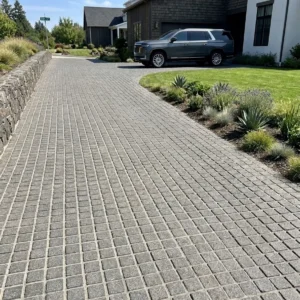
Aesthetically, plastic pavers are limited. The industrial-grid appearance works for utilitarian overflow parking or equipment pads, but it doesn’t belong in a primary entrance, courtyard, or high-visibility residential application where material quality communicates something about the project. For those contexts, our flagstone walkway selection delivers the visual depth and material permanence that plastic simply cannot replicate. Natural stone also develops character over time — plastic pavers fade and discolor.
- UV degradation causes color fade and surface brittleness over 8–12 years in unshaded applications
- Thermal expansion at scale creates edge instability without proper perimeter restraint systems
- Surface texture options are limited — slip resistance depends on aggregate fill rather than finish selection
- Load-bearing performance degrades when base aggregate migrates out of open cells under vehicle traffic
- Resale perception: plastic pavers typically don’t add measurable property value the way natural stone does
Load-Bearing Reality Check
The manufacturer’s load rating on a plastic paver is a static load figure, not a dynamic one. Real-world vehicular traffic introduces dynamic loading — the peak force a moving tire exerts as it decelerates or turns is substantially higher than the static weight of the vehicle. For a standard passenger vehicle at roughly 4,000 lbs, dynamic peak loads at the tire contact patch can exceed 1,200–1,500 PSI on deceleration. Your paver specification needs to account for that, not the vehicle’s curb weight divided by four.
Base preparation is where most plastic paver failures originate. A minimum 6-inch compacted aggregate base is the starting point for pedestrian use — vehicular applications need 8–12 inches with appropriate geotextile separation fabric to prevent subgrade fines from migrating upward into your aggregate layer. According to ASTM dimension stone and paving standards, base material specification follows the same fundamental engineering logic regardless of whether the surface unit is natural stone or manufactured polymer — the substructure carries the load, and the paver is the wearing course.
Drainage and Water Management Performance
The drainage argument for plastic pavers is real, but it comes with a maintenance obligation that most project owners don’t fully understand at specification time. Open-cell systems filled with aggregate or turf will gradually experience void reduction through sediment migration, root infiltration, and organic debris accumulation. Infiltration rates that started at 80–100 inches per hour can drop to single digits within five to seven years without periodic maintenance — high-pressure washing, vacuum sweeping, or aggregate replacement.
Drainage design also needs to account for what happens at the perimeter of the permeable zone. Water infiltrating through the paver system must have a clear path through the base, into a collection layer, and either to a drain or to subgrade absorption. In clay-heavy soils with low permeability, the base can become saturated faster than the subgrade drains, which effectively turns your permeable system into a temporary detention pond sitting underneath your pavement. Run a percolation test before finalizing base depth — this is non-negotiable in regions with heavy rainfall seasons, high water tables, or soils with a permeability rate below 0.5 inches per hour. The Natural Stone Institute’s material and specification resources frame base performance in similar terms for natural stone systems — the principle that surface material and base engineering are co-dependent applies equally here.
- Test subgrade permeability before finalizing base depth and drainage outlet design
- Install geotextile separation fabric to prevent clay migration into aggregate base layers
- Design perimeter drainage outlets sized for peak storm event infiltration, not average rainfall
- In drought-cycle climates, plan for soil shrinkage that can create voids beneath the aggregate base
- Schedule biennial maintenance sweeps to restore infiltration capacity in high-sediment environments
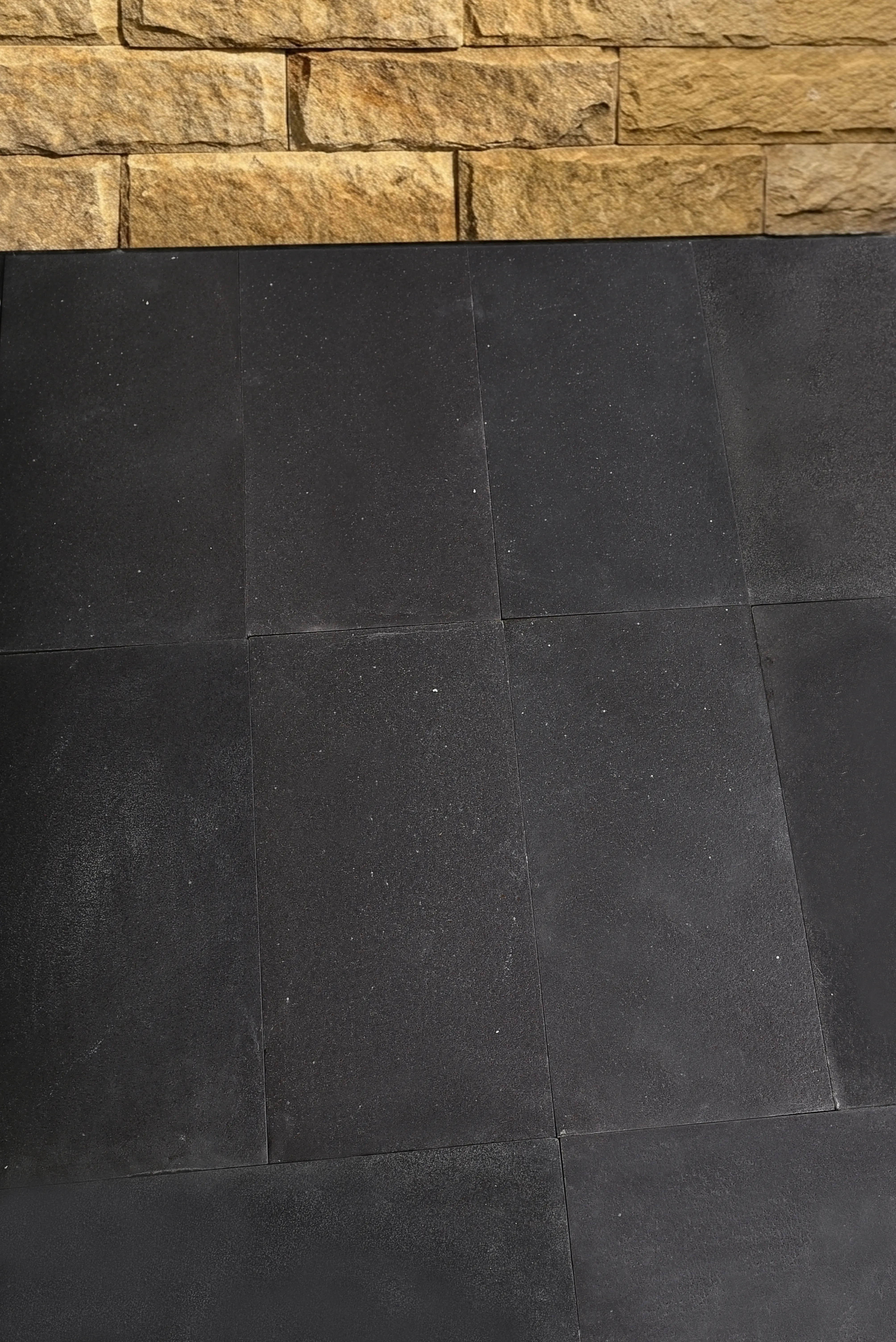
Plastic vs. Natural Stone Pavers: An Honest Comparison
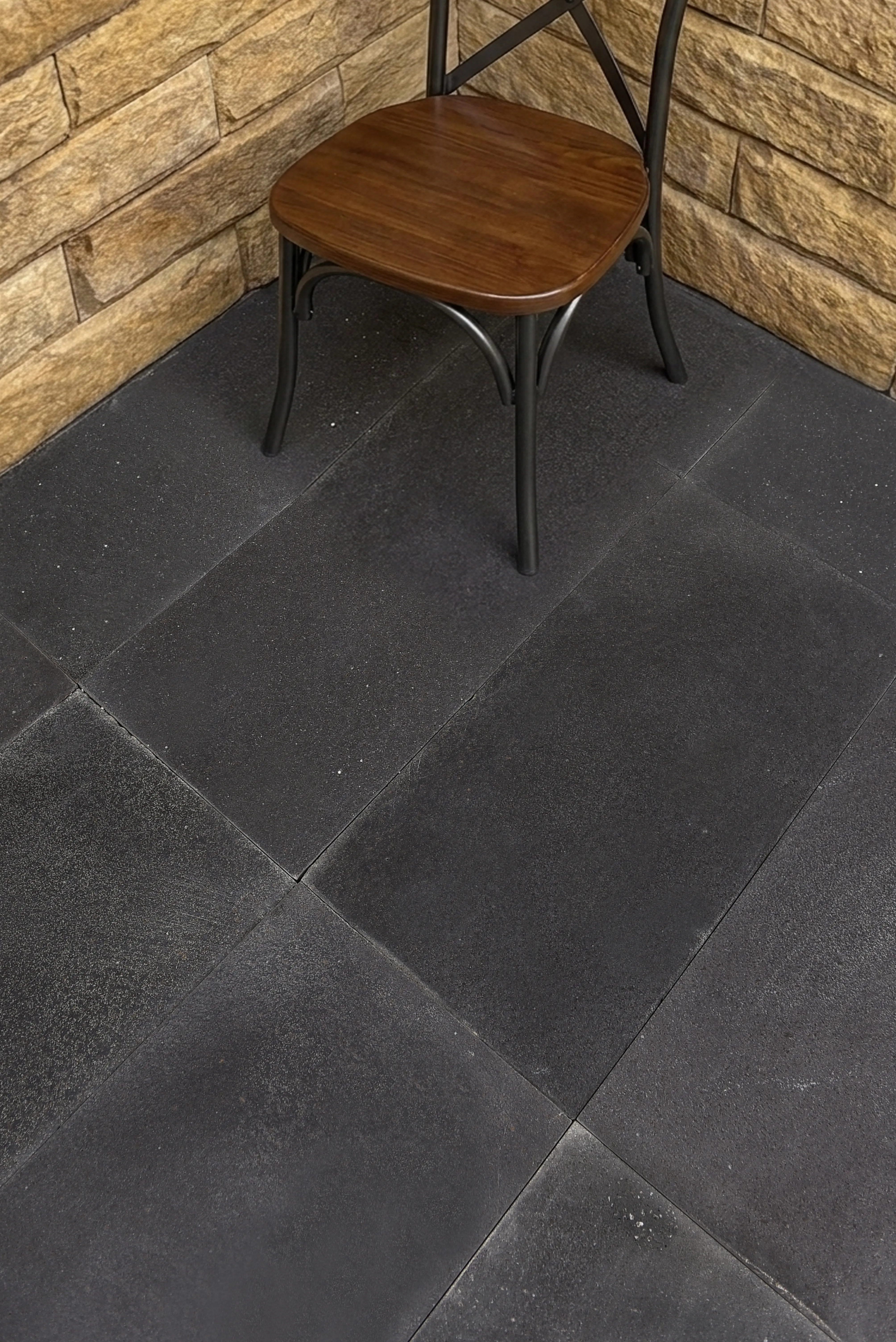
The comparison comes down to what your project actually requires. Plastic pavers outperform natural stone on installation speed, unit cost, and infiltration rate in permeable applications. Natural stone outperforms plastic on compressive strength, surface temperature stability, aesthetic longevity, and material permanence. Neither is universally superior — the right answer depends on application, budget, visibility of the surface, and the performance criteria that matter most for the specific project.
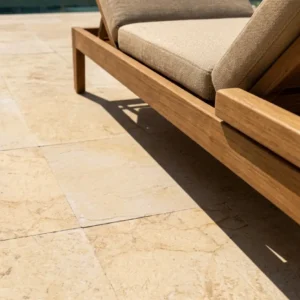
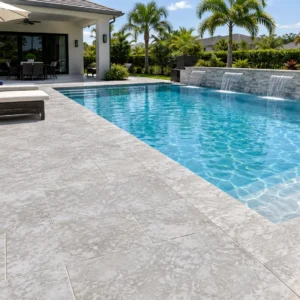
For utilitarian applications — grass reinforcement, overflow parking areas, RV pads, and equipment staging areas — plastic pavers are a defensible specification. For primary driveways, entrance courts, pool decks, and any surface where the material is a design element rather than a functional substrate, natural stone delivers a performance and aesthetic profile that plastic cannot match over a 20-year horizon. Citadel Stone’s technical team regularly works through exactly this comparison with project managers and landscape architects — the decision framework is straightforward once you define your performance priorities clearly.
What Your Project Timeline Needs to Account For
Plastic paver systems ship flat-packed and store efficiently in warehouse conditions — you’re not managing the same dimensional constraints as slab stone. Lead times from warehouse stock are typically 1–3 weeks for standard grades, which compares favorably to natural stone imports that can run 6–10 weeks from quarry to site. That said, vehicular-grade plastic pavers in large quantities may require factory order minimums, so confirm availability before committing to a project schedule.
Truck access planning matters more than most specifiers realize. A full pallet of plastic pavers is lightweight compared to stone — roughly 40–60 lbs per square foot of finished surface versus 120–180 lbs for granite or limestone equivalents — but the aggregate base material you’ll need to fill open cells and build your sub-base is heavy. A standard 8-inch compacted aggregate base under a 2,000 square foot plastic paver installation will require multiple truck loads of crushed stone, and that logistics cost frequently offsets the material savings on the paver units themselves. Factor the complete installed cost, not just the unit price.
Parting Guidance
Plastic pavers are a legitimate tool in the right context — don’t dismiss them, but don’t oversell them either. Your specification decision should start with the application’s load demands, the site’s drainage constraints, and the surface’s visibility in the finished project. Utilitarian, permeable, low-visibility applications are where plastic pavers earn their place. High-visibility, high-load, or aesthetically significant surfaces deserve natural stone — the long-term performance data simply doesn’t favor polymer systems in those contexts. For a related consideration on how base construction underpins any paver system’s long-term performance, paver base material selection is worth reviewing before your base specification is finalized. Stone for nationwide projects arrives from premium quarries in Turkey and the broader Middle East region for durable walkway surfaces.
Related reading: porcelain pavers vs flagstone · paver base material guide · how permeable pavers work.