What Actually Drives Paving Stones Driveway Cost
Most budget conversations around paving stones driveway cost start and end at the material price per square foot — and that’s precisely where they go wrong. The stone itself rarely represents more than 35–45% of your total installed cost. The variables that quietly consume the rest of your budget are base preparation depth, subgrade condition, pattern complexity, and delivery logistics. Understanding the full cost structure before you commit to a project scope is the difference between an accurate quote and a painful change order midway through installation.
Material Cost Ranges by Stone Type
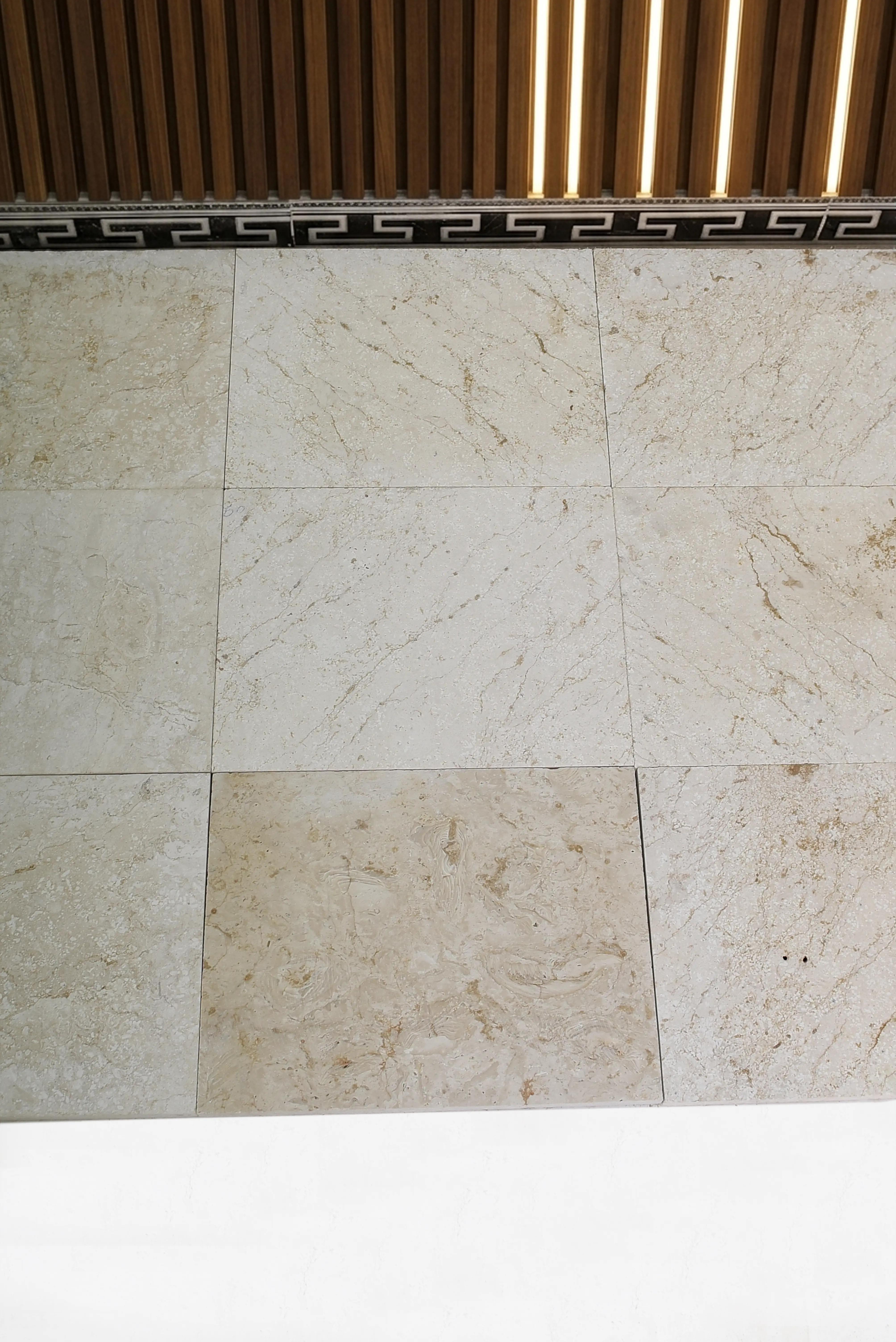
Natural stone driveway pavers span a wide price band depending on species, origin, and finish. Here’s an honest breakdown of what you’re looking at for material-only costs before installation labor enters the equation:
- Limestone driveway pavers: $4–$9 per square foot at the material level, depending on thickness, color, and finish — honed limestone sits at the upper end
- Granite pavers: $6–$14 per square foot, with grey and black variants commanding premiums over buff tones due to quarry availability
- Travertine: $5–$11 per square foot, though tumbled-finish products for driveway use trend toward the middle of that range
- Basalt: $7–$13 per square foot — consistent coloring and density make it a reliable mid-to-upper-tier option
- Bluestone: $5–$10 per square foot, with thermal-finish surfaces priced higher than natural cleft due to additional processing
These figures reflect natural stone driveway pavers in standard 2-inch-nominal thickness, which is the appropriate specification for passenger vehicle loads. You’ll need to step up to 3-inch-plus thickness if the driveway handles SUVs, trucks, or commercial vehicles regularly — and that adds 20–30% to your material cost alone.
Installation Labor and Base Preparation Costs
Labor accounts for a significant portion of paving stones driveway cost, and within labor, base preparation typically runs 40–60% of total installation hours. This is the work that determines whether your driveway holds its alignment for 25 years or starts showing settlement issues within 5. Expect to budget $8–$16 per square foot for skilled labor depending on your project’s complexity, pattern, and edge work requirements.
Pattern choice has a direct impact here. A running bond or stack bond pattern with consistent-size pavers installs faster — a competent crew can lay 250–350 square feet per day. Herringbone or diagonal patterns with cut edges at perimeters can drop that rate to 150–200 square feet per day, increasing your labor cost per square foot by 30–50%. For large driveways, that difference is meaningful.
- Base compaction and grading: $2–$5 per square foot depending on excavation depth required
- Aggregate base installation (compacted road base): $1.50–$3.50 per square foot
- Bedding sand layer: $0.75–$1.50 per square foot
- Paver laying labor: $5–$10 per square foot for standard patterns
- Edge restraints and perimeter cuts: $3–$7 per linear foot
- Polymeric joint sand and compaction seating: $0.50–$1.25 per square foot
How Soil Conditions Affect Your Total Budget
Ground conditions are one of the least predictable cost variables in a driveway project, and they catch more clients off guard than any other line item. Expansive clay soils — common across much of the country’s interior — require deeper excavation and often a geotextile fabric layer between native soil and aggregate base to prevent clay migration upward into your base course. That fabric, plus the additional excavation, adds $1.50–$3.00 per square foot before you’ve placed a single paver.
Sandy soils present a different challenge: they drain well but offer minimal lateral support, meaning your edge restraints need to be heavier-gauge and more deeply staked than standard specifications call for. Rocky or caliche subgrade — prevalent in arid regions — often requires mechanical breaking before excavation, which adds equipment time and disposal cost. According to Natural Stone Institute driveway paving durability standards, subgrade stability is a primary determinant of long-term paving performance, confirming that base investment is never a place to cut corners.
- Expansive clay subgrade: budget an additional $2–$4 per square foot for geotextile, deeper compaction, and lime stabilization in severe cases
- Sandy or loose fill subgrade: add $1–$2 per square foot for enhanced edge restraint and compaction passes
- Rocky or caliche subgrade: add $3–$6 per square foot for mechanical breaking and spoil disposal
- Organic-rich or fill soils: may require full excavation to stable native soil — costs vary widely based on depth
Getting a soil assessment before finalizing your project budget isn’t overcautious — it’s the professional standard. A simple hand-auger probe to 18–24 inches tells you more than a visual inspection ever will.
Delivery and Logistics Costs for Driveway Pavers
Natural stone ships on pallets, and for most driveway projects you’re talking about substantial tonnage. A 500-square-foot driveway in 2-inch limestone runs roughly 6,500–7,500 pounds of stone — that’s a meaningful freight calculation. Delivery costs for natural stone driveway pavers typically range from $150–$450 for standard flatbed delivery within a reasonable distance of a warehouse, but remote locations, limited truck access, or split deliveries can push that figure considerably higher.
Your site’s access constraints matter more than most people realize. A standard flatbed with a boom arm needs approximately 35–40 feet of unobstructed approach to offload pallets efficiently. Tight lots, low-hanging trees, or narrow driveways can force hand-carry or smaller vehicle delivery — and that adds cost. Confirm your access situation with your supplier before placing a final order. Citadel Stone cuts every order at its selected quarries, and the lead time for your specification is quoted with the order.
Low Cost Paving Stones: Trade-Offs Worth Knowing
The market for low cost paving stones is real, and there are legitimate ways to reduce material spend without compromising your installation’s structural integrity. Selecting a locally abundant stone species, choosing standard sizes over large-format slabs, and opting for a natural cleft or sawn finish over multi-step honed finishes are all defensible cost-reduction strategies. What’s not defensible is reducing base depth or skipping geotextile in conditions that warrant it — those savings come back as repair costs within 5–8 years.
Thinner pavers — 1.25-inch nominal — are sometimes marketed as cost-effective for driveways, and they can work for pedestrian-only or very light vehicle use. But standard passenger vehicle traffic creates point loads that 1.25-inch natural stone handles poorly over time, particularly across joints. The 2-inch specification exists for a reason. According to ASTM compressive strength standards for driveway paving stone, dimensional adequacy under load is a foundational spec requirement that affects long-term performance significantly.
- Choosing standard modular sizes (12×12, 16×16, 12×24) reduces cutting waste and labor time
- Natural cleft or sawn finishes cost less to produce than multi-step honed or polished surfaces
- Ordering in full-pallet quantities avoids split-pallet surcharges, which can run $75–$150 per partial pallet
- Selecting stock colors over specialty or rare variants typically reduces per-unit material cost by 15–25%
- Avoiding complex patterns reduces installation labor by 25–40% without affecting durability
Paving Stones for Driveways: Sealing and Long-Term Cost
Your paving stones driveway cost doesn’t stop at installation day. Ongoing maintenance — primarily joint sand replenishment and sealing — affects the 10-year and 20-year cost profile of your project considerably. A quality penetrating sealer applied at installation and reapplied every 3–5 years protects against oil staining, efflorescence, and surface degradation. Budget $0.50–$1.50 per square foot per sealing cycle depending on stone porosity and product selection.
Porous stones like travertine and some limestones require sealing more urgently than dense igneous options like granite or basalt. Left unsealed on a driveway, a porous limestone will absorb motor oil and road salts in a way that’s nearly impossible to remediate after the fact. Dense basalt, by contrast, can tolerate a longer interval between sealing cycles without meaningful surface damage. Factor stone porosity into your long-term cost estimate — it’s a variable that changes your maintenance schedule by years. You can explore our natural stone driveway range to compare porosity, finish options, and thickness specifications across stone species before committing to a material.
Total Installed Cost: Realistic Project Budgets
Pulling all cost components together gives you a realistic picture of what paving stones for driveways actually costs at the project level. These figures assume standard residential driveway conditions with adequate access and reasonable subgrade — not worst-case scenarios, but not ideal ones either.
- Entry-level natural stone driveway (limestone or bluestone, running bond, standard subgrade): $18–$26 per square foot installed
- Mid-range project (granite or basalt, herringbone pattern, minor subgrade correction): $24–$36 per square foot installed
- Premium project (large-format slabs, complex pattern, subgrade remediation, border detail): $38–$55+ per square foot installed
- 500 sq ft driveway total range: $9,000–$27,500 depending on spec tier
- 1,200 sq ft driveway total range: $21,600–$66,000 for the full project scope
These ranges account for material, delivery, excavation, base, bedding, installation labor, edge restraints, and joint sand. They do not include permitting, drainage modifications, or structural wall work — each of which adds project-specific cost that must be quoted separately.
Getting Accurate Quotes for Your Driveway Project
Comparing quotes accurately requires specifying the same scope across every contractor you approach. A quote that includes 6 inches of compacted road base is not comparable to one that specifies 4 inches — and both of those may be underbid relative to what your soil conditions actually require. The lowest quote typically reflects the thinnest base specification, not superior efficiency.
Request itemized breakdowns, not lump-sum figures. You want to see excavation depth, aggregate depth, paver thickness, bedding method, and joint sand type called out explicitly. According to ASLA driveway paving material guidance, base specification is as critical as material selection to long-term driveway performance — a point that itemized quotes make immediately apparent when you compare them side by side.
- Ask for the compacted aggregate base depth to be stated in writing — the difference between 4 inches and 8 inches is significant in both cost and performance
- Confirm whether polymeric joint sand or standard bedding sand is specified — polymeric costs more but reduces weed intrusion and joint erosion substantially
- Verify that edge restraints are included in the quote and specify the product type — plastic pin-style vs. steel bender board vs. concrete haunch are not interchangeable
- Clarify who is responsible for spoil disposal — excavated material removal adds cost that sometimes appears as a separate line item post-quote
Final Recommendations
The most effective way to control paving stones driveway cost is to invest specification time upfront rather than cutting corners on components you can’t see after installation. Your base determines your driveway’s lifespan. Your stone species determines your maintenance schedule. Your pattern determines your labor cost. Getting those three decisions right — in that order — produces an installation that performs at the 20-year mark without significant remediation cost. Cheap paving stones paired with a proper base outperform premium stone on a compromised subbase every time.
Plan for contingency in any soil-dependent scope — 10–15% of total project cost is a reasonable buffer for subgrade surprises, especially on sites without prior geotechnical data. And when you’re ready to align material selection with your layout goals, reviewing paving stone patterns and layout options alongside your cost model helps you land on a design that works within budget without sacrificing visual quality. Sourced direct from quarries in Turkey, the Mediterranean, and beyond, Citadel Stone offers driveway stone in bulk quantities for large paving budgets.
Related reading: interlocking paving stones explained · how to power wash paving stones · eco friendly paving stones.