Choosing the wrong sealer for patio stones doesn’t just affect aesthetics — it accelerates the exact failure modes you’re trying to prevent. Moisture trapped beneath a film-forming sealer on a porous limestone or travertine surface will eventually cause spalling, efflorescence, and joint washout that no amount of resealing can reverse. Understanding the chemistry behind each sealer type, and matching it precisely to your stone’s porosity and finish, is where durable patio installations begin.
Understanding Sealer Types for Patio Stones
The sealer category that works on a polished granite slab will actively damage a tumbled travertine paver — so your first decision point is sealer chemistry, not brand. Broadly, sealers for natural stone patio surfaces fall into two families: penetrating sealers (impregnators) and topical sealers (film-formers). Each interacts with the stone’s pore structure in fundamentally different ways, and getting this wrong on a newly installed patio is an expensive lesson.
Penetrating sealers work below the surface. They fill pore networks with silane, siloxane, or fluoropolymer molecules that repel water and oil without sealing the surface pores shut. The stone still breathes — vapor pressure from below can escape. Topical sealers, by contrast, lay a polymer film over the surface. They offer higher stain resistance and a more dramatic appearance change, but they trap moisture vapor from below, which causes problems on any stone laid over a substrate that isn’t bone-dry year-round. According to ASLA outdoor patio stone material selection guidance, moisture management is the dominant failure driver in outdoor paving systems — and sealer selection is directly part of that equation.
- Penetrating/impregnating sealers: silane, siloxane, fluoropolymer — breathable, no sheen change, best for porous stones
- Topical acrylic sealers: water or solvent-based, moderate film thickness, moderate sheen, periodic recoating required
- Topical polyurethane sealers: thick film, high gloss, very high stain resistance, traps vapor — not suitable for most exterior patio applications
- Enhancing impregnators: penetrating but contain color-deepening agents — popular for tumbled bluestone and basalt patio stones where a wet-look finish is desired without a topical film
Matching Sealer for Patio Stones to Stone Type
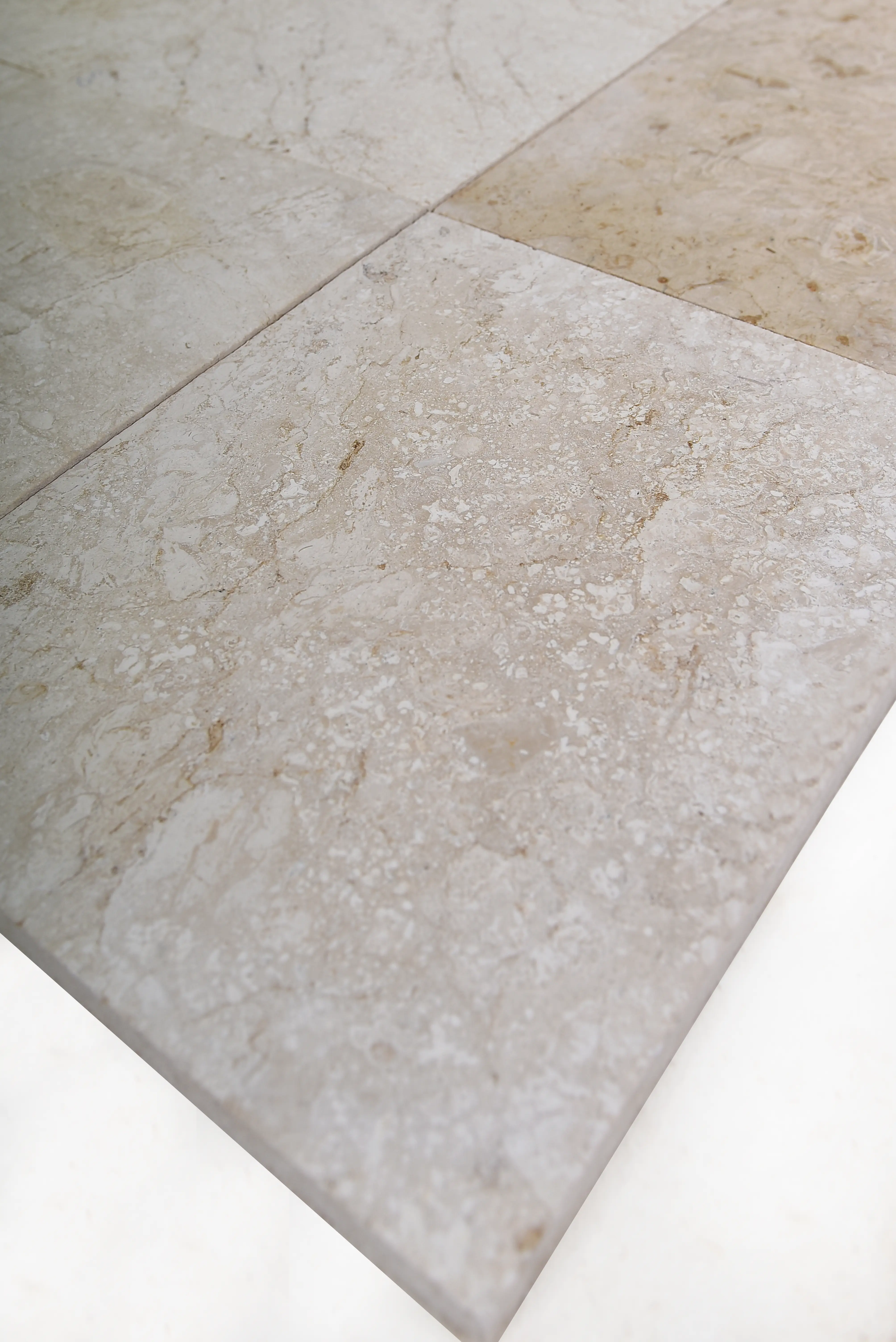
Your stone’s porosity rating is the single most important variable in sealer selection — and it’s one most homeowners never check. The ASTM C97 water absorption test gives you the number that matters: stones absorbing more than 0.75% by weight are classified as high-absorption and almost always require an impregnating sealer rather than a topical one. Limestone patio stones typically test at 3–8% absorption; travertine often exceeds 10% due to its interconnected void structure; granite typically falls below 0.4%. These aren’t marginal differences — they define your entire sealer strategy.
For dense, low-porosity stones like granite or basalt patio pavers, penetrating sealers still provide essential oil repellency, but you’ll apply them less frequently — every three to five years rather than annually. Porous limestones and travertines need resealing every one to two years in regions with heavy rainfall or freeze-thaw cycling, where water infiltration pressure is highest. The Natural Stone Institute outdoor stone selection guide consistently emphasizes matching sealer chemistry to absorption class before any other specification decision.
- Granite and basalt patio pavers: penetrating silane-siloxane blend, 3–5 year resealing cycle
- Limestone patio stones: penetrating fluoropolymer or siloxane, 1–2 year resealing cycle
- Travertine patio pavers: penetrating impregnator applied to filled and honed surfaces; unfilled travertine requires void filling before any sealer application
- Bluestone and flagstone: enhancing impregnator or neutral penetrating sealer depending on desired finish
- Polished surfaces (any stone): topical acrylic is viable only on interior applications — exterior polished patio stones develop traction loss under a topical film in wet conditions
Surface Preparation Before Applying Any Sealant for Patio Stones
Surface prep is where most DIY sealer applications fail. Applying a sealant for patio stones over residual curing compounds, efflorescence bloom, or incompletely cured jointing sand will lock those contaminants in place permanently. Your stone surface must be chemically neutral, completely dry, and free from any prior sealer layers that haven’t been stripped.
Stripping an existing topical sealer requires a dedicated solvent or alkaline stripper matched to the sealer chemistry — water-based acrylics strip differently from solvent-based polyurethanes, and using the wrong stripper leaves a gummy residue that blocks the new sealer’s penetration. Once stripped, allow the stone to dry for a minimum of 72 hours after cleaning. During prolonged wet periods or in high-humidity conditions, extend that drying window to five to seven days and confirm with a plastic sheet test: tape a 12-inch square of plastic to the stone surface and leave it for 24 hours — visible condensation on the underside means moisture is still migrating up, and any sealer applied over that condition will fail within months. The USGS natural stone paving production data documents how the mineral composition of natural stone directly affects moisture retention — an important reference point when selecting compatible sealer chemistries.
- Clean all joints, remove any biological growth (moss, algae) with a pH-neutral stone cleaner
- Neutralize efflorescence with a diluted acid wash (1:10 muriatic solution) followed by a thorough rinse — confirm pH neutrality before sealing
- Strip existing topical sealer layers completely — new sealer over old film delivers poor penetration and peeling within one season
- Allow 72 hours minimum dry time after cleaning; use the plastic sheet test to confirm vapor-free conditions before sealing
- Inspect jointing sand and repoint any voids — sealer cannot compensate for compromised joint stability
How Water Management Affects Sealer Performance
The drainage design of your patio system has a direct impact on how long any sealer for patio stones will perform. A patio with a 1.5% cross-slope drains fast enough that water doesn’t dwell on the surface long enough to probe sealer weak points. A flat or concave installation allows water to pond, and in regions with intense rainfall events — monsoon seasons, coastal summer storms, sustained nor’easters — that ponding creates hydrostatic pressure against the sealer interface that accelerates delamination and joint erosion far faster than normal weathering.
Expansive precipitation patterns also affect your resealing schedule. In regions with concentrated wet seasons followed by drought cycles, the stone surface undergoes repeated wetting-and-drying stress that breaks down sealer polymer chains faster than in areas with evenly distributed rainfall. Time your resealing application for the end of the dry season — when the stone is at its driest and most receptive — rather than as a reactive measure after rain damage appears. If your patio installation incorporates our porous stone selection, a penetrating impregnator is the correct choice because it preserves the stone’s natural drainage behavior while still protecting against stain infiltration.
Flooding risk is another drainage factor that directly shapes sealer specification. Patios in low-lying areas or those adjacent to large lawn areas in high-rainfall zones may experience brief inundation events. A topical film sealer on a porous stone in that scenario creates a pressure trap — water infiltrates through micro-cracks in the film and cannot escape. A penetrating sealant for patio stones that allows controlled vapor transmission handles these conditions significantly better because the moisture can cycle through the stone without building destructive hydrostatic pressure.
How Types of Stones for Patio Projects Shape Sealer Decisions
Your stone choice already made most of your sealer decisions for you — you just need to follow the logic through. The types of stones for patio projects most commonly specified nationally range from dense basalt and granite at one end to highly porous travertine and shell limestone at the other, and the sealer approach shifts dramatically across that spectrum.
Dense igneous stones — granite and basalt — don’t need a sealer for patio stones for structural protection the way porous sedimentary stones do. Their low absorption means they’re naturally resistant to most moisture-driven damage. The sealer on a granite patio paver is primarily an oil and stain barrier, not a moisture barrier. Apply a penetrating silane product and expect five or more years of effective performance with minimal maintenance. Natural stone patio pavers in the limestone and travertine category require a fundamentally different approach: higher application frequency, careful attention to fill condition (for travertine), and consistent monitoring of sealer failure signs like water no longer beading on the surface.
- Dense igneous patio stones (granite, basalt): penetrating sealer for stain resistance; reapply every 3–5 years
- Sedimentary patio stones (limestone, sandstone): penetrating fluoropolymer; reapply every 1–2 years; monitor for efflorescence signs
- Travertine patio stones: fill voids before sealing; use penetrating impregnator; avoid topical films that can trap moisture in unfilled voids
- Metamorphic patio stones (slate, quartzite): penetrating sealer recommended; slate’s cleavage planes make it vulnerable to water infiltration if unsealed
- Bluestone and flagstone patio pavers: enhancing impregnator popular for appearance; neutral penetrating sealer preferred for lower-maintenance applications
Patio Stones Sealer Application: The Complete Sequence
The patio stones sealer application sequence has seven steps, and shortcuts in any of them become visible within the first full weather cycle. Your stone is ready, it’s dry, and you have the correct sealer chemistry in hand — here’s the process that delivers results a professional installer would stake their reputation on.
Temperature matters more than most application guides acknowledge. Apply between 50°F and 90°F surface temperature — not air temperature, surface temperature. A stone sitting in direct afternoon sun at 75°F ambient air can hit 115°F surface temperature, which causes solvent-based sealers to flash off before full penetration occurs. Early morning application, before direct solar exposure, consistently outperforms midday application on south-facing or unshaded patios.
- Step 1: Verify surface temperature is between 50°F and 90°F using an infrared thermometer — not air temperature
- Step 2: Apply sealer with a low-pressure garden sprayer or a lambswool applicator pad; avoid high-pressure spray that creates aeration bubbles in the sealer film
- Step 3: Keep the surface wet with sealer for the manufacturer’s specified dwell time — typically 10 to 20 minutes for penetrating sealers; do not allow it to dry on the surface before the next step
- Step 4: Back-buff or wipe off all excess sealer before it cures — residual sealer left on the surface creates a patchy, sticky film that is extremely difficult to remove after cure
- Step 5: Allow the first coat to penetrate for 30 to 60 minutes, then evaluate water bead behavior; apply a second coat on porous stones (limestone, travertine) where the first coat absorbed completely
- Step 6: Do not expose the freshly sealed surface to water for a minimum of 24 hours; 48 hours is safer in humid conditions
- Step 7: Document your application date, sealer brand and dilution ratio, and ambient conditions — this becomes your maintenance baseline for the next resealing cycle
Common Sealing Mistakes That Shorten Patio Stone Life
The most expensive mistake is applying a topical sealer to a patio stone surface that hasn’t fully cured after installation. Newly laid natural stone pavers set on a cement-based mortar or sand-set bed contain significant moisture from the setting process. Applying any sealer — penetrating or topical — within the first 28 to 60 days traps curing moisture and initiates a chain of efflorescence, joint deterioration, and sealer delamination that compounds with every seasonal cycle. Wait the full cure period, regardless of how good the stone looks in the interim.
Citadel Stone’s technical team fields consistent questions about white haze forming on sealed limestone and travertine surfaces — it’s almost always caused by sealer applied over incompletely dried stone or over residual cleaning solution that wasn’t fully rinsed. At Citadel Stone, we recommend a pre-sealing water bead test on every patio section before applying sealer: drop water on the surface and watch how it absorbs. Stone that pulls the droplet in within 30 seconds is ready; stone that lets it sit on the surface for 90 seconds or more likely has moisture still present in the pore structure.
- Applying sealer before 28-day cure period — locks in curing moisture and causes efflorescence
- Using topical sealer on porous stone in exterior applications — vapor pressure causes delamination and spalling
- Skipping the back-buffing step — leaves surface residue that cures into a sticky, uneven film
- Applying sealer in direct sun at peak temperature — causes flash evaporation before full penetration
- Mixing sealer brands or chemistries between coats — incompatible polymer systems can prevent curing and create adhesion failure
- Ignoring joint condition before sealing — a sealed surface with deteriorated joints will still allow water infiltration at every joint line
Resealing Schedule and Long-Term Patio Stone Maintenance
Your resealing schedule is a function of three variables: stone porosity, sealer type, and exposure conditions. There’s no single answer that applies to every patio installation, but you can develop a reliable baseline using the water bead test. Run it quarterly on a representative area of your patio — when water stops beading and begins absorbing into the stone surface in under 60 seconds, it’s time to reseal, regardless of where you are in your planned schedule.
In regions with heavy rainfall seasons or freeze-thaw cycling, inspect patio stone sealers every six months. Freeze-thaw environments subject the sealer film and stone pore structure to repeated expansion-contraction stress — penetrating sealers hold up significantly better than topical films in these conditions because they flex with the stone rather than sitting on top of it. Patios in hot, dry climates experience UV degradation as the primary aging mechanism — UV breaks down acrylic and polyurethane polymer chains faster than moisture cycling does, which pushes topical sealer recoating intervals down to 12–18 months regardless of traffic volume. Warehouse stock availability at Citadel Stone means your sealer-compatible patio stone replacements are typically available within one to two weeks if maintenance reveals sections that need replacement alongside resealing.
Sealing Patio Stones: Final Recommendations
Getting the sealer for patio stones right is a compounding decision — the stone you choose, the drainage geometry you build into the base, and the sealer chemistry you apply all interact over years of seasonal cycling. You can’t isolate one variable and expect the others to compensate. Dense stones on well-drained bases with penetrating sealers consistently outperform every other combination in long-term field performance. Porous limestones and travertines are equally durable when sealed correctly and maintained on schedule — the failure cases almost always trace back to topical sealer applied over incompletely dried stone, or to drainage geometry that allows water to dwell against the surface longer than the sealer was designed to handle. Keeping detailed maintenance records and running quarterly water bead tests takes less than ten minutes per season and will tell you more about your sealer’s condition than any calendar-based schedule. As you plan the broader care of your stone surfaces, cleaning patio stones safely is worth reviewing before your next maintenance cycle to make sure your cleaning method doesn’t prematurely degrade the sealer bond. Topical sealers add a visible sheen that alters the natural matte finish of many stones Citadel Stone supplies, so material choice affects sealer type.
Related reading: Patio Stone Costs Broken Down by Material · Types of Patio Stones: A Complete Buyer’s Guide.