Why Your Cleaning Method Defines Long-Term Results
Most damage done to patio stones happens during cleaning — not from weather, traffic, or freeze-thaw cycles. Knowing how to clean patio stones correctly starts with understanding that the wrong cleaner for patio stones can strip surface finish, open micro-fractures in softer material, and permanently alter the stone’s color tone in ways that no sealer can correct. Natural stone is not a single material — it’s a family of mineralogically distinct materials, each with different porosity, hardness, and chemical sensitivity. The cleaner that lifts grease from granite with no consequence can dissolve the calcium carbonate matrix of limestone or travertine within minutes. Before you touch your surface with anything, identify the stone type and match your approach accordingly.
Reading Your Stone Before You Clean
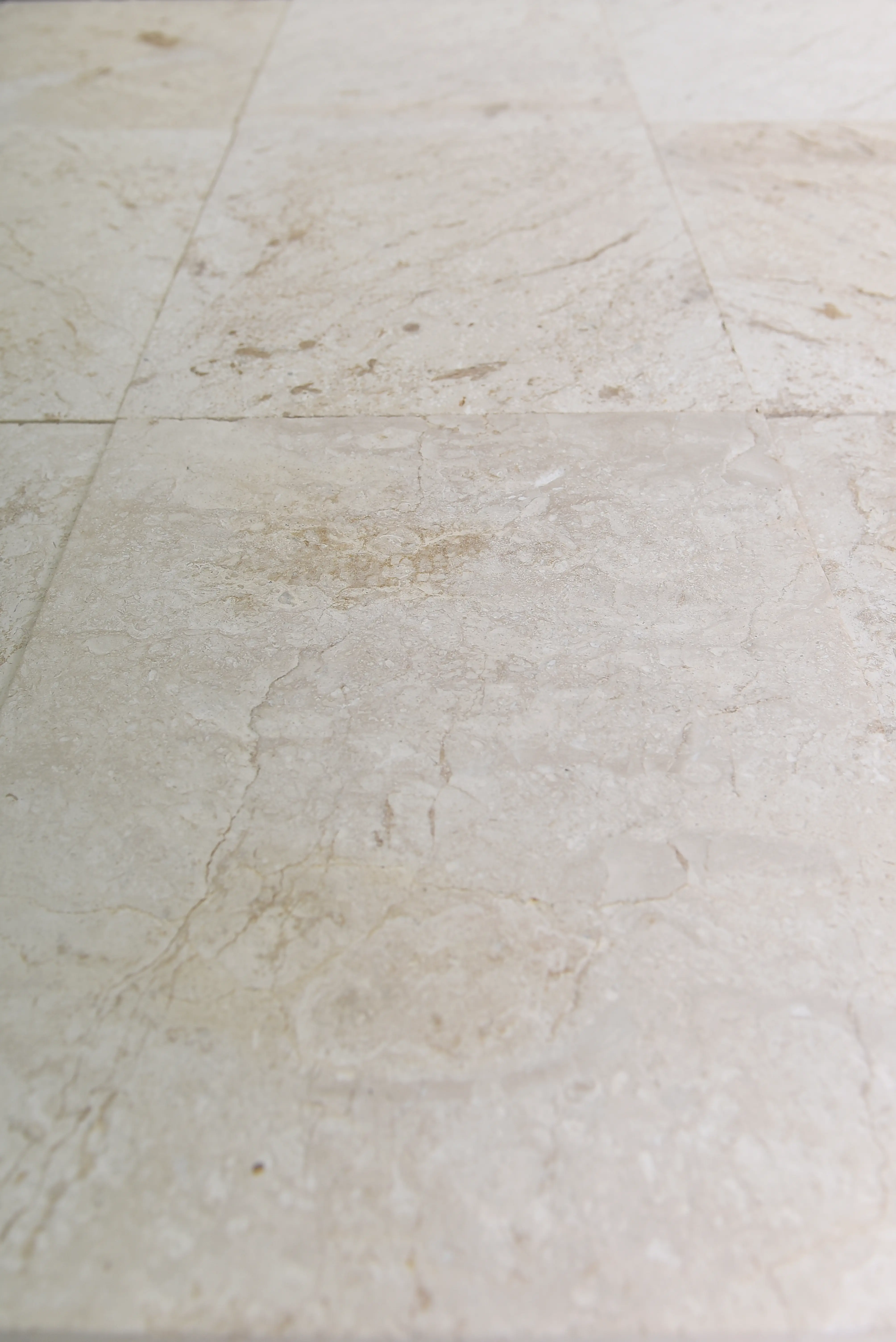
Your cleaning strategy hinges entirely on the stone’s mineralogy. Calcareous stones — limestone, travertine, and marble — are acid-sensitive. Any cleaner with a pH below 7 will react with the calcium carbonate and etch the surface, often within seconds of contact. Siliceous stones — granite, slate, basalt, and quartzite — tolerate a wider pH range but remain vulnerable to concentrated alkalis and abrasive scrubbing that dulls honed or polished finishes.
Field performance data consistently shows that misidentified stone accounts for the majority of chemical damage claims on patios. You can do a quick mineralogy check at home: apply a drop of white vinegar to an inconspicuous area. Fizzing indicates a calcareous stone — stop there and reach for a pH-neutral cleaner. No reaction means you’re likely working with a siliceous material and have more flexibility. According to Natural Stone Institute stone variety specifications, surface finish type — honed, polished, or textured — also determines which cleaning agents are appropriate, not just the stone species.
Routine Cleaning Without Causing Damage
For regular maintenance, your best tool is warm water and a pH-neutral patio stones cleaner applied with a soft-bristle brush. Avoid wire brushes entirely on any natural stone — they scratch the surface and create microscopic channels that trap future debris and moisture. Work in sections of roughly four square feet, scrubbing in circular motions to prevent streaking, then rinse thoroughly.
- Use pH-neutral cleaners (pH 6–8) on all calcareous stone types — travertine, limestone, marble
- Dilute any concentrate to the manufacturer’s recommended ratio — stronger is not better
- Rinse with clean water immediately after scrubbing to prevent residue from drying and forming a film
- Allow the surface to dry completely before evaluating results — wet stone always looks darker and may appear stained when it isn’t
- Repeat every 2–4 weeks in high-traffic areas, seasonally for low-traffic patios
One detail most homeowners overlook: the rinse water matters. If your hose water has high mineral content, you risk depositing calcium or magnesium residue during rinsing — a white film that looks like efflorescence. Use a low-TDS water source for the final rinse pass where possible, especially on dark-toned stone where mineral deposits are most visible.
Targeted Stain Removal by Stain Type
Stain chemistry drives your removal method, not stain appearance. A dark stain on your patio stones could be oil, organic matter, algae, or iron oxidation — and each requires a fundamentally different treatment. Applying the wrong agent not only fails to remove the stain but frequently bonds it deeper into the pore structure.
- Oil and grease stains: Apply a poultice of baking soda and water to draw the oil out — cover with plastic film and leave for 24 hours before gently brushing off
- Organic stains (leaves, berries, algae): Hydrogen peroxide at 12% dilution lifts organic pigment on most stone types without etching, but test on calcareous stone first in an inconspicuous spot
- Iron rust stains: Require an oxalic acid-based poultice on siliceous stone only — never on limestone or travertine, where the acid etches the surface aggressively
- Efflorescence (white mineral deposits): Dry-brush first to remove loose crystals, then apply a dilute efflorescence remover rated for your stone type — rinse thoroughly and check for reappearance
- Grease from outdoor cooking: Address within 24 hours — the longer cooking grease penetrates, the deeper you’ll need to draw with a poultice
The ASLA outdoor paving material guidance reinforces that permeable natural stone surfaces accumulate staining at different rates depending on surface texture — rougher finishes hold more organic debris and require more frequent cleaning intervention than honed or smooth-finished patio stones.
Pressure Washing: What You Need to Know
Pressure washing is effective on patio stones when done correctly — and destructive when overdone. The threshold for most natural stone is 1,200 to 1,500 PSI with a 40-degree fan tip held at least 12 inches from the surface. Exceeding these parameters on softer materials like limestone or tumbled travertine erodes the surface layer and can drive water into the sub-base at a rate that compromises joint integrity.
Technique matters as much as the PSI setting. Move the wand in continuous, overlapping passes — never hold it static over a single spot. Direct the spray at a consistent angle to avoid undercutting joint filler between stones, which weakens the installation over time. According to USGS natural stone paving production and construction use data, surface durability of dimension stone correlates directly with finish type — textured or flamed finishes tolerate higher pressure than honed or polished surfaces where mechanical erosion visibly dulls the finish faster.
- Maximum 1,500 PSI for limestone, travertine, and softer natural patio stones
- Up to 2,000 PSI is acceptable for granite and dense basalt patio stones with rough finishes
- Always use a fan nozzle — never a zero-degree pinpoint tip on any stone surface
- Pre-wet the surface to reduce temperature shock, particularly in hot weather
- Follow pressure washing immediately with a fresh-water rinse pass to clear dislodged debris
Drainage and Moisture: The Hidden Cleaning Factor
Here’s what most cleaning guides miss entirely: your patio’s drainage design directly determines how often and how aggressively you’ll need to clean. Patios with inadequate slope — less than 1.5% gradient away from the structure — retain standing water after rain. That standing water feeds algae growth, accelerates efflorescence cycles, and drives moisture into joint sand at a rate that loosens the installation progressively. In heavy-rainfall climates and regions that experience seasonal storm patterns, poor drainage transforms a twice-yearly cleaning task into a monthly maintenance problem.
Check your patio drainage before investing in cleaning products. Standing water that remains more than 30 minutes after rain stops tells you the base is compacted incorrectly or the surface slope is insufficient. No cleaning frequency or product choice compensates for a drainage fault — the algae and staining will return within weeks regardless of how well you clean. Correcting the gradient, adding a channel drain, or improving the aggregate base layer is the only long-term solution. At Citadel Stone, we’ve seen patio installations where quarterly cleaning resolved completely once a simple channel drain was installed at the low edge of the slab.
For guidance on product compatibility and care intervals matched to your specific stone type, review our stone care recommendations before committing to a cleaning schedule.
Sealing Patio Stones Before and After Cleaning
A properly sealed patio stone is dramatically easier to maintain. Sealers create a hydrophobic barrier that prevents oils, organic pigments, and mineral-laden water from penetrating the pore structure — meaning stains stay on the surface where they’re easy to lift, rather than bonding at depth. The right sealer for your patio stones depends on the finish and the intended effect: impregnating sealers preserve the natural appearance, while topical sealers add a sheen and provide stronger surface protection for high-traffic areas.
- Reapply impregnating sealers every 2–3 years on average — check annually by applying a few drops of water; if the stone absorbs rather than beads, reseal
- Clean the surface thoroughly and allow a full 48 hours of dry time before applying any sealer — moisture trapped under a sealer causes cloudiness and adhesion failure
- Apply sealer in thin, overlapping coats rather than flooding the surface — excess sealer pools in grout joints and creates a sticky residue that traps debris
- Do not seal immediately after pressure washing — allow 72 hours minimum for moisture levels to normalize in the sub-surface
Sealing also moderates how patio stones respond to freeze-thaw cycles and moisture intrusion from above. In regions that experience heavy precipitation seasonally, a quality impregnating sealer reduces the rate at which water penetrates the stone body and the joint mortar, extending both the surface appearance and the structural stability of the installation.
Cleaners to Avoid on Natural Stone
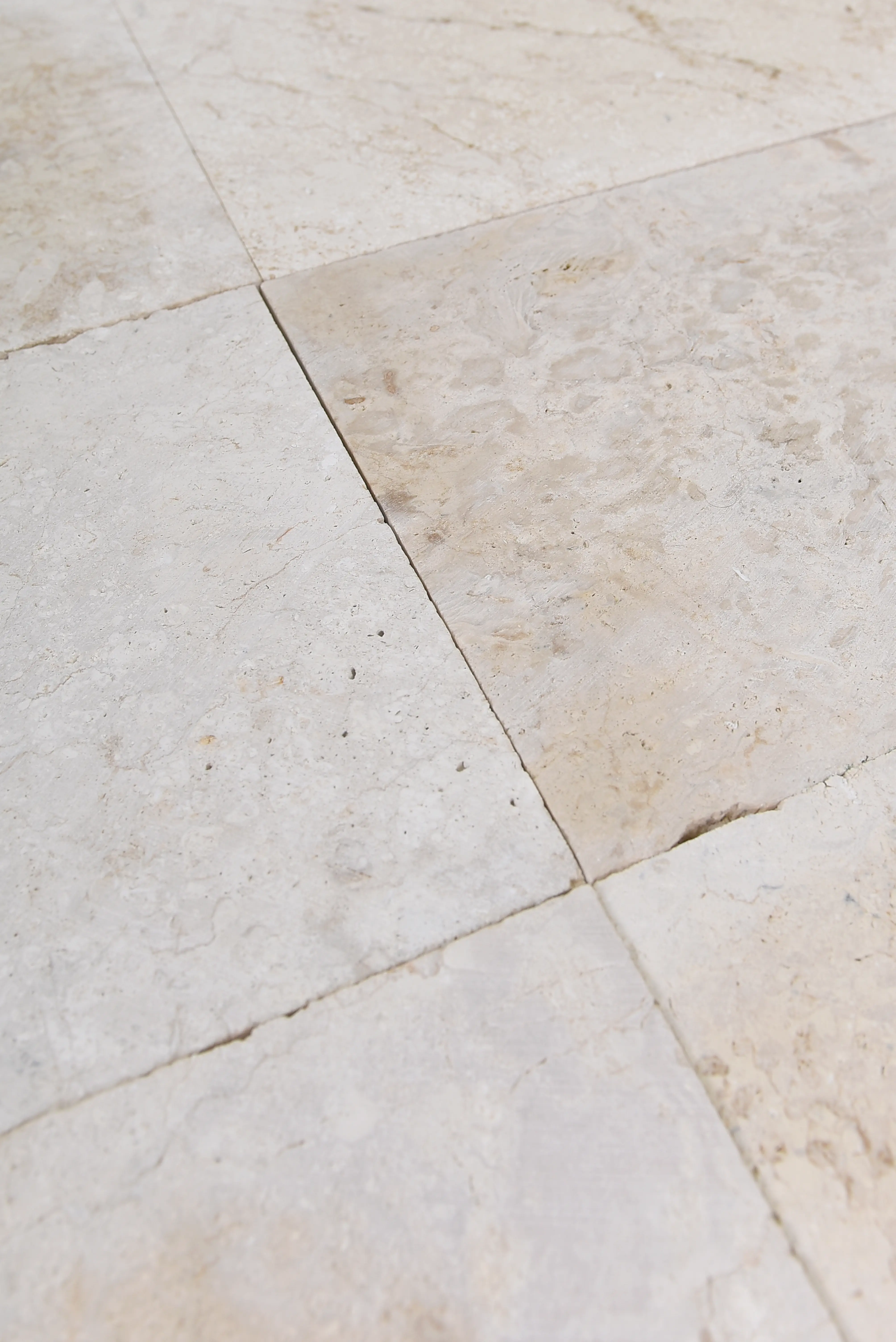
The list of damaging products marketed as general patio cleaners is longer than most people expect. Many household products cause irreversible surface damage on natural stone even in single applications — and the damage isn’t always immediately visible. Acid-based damage on limestone, for example, often appears as a dull patch that only becomes obvious when the surrounding sealed area stays bright while the etched zone fades further over time.
- Bleach and chlorine-based products: Discolor calcareous stone and degrade sealer chemistry — avoid on all but the densest granite with rough finishes
- Vinegar, lemon juice, or any acidic household cleaner: Etches limestone and travertine on contact — a single application can permanently dull a honed finish
- Ammonia-based cleaners: Break down impregnating sealers rapidly and leave a residue that attracts dirt faster than unsealed stone
- Dish soap and general household detergents: Build up a film in pores over time that clouds the surface and becomes increasingly difficult to remove
- Power washing with detergent additives: The combination of mechanical force and surfactant chemistry can open micro-cracks in softer patio stones
Citadel Stone maintains stock of stone-specific cleaning concentrates alongside our patio stone inventory, and our technical team can confirm product compatibility for your specific material before you apply anything to the surface.
How You Lay Patio Stones Affects How You Clean Them
Installation decisions made during the laying phase have direct consequences for your long-term cleaning workload. Joint width is the most significant variable — joints narrower than 3mm are nearly impossible to clean without forcing water or cleaning solution underneath the stone, while joints wider than 12mm trap organic debris and become a persistent algae breeding zone. Understanding how to lay patio stones with an appropriate joint spacing upfront saves significant maintenance effort over the life of the installation — and choosing the right patio stones cleaner for your joint material is equally important once the surface is down.
The jointing material also matters. Polymeric sand resists weed infiltration and organic buildup better than standard kiln-dried sand, which breaks down and washes out progressively. Mortar-bedded installations with flush-pointed joints are the easiest to clean — the rigid joint provides no crevice for debris accumulation and withstands pressure washing without risk of material displacement. For projects in areas with significant rainfall or where surface runoff concentrates, a mortar bed with a sealed joint surface reduces the frequency of deep-clean maintenance cycles considerably.
Getting Your Patio Stone Cleaning Approach Right
Getting your cleaning approach right from the beginning protects both the surface appearance and the structural integrity of your patio stones for decades. The sequence is straightforward: identify your stone mineralogy, select a pH-appropriate cleaner for patio stones, address drainage before it becomes a staining source, and reseal on a consistent schedule. Every shortcut in that sequence shows up eventually — as etching, as persistent algae patches, or as efflorescence that no amount of scrubbing fully resolves.
As your patio stone project evolves, related natural stone applications often come into consideration. Whether you’re planning complementary garden features or exploring landscape stone options across your property, slate landscape stone uses and care covers how another distinctive natural material performs in outdoor environments. Algae removal on dense stones like slate generally requires less aggressive scrubbing than on the open pores found across Citadel Stone travertine.
Related reading: types of patio stones · cost of patio stones.