

The biggest sourcing mistake on landscape stone projects isn’t choosing the wrong material — it’s treating all supply channels as interchangeable. Understanding where to buy landscape stones before you commit to a supplier directly shapes what grades you can access, what certifications back the product, and whether your delivery arrives in one coordinated shipment or in three frustrating partial loads. Getting the sourcing decision right saves you from the costly mid-project scramble that derails timelines and budgets.
Why Your Sourcing Channel Shapes the Outcome
Most buyers focus almost entirely on unit price when evaluating where to buy landscape stones, but price is only one variable in a much larger equation. The channel you choose determines grade consistency, minimum order quantities, lead times out of the warehouse, and the technical support available when field conditions don’t match the spec sheet. Each supply route has genuine strengths — and genuine gaps you need to plan around.
Supply channels for natural stone generally fall into four categories: direct national suppliers, regional distributors, big-box retail outlets, and local stone yards. Each operates on a different inventory model, and the differences matter enormously at project scale. Your decision should track the channel’s structural capabilities against your actual project requirements — not just its advertised price per ton.
Breaking Down Each Supply Channel
National Natural Stone Suppliers
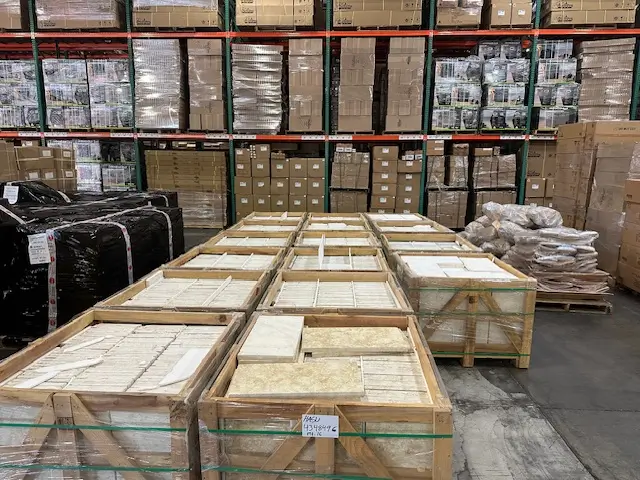
Direct national suppliers maintain high-volume inventory of quarried material sourced from domestic operations and selected quarries from the Middle East. Because they buy in large quantities, they can hold consistent stock of specific grades and finishes — which is critical when you’re matching material across multiple pallets or ordering a second shipment weeks after the first. Lead times from a well-stocked warehouse typically run one to two weeks, compared to the six-to-eight-week import cycle you’d face sourcing independently.
The Citadel Stone supply network operates on this model — carrying landscape stone inventory that ships by pallet or bulk truck to job sites nationally, with consistent grading across orders. That consistency matters when your project spans multiple deliveries or phases.
Regional Distributors
Regional distributors sit one tier below national suppliers in the supply chain. They typically carry a narrower product range than a national supplier but offer faster regional delivery windows. The trade-off is that their inventory depth can be inconsistent — a popular grade of limestone or basalt can sell out without replenishment notice, creating gaps mid-project. They’re a sound option for smaller residential scopes where you need one or two pallets rather than a coordinated multi-delivery schedule.
Big-Box Retail Outlets
Big-box retailers stock a limited selection of landscape stone — typically the highest-volume decorative grades like river rock, pea gravel, and basic flagstone. Grade control and provenance documentation are rarely available, and minimum order quantities are calibrated for homeowner use rather than commercial volume. For small accent applications these outlets work adequately, but you won’t find specialty grades, cut stone, or material with verified compressive strength data through this channel.
Local Stone Yards
A regional stone yard can be an excellent source for irregular and reclaimed material — fieldstone, rough-cut slabs, and locally quarried grades that don’t appear in national catalogs. The limitation is consistency. If you need to match material across multiple orders or specify to a standard, local yards can’t always guarantee the same quarry lot. Their strength lies in variety and the ability to hand-select material on-site, which has real value for naturalistic landscape installations.
Stone Types and What Grade Actually Means
The phrase “landscape stone” covers an enormous range of materials, and the grade distinctions within each type are just as important as the type itself. According to the Natural Stone Institute’s variety selection resources, each stone category carries distinct performance characteristics that should drive your selection before price enters the conversation.
Here’s how the major landscape stone types break down by application suitability:
- Limestone: Excellent for dry-stack walls, garden edging, and decorative groundcover — available in crushed, slab, and block formats with compressive strengths typically ranging from 4,000 to 12,000 PSI depending on density grade
- Basalt: High density and extremely low absorption rate make it ideal for water features, wet-zone borders, and fire pit surrounds — sourced primarily from volcanic formations with consistent dark coloration
- Granite: The default choice for high-traffic pathways and driveway edging — abrasion resistance and compressive strength above 15,000 PSI suit it to heavy load applications
- Flagstone (bluestone, sandstone, quartzite): Natural cleft surfaces and irregular shapes work well for stepping stones, informal pathways, and patio borders where organic aesthetics are the design goal
- River rock and pea gravel: Decorative fill material for drainage channels, dry riverbeds, and ground cover — selected for rounded form and diameter consistency, not structural capacity
Grade within each type refers to surface quality, dimensional tolerance, and color consistency. First-grade material carries tight dimensional tolerances and minimal surface variation — what you specify when matching across large areas. Second-grade material may include minor edge chips, color variation, or thickness inconsistency that requires field sorting. For landscape applications where natural variation is desirable, second-grade often delivers better aesthetic character at a lower cost.
UV Exposure and Long-Term Stone Appearance
Sun-exposed landscape stone installations face a weathering dynamic that most buyers don’t account for at the sourcing stage — ultraviolet degradation and surface oxidation alter the appearance of certain stone types significantly over the first three to five years. This isn’t a quality defect; it’s a material property that varies by stone type and finish, and you need to factor it into both your selection and your maintenance plan.
Lighter limestone grades and tumbled travertine are particularly susceptible to color shift under sustained UV exposure. The calcium carbonate surface gradually brightens and develops a chalky undertone as organic compounds in the stone oxidize. Iron-bearing stones — certain sandstones and some basalt varieties — can develop surface rust toning as mineral oxidation progresses. In most cases this patina enhances the natural look, but if consistent color is a design requirement, you need to select accordingly and establish a sealing schedule from day one.
The USGS dimension stone production data documents the natural mineral variability across quarry sources — a useful reference when evaluating how a specific stone type is likely to respond to extended sun exposure based on its mineral composition. Dense, low-absorption stones like granite and basalt hold their color profile significantly longer than porous sedimentary types, largely because their sealed surface structure limits the oxidation pathways UV exposure exploits.
For landscape stone in high-UV installations, the practical guidance is:
- Specify a penetrating sealer application within 30 days of installation — this is especially critical for limestone and sandstone in south-facing exposures
- Plan a resealing cycle every 18 to 24 months for porous sedimentary stone in full-sun positions
- Choose honed or natural cleft finishes over polished finishes for outdoor use — polished surfaces lose their sheen faster under UV and require more maintenance to retain appearance
- Understand that tumbled or brushed finishes naturally absorb the look of UV weathering more gracefully than precision-cut surfaces where color shift becomes visually obvious
- Dark-colored stones in full-sun positions absorb significantly more solar radiation, which can accelerate surface micro-cracking in stones with high feldspar content
Evaluating Supplier Quality Controls Before You Order
The questions you ask a potential supplier before placing a landscape stone order reveal more about material quality than any catalog description. A supplier with genuine material expertise should be able to discuss quarry sourcing, lot consistency, and testing data without hesitation. Vague answers to specific questions are a reliable signal that grade control isn’t happening systematically.
Key questions to ask any supplier before committing:
- Can you provide the quarry source or origin region for this material lot?
- What compressive strength and absorption rate data is available for this stone type?
- Are dimensional tolerances held to a published specification, or is there accepted variance?
- How is color consistency controlled across pallets in the same order?
- What is the warehouse stock level for this material, and is it a stocked or special-order item?
- What are the lead times if you need a replenishment shipment two weeks after the first delivery?
At Citadel Stone, we perform visual and dimensional quality checks at the warehouse level before material ships — a step that eliminates the grade surprises that surface when pallets are opened on-site. Our technical team can provide sourcing detail and material data for most landscape stone types we carry, which directly supports specification documentation for project submittals.
Ordering Logistics and Delivery Planning
Logistics planning is where landscape stone projects either run smoothly or accumulate costly delays. The critical variables are truck access at the delivery site, pallet staging area availability, and whether your project timeline can absorb the lead time gap between order placement and material arrival on site.
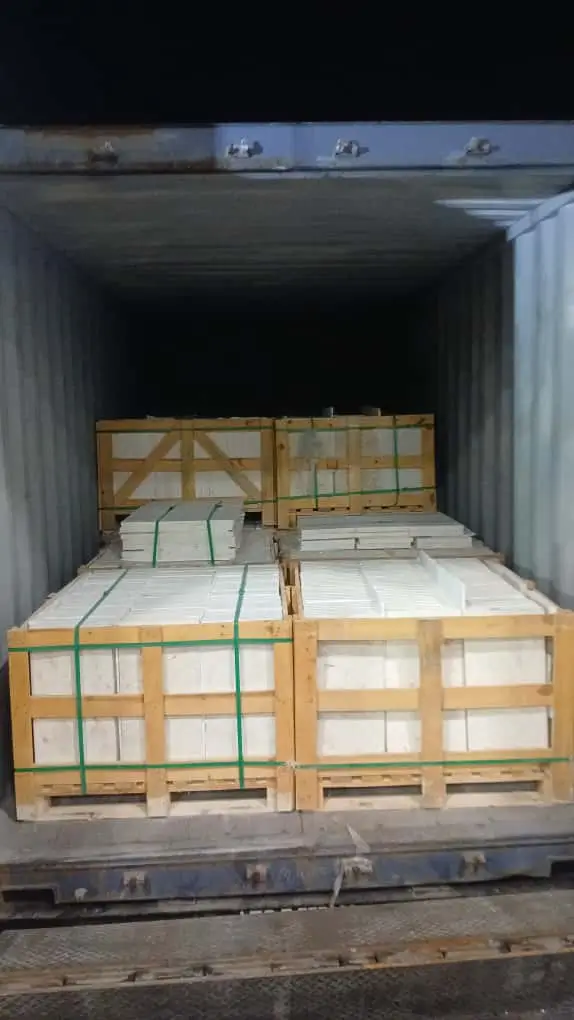
For residential landscape projects, pallet delivery via a standard flatbed truck handles most requirements. You’ll need a cleared staging area close to the work zone, because moving stone by hand from a distant drop point adds significant labor time. For larger commercial or municipal landscape scopes, bulk truck delivery in loose material or super-sacks reduces per-ton cost but requires a site loader and significantly more staging space. Confirm with your supplier whether they can deliver to both your scheduled pallet drops and any supplemental bulk material runs without requiring separate freight coordination.
Lead time planning deserves more attention than most buyers give it. The American Society of Landscape Architects consistently identifies material delivery sequencing as one of the primary drivers of landscape installation delays. Stocked warehouse inventory can typically ship within five to ten business days for pallet quantities. Special-order material, import-sourced grades, and oversized slabs typically run four to eight weeks from confirmation. Build your project schedule around realistic lead times — not optimistic ones — and confirm stock availability before the project timeline is locked.
A few additional logistics details that matter in practice:
- Order 8 to 12 percent overage on cut stone and flagstone — field breakage, irregular fits, and pattern cuts consume more material than most budgets account for
- For phased projects, order all material from the same quarry lot if at all possible — color consistency across lots isn’t guaranteed even within the same stone type
- Confirm the supplier’s policy on damaged pallets before delivery — some suppliers require damage claims within 24 hours of receipt, and field inspection on arrival is your documentation window
- If site truck access is constrained, discuss a boom truck or crane-off delivery option with your supplier early — retrofitting the delivery method after the order is placed adds cost and delays
Understanding Pricing Factors for Landscape Stone for Sale
Landscape stone for sale across different channels carries pricing that varies based on several cost drivers that aren’t always visible in the quoted price. Understanding what’s baked into a price — and what isn’t — prevents budget surprises at the invoice stage.
Material pricing is driven primarily by stone type, grade, finish, and origin. Dense igneous types like basalt and granite typically command higher prices than sedimentary types like limestone or sandstone, reflecting higher quarrying and processing costs. Honed or cut finishes add processing cost over natural cleft or tumbled finishes. Material sourced from selected quarries from the Middle East — which produces some of the world’s finest limestone and travertine — carries import logistics costs that domestic-quarried material doesn’t.
Beyond material cost, verify what the quoted price includes:
- Freight cost — is it included, or quoted separately based on delivery zip code and quantity?
- Minimum order thresholds — some suppliers require full-pallet minimums; others can accommodate smaller quantities at a freight premium
- Delivery format — loose bulk, palletized, or super-sack each carries different offload requirements that affect your site cost
- Lead time premiums — rush orders from suppliers who hold warehouse inventory may carry an expedite fee; factor this in when project timelines compress
Documentation and Specification Requirements
Commercial and municipal landscape projects increasingly require material documentation as part of project close-out — particularly when natural stone is specified in publicly funded or permitted work. Understanding what documentation you can realistically obtain from a given supplier before you commit to the channel prevents late-project compliance gaps.
Documentation requirements by project type typically include:
- Material test data (compressive strength, absorption rate, freeze-thaw cycle performance) — available from established national suppliers; rare from retail channels
- Country or region of origin documentation for import-sourced material
- Product data sheets with dimensional tolerances, finish specifications, and recommended applications
- Safety Data Sheets (SDS) for any treated or sealed material
- Packing lists and delivery records for project closeout files
The ASTM standards framework — specifically the dimension stone testing standards maintained by ASTM International — provides the testing methodology against which most natural stone product data is measured. Suppliers who can reference ASTM test data for their landscape stone products are operating at a documentation standard that supports specification submittals. Suppliers who can’t provide test data should prompt you to investigate whether grade control is happening at all.
Where to Buy Landscape Stones: Making the Right Sourcing Decision
Deciding where to buy landscape stones comes down to matching your project’s scale, grade requirements, and timeline to the supply channel that can actually deliver on all three without compromise. National suppliers with consistent warehouse inventory and documentation capability support commercial and complex residential projects best. Regional yards and distributors fill the gap for smaller scopes and specialty grades. Retail channels are adequate for decorative fill but not for specification-grade work.
The common thread across all successful sourcing decisions is asking the right questions before the order is placed — about grade consistency, lead times, truck access, and documentation availability. For a related look at how crushed material integrates into landscape design, using crushed stone in landscape applications covers the practical details worth reviewing before finalizing your material plan. Stone for nationwide projects reaches driveways and job sites by pallet or bulk truck, and Citadel Stone coordinates freight for either.
Related reading: river stone landscape · types of landscape stone · landscape stone cost breakdown.