What Most Installers Miss About Crushed Landscape Stone
Crushed landscape stone installations fail — not because of the material, but because the installer underestimated what’s happening below grade. The stone you select for your yard is only as stable as the subgrade beneath it, and that subgrade varies dramatically depending on your soil composition. Most professionals get the surface layer right and lose the battle underground, watching their neatly spread crushed stone migrate, sink, or heave within a season or two.
The good news is that understanding a handful of non-obvious variables transforms your results completely. You’ll approach aggregate depth, compaction cycles, and edging anchoring differently once you see crushed landscape stone as a system rather than a surface product. This article walks you through the critical decisions — the ones that separate installations that hold for two decades from those that need annual correction.
Choosing the Right Crushed Stone for Your Application
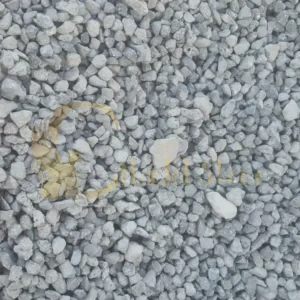
Not all crushed landscape stone performs the same way, and the category you choose should follow the application’s functional demands — not just your aesthetic preferences. Angular crushed stone locks together under compaction and resists migration far better than rounded alternatives. For pathways, driveways, and utility areas where you need stability, angular crushed granite or limestone in the 3/4-inch to 1-inch range delivers the interlock you need.
Finer crushed stone — in the 1/4-inch minus or screenings range — behaves differently. It compacts to a near-solid surface, which works well for base layers beneath flagstone or stepping stones. However, it drains poorly when used as a finish layer because the fine particles seal together and shed water laterally rather than allowing infiltration. According to American Society of Landscape Architects natural stone hardscape guidance, drainage geometry is one of the most consistently underspecified elements in residential hardscape projects.
You’ll also want to consider the source material’s hardness. Crushed limestone tends to be softer and more prone to surface wear under heavy foot traffic, while crushed granite holds its edge profile longer. For decorative beds or low-traffic areas, either performs well. For paths that take daily use, granite-based crushed stone gives you a longer service window before the angular edges round off and migration begins.
Depth, Compaction, and Base Requirements
Here’s what most specifiers underestimate: the required depth of crushed landscape stone is not a fixed number — it’s a function of your subgrade conditions. A standard recommendation of 3 to 4 inches works in stable, well-draining sandy loam. Put that same 3-inch layer over expansive clay, and you’ll be releveling within 18 months as the clay shrinks and swells seasonally.
For clay-heavy subgrades, you should plan for a geotextile separation fabric beneath your crushed stone layer, followed by a 4- to 6-inch compacted aggregate base before the finish stone goes down. The fabric prevents clay migration into your drainage layer — without it, clay particles wick upward through the pore spaces and effectively turn your clean crushed stone into compacted mud over time. This is one of the most common field failures we see, and it’s entirely preventable.
- Sandy soils: 3 to 4 inches of crushed stone with light compaction is usually sufficient — drainage is typically excellent
- Clay soils: install geotextile fabric, a compacted sub-base of 4 to 6 inches, then your finish crushed stone layer on top
- Caliche-heavy soils: scarify to at least 6 inches, remove loose material, and compact before any aggregate goes down
- Rocky subgrades: check for drainage pockets — trapped water beneath a rocky shelf will cause more damage than poor compaction
- Organic or fill soils: these require the deepest base treatment — sometimes 8 to 10 inches total — before any surface aggregate is stable
Compaction matters regardless of soil type. A plate compactor run in two passes over your sub-base reduces long-term settlement by up to 60% compared to hand-tamped or uncompacted bases. Rent the equipment — it’s not optional on any project larger than a small garden bed.
Edging and Containment: The Detail That Defines Long-Term Performance
Crushed stone migrates. That’s its nature, and it isn’t a defect — it’s a physics reality you need to design around. Your edging system is the single most important structural element in a crushed landscape stone installation, and it deserves more engineering attention than most homeowners give it.
Plastic edging flexes over time and rarely holds crushed stone cleanly at grade. For any pathway or driveway application, steel or aluminum landscape edging staked at 18-inch intervals performs dramatically better. For a more permanent solution, a concrete mow strip or mortared natural stone border eliminates the containment problem entirely. The Natural Stone Institute’s landscape stone variety selection guide highlights containment as a key factor in long-term aggregate stability for residential applications.
Depth at the edging line matters too. Your crushed stone surface should sit 1/2 to 3/4 inch below the top of your edging when freshly installed — this accounts for the slight spreading that occurs during the first few weeks as traffic and rain settle the layer. If you install flush to the edging top, you’ll have material spilling out within a month.
Drainage Performance and Why It Matters More Than Aesthetics
The drainage performance of crushed landscape stone is the feature most buyers undervalue when they’re focused on how the finished yard will look. Properly installed crushed stone with appropriate grading allows water to percolate directly into the subgrade rather than pooling or running off — this is particularly relevant for projects where stormwater management matters. According to USGS natural landscape stone production data, permeable aggregate surfaces have seen growing adoption in residential hardscape specifically for their stormwater management benefits.
For effective drainage, your crushed stone layer needs a slight cross-slope — 1% to 2% is enough to direct surface water away from structures while still maintaining the visual appearance of a flat installation. Most people notice that standing water pooling in their crushed stone areas is almost always a grading problem, not a stone problem. Get the slope right during installation and you’ll avoid 90% of the drainage complaints that come up in year two.
- 1/4-inch crushed stone or screenings: good for compacted bases, poor for surface drainage
- 3/8-inch crushed stone: balances drainage and stability well for low-traffic areas
- 3/4-inch crushed stone: optimal drainage in high-precipitation climates, comfortable underfoot
- 1-inch to 1.5-inch crushed stone: maximum drainage, best for rain gardens or dry creek bed applications
- Clean crushed stone (no fines): drains fastest but provides least compacted stability
Soil Conditions and Subgrade Preparation
Your soil composition is the variable that determines whether a crushed landscape stone installation looks perfect in year one and deteriorates by year three, or maintains its performance for a decade or more. Expansive clay soils are the most common challenge. Clay absorbs water and swells — in some regions, clay subgrades shift vertically by 1 to 2 inches seasonally. That movement translates directly into surface unevenness, edging displacement, and aggregate migration.
Treating the subgrade before installation starts is not optional on clay-heavy lots. A layer of compactable base aggregate — typically a 3/4-inch crushed stone or road base material — creates a stable transition zone between the moving clay and your finish surface. At Citadel Stone, we recommend pairing your finish crushed landscape stone order with our compactable base stone to ensure the base and finish layers are matched for compatible gradation and drainage performance.
Sandy soils present a different challenge. They drain freely — sometimes too freely — and they don’t provide much lateral resistance to edging stakes. In sandy subgrades, you may need longer stakes at tighter spacing to keep your containment system anchored through the seasonal shifts that occur even in well-draining conditions. Rocky subgrades are generally the most stable, but they require careful attention to drainage pockets where water can collect beneath the stone and undermine the base layer over time.
Calculating Coverage and Ordering the Right Quantity
Coverage calculations for crushed landscape stone trip up more project managers than almost any other material estimate. The standard formula — square footage divided by 12, multiplied by desired depth in inches, divided by 27 for cubic yards — gives you a volume figure, but it doesn’t account for compaction loss. Crushed stone settles 15% to 20% after compaction and initial traffic. Order to that compacted depth, and your installation will be noticeably thin within a few weeks.
The practical approach is to add 20% to your calculated volume as a compaction buffer. For a 500-square-foot pathway at 4 inches of finished depth, your nominal calculation gives you about 6.2 cubic yards — but you should order 7.5 cubic yards to account for compaction and any low spots you discover during installation.
- Measure your coverage area carefully — irregular shapes benefit from being broken into rectangles for calculation
- Confirm your desired finished depth, not your installed-before-compaction depth
- Add 20% for compaction loss on any project with foot traffic or vehicle access
- Add 10% for projects in purely decorative beds with no compaction requirement
- Verify stock availability before finalizing your project timeline — popular crushed stone sizes can have lead times that affect scheduling
- Confirm delivery access to your site before ordering — tight gates or steep grades may affect whether a full truck delivery is practical
Citadel Stone ships crushed landscape stone by the cubic yard, and our team can help you validate your coverage calculation before your order ships — a quick review of your dimensions typically catches the most common measurement errors before material is on the truck.
Maintenance and Longevity: Setting Realistic Expectations
Crushed stone requires less maintenance than most organic mulch alternatives, but it’s not zero-maintenance. Over time, fine particles wash in from surrounding soil, organic debris accumulates in the voids, and the surface gradually loses its clean aggregate appearance. How quickly this happens depends heavily on your site conditions — sheltered areas under tree canopy accumulate debris faster, and slopes with erosion exposure collect silt particles that clog drainage.
A practical maintenance schedule for most residential crushed landscape stone installations runs like this: rake and redistribute surface stone annually to address migration and low spots, top-dress with fresh stone every three to five years to maintain your specified depth, and use a leaf blower on a low setting to clear debris from the surface before it works its way into the aggregate. Avoid power washing — high-pressure water drives fine particles deeper into the layer rather than removing them.
You can expect 10 to 15 years of solid performance from a properly installed crushed stone pathway with minimal maintenance, and decorative bed applications can last considerably longer since they don’t take the compaction stress of foot traffic. The installations that fail early are almost always traceable to a base preparation shortcut or inadequate containment — not to the quality of the stone itself.
Final Recommendations for Crushed Landscape Stone
Getting crushed landscape stone right comes down to decisions made before a single shovel of material hits your yard. Subgrade preparation, drainage geometry, containment system quality, and accurate volume calculation all outweigh the specific stone selection in determining how your installation performs over time. The material you choose matters — but the system you build around it matters more.
Your stone selection should follow your application’s performance demands rather than catalog preference. Angular crushed granite for high-traffic paths, clean crushed limestone for decorative applications, finer gradations for compacted base layers. Pair every finish stone layer with a proper sub-base treatment that accounts for your specific soil composition — whether that means a geotextile on clay, extra stake density in sandy subgrades, or drainage remediation on rocky lots. As you explore complementary options for your outdoor space, river stone for yard transformations offers a look at how rounded natural stone can work alongside crushed material in creative landscape applications. Sourced direct from quarries in Turkey, the Mediterranean, and beyond, crushed stone from Citadel Stone ships by the cubic yard to most regions.
Related reading: faux stone landscape border · landscape design with stone · How to Calculate Landscape Stone for Any Project.