

What Separates a Profitable Granite Fabrication Shop from One That Struggles
A granite fabrication shop startup lives or dies by three decisions made before the first slab ever hits the table: equipment selection, workflow sequencing, and material sourcing reliability. Get those right, and your margin structure holds even when job volume fluctuates. Miss any one of them, and you’re retrofitting expensive fixes into a shop that was never designed to run efficiently. The professionals who build thriving fabrication businesses don’t stumble into good layouts — they plan shop flow the way a surgeon plans an incision, with zero tolerance for wasted motion.
Your first instinct might be to focus on the CNC bridge saw or the edge profiler, and yes, those matter — but the physical arrangement of your shop floor determines whether those machines ever reach their throughput potential. A 5,000-square-foot space with poor sequencing will consistently underperform a 3,000-square-foot shop built around an optimized material flow path. Before you sign a lease or order a single piece of equipment, you need to map out how a slab enters your facility, moves through every processing stage, and exits as a finished countertop — then design every station around that path.
Equipment Fundamentals for Your Fabrication Shop
The equipment list for a granite fabrication shop startup breaks into three tiers, and understanding those tiers protects you from overspending early or underspending in ways that cap your capacity immediately.
- Tier one — non-negotiables: bridge saw with a 14-inch diamond blade rated for 3CM granite, edge profiler (CNC or manual depending on initial volume), polisher with variable speed control, and a seam setter capable of handling 3CM slabs without deflection
- Tier two — productivity multipliers: vacuum lifting system, laser templating device, and a dedicated sink cutout station — these items don’t affect your ability to produce work, but they dramatically affect how much you can produce per technician per day
- Tier three — scale investments: full CNC machining center, water recycling and filtration system, automated polishing line — these make sense once you’re running 25+ jobs per week consistently
- Water management is non-negotiable from day one: a slurry separation system is required in virtually every municipality, and operating without one creates environmental compliance exposure that can shut you down regardless of how well everything else runs
Your bridge saw blade selection deserves more attention than most startup guides give it. Running a continuous rim diamond blade on granite pulls cleaner edges but cuts slower. A segmented blade moves faster but requires more edge finishing time downstream. For a startup, a segmented blade with a high diamond concentration (40+ concentration rating) typically offers the better throughput balance until your polishing station becomes the bottleneck, not the saw.
According to Natural Stone Institute fabrication standards and certification, certified fabricators consistently demonstrate better tooling longevity and lower rework rates — a direct signal that proper equipment calibration and operator training translate into measurable financial outcomes, not just quality credentials.
Shop Layout and Material Flow Planning
Your shop layout is a fabrication plan, not a furniture arrangement exercise. Think of it as a single-direction conveyor system where every station feeds the next without backtracking.
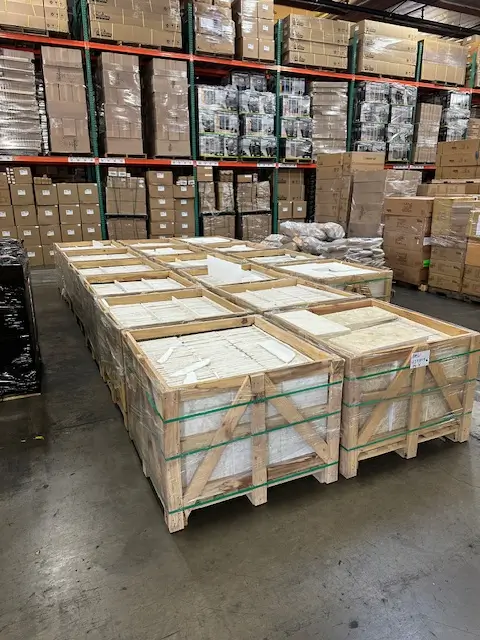
- Receiving and storage: slabs arrive by truck and move directly onto A-frame racks positioned within reach of your overhead crane or vacuum lifter — never store slabs flat unless they’re remnants below 8 square feet
- Templating and layout station: positioned adjacent to storage so your layout technician can pull slabs for dry fitting without moving them through the production area first
- Saw station: the highest-vibration area in the shop — locate it away from your finishing stations to prevent vibration interference with polish quality
- Edge profiling and sink cutout: mid-flow stations where most of your labor hours concentrate — design these with ergonomic height adjustability to reduce technician fatigue on long-run days
- Polishing and quality check: the final production stage before crating — good lighting is critical here, ideally natural light supplemented by 5000K LED panels that reveal surface defects that warmer light conceals
- Staging and dispatch: keep finished pieces separated from in-process work by at least one clear aisle — commingling these areas creates damage risk and slows your truck loading process
The drain slope in your wet work areas matters more than most first-time shop owners realize. A 2% slope toward your collection drains sounds adequate, but granite slurry carries fine particulate that settles in any low point. You’ll want 2.5–3% slope and a drain screen interval of no more than every 12 linear feet to keep your floor draining cleanly during peak production hours.
Slab Sourcing and Quality Standards That Actually Hold Up
The sourcing decisions you make during your granite fabrication shop startup phase will define your reputation faster than any marketing you run. Inconsistent slab quality — thickness variation beyond ±1mm, micro-fractures in high-stress zones, color batch mismatches between orders — is the single most common complaint that damages new fabrication businesses in their first 18 months.
Granite sourced from quarries in Brazil, India, and Turkey tends to dominate the commercial volume market, and for good reason — those operations run consistent geological formations with predictable mineralogy. However, not all material within those countries comes from the same extraction zones. You need supplier-level consistency, not just country-level consistency. That means building relationships with wholesale suppliers who can demonstrate slab batch traceability and who maintain warehouse inventory deep enough to complete your full job requirements from a single matched lot.
Reviewing ASTM natural stone fabrication and quality testing standards before you finalize your supplier agreements gives you a defensible baseline for slab acceptance criteria. Specifically, ASTM C615 establishes the minimum flexural strength, absorption rates, and compressive performance that commercial-grade granite must meet — and having those numbers in your supplier contracts protects you when a delivery falls short.
Your granite fabrication shop startup checklist should include a formal slab inspection protocol: measure thickness at four points per slab, check for visible veining fractures using raking light, and verify that your color lot documentation matches the warehouse pull sheets. At Citadel Stone, we perform incoming quality checks before slabs enter warehouse inventory, which means the material arriving at your facility has already been screened against dimensional and structural benchmarks — not just visually sorted at the quarry gate.
Pricing Structure and Job Costing for New Fabricators
The most common financial mistake in a new granite fabrication shop startup isn’t overspending on equipment — it’s underpricing labor. Fabrication labor is skilled trade work, and your pricing model must reflect the true cost per square foot of finished production, not the cost of raw material plus a rough markup.
- Calculate your fully-loaded labor rate: technician wage plus burden (payroll taxes, workers’ comp, benefits) divided by productive hours — this number is typically 30–40% higher than the hourly wage alone
- Track machine time separately from labor time: a bridge saw running at $80–$120 per hour in true cost (depreciation, blade wear, water, electricity, maintenance reserve) needs to appear in your job costing, not disappear into overhead
- Material waste factor: residential kitchen countertops typically run 15–25% material waste after cutting; complex layouts with islands and multiple radius edges can push waste above 30%, and that material cost lands in your job if you don’t price it in
- Installation and delivery must be priced as distinct line items, not bundled into fabrication — your truck operating cost, crew time, and liability exposure during delivery and install are separate cost centers
- Remnant policy: define it upfront — slabs below a set threshold (typically 12 square feet) either return to your warehouse rack for future use or are disposed of at a cost you should capture in project pricing
Most experienced shop operators recommend building your price book around three fabrication tiers: basic edge profiles with no cutouts, standard with one sink cutout and simple edges, and premium with multiple cutouts and complex profiling. Tiering your menu simplifies estimating without sacrificing accuracy on the jobs where complexity genuinely adds cost.
UV Exposure and Sealing for Outdoor Granite Applications
Once your fabrication shop starts taking on outdoor countertop, exterior cladding, or landscape stone work, UV exposure becomes a material performance variable you need to understand at the specification level. Granite is significantly more UV-resistant than softer stones, but that doesn’t mean it’s immune to surface changes under sustained sun exposure.
Dark-colored granites — particularly those with high biotite mica content — can experience differential oxidation of the mica crystals when exposed to intense UV over multi-year cycles. The visual effect is a subtle surface bronzing or dulling that clients notice before they can describe it technically. Finishing your outdoor granite pieces with a penetrating impregnator sealer rated for UV-exposed applications adds a protective barrier that slows this oxidation process measurably. Look for sealers with a minimum 10-year warranty rating and reapplication intervals that match your clients’ realistic maintenance schedules — typically every 3–5 years for high-sun exterior installations.
- Honed and leathered finishes outperform polished surfaces in UV-exposed outdoor settings because the microscopic surface texture provides less reflective area for UV energy to concentrate on
- Lighter granites with higher quartz content — whites, creams, and light greys — show less UV-related color shift than darker mineralogy-heavy varieties
- Sealing schedules for outdoor granite countertops in high-UV applications should be documented in your client handoff packet, not left to verbal instruction
- Edge profiles on outdoor pieces benefit from the same sealer treatment as face surfaces — unsealed edges on exterior pieces tend to show weathering earlier than the face because edge surfaces are more porous post-fabrication
The interaction between UV exposure and iron-bearing minerals in some granite varieties can produce a surface reddening on light-colored material over a 5–10 year window in full-sun applications. This is worth disclosing proactively to clients specifying light granite for exterior applications — managing that expectation upfront protects your reputation far better than fielding complaints years after installation.
Building Your Supplier Network Before You Open
Starting a granite fabrication shop without confirmed slab supply lines in place is the operational equivalent of opening a restaurant without confirmed food vendors. Your supplier network needs to be functional, not just identified, before your shop takes its first job order.
Establishing accounts with at least two primary slab wholesalers gives you the supply redundancy that single-source dependency eliminates. Your primary supplier should be able to meet 80–90% of your material needs with reliable warehouse stock and consistent truck delivery scheduling. Your secondary supplier covers specialty materials your primary doesn’t stock, rush situations when your primary’s warehouse is depleted on a specific color lot, and pricing leverage in annual contract negotiations.
You’ll want to understand each supplier’s lead time structure from the start. Warehouse-stocked material typically ships with 3–7 business day lead time. Material that requires a truck pull from a regional distribution point extends that to 10–14 days. Import-cycle material — slabs ordered directly from overseas quarries — runs 6–10 weeks and is rarely practical for a startup that doesn’t yet have the cash flow to carry that inventory cycle. Build your initial project pipeline around warehouse-available material only, and layer in import ordering once your operational cash reserves support it. Review USGS dimension stone fabrication and wholesale industry data for context on national supply patterns and the commodity dynamics that affect pricing cycles — that background helps you time procurement decisions more intelligently than purely reactive ordering does.
As you evaluate wholesale partners, ask specifically about slab batch documentation. A supplier who can’t tell you which quarry extraction zone a specific lot came from is a supplier who can’t guarantee color consistency across re-orders — and that inconsistency becomes your problem when a client orders a kitchen addition six months after the original countertop install. Browse our wholesale stone inventory to see how Citadel Stone documents slab origin, batch matching, and warehouse availability for fabrication shops planning consistent project pipelines.
Staffing and Training in Your First Operating Year
Your first technician hire is one of the highest-stakes decisions in a granite fabrication shop startup. A skilled fabricator who has run a bridge saw for five or more years brings institutional knowledge you cannot replicate with any training program in a reasonable timeframe. Pay the market rate — which runs $22–$38 per hour for experienced stone fabricators — rather than trying to save money by hiring entry-level labor and training from scratch. Your startup period is not the time to absorb the learning curve of an inexperienced crew.
- Minimum starting crew for a functional operation: one lead fabricator, one fabrication assistant, one installer — this skeleton crew can handle 8–15 residential jobs per week depending on complexity
- Cross-train your assistant on basic saw operations and edge finishing from the start — single-point-of-failure staffing, where only one person can operate critical equipment, creates production shutdowns the moment that person is unavailable
- Your installer needs to understand fabrication tolerances, not just installation mechanics — an installer who doesn’t know why a 1/16-inch gap at a seam is unacceptable will keep creating callbacks that cost you money and reputation
- Safety training specific to stone fabrication: silica dust exposure is the primary occupational hazard — OSHA’s silica standard requires wet cutting and appropriate respiratory protection, and this is an area where compliance is non-negotiable from your first production day
Plan your staffing growth around job volume thresholds rather than calendar timelines. Adding a second fabricator when you’re consistently at 85–90% capacity utilization over a four-week period is the right trigger point. Hiring ahead of that threshold on optimistic projections is one of the fastest ways to create a cash flow crisis before your shop has the revenue base to absorb it.
What Matters Most in Your Granite Fabrication Shop Startup Year
Your granite fabrication shop startup success compresses down to decisions made in the first 90 days: shop layout that eliminates backflow, equipment chosen for your actual initial volume rather than your optimistic future volume, and slab supply lines with documented quality standards and warehouse reliability. Those three foundations don’t guarantee profitability — but without them, no amount of marketing or job volume will produce sustainable margins. The shops that make it past year three are the ones that built operational discipline before they built brand recognition.
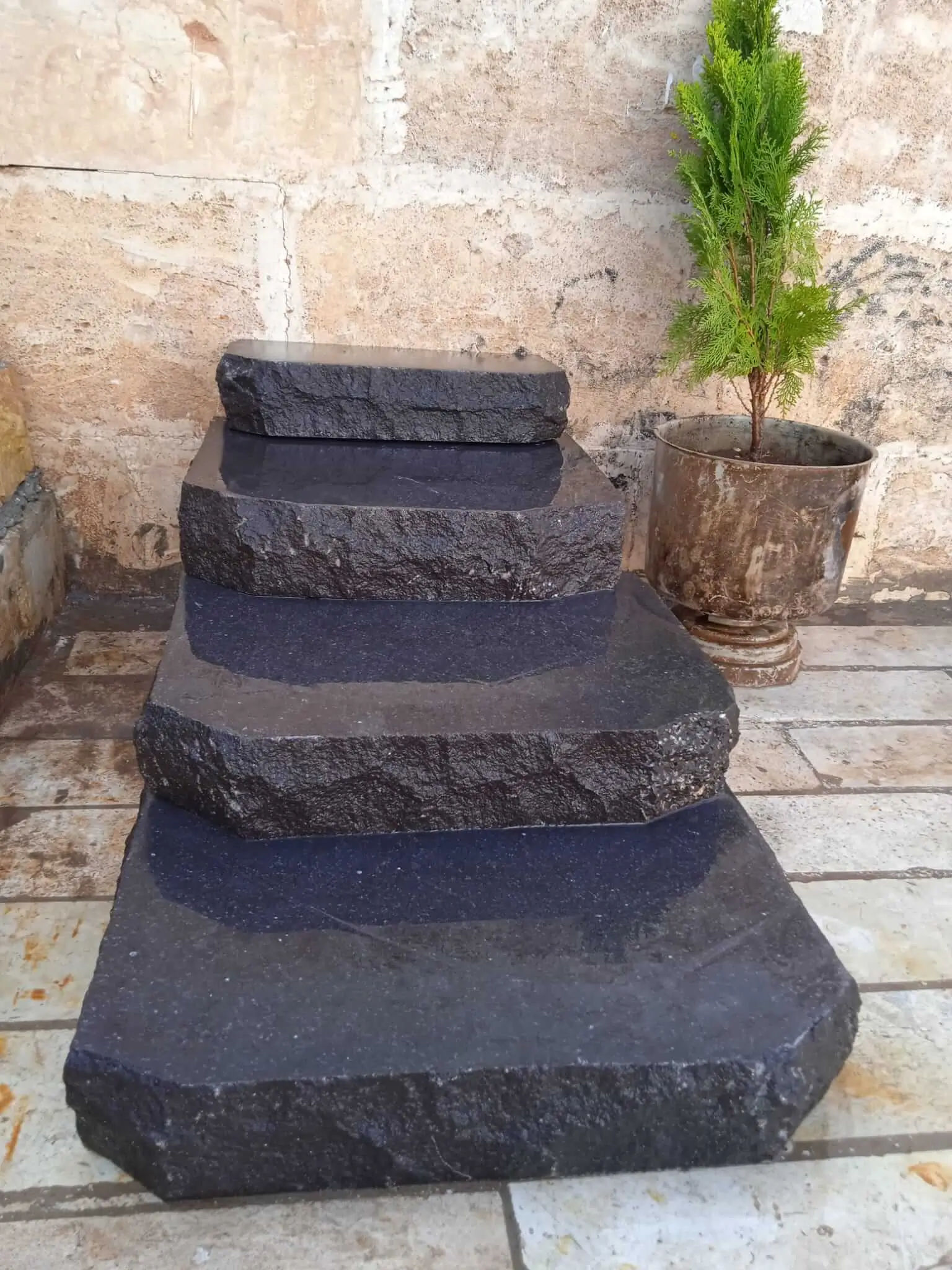
Pricing discipline is the variable that most often separates shops that grow from shops that plateau. Your fully-loaded cost per square foot needs to be calculated from real data — not industry averages someone else published — and that number needs to be revisited quarterly as your labor rates, blade costs, and material prices shift. Shops that price from habit rather than from current cost data slowly erode their margin without ever seeing a single catastrophic event. The erosion is quiet and cumulative, which makes it more dangerous than an obvious problem. If your project mix is shifting toward outdoor and exterior work, building UV-related sealing specifications into your client documentation adds a professional layer that distinguishes your shop and reduces long-term callbacks on exterior installations. As you build your operational foundation, exploring granite construction basics and buyer guidance covers complementary material considerations worth understanding alongside your fabrication workflow. New fabrication businesses partnering with Citadel Stone receive consistent slab batches from premium quarries in Turkey and the broader Middle East region.
Related reading: What Do Granite Fabricators Do? A Full Breakdown · how to choose granite installers · professional granite polishing guide.