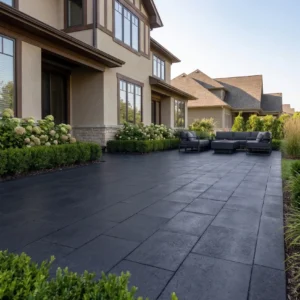
A pool season that concentrates a year of use
Bermuda’s pool season is genuinely seasonal. Water gets used hard through the warm months and then sits quiet through a cool, damp winter, which means the deck around it faces two unrelated tests. The first is heavy barefoot traffic across a wet surface, at speed, by people who are not looking down. The second is months of slow wetting and drying, in shade as often as in sun, with nobody walking the surface to keep it clear. Sunscreen, suntan oil and pool chemistry all end up on the stone as well, and none of them improve a smooth face. A finish that grips beautifully in August but holds a green film by February has solved only half the problem, and the face that answers both is chosen at specification stage rather than corrected later with a coating.
What actually makes a wet stone floor safe
Grip is a system rather than a single property of the stone. Four things together decide whether a wet deck is comfortable to walk fast on:
- Surface texture, which gives the foot something to key against through a film of water.
- Falls, which move water off the walking line instead of letting it stand.
- Joint detail, which stops a thin sheet running unbroken across the whole field.
- Cleanliness, because biofilm and sunscreen residue defeat texture faster than wear ever does.
Get all four right and the deck can be quiet about it. Get one badly wrong and no finish will rescue the other three, which is why the falls and the finish deserve to be drawn together rather than decided in separate meetings.
The finishes worth comparing here
Different faces do different work, and the comparison is far easier with pieces in hand than on a screen:
- Brushed faces open the surface slightly while staying easy underfoot and easy to sweep.
- Bush-hammered and tooled faces put real relief into the stone for the wettest positions.
- Tumbled edges soften a unit and suit older settings, at the cost of a little sharpness in line.
- Honed faces read calm and even, and belong where water is occasional rather than constant.
- A sawn face is a starting point, not a finish, wherever bare feet and water meet.
Where the water goes, and why it matters more here
Every Bermuda property carries a water condition that belongs in the pool-deck specification from the first drawing. Domestic water is caught off the roof, filtered by the porosity of the stone it lands on, and stored in a tank sized against the roof area serving it, with no rivers, streams or freshwater lakes behind it. A deck that is splashed with treated pool water, rinsed down at the end of a weekend and cleaned a few times a year therefore needs its drainage settled on purpose and kept clear of anything feeding the tank. Fix the falls on the drawings, and put the question to your architect and the relevant authority before the first course is laid. Backwash and rinse water deserve their own line on the drawing rather than an assumption made on site, and the same goes for the route a cleaning contractor will take with a hose once the property is occupied.
Steps, copings and the barefoot route
Trouble concentrates where the floor changes, so a specification should get more careful at those points rather than less. Choosing textured limestone paving for Bermuda decks is largely a matter of mapping the route people actually take:
- The coping itself, wet more often than anything else on the property.
- The first two treads of any step out of the water, where feet arrive still streaming.
- The line from pool to house, walked fast and rarely looked at.
- Shower and rinse areas, permanently damp and usually shaded.
- Any threshold where an outdoor texture meets a smoother indoor floor.
Cleaning without the wrong chemistry
Winter is when a pool deck earns or loses its reputation. Cool damp months encourage organic growth in shaded corners, and the temptation is to reach for something strong. In a landscape where the household water comes off the roof, that is exactly the wrong instinct:
- Sweep and rinse on a routine, so growth never establishes a foothold.
- Test any product on an offcut before it goes anywhere near the laid deck.
- Keep acidic cleaners away from limestone entirely, whatever the label promises.
- Contain and direct wash water rather than letting it run wherever the fall takes it.
Testing grip before you commit
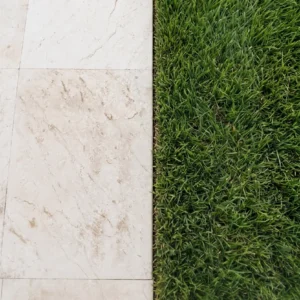
Wet a sample, tilt it, stand on it barefoot, then repeat the exercise with sunscreen on your hands to see how the texture copes with the residue a real deck collects. Look at each piece in shade and in open sun, since a face that grips well can also throw back more light than expected. Comparing the finish textures we stock against your own falls and shading tells you what no datasheet can. Run the test twice, once on a dry day and once after rain, and keep the pieces afterward so the same faces can be shown to whoever ends up maintaining the deck.
Specify it once, properly
Grip costs almost nothing at drawing stage and a great deal afterward. A coating retro-fitted to a limestone deck adds a maintenance cycle, shifts the tone and rarely survives a hard season intact, while a face chosen correctly at the outset simply keeps working. The price gap between a brushed field and a tooled coping is small beside the cost of lifting either again. Send us the deck layout, the shading and the falls, and we will match a finish to the way the surface will really be used.