Start With the Plot, Not the Sample Board
Limestone and basalt are both capable outdoor materials, and a straight quality contest between them produces no useful answer. What produces an answer is the plot. On Curacao a single property can hold a windward boundary in permanent salt aerosol, a sheltered leeward terrace, a pool surround that is wet by design and a drive apron carrying turning loads. Those are four different problems, and specifying one stone across all of them means three of the four are compromised. Zoning the plot before any material is chosen costs nothing at drawing stage, and it turns every later decision about depth, finish and tone into a much narrower question.
What Each Stone Brings to the Job
Set aside taste for a moment and look at the properties that change how each behaves in service.
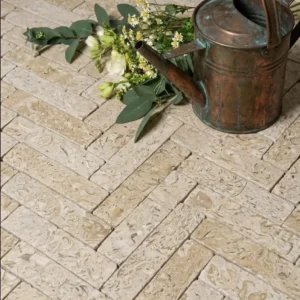
- Limestone reads pale, stays cooler underfoot and takes a wide range of worked faces
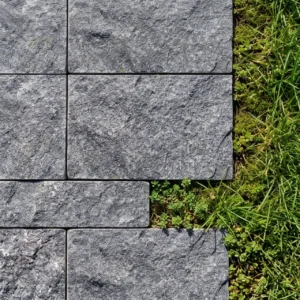
- Basalt reads dark and dense, and takes concentrated loads with room to spare
- Absorption and density figures should be requested for both rather than assumed
- Both can be supplied flamed, brushed or bush-hammered for wet grip
- Tone also drives glare, which is a separate consideration from surface temperature
The Windward Side of the Island
Trade winds arrive from the east and east-northeast at roughly 15 to 25 knots almost continuously, and from February to August the southeasterlies come off South America dry. The east and north coasts therefore live in a standing salt aerosol carrying wind-blown grit, so anything laid there is being abraded and salted at the same time.
- Ask for absorption and density on any unit going to the east or north side
- Specify a textured face rather than a polished one on exposed ground
- Choose jointing that tolerates salt without holding water against the units
- Keep drainage exits clear of the wall lines where salt tends to concentrate
- Expect blown grit to reach walls and copings, not only the paving field
The Leeward Terrace and Pool Surround
The west and southwest coast is calm, which is why marinas and resort frontages are there. The pressures change accordingly: less abrasion, less salt aerosol, but more barefoot traffic and far more sun on an open deck. This is where a pale limestone field usually earns its place, since surface temperature and glare become the day-to-day complaints rather than wear. The same logic applies to shaded courtyards, where the material is judged on how it looks and feels rather than on how it survives. Wet grip still has to be dealt with around a pool, but that is a question for the finish rather than for the choice of stone, and both materials can be supplied with a worked face. The Curacao limestone paver range is worth reading with that split in mind rather than choosing one material for the whole property.
Drives, Aprons and Service Routes
Vehicles change the calculation completely, and the failures show up at the turning points rather than in the straight runs.
- Take unit depth up where wheels turn, rather than relying on a stiffer bed
- Prefer smaller units where the surface has to follow a fall or a radius
- Expect tire scuff and oil to show more against a pale field than a dark one
- Detail edge restraint so units cannot creep under repeated turning loads
- Keep the apron material and the terrace material as separate decisions
The Island’s Own Geology, Briefly
Basalt is not foreign to this ground. The Curacao Lava Formation runs to roughly 5 km of pillow lavas with basalt intrusions, the Knip Formation holds deepwater calcareous sands and clays, and Quaternary limestone terraces sit above them. What the island’s mining sector publishes, however, is crushed aggregate, sand, fill and industrial powders rather than cut paving units. The distinction is one of product category rather than merit: graded material builds the base, and dimension-sawn stone forms the wearing course above it. Both belong on the same job, bought from different suppliers and meeting at an interface level that deserves to be agreed early.
Using Both Stones on One Property
Mixing materials works when the logic is legible on the ground and looks arbitrary when it is not.
- Let a change of material follow a change of use, such as terrace to drive
- Keep one stone as the dominant field and use the second as edge, band or apron
- Match the finish family across both so the textures read as one scheme
- Consider a darker unit for the salt-blasted boundary and a pale field for sitting areas
- Order both in the same shipment so tone and thickness are agreed together
A Simple Way to Zone the Specification
Walk the plot with a plan and mark four things: which faces are exposed to the trade winds, where people will be barefoot, where vehicles turn, and where water will sit or run. Then assign material and finish per zone rather than per property, and price each zone on its own terms. Doing it in that order also makes the quote easier to read, since every line can be traced back to a condition on the ground rather than to a preference. Where the boundary takes the full brunt of blown salt, basalt paving for the windward side is a reasonable place to begin the comparison. Zone first, then choose the stone, and the specification stops being a matter of opinion.