What cool underfoot actually means
A floor does not have to be colder than the room to feel cold. Skin judges a surface by how fast it draws heat away, and dense stone pulls warmth from a bare sole quicker than timber, vinyl or carpet at exactly the same air temperature. That is why a limestone floor in a shaded room reads cool at ten in the morning while the board floor next door reads neutral. The effect belongs to the material rather than to a coating, so it does not wear off, fade or need reapplying the way a coating does.
The climate the floor answers to
The island runs a tropical savanna pattern, drier from January to July, with roughly 1,047 mm of rain across the year and the wettest stretch falling between September and November. Those wet months sit inside the hurricane season, so a floor that has to stay pleasant on a still, humid afternoon also has to take water walked across it during a storm week.
- January to July is the drier, brighter half, when sun through glazing does most of the heating.
- September to November brings the heaviest rain and the peak storm risk together.
- Humid air slows surface drying, so floors stay damp longer than the same floors would inland.
- Where a home is not cooled around the clock, the floor’s thermal mass does real work.
Tone and finish do most of the work
Two tiles of the same stone in different tones will not behave the same way in a sunlit room. Pale stone reflects more of what lands on it; darker stone absorbs and holds it. Finish changes the picture again, because a worked face scatters light instead of throwing a hard sheet of glare back at eye level.
- Pale, warm-toned limestone suits rooms with unshaded glazing on the sun side.
- A honed or lightly brushed face keeps glare down without turning slick when wet.
- Polished surfaces read hotter to the eye and are the wrong instinct beside a pool door.
- Darker, denser stone earns its place where shade is permanent or the floor is deliberately grounding.
- Sample in the actual room, at the hour it takes the worst of the sun.
Depth, bedding and the mass behind it
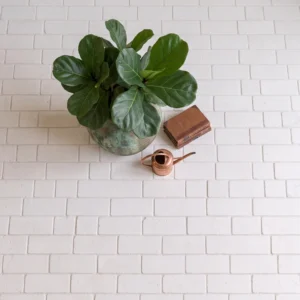
Thermal comfort is not only a surface property. A thin tile on a warm slab will follow the slab; a heavier unit, bedded properly, holds its own temperature longer and evens out the swing between afternoon and evening. Interior floors do not need paving depths, but they do need consistent depth, because calibrated stock is what lets a fixer keep the bed thin and even instead of packing under high spots. That is the practical argument for starting from limestone floor tile in stocked depths and working back to the room.
Rooms on the windward side
Aspect changes the answer more than the floor plan does, so walk the rooms at different hours before ordering.
- Dawn Beach and Oyster Pond face the Atlantic and meet the weather first.
- Leeward Great Bay and Simpson Bay sit in a quite different position.
- Rooms on the slopes near Cole Bay catch sun from angles a plan drawing hides.
- Treat all of that as reasoning to check on site, not as a published exposure map.
Where limestone hands over
Sint Maarten’s own rock is volcanic. Andesite tuff and tuff breccia sit under much of the island, intruded by hypabyssal basalt and quartz diorite, and limestone and marl were deposited later on top of the eroded volcanics. The Point Blanc formation is part of the island’s geological record, with a sample held at the Sint Maarten Museum, and the port itself stands on the hard layered limestone at Point Blanche. Island rock has a documented history of being worked for aggregate, and aggregate and the concrete made from it are the base and the structure under any floor. What a 34 square kilometer island does not turn out is calibrated, dimension-sawn tile in repeatable lots and matched finishes. That is a processing and supply distinction, not a comment on the rock.
Landing the order at Point Blanche
Customs Sint Maarten states on the government’s own website that it is mainly a law enforcement agency and not primarily an import duty collecting organization, and that the only tax it levies is tax and excise on unleaded gasoline. Turnover tax at five percent is charged on a local seller’s realized revenue, not on your consignment at the border, and the CARICOM common external tariff does not apply because Sint Maarten is not a member state. Clearance and declarations still exist; an ad valorem duty on a pallet of tile does not. Direct ocean freight discharges at the Captain David Cargo Quay at Point Blanche, a 540 m berth with 10.5 m alongside depth, a 3,000 TEU yard and mobile cranes rated at 100 tonnes each. Freight and handling planning sits with our supply desk for Sint Maarten.
What to settle before you order
- Which rooms take direct sun, and for how many hours of the day.
- Whether the floor runs out to a terrace, and exactly where that transition falls.
- The depth your build-up can carry without lifting door leaves.
- Absorption and density figures for the stone, supplied in writing.
- A spare allowance from the same lot, stored dry and flat on site.
Work through those five and the specification more or less writes itself. A floor chosen for the room it actually lives in stays comfortable long after the invoice is forgotten.