The barefoot test nobody runs
Almost every paving decision in Grenada gets made from a photograph. Almost every complaint afterward is about heat. A pool deck at Grand Anse in March is walked barefoot by people who have just climbed out of the water, and the gap between a surface they can cross and a surface they hop across is not a question of taste. It is a question of how much solar energy the stone absorbed over the previous two hours and how quickly it gives that energy back. All of that is predictable, and all of it is easy to get right at specification stage rather than after the deck is laid.
Why tone drives surface temperature
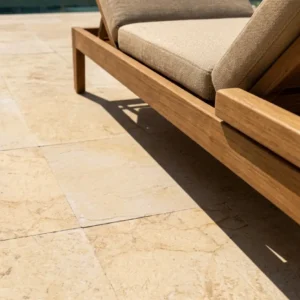
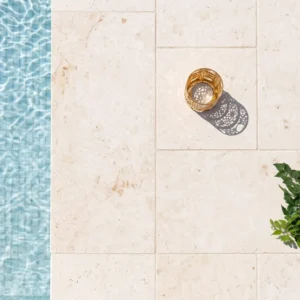
A light surface reflects a larger share of the sunlight landing on it; a dark surface converts more of it into heat. Under the near-vertical dry-season sun, roughly January through May, that difference is the entire story on an unshaded deck. It is why pale stone is so widely used across the region, and why the same stone in a dark finish behaves differently underfoot. Tone is not decoration on a Caribbean terrace. It is a performance property and it deserves the same seriousness in the specification as thickness or bedding detail.
Where the heat actually bites
Not every part of a project needs the palest stone available. Heat matters where skin meets stone and where people stand still, which is a much smaller area than most schemes assume.
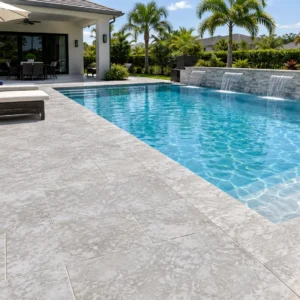
- Pool copings and the first courses out from the water, walked barefoot and wet.
- Open terraces with no overhead shade between mid-morning and mid-afternoon.
- Steps, where a foot rests longer and a stumble costs a great deal more.
- Upper decks and roof terraces that catch sun from the moment it rises.
- West-facing frontage at Point Salines and Grand Anse, which holds heat into the evening.
Shade, breeze and the afternoon
Grenada is not a still island. The trade breeze crossing a terrace carries heat off a paved surface far faster than the same stone would lose it in a sheltered courtyard, which is why an enclosed patio at True Blue can feel hotter underfoot than an exposed deck at Morne Rouge. Shade structures, planting and the shadow of the building itself move the problem around through the day. Map the sun path across your actual site before you settle on tone, because the answer often changes between one end of a terrace and the other. Running lighter paving for open decks alongside a slightly warmer stone under cover is a legitimate design decision, not a compromise.
Finish changes the feel
Two slabs cut from the same block can behave very differently underfoot depending on how the face was worked. Texture changes the contact area between skin and stone, the way a film of water sits, and the way light leaves the surface.
- Honed faces read cooler to the eye and stay smooth, but can throw glare in open sun.
- Brushed and antiqued faces scatter light and cut the mirror effect on bright days.
- Bush-hammered faces give strong grip but hold warmth in the raised peaks.
- Sawn and lightly textured faces sit in the middle and suit most resort decks.
Pale is not the same as fragile
There is a persistent idea that pale stone must be soft stone. It is not a reliable rule. Color comes from mineralogy and from the conditions the rock formed under, while strength comes from density, grain structure and how tightly the material is bound together. Plenty of very pale limestone is dense and low in absorption, and plenty of darker stone is not. The only honest way to know is to read the tested figures for the specific unit in front of you, which is precisely what a supplier should hand over without being chased for it.
Keeping pale stone looking pale
Light stone shows whatever lands on it, and in a wet-season climate a good deal lands on it. Almost all of that is routine maintenance rather than material failure, provided somebody is actually doing it.
- Rinse salt off exposed frontage after a hard blow from the Atlantic side.
- Lift leaf litter before the wet season, since tannins mark pale surfaces quickly.
- Keep joints free-draining so standing water cannot leave rings behind.
- Wash with clean water and a soft brush before reaching for anything stronger.
- Deal with iron marks from fixings and furniture early rather than at season end.
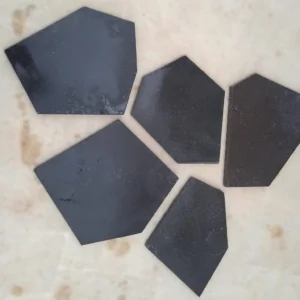
If you want to see how a finish changes glare before committing, compare the worked surfaces side by side in daylight.
Sizing and sampling the order
Once tone and finish are settled, the remaining work is quantity and format. Larger units give a calmer field with fewer joints, while smaller units follow curves and slopes with far less cutting on site.
- Set format by the shape of the space, then confirm thickness by the traffic it carries.
- Allow for cutting waste around pools, steps and planters.
- Order coping and field paving together so tone matches across the batch.
- Check lead time against the shipping schedule into St George’s.
Samples are small and they answer the one question a photograph never can. Put a pale sample on your own terrace at noon and let your feet decide.