Granite Performance Fundamentals Worth Understanding
White granite landscape rock earns its reputation not from aesthetics alone but from a compressive strength that consistently tests above 19,000 PSI — a figure that puts it comfortably ahead of most concrete paving alternatives in freeze-thaw durability. Your specification decisions, though, need to account for more than raw strength. The interaction between surface finish, base preparation, and long-term UV exposure determines whether your installation performs brilliantly at year fifteen or starts showing its age at year seven. Understanding these variables before you commit to a product type is what separates a precise specification from an expensive correction later.
What Makes White Granite Distinct From Other Landscape Stone
Granite is an igneous rock formed under intense pressure and heat, which produces a crystalline matrix of quartz, feldspar, and mica that resists water absorption at rates typically below 0.4% by weight. For landscape applications, that near-impermeable density translates to exceptional freeze-thaw resistance and minimal staining susceptibility compared to sedimentary alternatives like limestone or sandstone. White granite landscape rock specifically tends to carry high feldspar content, which is what drives the bright, reflective surface tone that makes it so effective in landscape design.
The mineral composition also influences how white granite behaves structurally over decades. The interlocking crystal structure means the material doesn’t develop the micro-fracturing you sometimes see in denser basalt under repeated thermal cycling. That said, the mica flakes in certain white granite varieties can create minor surface relief over time in high-traffic zones — a detail worth considering when you choose between honed and flamed finish options for walkways versus decorative beds.
- Compressive strength typically ranges 19,000–25,000 PSI, well above landscape load requirements
- Water absorption below 0.4% makes it one of the lowest-absorption landscape stone options available
- Feldspar content drives the characteristic white-to-silver coloration and surface reflectivity
- Mica content varies by quarry source and affects long-term surface texture retention in high-traffic areas
- Granite’s igneous origin produces consistent density throughout, unlike layered sedimentary stones
According to NSI granite application specifications, granite’s combination of low absorption and high compressive strength makes it one of the most specification-appropriate natural stones for demanding outdoor environments. That guidance aligns with what you’ll observe across long-running landscape installations — granite simply ages with far less maintenance intervention than most alternatives.
Selecting Between White, Gray, and Blue Granite Landscape Rock
Color selection in granite landscape rock is genuinely more technical than it might appear. The distinction between white, gray granite landscape rock, and blue granite landscape rock comes down to mineral composition ratios — not just surface appearance — and those ratios affect performance characteristics in ways that matter for specific applications.
Gray granite landscape rock typically carries a higher biotite mica content, which produces the darker flecking that gives it that warm, charcoal-influenced tone. In practical terms, gray granite shows less surface soiling from organic debris like leaf tannin and algae — an underappreciated benefit in shaded garden beds where white tones can develop surface discoloration if left unsealed. For high-visibility feature areas like front garden borders or entry paths, white granite’s brightness creates the strongest visual contrast against planted material, but it also demands more consistent maintenance attention to keep that appearance.
Blue granite landscape rock is the most compositionally distinct of the three — its characteristic blue-gray tone typically comes from a higher hornblende or augite mineral content, which produces a denser, harder stone. Blue granite landscape rock tends to run slightly harder on the Mohs scale, which makes it exceptionally wear-resistant for high-traffic paths and driveways. The trade-off is that the darker surface absorbs moderately more radiant heat than white granite in direct sun, which can matter in seating areas or barefoot-use zones during peak summer months.
- White granite: maximum visual brightness, higher maintenance demand for appearance retention
- Gray granite landscape rock: natural tannin and algae camouflage, lower visual maintenance in organic settings
- Blue granite: highest hardness and wear resistance, moderate heat absorption in full-sun zones
- All three share granite’s core performance characteristics — the differences are degree, not category
Surface Finish Selection and Long-Term Appearance
Your finish choice has a larger impact on long-term satisfaction than most specifiers anticipate — and that impact intensifies in sun-exposed installations. UV exposure doesn’t degrade granite structurally, but it does interact with the surface finish in ways that affect how the stone looks and performs across its lifetime. Polished white granite landscape rock develops a visible oxidation layer on feldspar minerals when exposed to prolonged direct sunlight, which gradually shifts the surface from a bright optical white toward a warmer ivory tone. That shift is gradual but cumulative, and it’s essentially irreversible without professional resurfacing.
Flamed and brushed finishes are more UV-stable in practical terms because the surface micro-texture already diffuses light rather than reflecting it specularly. What you see with a flamed finish is the stone’s actual mineral color rather than a polished optical effect, so UV-induced tonal shift is far less perceptible over time. For landscape applications in full-sun environments, a flamed or brushed finish on white granite landscape rock is almost always the more practical specification — the slight reduction in brightness is more than offset by the long-term appearance stability.
- Polished finish: maximum initial brightness, visible tonal shift with prolonged UV exposure
- Honed finish: low-sheen surface, moderate UV stability, good for transitional indoor-outdoor zones
- Flamed finish: high UV stability, slip resistance without additives, best for path and driveway applications
- Brushed finish: textural variation, maintains consistent appearance under heavy sun exposure
- Tumbled finish: aged aesthetic from installation day, virtually no visible UV-driven change over time
Sealing schedules matter most for honed and polished finishes. A penetrating silane-siloxane sealer applied every 24–36 months creates a hydrophobic barrier that resists the surface iron oxidation responsible for yellowing on light-colored granite. You don’t need a surface-coating sealer — those trap moisture and actually accelerate the problem in granite. A penetrating sealer that bonds with the stone’s crystal structure at a molecular level is the right specification for white granite in exposed landscape settings.
Sizing and Thickness Specifications for Landscape Applications
Thickness selection follows the load path, not aesthetic preference. White granite landscape rock used as decorative aggregate or border stone operates under entirely different structural demands than granite used as stepping stone or pathway slab, and conflating those applications leads to either over-specification (wasted budget) or under-specification (premature failure).
For decorative beds and mulch-replacement applications where granite chip or crushed stone is used as a surface layer, your primary concern is particle size consistency and depth. A 1.5-inch to 2-inch depth of 3/4-inch granite chip provides effective weed suppression and drainage without shifting excessively in moderate foot traffic zones. For stepping stones and pathway slabs, 1.5-inch nominal thickness is the minimum for standard residential use; 2-inch thickness becomes the specification threshold for applications where occasional vehicle overhang or equipment access is possible.
Sizing across the slab and irregular flagstone categories involves a calculation most specifiers miss: the unsupported span between base contact points. Granite’s flexural strength is high — typically 1,500–2,200 PSI — but that figure assumes adequate base contact. A 24-inch × 24-inch slab bridging a soft spot in the aggregate base will flex at its center point under repeated loading, and granite’s crystalline structure means it fractures cleanly rather than deflecting gradually. Your base preparation quality directly determines whether that flexural strength is engaged or irrelevant. According to ASTM C615 granite dimension stone standards, proper base contact area is as critical to long-term performance as the stone’s intrinsic physical properties.
- Decorative chip/aggregate: 3/4-inch to 1.5-inch particle size, 1.5-2 inch bed depth for coverage performance
- Stepping stones: minimum 1.5-inch nominal thickness on compacted aggregate base
- Pathway slabs: 2-inch thickness where equipment or vehicle overhang is possible
- Large format slabs (24″ × 36″ and above): 2.5-inch minimum to manage unsupported span flexural risk
Base Preparation: The Variable That Determines Installation Longevity
Base preparation is the most under-specified element in landscape granite installations, and it’s where the gap between a ten-year installation and a twenty-five-year installation is decided. Your granite selection can be flawless, but a compressed-aggregate base that doesn’t account for soil expansion behavior will generate differential settlement that no stone thickness compensates for.
The standard recommendation of 4 inches of compacted aggregate base covers most residential landscape applications with stable sub-grade soils. In expansive clay-heavy sub-grades, that figure needs revision to 6 inches minimum, and you should strongly consider a geotextile separation fabric between native soil and aggregate to prevent clay migration into the base layer. Clay migration is a slow process — you won’t see the consequences at installation — but within five to eight years it compromises the drainage and load-distributing function of the aggregate entirely. You can access our Landscape Granite product range for material options that include both decorative and structural landscape granite specifications suited to these applications.
Drainage geometry matters as much as base depth. White granite landscape rock’s near-zero absorption means all surface water must route off the installation rather than through it. A minimum 2% cross-slope ensures positive drainage; installations that fall below that slope on flat ground benefit from a perimeter edge drain or channel to prevent water pooling at joint lines. Standing water under granite in freeze-thaw regions causes the hydraulic expansion damage most people incorrectly attribute to the stone itself.
- Standard residential base: 4 inches compacted crushed aggregate, 95% Proctor density minimum
- Expansive clay sub-grade: 6-inch base minimum plus geotextile separation fabric
- Surface drainage: 2% minimum cross-slope for all landscape granite slab applications
- Perimeter drainage recommended wherever flat topography prevents natural water routing
- Joint sand: polymeric sand at 92-95% fill capacity prevents washout and weed establishment
UV Exposure, Surface Oxidation, and Your Sealing Schedule
Sun-exposed landscape installations present a specific maintenance challenge for white granite that deserves a dedicated look. The UV spectrum doesn’t chemically degrade granite’s mineral matrix — the stone’s crystalline structure is stable under UV exposure — but it does drive an oxidation process in iron-bearing minerals within the feldspar and mica components. That oxidation is what produces the warm yellowing or reddish tinting that gradually develops on unsealed white granite surfaces in high-sun environments, particularly in the first three to five years of installation.
Your sealing schedule should start at installation, not after visible discoloration appears. A penetrating silane-siloxane sealer applied to a clean, dry surface on day one creates the molecular barrier that slows iron oxidation from the outset. Re-application every 24 months in full-sun, high-UV environments is the practical standard; shaded or partially shaded installations can extend that interval to 36 months without significant performance loss. Testing for sealer depletion is straightforward — water droplets should bead visibly on the surface. When they start to absorb rather than bead, reapplication is overdue.
Surface finish selection interacts directly with sealing effectiveness. Penetrating sealers work best on honed and flamed surfaces where the stone’s pore structure is open and accessible. Polished surfaces have a compressed crystal structure that limits sealer penetration depth, which means polished white granite landscape rock in full-sun conditions needs more frequent reapplication — approximately 18-month intervals in intense UV environments — to maintain meaningful protection. The USGS dimension stone production and use data documents granite’s mineralogical consistency across quarry sources, which supports the predictability of sealing performance recommendations across different white granite products.
- Initial sealing at installation prevents iron oxidation from establishing in the first high-UV season
- Penetrating silane-siloxane formula — never surface-coating sealers on granite
- Full-sun installations: 18-24 month reapplication intervals depending on finish type
- Partial shade: 30-36 month intervals without significant appearance compromise
- Bead test: active water beading indicates effective sealer coverage; flat absorption signals reapplication need
Ordering, Logistics, and Lead Time Planning
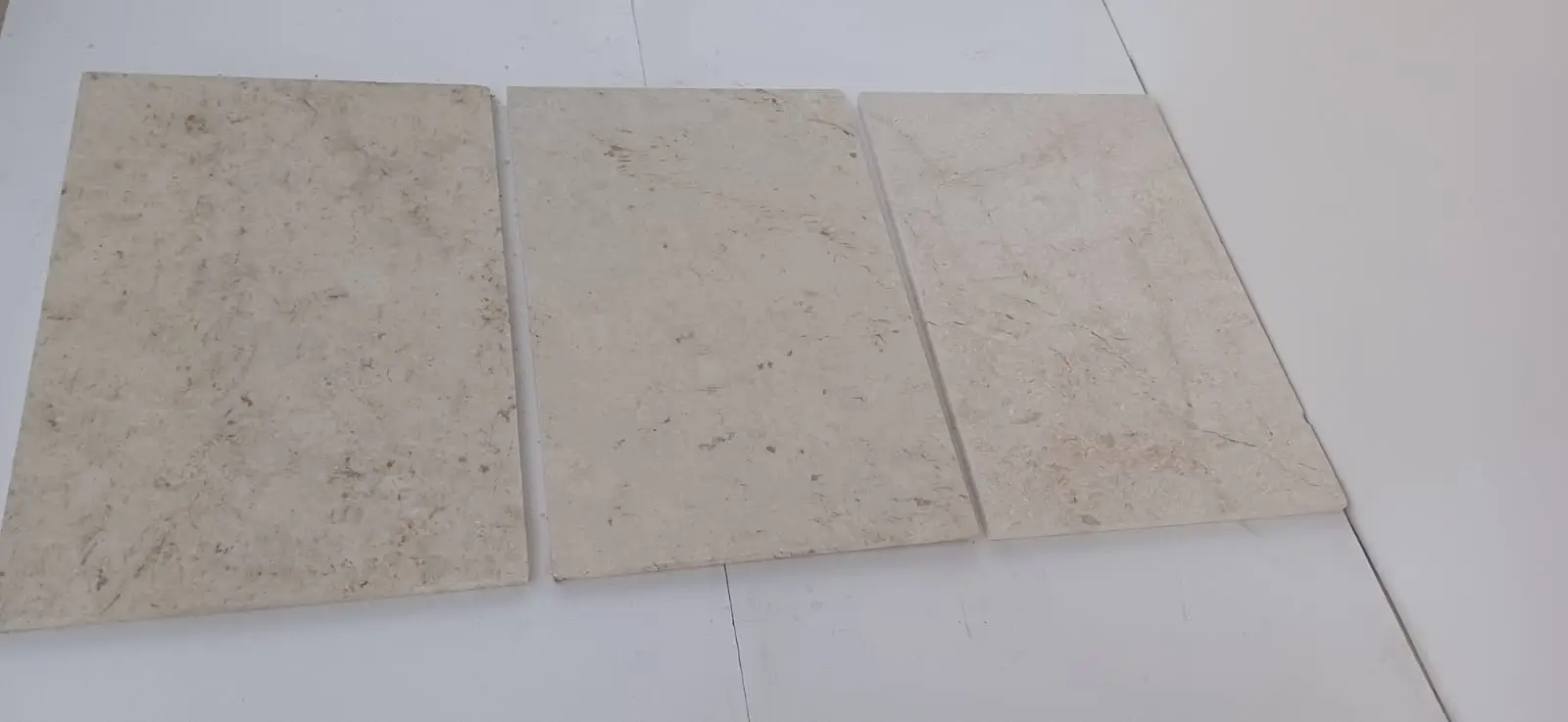
Your project timeline is directly affected by how you approach material ordering — and granite landscape rock has some logistical nuances worth understanding before you commit to installation dates. Quarried granite ships in bulk, and the specific white granite landscape rock you specify may not always match what’s sitting in warehouse inventory at any given moment. Tonal variation between quarry batches is a genuine issue with white granite specifically, because the feldspar and quartz ratios that determine whiteness vary even within a single quarry across different extraction faces.
Ordering your full project quantity from a single warehouse batch is the only reliable way to ensure tonal consistency across the entire installation. Partial orders filled from different shipments introduce the risk of visible batch variation that becomes apparent when material is installed side by side. Citadel Stone maintains national warehouse inventory that reduces lead times significantly compared to direct-import cycles — typically 1–2 weeks from confirmed order versus the 6–8 week lead times that characterize per-project imports. That lead time advantage is worth factoring into your scheduling decisions, particularly for projects with firm completion deadlines.
Truck access at the delivery site is an often-overlooked logistical variable. Bulk granite landscape rock ships on pallets or in super-sacks, and the delivery truck configuration depends on order weight and site access. Narrow driveways, low overhead clearance, or unpaved site approaches can limit truck access and require material staging at a secondary location — adding handling costs and time. Confirm site access dimensions with your supplier at the point of ordering, not on delivery day. At Citadel Stone, we recommend providing a site sketch with access dimensions when you place your order so the correct truck configuration is dispatched from the outset.
Installation and Placement Techniques for Landscape Granite
Placement technique varies meaningfully between white granite landscape rock used as decorative aggregate and the same material used as slab or stepping stone elements. For decorative aggregate and bed applications, the critical variable is edge containment — loose granite chip migrates under foot traffic and irrigation spray without a firm edging system. Steel edging staked at 18-inch intervals provides the most reliable containment; plastic edging is adequate for light applications but flexes under freeze-thaw ground movement and can create visible waviness in the border line within two to three seasons.
Slab and stepping stone placement requires attention to the leveling process that most installations rush. Each slab should have full-perimeter base contact, which means checking with a straightedge across all four edges, not just corner-to-corner diagonally. A slab that rocks on two opposite corners has a high-centering problem — all load concentrates at two contact points rather than distributing across the base, and fracture risk increases proportionally. The correction takes about three minutes per stone during installation; the correction after installation requires lifting and resetting the stone entirely.
- Edging system: steel or aluminum at 18-inch stake spacing for reliable aggregate containment
- Slab leveling: check all four edges plus both diagonals before progressing to adjacent stones
- Expansion joint spacing: 12-15 feet in sun-exposed applications to accommodate thermal movement
- Polymeric joint sand: compact with a plate compactor at 75-80% fill before final top-off
- Avoid installation when surface temperature exceeds 95°F — joint sand setting times compress unpredictably in extreme heat
For path and patio applications using white granite landscape rock slabs, a dry-set installation on compacted aggregate base outperforms mortar-set in landscape contexts due to the drainage flexibility it provides. Mortar-set granite in landscape beds creates an essentially impermeable layer that redirects water laterally rather than vertically, which increases the risk of perimeter erosion and frost heave at the slab edges. Dry-set with polymeric joint sand gives you structural stability and controlled drainage simultaneously.
Before You Specify White Granite Landscape Rock
The specification decisions that determine white granite landscape rock performance across a ten-to-twenty-year horizon concentrate in three areas: finish selection relative to sun exposure, base preparation depth matched to soil type, and sealing schedule locked to site-specific UV conditions. Get those three variables right at the planning stage, and the material’s intrinsic properties — its compressive strength, near-zero absorption, and mineral stability — do the rest of the work without much intervention from you. Miss any one of them, and you’re addressing the consequences rather than enjoying the installation.
Your ordering approach matters as much as your specification. Confirming full project quantity from a single warehouse batch, verifying truck access at your site before the delivery date, and allowing a week of on-site acclimatization before installation in temperature-variable seasons are the logistical details that prevent the common field problems experienced installers almost never deal with anymore. For complementary project planning, crushed granite coverage and costs covers the tonnage and area calculations that often run alongside landscape granite slab specifications. Stone for nationwide projects arrives from our established selected quarries across multiple continents, letting white granite rock brighten shaded beds and borders.
Related reading: Granite Landscape Blocks for Walls and Raised Beds · how to build granite landscape steps · decomposed granite landscape pros and cons.