What Decomposed Granite Actually Does in a Landscape
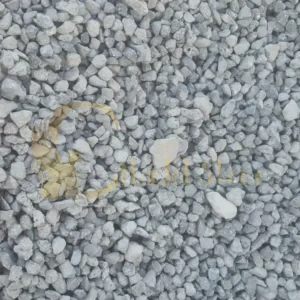
Decomposed granite landscape pros and cons aren’t always presented honestly — most coverage skips the nuanced performance variables that determine whether your installation thrives or deteriorates within three years. DG, as it’s called in field work, is a granitic rock that has weathered into a loose, gritty aggregate ranging from fine sand to roughly 3/8-inch particles. That gradation matters enormously: the right blend compacts to a firm, stable surface, while a poorly graded batch stays loose and migrates under foot traffic or surface water.
The material performs best when you understand what it’s actually doing structurally. DG doesn’t interlock the way cut stone pavers do — it relies on fine particle cohesion and compaction pressure to hold its form. That means your base preparation and compaction protocol carry more weight here than with almost any other landscape material.
The Real Advantages Worth Specifying For
Decomposed granite landscape pros and cons start with the genuine strengths — and there are several that hold up under professional scrutiny. The drainage performance alone justifies serious consideration on sites where hardscape runoff is a concern. A properly installed DG surface allows water to percolate through rather than sheet across, which reduces erosion risk on sloped properties and helps manage stormwater volume without engineered drainage infrastructure.
- Permeability rates for compacted DG typically fall between 0.5 and 2.0 inches per hour, depending on fines content and compaction level — measurably better than concrete or asphalt alternatives
- Surface temperatures run lower than dense paving materials, making DG comfortable for barefoot use and pet traffic in warm conditions
- The material blends naturally into planting beds, pathways, and gravel gardens without the visual formality of cut stone — useful when a relaxed, naturalistic aesthetic is the design goal
- Installation cost per square foot is significantly lower than dimensional stone paving, making large-area coverage financially feasible
- You can adjust grades and reshape DG paths with standard hand tools, which simplifies ongoing maintenance and seasonal repairs
The American Society of Landscape Architects natural stone hardscape guidance supports permeable aggregate surfaces as a practical stormwater management strategy in residential and commercial landscape design, particularly where highly resistant coverage limits apply.
The Honest Limitations You Need to Factor In
Here’s where most DG articles pull their punches. The limitations of decomposed granite in landscaping are real and worth knowing before you commit to a large-scale installation. The most persistent issue is migration — DG particles track onto adjacent hard surfaces, accumulate at low points, and shift under concentrated foot traffic over time. Stabilized DG (mixed with a polymer binder) reduces this significantly, but it also reduces permeability, which can undercut one of the material’s primary selling points.
- Untreated DG requires top-dressing every two to four years on high-traffic paths to maintain surface consistency
- The material is not structurally suitable for vehicle loads — it deforms under tire pressure and won’t recover without regrading and recompaction
- Fine particles can become muddy in sustained wet conditions if drainage beneath the surface is insufficient
- Weeds will establish through DG without a quality weed barrier beneath — and that barrier degrades over time, requiring eventual replacement
- Color variation between batches can be noticeable when adding material during repairs, which affects aesthetic consistency on visible surfaces
The weed barrier question is one that often trips up first-time specifiers. Using a landscape fabric that’s too dense will trap fines at the surface and create a compaction layer that prevents water movement — exactly the opposite of what you want. Needle-punched nonwoven fabrics in the 3–4 oz range typically hit the right balance between weed suppression and water flow.
Landscape Decomposed Granite Fines and Particle Gradation
Particle gradation is the variable most landscape DG purchases get wrong. Landscape decomposed granite fines — the minus-3/8-inch material that includes dust, sand-sized particles, and small aggregate — are what give DG its compaction and surface cohesion. But when the fines content exceeds about 15–20% by weight, you start seeing drainage problems and surface softening in wet conditions.
Sourcing matters here more than many buyers realize. At Citadel Stone, we evaluate DG gradation directly from the quarry source before it ships — because inconsistent fines content is the single most common cause of DG surface failure we see in the field. A batch that looks identical in a photograph can behave completely differently under compaction depending on how it was processed and screened.
Request a gradation analysis from your supplier before ordering for any project larger than a few hundred square feet. The target gradation for a well-performing DG pathway typically shows 30–50% retained on a No. 4 sieve, with fines content (passing No. 200) below 10%. Material outside those ranges will either fail to compact adequately or drain too slowly to perform as intended. Explore our decomposed granite selection to review material options sourced for consistent gradation standards.
Installation Variables That Define Long-Term Performance
Your installation protocol determines whether decomposed granite delivers its theoretical benefits or becomes a maintenance burden within two seasons. The base layer is where most failures originate — not the DG surface itself. A minimum of 4 inches of compacted Class II road base beneath your DG layer provides the stable, well-draining foundation that allows the surface material to perform correctly. Skip this step or reduce depth, and you’ll see settlement, soft spots, and drainage failure within the first full year.
Compaction technique also requires attention. DG should be installed and compacted in 2-inch lifts — not dumped to full depth and rolled once. Each lift needs to reach 90–95% relative compaction, which typically requires a plate compactor with two to three passes and light moisture application before compaction. Running DG too dry during compaction produces a brittle surface that fractures under traffic; running it too wet creates compaction that seals the surface and inhibits drainage.
- Lay a quality weed barrier before base installation, not on top of base — placing it above the road base but below the DG surface layer
- Install edging restraints before placing DG — the surface material will migrate laterally without containment, especially on slopes
- Allow 24–48 hours of curing time after final compaction before opening to regular foot traffic
- On slopes exceeding 5%, consider stabilized DG rather than native material to prevent washout during heavy rain events
Wind, Storm Events, and Surface Integrity
The mechanical stress from severe weather deserves specific attention when specifying DG for exposed landscape areas. Wind-driven rain is particularly damaging to DG surfaces because it combines hydraulic force with impact energy — the rain drops dislodge surface fines, and the runoff carries them downslope before they can reintegrate into the compacted layer. A slope of even 2–3% can become a significant erosion channel during a storm event that delivers one inch of rain per hour or more.
Edge restraint integrity becomes critical under these conditions. A steel or aluminum edging system anchored at 24-inch intervals holds DG in place far better than plastic bender board, which flexes and gaps under frost-heave pressure or storm-related soil movement. On pathways wider than 4 feet, intermediate edging or stepping stone breaks help prevent the surface from shifting laterally during wind-driven saturation events.
Hail impact is worth considering as well. DG surfaces handle hail better than polished stone because the loose aggregate simply absorbs impact without cracking or spalling. The concern after a hail event is redistribution — inspect the surface for low spots and uneven compaction within a week of any significant hail storm and add top-dressing where needed.
Decomposed Granite Landscape Ideas That Actually Work
Thinking through decomposed granite landscape ideas before you order helps avoid the mismatch between aesthetic expectation and installed reality. DG works best in applications where its natural character is an asset rather than a limitation. Dry-garden settings, Japanese-inspired gravel areas, native plant gardens, and informal woodland paths all suit the material’s visual texture and drainage behavior.
- Pathway applications between 3 and 6 feet wide compact well and hold shape under moderate foot traffic — the ideal use case for residential landscapes
- Patio areas under pergolas or shade structures work well with stabilized DG if you accept the reduced permeability trade-off
- Transition zones between lawn areas and planting beds benefit from a 12–18 inch DG buffer that reduces mowing encroachment and improves drainage at the bed edge
- Dog run surfaces are a practical application — DG drains quickly, stays cooler than concrete, and cleans up reasonably well with periodic raking and top-dressing
- Fire pit surrounds and outdoor seating areas in naturalistic garden settings often look more appropriate in DG than in cut stone, particularly in informal or cottage-style landscapes
According to USGS natural landscape stone production and use in the USA, granite-derived landscape aggregates represent a consistent share of annual dimension stone output, underpinning their broad availability through established supply chains — a reflection of the material’s genuine versatility when specified correctly.
Ordering, Logistics, and Project Planning
The practical side of a DG project often surprises buyers who haven’t ordered bulk landscape aggregate before. Coverage calculations need to account for compaction — DG loses roughly 20–25% of its loose volume once compacted to the correct density. That means a surface area requiring 3 inches of compacted depth needs to be ordered at approximately 3.75 inches of loose material to finish at the right grade after compaction.
Citadel Stone maintains warehouse inventory of landscape granite nationwide, which typically allows orders to ship within 5–7 business days rather than the extended lead times that can affect import stone products. Verify warehouse stock levels early in your project planning cycle if you’re working against a construction schedule — availability can shift quickly during peak landscaping season. Truck access to the delivery site also shapes your order logistics; confirm whether your site can accept a standard delivery truck or requires a smaller vehicle, as that affects minimum order quantities and delivery cost.
For large projects, consider ordering a test batch of one to two tons before committing to full quantity. This lets you verify gradation, color, and compaction behavior before the full delivery arrives — a step that saves significant time and cost if the material doesn’t perform as specified.
Getting Decomposed Granite Specifications Right
Decomposed granite landscape pros and cons ultimately come down to application fit and installation discipline. The material delivers genuine value on pathways, naturalistic garden areas, and drainage-sensitive sites where permeability and low surface temperature matter. It’s a poor choice for vehicle traffic, formal patio settings where migration would be visually disruptive, or any application where long-term maintenance resources are limited. The Natural Stone Institute landscape stone variety selection guide provides a useful reference framework for comparing aggregate and dimensional stone materials across application contexts.
Your specification decisions — gradation, stabilization, base depth, edge restraint type — shape the installation’s performance far more than the material choice itself. Get those details right, verify your source material before ordering at scale, and DG will perform reliably for a decade or more with minimal intervention. For projects that call for complementary hardscape elements beyond aggregate surfaces, choosing the right granite installer covers the professional selection process in detail. For landscapes that need both visual texture and functional drainage, Citadel Stone offers decomposed granite sourced for consistent grain size and natural color stability.