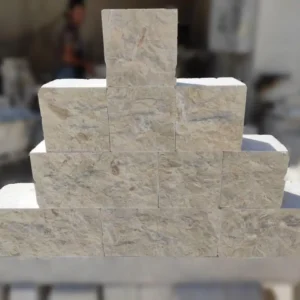
Bonaire is renovating. The island’s housing stock – solid, modest, sun-faded – is being refreshed street by street as Dutch arrivals, dive-business owners and local families upgrade what the construction boom’s new-build prices increasingly argue for keeping: good bones in established neighborhoods, minutes from the sea. The renovation wave has its own logic, calendar and materials hierarchy, and stone sits at the top of the hierarchy for reasons this guide walks room by outdoor room.
The Renovation Case
The island’s renovation math is straightforward: existing homes hold locations new builds cannot buy – established districts, mature shade, walkable distance to town or shore – and their concrete-and-masonry bones take upgrades gratefully. The dollar economy prices the work transparently, the calm belt removes the storm-season constraint that complicates renovation elsewhere, and the island’s steady appreciation rewards improvements honestly. What the older stock lacks is the surface layer – and the surface layer is exactly what a renovation can transform.
Outdoor First
Bonaire renovations start outdoors more often than in, because the island lives outdoors and the listing photographs do too:
- The front approach – gate, path, entrance threshold – resets the property’s age in a week of work.
- The backyard court in pale stone converts dead ground into the main living room.
- The carport apron in real material ends the gravel-and-dust cycle permanently.
- The roof terrace, where structure allows, adds the island’s cheapest view real estate.
upgrade arithmetic for small properties runs the sequencing economics at hospitality scale, and the domestic version follows the same order: the surfaces most seen and most used, first.
Good Bones, New Surfaces
The classic Bonaire renovation keeps the masonry shell and transforms everything the hand and eye touch: floors carried indoor-to-outdoor in one pale limestone family, thresholds rebuilt clean, window sills and wall caps renewed in cut stone, and the yard’s tired concrete lifted for real paving over a proper base. The transformation is disproportionate to the scope – a structurally minor project reads as a rebuilt house – and it is the renovation market’s open secret everywhere the climate lives outdoors.
The Services Window
Renovation’s golden moment is the open ground: the week the yard is up is the week the property’s next twenty years get their infrastructure – conduit for future lighting and shade power, water lines to where the outdoor kitchen will someday be, drainage falls corrected once and permanently, cistern connections renewed. The stone goes down last over all of it, and the discipline is absolute: nothing closes until the services map is photographed and filed. Lifting finished paving to add a cable is the island’s most avoidable renovation, and every street has one house that learned it the hard way.
Living Through the Works
Most Bonaire renovations happen around occupied houses, and the phasing manners matter: the household keeps a working entrance and one outdoor room throughout, dusty phases schedule against the trade wind’s direction and the neighbors’ laundry days, deliveries consolidate so the street lends its verge once rather than weekly, and the crew’s radio observes siesta. Island renovations are neighborhood events whether owners intend it or not; the ones run with courtesy finish with the street’s goodwill intact, which on Bonaire is worth more than the schedule it cost.
The Value Question
The island’s buyers – and its rental guests – read renovations the same way: surfaces first. A property refreshed in one coherent stone family photographs as designed, inspects as maintained and appraises as upgraded, while the same budget scattered across many materials reads as patched. The market’s advice is the craft’s advice: fewer materials, better executed, documented with batch records for the next phase or the next owner. Coherence is the renovation’s compound interest.
The Shade Retrofit
The older housing stock’s common gap is engineered shade – houses built lean on a sunny island, their yards waiting decades for the pergola that never came – and the renovation wave’s favorite single move is closing that gap properly: shade structures on stone-footed bases planned into the new paving, positioned by the afternoon arc rather than the drawing’s symmetry, sized so the outdoor room works from ten to five instead of dawn and dusk only. The retrofit’s discipline is structural honesty – bases cast with the court, posts fixed for the trade wind, and the paving detailed around them from the start rather than cut afterward. One shade structure, correctly placed, roughly doubles a Bonaire yard’s usable hours; no other renovation dollar on the island buys as much daytime.
The Refresh, Sequenced
The island refresh runs on a sequence any owner can hold: outdoor first, services under, one stone family throughout, manners all the way. The wider rebuild wisdom – renting the district first, hiring on standing work, specifying once for the climate – is mapped in sequencing a home rebuild wisely, and Bonaire’s version runs it in dollars on calmer ground. Renovate the surfaces the island actually lives on, in stone that will outlast the next three owners, and the modest house joins the island’s quiet appreciation story – permanently.
The Paint-and-Stone Pact
Bonaire’s streetscape runs on a color pact: walls in the Caribbean’s confident brights – ocher, coral, sea green, cobalt – grounded by neutral stone below and around them. The renovation wave keeps the pact deliberately:
- Pale stone thresholds, paths and courts let the painted volumes carry the color story without competition.
- Repainting cycles refresh the island look every few years; the stone layer beneath never needs to follow fashion.
- Sills, caps and plinths in cut stone frame the color fields crisply – the detail that separates painted-and-finished from just painted.
- Where render meets paving, a clean stone base course takes the splash and scuffs the paint would record.
The pact is practical as well as pretty: color does the personality, stone does the permanence, and each renewal cycle costs less because the hard layer opted out of it. A street that keeps the pact ages like the island at its best – bright above, grounded below, and photogenic from every angle the sun tries.
Ultraviolet does the damage, not footfall
Properties here age from above. Sun, heat and salt work on a surface continuously whether or not anybody is using it, and a house that stands empty for months can look worse than one occupied year round. Sealers chalk, jointing degrades, resin-bound products yellow and fail, and colors shift. Natural stone is the exception rather than the rule in that list, which is why so many refurbishments here end up replacing a manufactured surface with a mineral one. The Natural Stone Institute overview of limestone and travertine is the reference worth using, because absorption and density decide how a pale surface behaves under this much light.
- Assume ultraviolet exposure is the primary aging mechanism
- Avoid finishes that depend on a coating to look right
- Choose color that will still read correctly once bleached slightly
- Check absorption, because salt entering a unit never fully leaves
- Sample on site and view after a few weeks, not in a showroom
Fix the substrate before you choose the surface
Almost every renovation here is an overlay, and overlays fail for reasons underneath them. Cracked slabs, failed waterproofing, blocked drainage and corroded reinforcement all have to be resolved first, because a new finish laid over an unresolved problem simply hides it for a season. Guidance on detailing natural stone paving for lasting durability is direct that method matters as much as material, and over an existing slab the safest methods are those that stay independent of it.
- Existing slab surveyed for level, falls and cracking before ordering
- Roof and terrace drainage corrected first, since most damage starts there
- Uncoupling or independent build-ups over slabs with a movement history
- Waterproofing renewed wherever a terrace sits over occupied space
Choosing bonaire renovation stone that will not need doing again
The point of a refurbishment on this island is to stop the cycle, not to restart it. That argues for a mineral surface, a reversible build-up, honest falls and a documented spare stock.
- One material and finish across the property so repairs always match
- Build-ups that can be opened in patches rather than broken out
- Attic stock stored dry on site from the first delivery
- An as-built record handed to the owner at completion
Our Bonaire stone supply guide sets out the formats, finishes and lead times that suit this island. Specify for the sun and the next renovation becomes a clean rather than a rebuild.