The expat homes that succeed in Belize share a build sequence, not a style: a year of renting before land is bought, a local builder chosen on standing work rather than website polish, and materials specified once for a climate that punishes shortcuts. Belize expat home building is a well-worn path by now — thousands of North Americans have walked it — and the professionals who serve them agree on what separates the happy endings from the cautionary tales. Here’s the working playbook.
Rent First, Buy Second, Build Third
The pros’ first advice never varies: live in the country before committing to coordinates. The districts differ more than any listing suggests — and the right one depends on the life you’re actually importing:
- Ambergris Caye — the full amenity island: restaurants, flights, rental income potential, and the highest costs
- Placencia — beach-villa country with road access and a marina economy
- Corozal — the value corridor: quiet, close to Mexican shopping, favored by budget-conscious retirees
- Cayo and San Ignacio — inland acreage, rivers, ruins and ranchland for the self-sufficiency minded
- Hopkins — village warmth with a growing boutique-hospitality scene
A wet season spent in your chosen district teaches more than any forum thread — and the households still here a decade later are overwhelmingly the ones that rented first.
Land, Title and the Paper Layer
Belize runs fee-simple land ownership open to foreigners under English-derived law — a genuine advantage over much of the region — but the diligence is real: titles searched properly, boundaries surveyed rather than assumed, access and utilities confirmed in writing, and an attorney who answers to you rather than to the seller. The QRP residency program adds its incentives for qualifying retirees; treat its import concessions as covering household goods, and budget building materials at standard duty and GST through your broker.
The Builder Decision
Your builder choice outweighs every material decision combined. The market runs from excellent to improvised, and the pros’ filter is consistent:
- Standing buildings you can walk, with owners you can phone
- Written scopes, staged payments tied to milestones, and change orders on paper
- Storm-detail literacy — strapping, openings, drainage — demonstrated, not claimed
- Comfort working with your remote oversight if you build from abroad
Belize’s Mennonite communities anchor a respected segment of the construction trades, and their work travels the country; whoever you choose, the reference-and-milestone discipline is identical.
Specifying for the Climate You Actually Bought
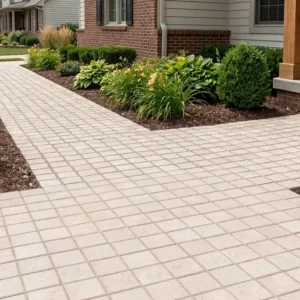
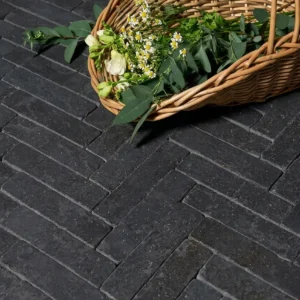
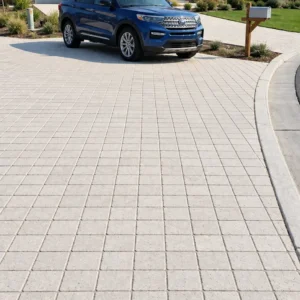
The country splits its exam: caye and coast run salt, sand and glare; inland runs rain, shade and green growth. The materials answer follows the split — dense pale stone on the exposed surfaces, textured where wet, marine fixings on the coast, and drainage engineered everywhere because the wet season arrives seriously. Concrete-and-masonry structure with a hardened roof is the storm-country baseline. What most expats under-budget is the ground plane: verandas, pool surrounds and paths are where tropical living actually happens, and estate-grade drive and surface standards from a neighboring market show what specifying that layer properly looks like.
Building From Abroad
Most expat builds start while the owners still work elsewhere, and the remote method is settled practice: a local representative with real authority, progress documented in photographs against a fixed baseline, payments released on verified milestones, and decisions batched to visit windows. Materials suit the method when they arrive documented — batch records, specifications, photographed loading — because a remote owner’s protection is always paper. Truck access and staging get confirmed before each delivery, and the warehouse habit — spares bought with the original order — saves the month a reorder would cost.
The Budget Truth
Building costs less in Belize than in the US — but less than expats expect it to, and the honest ledger keeps the surprises small: imported materials carry freight, duty and GST; skilled trades price fairly rather than cheaply; and the contingency belongs at the professional 15–20 percent, not the optimist’s five. The 2:1 currency peg keeps the arithmetic stable, and the decade view rewards durable choices: surfaces bought once outperform every replacement cycle a tropical climate runs.
What the Settled Ones Know
Belize expat home building rewards patience, paper and durable materials — the same three things every successful arrival names. Rent the district first, title the land properly, hire on standing work, specify for your actual climate and build the remote method into the contract. For the broader decision of relocating well, how relocation households actually decide maps the same questions from another jurisdiction’s wave. The expat home that lasts in Belize is the one built like the locals build — slowly, solidly and in stone where it counts.
The First Dry Season: What Year One Teaches
The house is not finished when the builder leaves; it is finished after its first full cycle of wet and dry. The first dry season is when a Belize build shows you what it is – hairline movement in render, a door that finally sits true, the terrace shedding its construction dust and settling into its working color. Owners who plan for that year, instead of being surprised by it, spend it tuning rather than repairing.
- Walk the paving after the first heavy rains and again in the dry: joints that washed low get topped once, early, before they invite weeds.
- Rinse exterior stone with fresh water on a simple schedule near the coast; salt is patient and cheap to beat when the habit starts in year one.
- Keep a small reserve of the original material on site – matching an attic stock tile years later is trivial; matching a memory is not.
That last habit is the cheapest insurance in the tropics. A dozen spare pieces stored flat in the utility room turn every future repair into an afternoon, and they only exist if the original order included them – one more reason the specification stage, not the repair stage, is where a Belize house is really won.
What the numbers say about local supply
Expectations imported from a large market are where most first projects go wrong. The Statistical Institute of Belize records a mid-year population just under 419,000 and merchandise imports running around 275 million dollars a month against a quarterly gross domestic product of roughly 1.45 billion. That is a country with genuine capacity in the ordinary trades and very little depth in specialist finishes. Cement, block, timber, reinforcement, roofing and the crews who use them are all here. A particular stone in a particular thickness and finish is an import decision with a sailing attached, and treating it as a shopping trip rather than a procurement exercise is the single most common cause of a stalled site.
- Assume nothing specialist is held in stock locally
- Freeze the finishes schedule earlier than you would at home
- Order trims, spares and fixings with the main consignment
- Keep the material palette short so fewer things can be late
- Budget a documented surplus rather than a second part load
The season you are actually building in
The calendar governs more of the program than the drawings do. The climatology published by the National Hurricane Center puts the Atlantic season from June through November, with most activity between mid-August and mid-October and the statistical peak on September 10. In practice that splits a build year in two: a dry stretch when foundations, external works and deliveries move easily, and a wet stretch when access roads soften, curing slows and an unfinished roof becomes a liability. Owners who plan around that finish close to budget. Owners who ignore it pay for the same work twice.
- External works and hard landscaping front-loaded into the dry months
- Deliveries scheduled before access tracks deteriorate
- Nothing left unrestrained or unroofed through the peak weeks
- A written tie-down and clear-the-site routine issued before June
The decisions that are expensive to reverse
Some choices can be revisited cheaply and some cannot. Paint, planting and furniture are easy. Levels, drainage, the build-up under a terrace and the route services take are not, because correcting them means lifting whatever was laid on top. Spending an extra week on those at design stage is the least glamorous and most valuable money in the whole project.
- Finished levels and falls resolved before any slab is poured
- Service runs mapped and recorded, then laid under liftable surfaces
- Drainage sized for the intense storm, not the annual average
- A build-up that can be opened in patches rather than broken out
- An as-built record handed over, not left in a contractor notebook
Belize expat home building, done in the right order
Rent first and learn the district. Buy with clean title. Choose a builder on work you can stand in front of. Then specify once, order complete, and build the external works in the dry season. Our Belize stone supply guide sets out the formats, finishes and lead times that suit this country. The people who settle well here are the ones who let the country set the sequence.