Every Puerto Rican town keeps the same heart: the plaza — church at one end, trees and benches in formation, the alcaldía nearby — and the calendar that animates it, the fiestas patronales that give each of seventy-eight municipalities its annual week of music, kiosks and processions. The plaza is the island’s civic constitution written in stone, and its craft — daily commons, festival stage, heritage ensemble — is this library’s civic chapter at its most complete. Here is the plaza’s guide.
The form and its duties
The Spanish colonial grid gave every town its square, and the duties layered since: the daily commons of domino games, bench courtship and after-mass circulation; the civic stage for proclamations and protests alike; the festival floor — the fiestas’ week of stages, kiosks and crowds; and the heritage ensemble of church facade, monuments and the small-capital dignity every municipality maintains at its own scale. The ground carries all four at once: public-duty surfaces under heritage manners, shade as infrastructure, and the civic-event specification built into the permanent stone.
Fiestas engineering
The patronales run the annual-city disciplines at town scale: stages rising at the plaza’s proven positions, kiosk rows on dressed power and water, processions timed between church and square on routes the calendar has walked for centuries, and the strike-clean rhythm returning Monday’s ordinary plaza. The engineering is permanent hospitality for temporary intensity: service points cast into the ground, surfaces rated for crowd-and-stage loads, drainage that shrugs the week’s spills, and lighting that turns festival without abandoning the year’s warm civic register.
- Fixing points for stages and marquees cast into the slab in advance
- Power and water outlets grouped where events actually need them
- Load paths agreed for trucks that will cross the square once a year
- A written reinstatement standard for whoever takes the site down
The daily commons
Between fiestas the plaza does its real work: the elders’ benches in reliable shade, the neighbor-scale civic craft of towns that know their squares by feel, step-free routes for every generation the after-mass hour circulates, and the small commerce — the piragua cart, the coffee window — that keeps the commons fed. Maintenance is civic pride at municipal budget: surfaces repaired in kind, trees arborist-kept because the canopy is half the architecture, and the flagship-threshold manners at the church door where every wedding photographs.
Renewal without loss
Plaza renovations are the island’s most-watched public works — every citizen is a stakeholder in the square they grew up circling — and the successful ones run heritage renewal’s law: the ensemble’s character held, mature trees defended like monuments, new paving in the dignity register rather than fashion’s, accessibility threaded without falsifying levels, and consultation real because the town will audit the result nightly for a century. The failures — over-designed, tree-poor, glare-bright — teach the same lesson inverted: the plaza belongs to its town, and renewal serves the belonging.
- Phasing that keeps part of the square usable throughout the works
- A single specification carried across successive phases and budgets
- Matching stock secured at the start, not chased between phases
- Records handed to the municipality rather than left with the contractor
The network effect
Seventy-eight plazas make a national infrastructure: the fiestas calendar rolls year-round across the island, plaza-hopping is domestic tourism’s quiet backbone, and the squares’ collective keeping — from Ponce’s grand Delicias to the smallest mountain town’s — is the island’s civic health made visible. Towns compete politely on their squares; the pride is architectural policy; and the stone underfoot, kept honest, is what the competition is actually made of.
Specifying the constitution
Plaza work runs the civic kit complete: public-duty surfaces in heritage dress, cast-in festival services, canopy-respecting construction, step-free dignity and repair-in-kind maintenance — served from the island supply page with the documentation municipal works require. The church bells still order the week, the fiestas still order the year, and the plaza — swept, shaded, level where the dominoes demand — remains what it has been for four centuries: the town, in stone, agreeing with itself.
The glorieta: the plaza’s musical furniture
Look at the center of almost any Puerto Rican plaza and there it is: the glorieta, the bandstand — a raised, roofed, usually octagonal platform that gave the town’s retreta, its evening band concert, a proper stage. The tradition is Spanish, the affection is entirely local, and while the municipal band no longer plays every Sunday in most towns, the structure remains the plaza’s most photographed object and its most flexible one: children’s stage, quinceañera backdrop, shade for the domino table when the sun swings west, and the fiestas’ ready-made platform when the calendar comes round.
As a piece of construction it is small and demanding. The platform takes crowd loading and decades of weather; steps and edges take constant informal use by people not paying attention; the roof structure is exposed masonry-and-timber craft where every joint is visible from below and judged nightly; and the whole object sits at the center of a space where every citizen has an opinion about its condition. Restoration accordingly runs the renewal-without-loss discipline: original fabric conserved, replacement matched, accessibility added thoughtfully where a raised platform meets modern expectations, and lighting warm enough to keep the evening register the night-lighting craft prescribes.
Its deeper value is as the plaza’s proof of purpose. A square with a well-kept glorieta is a square that still expects something to happen in it — and towns that restored theirs report exactly that: the band returns for the patronales, the school choir uses it at Christmas, couples photograph on its steps most Saturdays. The stone and timber are modest; what they hold up is the town’s assumption that public life deserves a stage, standing at the center, waiting for the next occasion to need it.
The plaza is a room, and its walls are listed
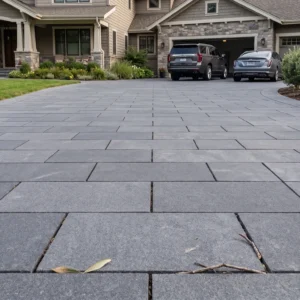
A town square is defined by what stands around it, and in many municipalities that means protected fabric. The National Register nomination for the Parque de Bombas on Plaza Las Delicias records a building of roughly 181 square meters raised in 1882, listed in June 1984, bounded by the plaza on two sides and the cathedral on a third, and serving as a civic institution since 1885. Ground-level work in that setting is judged as part of the composition, which is a strong argument for a quiet floor and confident detailing.
- Let the buildings carry the color and the ground stay calm
- Scale the unit size to the square rather than to the pallet
- Keep modern components small, recessive and consistent
- Agree the treatment with the heritage authority before ordering
A calendar of concentrated load
Plazas are not evenly used. For most of the year the square carries pedestrians, a few chairs and a slow evening. Then the patron saint festival arrives and the same ground takes stages, generators, food stalls, delivery vehicles and a whole municipality at once, for several days, several times a year. Designing for the quiet average guarantees failure during the weeks that matter most.
- Bedding and thickness set by the event vehicle, not the daily footfall
- Continuous edge restraint, because crowd load finds every loose edge
- Service covers set flush and rated for what will cross them
- Emergency access kept clear at the busiest hour of the busiest day
Reinstatement is the long game
Squares are opened repeatedly, for drainage, cabling, lighting and repair. Guidance on detailing natural stone paving for lasting durability is clear that installation method drives long-term performance, and in a civic square the method has to assume the surface will be lifted and relaid many times over its life.
- A build-up that can be reopened without breaking units
- One documented detail issued to every trade that works on the square
- Municipal stock of matching units held for ongoing repair
- Photographic records before and after every opening
Choosing town plaza stone for a working square
The best civic floors are unremarkable on an ordinary Tuesday and completely reliable during the fiestas. Specify for the heaviest week, detail for repeated repair, and keep the pattern quiet enough to sit under whatever the calendar brings. Our Puerto Rico stone supply guide sets out the formats, finishes and lead times that suit this island. The square belongs to the town on its busiest day, and that is the day the ground has to be right.