Curaçao runs a quiet education economy: medical schools drawing North American cohorts, the university’s regional pull, exchange programs and internship pipelines — thousands of students cycling through the island on semester rhythms, all needing housing that works. The student-landlord market is a specification genre of its own: high turnover, hard use, parental inspection by video call — and the properties that get the physics right run occupancy the tourist market envies. Here is the student-housing guide.
The semester economy
Student demand runs on the academic calendar’s certainty: cohort arrivals landing twice yearly, multi-semester stays outlasting any hotel guest, and vacancy risk concentrated in transition weeks the turnover-window disciplines were made for — repairs, repaints and deep cleans compressed between departures and arrivals. The revenue profile rewards durability arithmetic: surfaces that survive four-year service without refresh beat every recurring-cost alternative, and the landlord-grade specification translates directly at student pitch.
Hard-use interiors, honest surfaces
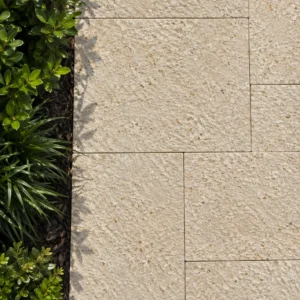
Student premises take hospitality wear without hospitality staff: kitchen floors on stain-shrugging stone where twelve roommates learn to cook, bathroom thresholds at wet-room honesty, furniture-dragging tolerance as a flooring specification, and the communal-register durability throughout the shared zones. The finish philosophy runs practical-not-precious: surfaces that clean to inspection standard with student-grade effort, and details without fragile moments a security deposit can’t cover.
- Specify to commercial duty even though the building is nominally residential.
- Put the toughest surface on stairs, landings and entrances, where student housing wears out.
- Choose a floor that survives being cleaned badly rather than one needing careful maintenance.
- Keep the palette to one format so a damaged unit is always swappable.
The compound model
The market’s better properties run purpose-adapted compounds: shared courtyards as the social heart on gathering-court logic, study porches in the shaded lee where the climate does the air-conditioning’s work, laundry-and-bike zones on working-grade ground, barbecue corners that keep weekend life on-premises, and security layering — walls, lighting, sightlines — that parents evaluate from abroad. The courtyard compound photographs its way through every enrollment cycle; the listing-photography truth applies to bunks as much as villas.
Parents, deposits and documentation
The market’s real clients pay from another hemisphere, and trust runs on documentation: condition reports against photographed baselines, the document-trail culture applied to tenancy, maintenance response times that parent forums grade publicly, and premises quality readable in a video tour. Stone’s honesty serves the genre: it photographs as solid because it is, wears its age gracefully between refurbishments, and gives the condition report clean vocabulary — no carpet ambiguity, no laminate lifting at year three.
Neighborhood fit
Student compounds live inside barios with their own rhythms, and the neighborly disciplines govern: quiet-hours design — courtyard acoustics softened, social zones oriented inward — parking and scooter management off the street, and the landlord’s local standing maintained the way the neighborhood economy maintains everything: by being known, present and fair. The property that respects its street keeps its permits, its neighbors and its student pipeline; the one that doesn’t makes the parent forums for the wrong reasons.
- Design the boundary so the building sits comfortably in a residential street.
- Provide covered bike and gear storage rather than letting it accumulate on the path.
- Light the approach properly, since students come and go at every hour.
- Keep external surfaces easy to sweep, because litter is the main complaint neighbors raise.
Building for the decade’s cohorts
Student housing is infrastructure investment on education-economy fundamentals: demand recurring by calendar, specification proven by turnover, and returns compounding for the landlord who builds once and hosts for decades. The island supply guide serves the genre’s arithmetic: communal-grade surfaces, courtyard packages, batch documentation for phased compounds, and durability counsel priced against cohort after cohort of hard, ordinary, rent-paying use. The lecture halls fill twice a year; the landlord’s ground should be ready every time.
Two wheels and a courtyard: the compound’s traffic plan
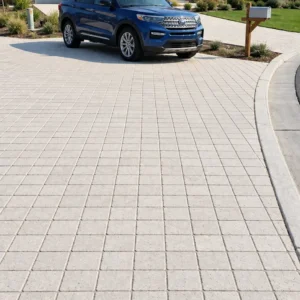
Student compounds run on scooters and bicycles, and the properties that stay pleasant plan the fleet like the landlords they are. The parking court comes first: a dedicated stone apron, shaded and lit, sized for the real ratio — on this island effectively one two-wheeler per tenant — with anchor rails for locks, drainage that keeps the oil drips off the social courtyard, and a position that shortens the ride-in without routing engines past bedroom windows. Circulation follows: the ride arrives at the compound’s edge and walks the last meters, enforced by geometry rather than signage — bollards, planters and level changes that make the courtyard obviously pedestrian — and the helmet-and-rain-gear layer gets its hooks and shelf at the threshold, because the alternative is the kitchen table.
The maintenance realities earn their corner too: a wash point with hose reach to the parking apron keeps bike cleaning out of the shower block; a small secure store swallows the out-of-term fleet the semester economy strands twice a year; and the landlord’s rules — no engines in the courtyard, repairs on the apron, the abandoned-bike sweep each August — ride better on infrastructure that makes compliance the easy path. Neighborhood fit completes the plan: the compound’s traffic noise concentrated at its own edge, the street’s parking left to the street, and the bario’s goodwill preserved by the simple absence of thirty scooters on its pavement.
None of this is glamorous and all of it is retention: parents notice the ordered court on the video tour, tenants stay where daily logistics run smooth, and the stone that takes the fleet’s daily grind — dense, oil-tolerant, hosed weekly — is the cheapest staff member the compound will ever employ. The semester economy arrives on two wheels; the good compound was designed knowing it.
Buying on evidence rather than on price
A tight budget makes objective data more valuable, not less. The Natural Stone Institute testing program covers ASTM C97 for absorption and bulk density, C170 for compressive strength, C880 for flexural strength, C1353 for abrasion resistance and ANSI A326.3 for slip. In student accommodation, abrasion resistance and slip are the two figures that decide whether a floor is still presentable at the third tenancy rather than the first.
- Read abrasion resistance first, because rental floors wear rather than break.
- Use absorption data to keep water out of the fabric in ground floor units.
- Meet the slip benchmark in every wet room without exception, since liability sits with the landlord.
- Accept a plainer material with better numbers over a handsome one with none.
- Keep the test certificates on file, as they are what a future insurer or buyer will ask for.
Grip in a building nobody maintains carefully
Student housing is cleaned quickly, often with whatever is available, and it is walked wet from showers and from the rain. Guidance from Use Natural Stone on frictional testing sets ANSI A326.3 as the method with a dynamic coefficient of friction of 0.42 as the benchmark for level interior surfaces expected to be walked on wet, notes that no published exterior threshold exists, and records that polished stone generally fails the wet test. In shared accommodation that is a safety specification, not a preference.
- Specify a textured finish in every shared circulation route and every bathroom.
- Avoid polished thresholds, which are the most common slip point in shared housing.
- Keep the same texture throughout so nobody meets a change on a stair.
- Choose a surface that stays safe when cleaned with the wrong product, because it will be.
The arithmetic of a twenty year hold
Student property is bought to hold, and the relevant comparison is never the delivered price of a floor. It is that price plus every void period, repair and replacement across two decades of tenancies. A floor replaced twice in that window costs far more than the durable option that was rejected at tender for being fifteen percent dearer.
- Count void periods as a cost, since a unit out of service earns nothing.
- Add freight to every future repair, because a small replacement order still crosses an ocean.
- Choose one format across the whole block so spares serve every unit.
- Buy attic stock at the outset, as matching a batch a decade later will not happen.
Student housing stone built for hard use
This is unglamorous property that has to work relentlessly. Specify to commercial duty, buy on abrasion and slip data rather than appearance, keep one format across the whole building, and hold spares so a damaged unit is a morning of work rather than a void week. Our Curacao stone supply guide sets out the formats, finishes and lead times that suit this island. The landlords who do well here spend the money on the stairs and the wet rooms and let everything else be ordinary.