Curaçao’s largest city, by one telling, is in the Netherlands: generations of islanders who studied, worked and raised families across the water, holding the island in school-holiday memory and family-land title. Now the return wave builds — retirees coming home, remote workers choosing the sun, second-generation families claiming the ground their grandparents kept — and the diaspora build is its own genre: European savings, island roots, and a house that must be both passports at once. Here is the coming-home guide.
Family land, modern build
The return build usually starts on inherited ground — the family parcel in a bario the grandparents knew, boundaries remembered as much as surveyed — and the first craft is legal-and-lay-of-land patience: titles cleared across sibling diasporas, the neighborhood manners honored because the neighbors remember the family, and the plot’s old assets — mature trees, a stone boundary wall, sometimes a ruinous ancestral core — treated as the heritage seed the new house grows around rather than clears.
The two-country design brief
The returning client designs from double experience: Dutch decades set expectations for insulation-era comfort, documented process and low-maintenance finishes, while island childhood sets the real program — the galerij porch where visiting happens, the yard that hosts the family calendar, cross-ventilation over air-conditioning pride, and the lee-court instinct remembered in the body. The best return builds read Dutch in the drawer and Curaçaoan on the terrace.
- Write the brief down properly, since a remembered island is not the same as the current one.
- Visit before committing to a layout, because twenty years changes a neighborhood.
- Test imported expectations against local build cost early rather than late.
- Keep one decision maker, as a family project with three opinions stalls fastest.
Building from abroad
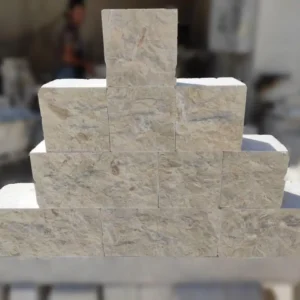
Many return builds run their first phases remotely — the owner still working in Rotterdam while the foundations pour — and the discipline is the absent-owner playbook with family assist: a local project representative with real authority, progress documented in photographs against batch-recorded materials, decisions batched to visit windows, and the island logistics calendar respected so visits coincide with the decisions that need eyes. Stone serves remote building well: specified once, photographed honestly, it arrives as approved or visibly not.
The pension arithmetic
Retirement returns build on fixed-income honesty, and the material choices run long: the staged-build wisdom phasing the compound as funds release, durability arithmetic favoring surfaces that skip the replacement cycle, low-maintenance landscapes on the native-palette economy, and the house sized for the real future: single-level living on the ages-and-stages logic, guest rooms for the Dutch grandchildren’s summers, and running costs a pension carries comfortably.
Re-rooting in the bario
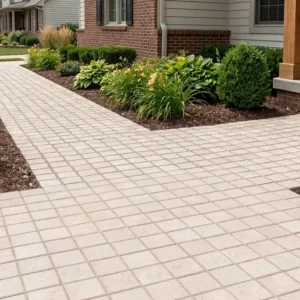
The return is social before it is architectural: the build re-introduces the family to the neighborhood, local trades hired become the relationship network, and the finished yard’s first party — the asado-scale housewarming — is the true completion certificate. Builds that arrive European-aloof struggle for every service and favor; builds that arrive as returning family find the island’s doors open. The stone terrace where the neighbors drink coffee is infrastructure; treat it in the budget accordingly.
- Choose a contractor on completed work you can walk around rather than on a family recommendation.
- Put the payment schedule in writing before the first delivery arrives.
- Appoint someone local with written authority to act while you are away.
- Expect to be present for the critical decisions rather than approving them by message.
The homecoming specification
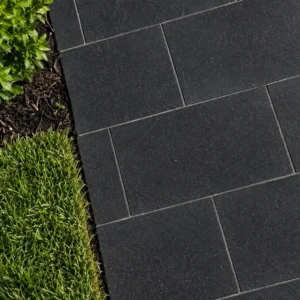
The diaspora build’s material law blends both inheritances: Caribbean performance — dense stone, marine fixings, cloudburst drainage — under European documentation, family-scale budgets served honestly, and the island supply guide as the returning family’s ally: modest phased orders, batch records for the years between phases, counsel in whichever language the family thinks in. The island keeps its children’s ground; the return build keeps the promise — and the galerij, evening-cool in the trade wind, is where the homecoming finally lands.
The container of memories: moving a household across the ocean
Most return builds climax in a shipping container of furniture, and the move deserves design attention before the vessel sails. The honest audit comes first: Dutch interiors are built for insulation and low light, and their contents translate unevenly — solid-timber pieces survive the tropics with care while veneers and laminates delaminate in humidity; upholstery hosts what the climate breeds unless it was chosen for it; and the beloved oak table may need refinishing for its new light but will outlive every replacement the island could sell. The translation list writes itself: ship the solid, the sentimental and the irreplaceable; sell the climate-fragile; and budget the arrival works — refinishing, re-upholstering in tropical-weight fabrics, the electrician’s adaptations — as part of the freight decision rather than a surprise after it.
The house’s design should expect the container. Interior humidity management — cross-ventilation as the cunucu taught, dehumidified storage for the archive boxes and photographs — protects what crossed the ocean; the galerij’s deep shade becomes the daily living room where imported furniture would fade in direct sun; and the storage plan includes the transition’s reality: a household mid-merge needs a dry, ventilated room for the boxes the first year does not unpack. Logistics run the island’s standard rules — the freight calendar’s honesty, consolidated arrival, customs paperwork for household effects prepared in advance — and the container’s landing is best scheduled after the dust works finish and before the family arrives to live.
The deeper point is emotional logistics: the return build succeeds when the house holds both lives — the island’s outdoor rhythm and the Dutch decades’ accumulated objects — without either crowding the other. Stone floors, generous shade and dry stores are the practical welcome; the family’s history, safely landed and sensibly placed, is what makes the new house immediately old in the best way.
The permit path nobody plans for
Distance makes an ordinary process feel opaque. Guidance summarized in this overview of Curacao construction regulations identifies the Bouw- en woningverordening Curacao as the governing instrument and states plainly that no construction works may be carried out without a building permit from the government of Curacao. Applications go in writing with the applicant name, profession and residence, along with a building plan showing dimensions, height, wall thickness and structural calculations, a site drawing, a cadastral extract and the title or lease deed.
- Assemble the full document set before applying, because an incomplete file simply waits.
- Expect a decision no later than a month after filing, which is workable if the file is complete.
- Read a refusal properly, since it must be expressly stated with reasons and can be appealed.
- Consult the fire department early, as prevention advice is part of the process.
- Check any gated community deed restrictions, which apply on top of the public requirements.
Ordering material from four thousand miles away
The good news is that the island receives cargo unusually well. The Curacao Ports Authority description of Willemstad records a container terminal working to a draft of 12.2 meters with two 50 ton gantry cranes rated at 30 to 35 moves an hour, inside a harbor whose entrance carries a minimum depth of 15.2 meters. Deep water and real crane capacity mean a returning owner can specify properly rather than settling for whatever is locally available.
- Order one consolidated consignment rather than several small ones spread across the build.
- Buy attic stock while the container is open, since a later top-up costs far more in freight.
- Have a named person receive and check the delivery against the packing list on the day.
- Photograph every crate on arrival, because a claim made later without evidence rarely succeeds.
Specifying for a house you will not supervise daily
A build run partly from abroad needs a specification that survives interpretation. That means naming standards rather than describing a look, choosing materials that a general contractor can lay correctly without an outside trade, and keeping the palette small enough that a substitution is obvious rather than subtle.
- Name the material, the finish and the batch in writing rather than approving a photograph.
- Keep the number of different materials low so mistakes are visible immediately.
- Choose systems an ordinary local crew installs well rather than anything needing a flown-in team.
- Set inspection points at stages you can actually attend or verify by dated photograph.
Returning home to build without the usual regrets
Coming back to build is an emotional project run on practical rails. Get the permit file complete before applying, use the deep water harbor to specify properly, name everything in writing, and appoint someone locally who can act rather than only report. Our Curacao stone supply guide sets out the formats, finishes and lead times that suit this island. The returning owners who end up happiest are the ones who treated the process as a project rather than as a homecoming.