Every other island in this cluster designs for endless summer; Bermuda designs for a year. The island’s subtropical Atlantic climate delivers a genuine cool season — blustery, changeable, sweater-weather months when the Caribbean playbook simply does not apply — and its outdoor spaces either hibernate through it or are designed to defy it. The difference is design, most of it in stone, and this guide is the cluster’s only four-season edition.
The Bermudian winter, honestly described
The cool season is Atlantic, not Arctic: no frost, no snow, but real wind, frequent rain, and temperatures that make an exposed terrace unappealing and a sheltered sunny corner genuinely delightful. That asymmetry is the design opportunity — on a February afternoon the island offers both experiences within ten meters, and the property that builds the sheltered corner owns three extra months of outdoor life a year. The stone consequences run through everything: where walls go, how sun is caught, which surfaces dry fast, and what the gale season may handle.
The winter room: lee plus sun
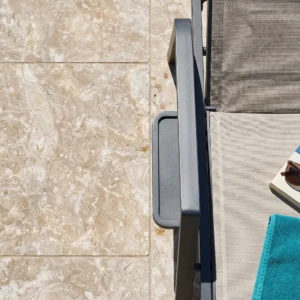
The four-season terrace is an exercise in microclimate: a corner wrapped from the prevailing winter winds by the wind-wall craft — solid where the blow comes from, open where the low winter sun arrives — floored in stone dense enough to shrug the wet months and textured enough to grip them. South-facing lee corners are the island’s winter gold: stone holds the afternoon’s warmth after the air cools, walls double as seats, and a fire feature on the wind-first rules converts autumn and spring evenings outright. The same corner in summer is the shaded morning room; the microclimate works both shifts.
- Design one sheltered corner that works on a cool damp afternoon in February.
- Provide a sunny aspect for winter and a shaded one for August on the same terrace.
- Keep the winter seating position out of the prevailing wind rather than in the best summer spot.
- Use built-in seating so nothing needs storing through the wet months.
Surfaces for the wet months
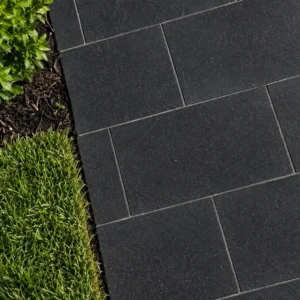
Winter’s design load is water and grip: rain-frequent months keep surfaces damp longer, moss finds shaded corners, and the specification answers as the wet-climate islands taught — textured finishes on every exposed walk and step, falls that clear standing water fast, drainage maintained as ritual before and through the season, and the damp-shade brushing rhythm applied to Bermuda’s sheltered spots. Dense low-absorption stone is the quiet hero: it dries fast, feeds no moss willingly, and meets the gale-driven rain without absorbing a winter’s worth of it.
The gale-season drill
Bermuda’s winter blows arrive with rehearsed regularity, and the outdoor room runs a seasonal drill the storm-belt islands would recognize: the soft layer — cushions, umbrellas, planters light enough to move — stows in autumn; fixed elements are checked at the season’s turn; drains are cleared while the leaves finish falling; and the stone itself stands unbothered, which is precisely why the island’s outdoor investment concentrates in it. Spring reverses the drill and the terrace resumes without a repair bill — the mass-and-anchorage logic applied to a gentler, more frequent adversary.
Shoulder seasons: the island’s secret best
Bermudians know what visitors learn slowly: April-May and October-November are the island at its finest — warm enough, calm enough, uncrowded — and the four-season terrace collects them entirely. Design moves that pay here: sun-tracking sitting spots for the lower shoulder-season light, wind shelter that converts marginal days, outdoor dining corners that work at eighteen degrees as happily as twenty-eight, and lighting on the warm grazing rules for evenings that arrive earlier. The stone package is unchanged from summer’s; the geometry that deploys it is everything.
- Expect the terrace to be used in every month, which raises the durability requirement.
- Plan for damp rather than for drought, since winter here holds moisture on surfaces.
- Choose a finish that stays safe when a thin film develops in the cool season.
- Keep drainage generous, because winter rain arrives steadily rather than in bursts.
A year-round island, built for
The four-season brief rewards exactly the material this cluster supplies: stone dense enough for Atlantic winters, textured for the wet months, massive enough for the gales, handsome enough for the world’s prettiest summers — and detailed by the Bermuda ordering guide with the microclimate drawn before the terrace is. Build the winter room once, and February stops being the off season; it becomes the season the neighbors envy.
The holiday terrace: entertaining through the cool season
Bermuda’s social calendar peaks precisely when its weather turns — the holiday season arrives with the cool — and the four-season terrace faces its finest test: hosting festively outdoors in blustery December. The winter room earns its keep now: the lee-and-sun corner becomes the mulled-drinks station, the fire feature runs nightly on the wind-wise rules, stone-held afternoon warmth extends gatherings past early sunsets, and the warm-lighting playbook does holiday duty — grazed stone, candle-temperature scenes, the terrace glowing welcome from the lane. The operational kit matches: outdoor heaters on stable stone footing in the deepest lee, throws and cushions staged for deployment, and the covered fallback — veranda or pavilion — dressed to receive the party the weather occasionally redirects.
The season’s entertaining rhythm rewards surfaces specified for it: dense stone shrugs the wet-month traffic of guests moving indoors and out, textured finishes keep heeled and street-shoed footing safe on damp evenings, and the drainage discipline means a morning shower never cancels an afternoon gathering. There is a cultural fit here worth naming: Bermuda’s hosting tradition is generational, its properties entertain as identity, and the outdoor rooms that serve November through January multiply a home’s social season by half a year. Summer terraces are universal in this cluster; the terrace that hosts the holidays is Bermuda’s own genre — and stone, holding warmth, footing and firelight together, is the material the genre was waiting for.
A climate that genuinely has a winter
Bermuda is subtropical rather than tropical, and the difference is the whole design problem. Records published by the Bermuda Weather Service show a summer running warm and humid, with August averaging a maximum near 30.0 degrees Celsius and a minimum near 25.5, and sea surface temperatures around 29.7. Winter drops well below that, cool and damp enough that a terrace designed only for August sits unused for months. The same record tracks rainfall normals through the year, which arrive steadily rather than in tropical bursts.
- Design two terraces in one, since the summer position and the winter position are rarely the same.
- Expect surfaces to stay damp for longer in winter than anywhere in the tropics.
- Assume biological film will develop in the cool months and specify a finish that stays safe.
- Keep the sunny winter aspect free of planting that will shade it exactly when it is needed.
- Provide shelter from wind rather than from sun as the winter priority.
Grip on a surface that is wet for months
A damp winter changes the slip calculation completely. Guidance from Use Natural Stone on frictional testing sets ANSI A326.3 as the method with a dynamic coefficient of friction of 0.42 as the benchmark for level interior surfaces expected to be walked on wet, notes that no published exterior threshold exists, and records that polished stone generally fails the wet test. On a terrace that spends a quarter of the year damp, that is a year-round safety issue rather than a poolside one.
- Specify a textured finish across the whole terrace, not only near water.
- Test the delivered finish rather than trusting the description of the stone family.
- Keep grip consistent through steps, which are where winter falls actually happen.
- Retest after a few winters, because algal film and cleaning both change the surface.
Materials that look right in low winter light
Bermudian winter light is soft, low and often overcast, and it treats materials very differently from August sun. A stone chosen from a summer sample can look cold and flat in February, which is exactly when the owner is at home and looking at it. The safest choices carry visible warmth and enough texture to hold a shadow even under a heavy overcast.
- Choose material with warmth in the tone so it does not read as cold in overcast light.
- Prefer visible texture, which keeps a surface alive when there is no strong sun to model it.
- View samples outdoors on an overcast day rather than only in bright conditions.
- Avoid very pale flat surfaces, which look brilliant in August and lifeless in February.
A four season terrace that earns its keep in February
The test on this island is not whether a terrace photographs well in July. It is whether anyone sits on it in February. That comes from a sheltered winter corner, a genuinely textured surface for the damp months, warm-toned material that holds up in low light, and drainage sized for steady rain. Our Bermuda stone supply guide sets out the formats, finishes and lead times that suit this island. Design for the month the island actually finds difficult and the easy months look after themselves.