Why Material Choice Defines Sill Performance
Stone window sills vs alternatives isn’t just a matter of aesthetics — the material you choose determines how your sill handles water infiltration, thermal cycling, and decades of UV exposure simultaneously. Most sill failures trace back to a single decision made at specification stage, not installation. Understanding the performance gap between natural stone and its substitutes gives you a real advantage before a single piece is cut or set.
The compressive and flexural demands on a window sill are genuinely modest compared to flooring or stair applications. What the sill sees instead is relentless moisture at the interface — the junction between the sill, the window frame, and the wall substrate. That’s where material porosity, thermal expansion coefficient, and surface hardness become the deciding factors. Natural stone, engineered composites, timber, and cast materials each respond very differently to that combination of stresses.
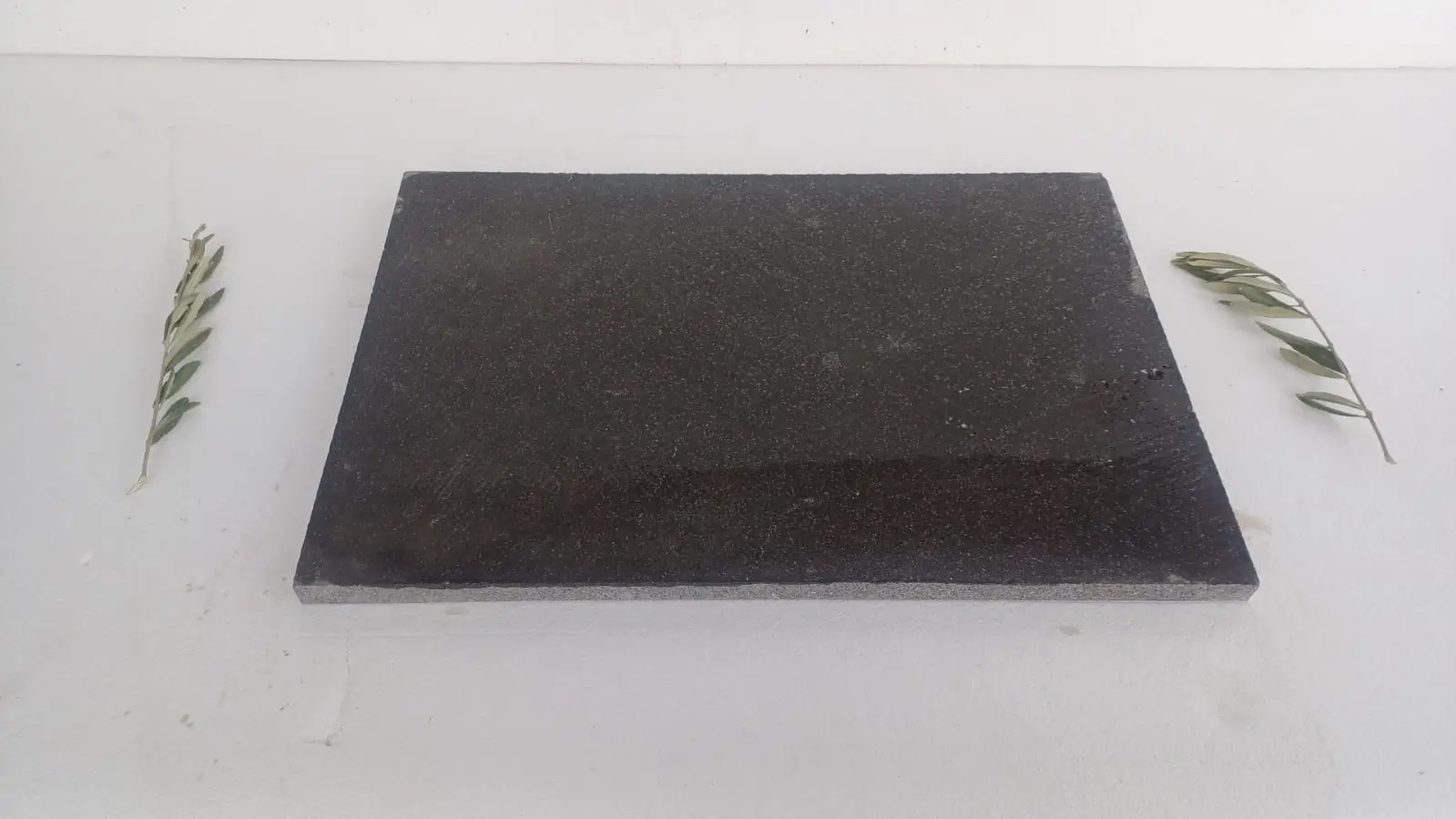
Natural Stone Sills: Performance Fundamentals
Natural stone sills — limestone, marble, and granite being the three most commonly specified — carry a compressive strength that typically ranges from 8,000 to over 20,000 PSI depending on stone type. That’s well above the structural demand, which means stone’s longevity advantage comes not from compressive capacity but from its resistance to surface degradation, moisture penetration, and thermal movement. According to NSI technical design standards for stone steps and sills, natural stone dimension products used in architectural applications should be evaluated against ASTM flexural and absorption benchmarks to confirm field suitability.
Limestone sills, particularly dense grey or buff varieties, are a reliable workhorse for residential and commercial projects alike. Their absorption rate — typically 3 to 7 percent by weight for quality limestone — is low enough to resist freeze-thaw spalling when properly sealed, and their surface hardness handles the mechanical abrasion from window operation hardware without marking. Marble delivers lower absorption figures and a harder surface, but its calcite mineralogy makes it more sensitive to acidic rainfall over multi-decade timescales in exposed exterior positions.
- Limestone sills: compressive strength 8,000–14,000 PSI, absorption 3–7%, moderate surface hardness
- Marble sills: compressive strength 12,000–18,000 PSI, absorption under 1%, high surface polish retention but acid-sensitive on exposed exteriors
- Granite sills: compressive strength up to 22,000 PSI, absorption under 0.5%, hardest surface — best for high-traffic or coastal exposures
- All three exhibit thermal expansion coefficients in the range of 4–8 × 10⁻⁶ per °F — modest enough to avoid joint stress under normal temperature cycling
The dimensional stability of stone across temperature swings is one of its most underappreciated properties. In freeze-thaw regions, materials that expand and contract predictably with low moisture uptake outlast those with higher thermal movement or greater porosity. Stone’s long track record in exterior applications reflects that physical reality, not just tradition.
Cast Stone and Precast Concrete Sills
Cast stone sills are the most common alternative you’ll encounter on commercial and residential projects across a range of budgets. They’re produced from fine aggregate and portland cement, with pigments added to approximate the colour of natural stone. Quality cast stone — properly cured and sealed — achieves compressive strengths of 6,500 PSI and above, which is adequate for sill applications. The challenge is what happens at 10, 15, and 20 years.
Cast stone’s absorption rate is typically 6 to 10 percent, higher than most natural stone used for sills. In environments with significant moisture cycling, that differential matters. Water ingress drives carbonation of the cement matrix, and if there’s any steel reinforcement near the surface, corrosion staining becomes visible. Micro-cracking at the surface appears earlier than with dense natural stone — not structural failure, but a visual deterioration that becomes maintenance-intensive. According to ASTM natural stone flexural and compressive standards, the performance benchmarks for cast stone differ materially from those for natural dimension stone, and that gap is worth understanding at specification stage.
- Lower upfront cost — typically 30–50% less per linear foot than comparable natural stone sills
- Achievable in custom profiles and moulds without cutting costs
- Higher long-term maintenance burden: more frequent sealing, susceptibility to surface carbonation
- Repair matching is straightforward when the original mix is available — harder on aged projects
Timber Sills: Where They Work and Where They Fail
Timber window sills occupy a specific niche: interior applications, dry climates, and historic restoration where material authenticity is required. Hardwood sills — oak, sapele, and accoya-treated pine being the most common specifications — perform reliably on interior reveals where moisture exposure is limited. The moment a timber sill moves to a fully exposed exterior position with no overhang protection, its service life compresses dramatically.
Timber’s failure mode is almost always end-grain moisture uptake at the joint between the sill and the window frame. Timber expands and contracts with humidity and temperature at rates far exceeding stone or cast alternatives — typically 0.1 to 0.3 percent across the grain with seasonal moisture changes. That cycling opens sealant joints, allows water ingress, and begins a slow decay process that compounds year over year. For an exposed exterior specification where longevity is the priority, timber is rarely the right call when stone window sills vs alternatives are honestly evaluated.
- Interior use: acceptable performance with hardwood species and proper finish
- Exterior exposed positions: high maintenance, typically requires replacement within 10–15 years without exceptional protection
- Historic restoration: sometimes mandated by conservation requirements regardless of longevity trade-off
- Accoya or hardwood treated with acetylation improves dimensional stability but doesn’t match stone performance in moisture-exposed details
uPVC and Composite Sills: The Cost-Performance Trade-Off
uPVC sills dominate the volume residential market because their installed cost is genuinely low — typically a fraction of natural stone on a per-unit basis. For a straightforward window replacement project on a tight budget, uPVC delivers adequate function: it’s impermeable, dimensionally stable at ambient temperatures, and requires no sealing maintenance. The limitations become apparent at the premium end of the specification range and on projects where thermal performance or visual quality is the brief.
The thermal expansion coefficient of uPVC is approximately 50–70 × 10⁻⁶ per °F — ten to fifteen times higher than natural stone. In direct sun exposure, a uPVC sill can experience surface temperatures exceeding 140°F, generating measurable expansion that stresses end joints and sealant lines. Over time, discolouration and surface crazing from UV degradation become visible, particularly with lighter colours. Composite sills — typically a foam core with a fibre-cement or polymer shell — improve on both counts, offering better UV stability and lower expansion rates, but they remain inferior to natural stone on dimensional stability and long-term surface integrity.
- uPVC: lowest cost, impermeable, but high thermal expansion and UV degradation over 15–20 years
- Composite: better UV resistance than uPVC, mid-range cost, limited profile options
- Neither alternative matches stone for resale value contribution or architectural specification credibility
- Both are appropriate for budget residential applications where 15–20-year replacement cycles are acceptable
Cost Factors and Sourcing Decisions That Affect Your Budget
The cost comparison between stone window sills and alternatives changes significantly depending on freight distance, warehouse availability, and labor market conditions. Natural stone sills carry a higher material unit cost, but that premium needs to be evaluated against the full project economics. Stone sills typically require less skilled installation time than complex timber or composite profiles, and their maintenance cost over a 25-year period is substantially lower than materials that require resealing or replacement at 10-year intervals.
Freight is a real variable in stone sill budgets. Natural stone window sills shipped from a warehouse stocked with nationally distributed inventory reach most project sites in 1–2 weeks. That lead time advantage over imported or specially quarried material is worth factoring into your project schedule. When you’re coordinating a window replacement across multiple units, truck delivery timing from a warehouse with confirmed stock eliminates the schedule risk that sourcing from overseas or specialty fabricators introduces.
For projects specifying stone window sills across multiple openings, you can review natural stone sills from Citadel Stone to understand profile options, thickness ranges, and current availability. At Citadel Stone, we maintain stock of the most commonly specified sill dimensions, which reduces lead times for projects that can’t absorb extended material procurement windows.
- Material-to-labor cost ratio: stone sills typically require less complex installation than profiled timber or custom cast stone, offsetting part of the material premium
- Long-term cost per year of service: stone’s 40–60 year service life compresses the annualised cost well below alternatives requiring 10–15 year replacement cycles
- Freight distance from warehouse stock affects landed cost — confirm stock availability before committing to project timelines
- Value engineering on high-opening-count projects: specifying a consistent stone profile across all windows reduces fabrication and installation complexity
Slip Resistance and Safety Considerations
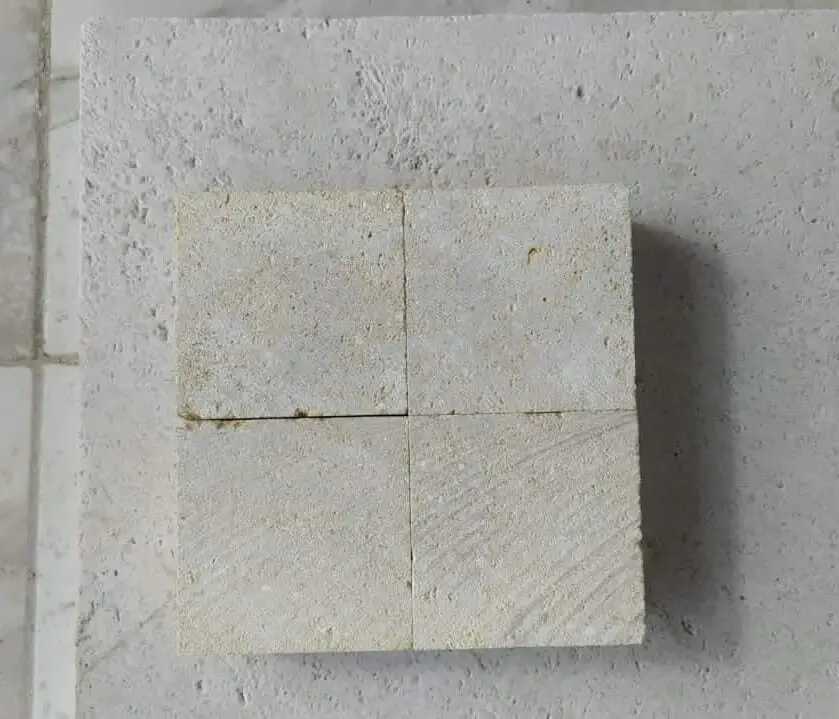
Sill safety is a dimension most specifications underweight until a problem arises. For ground-floor or accessible window positions where sills may be used as a handhold or occasionally stepped on, surface slip resistance becomes a genuine spec requirement. According to ADA surface and slip resistance design standards, architectural elements likely to be contacted during normal use in accessible environments should meet defined friction thresholds. Stone sills finished with a honed or slightly textured surface meet those thresholds readily — a highly polished marble sill in a wet exterior exposure may not.
Your finish specification determines the slip coefficient as much as the material itself. A honed limestone sill with a matte finish delivers a static coefficient of friction above 0.5 in wet conditions — comfortably above typical residential safety thresholds. A polished marble sill in the same exposure falls below that figure. For exterior sills on ground-floor accessible positions, specify honed, bush-hammered, or lightly textured finishes rather than polished surfaces regardless of the stone you choose.
Specifying Stone Window Sills: Thickness and Projection
The practical specification decisions for stone window sills center on two dimensions that are often handled too loosely in project documents: thickness and projection. Standard sill thicknesses for residential applications run from 1¼ inches to 2 inches nominal. That range is adequate for most single-story openings, but for wider spans — anything beyond 48 inches — you should increase to 2 inches minimum and verify flexural strength against the unsupported span. Natural stone window sills in limestone at 2-inch thickness handle spans up to 60 inches without supplementary support in most residential applications.
Projection beyond the face of the wall determines drainage effectiveness. A sill with less than ¾-inch projection and a missing drip groove will allow water to track back to the wall face — the source of the water staining and joint deterioration you see on poorly detailed historic buildings. Specify a minimum 1-inch projection with a continuous drip kerf cut on the underside, positioned at least ½ inch from the wall face. That detail costs nothing at fabrication stage and eliminates a persistent maintenance problem over the life of the installation.
- Minimum thickness: 1¼ inches for spans under 36 inches; 2 inches for spans 36–60 inches
- Minimum projection beyond wall face: 1 inch — more on exposed elevations
- Drip groove on underside: continuous, ½ inch minimum from wall face
- End bearing on masonry substrate: minimum ½ inch each end for dimensional security
- Joint sealant at window frame interface: specify a low-modulus, paintable sealant — not mortar — to accommodate differential movement
Final Perspective
The decision on stone window sills vs alternatives ultimately comes down to what service life expectation you’re designing for and what the project budget can absorb at the material stage versus the maintenance stage. For projects where 15–20 years of adequate function is the brief and budget is the primary constraint, uPVC and cast stone sills are defensible choices. For anything with a longer horizon — renovation of a quality home, commercial facade work, or any project where the sill is architecturally visible — natural stone’s combination of dimensional stability, moisture resistance, and surface durability makes it the specification you won’t revisit in a decade.
Stone window sills also contribute to property value in a way that composite alternatives simply don’t. Buyers and assessors recognise natural stone detailing as a quality indicator, and that recognition has a measurable effect on resale positioning. As you evaluate your options, it’s worth exploring related natural stone applications around the property — dry stone walling techniques and methods can inform how natural stone performs structurally in other exposed architectural contexts. For homeowners weighing longevity against upfront cost, Citadel Stone offers natural stone sills selected for dimensional stability across a wide range of climates.