Where Budget Meets Design Reality
Cheap patio paver ideas succeed or fail based on three decisions made before a single paver is ordered: format selection, layout pattern, and joint specification — and most homeowners get at least one of these wrong. The difference between a patio that looks like a budget project and one that looks like a designer installation usually isn’t the material cost — it’s the layout decision and the jointing strategy. You can stretch your budget significantly by understanding which stone formats waste the least material and which installation patterns hide imperfect cuts.
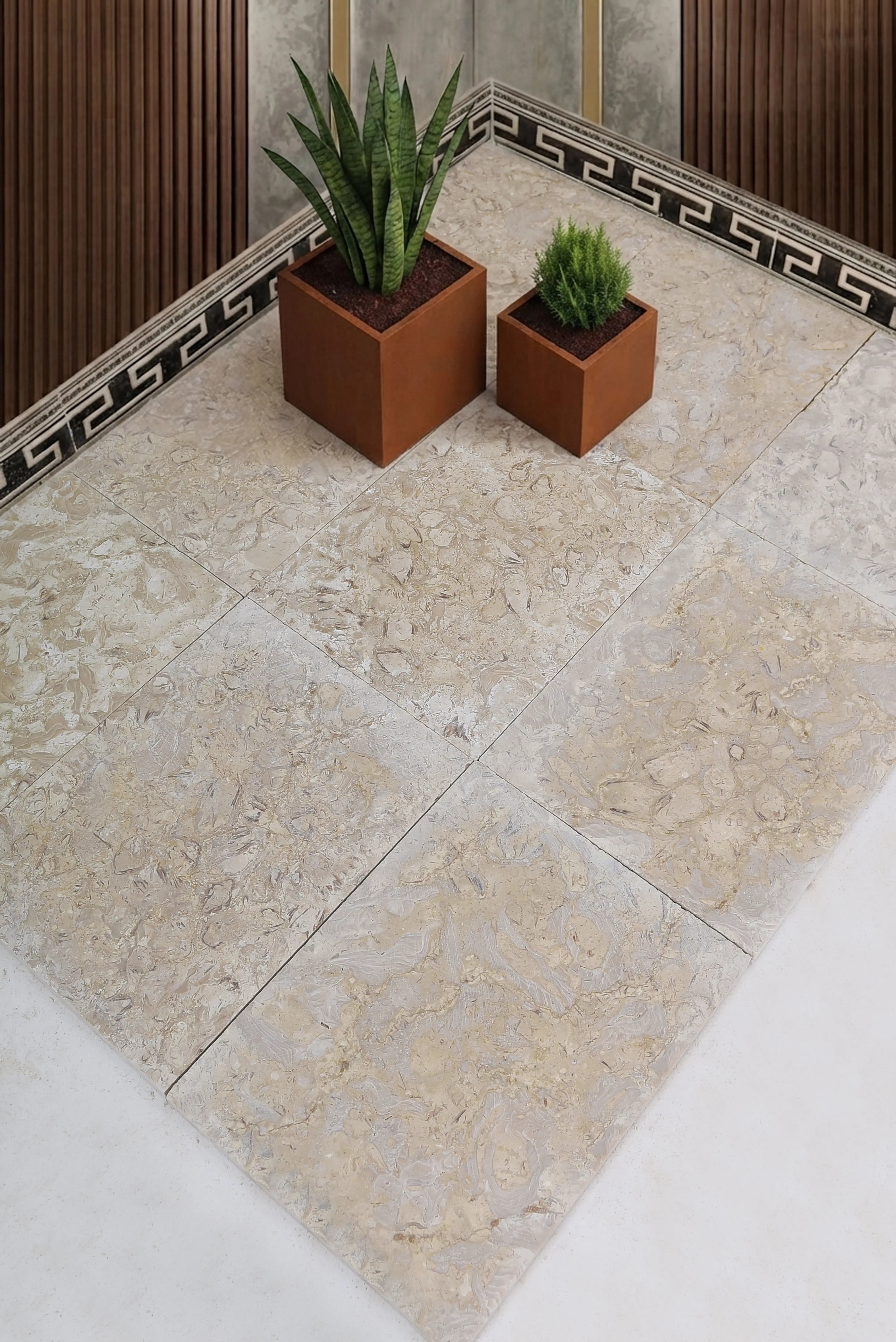
Stone Patio Ideas on a Budget That Actually Hold Up
Natural stone isn’t automatically expensive — the cost driver is usually format, not material. Larger, uniform-cut slabs in premium finishes cost more to quarry, process, and ship. Your most budget-conscious move is to look at irregular limestone, tumbled travertine offcuts, or mixed-size ashlar sets that suppliers discount precisely because they’re harder to sell in uniform quantities. These formats are field-tested to perform just as well structurally — they just require a slightly more experienced eye during layout.
The ASLA outdoor patio stone material guidance consistently points to natural stone as a long-term value investment over synthetic alternatives — even at the budget tier, you’re building something that can outlast a concrete pour by decades with proper maintenance. Stone patio ideas on a budget should prioritise absorption rating and hardness before aesthetics, because a beautiful paver that absorbs water freely will degrade faster in climates where temperatures swing hard between day and night.
Simple Paver Patio Ideas That Minimise Waste
Waste is where budget patio projects bleed money — and it’s almost entirely avoidable with the right layout. Rectangular patios with running-bond or stacked patterns in a single paver size produce the least off-cuts. Simple paver patio ideas built on a rectangular footprint can realistically hold waste to under 5% with accurate field measuring.
- Choose a paver size that divides evenly into your patio dimensions — this alone eliminates most cut waste
- Irregular flagstone and random ashlar layouts absorb size variation naturally, meaning less precise cutting is needed at borders
- Avoid curved edges if you’re on a strict budget — curves create exponential cut waste regardless of paver type
- Order 8-10% overage on budget natural stone formats; warehouse stock can fluctuate and dye-lot matching matters
- Ask your supplier for remnant or short-run pallets — these are often discounted 20-30% and contain full-dimension pieces
Budget patio paver design decisions made at the planning stage directly determine your final installed cost. Spending thirty minutes on a scaled drawing before ordering is worth more than any discount you’ll find at the point of purchase.
Limestone: The Value Leader in Natural Stone Patios
Limestone consistently outperforms other natural stones on the value-per-square-foot calculation for patio use. It’s dense enough for residential foot traffic, available in a wide range of formats and thicknesses, and quarried in large volumes — which keeps per-unit pricing competitive. Cheap patio paver ideas built around limestone appear in residential projects far more often than granite or marble for exactly this reason.
According to USGS limestone composition and construction data, its sedimentary formation makes it highly consistent in density and compressive strength across quarry batches — which matters for outdoor paving because uniform strength means uniform freeze-thaw resistance. That’s a critical point: in regions where temperatures cycle between warm afternoons and cold nights, inconsistent stone density creates uneven stress fracture points. Limestone’s natural consistency works in your favour here.
You can source affordable stone from Citadel Stone in multiple thicknesses and finish options, which gives you genuine flexibility to match your patio’s structural requirements without defaulting to the most expensive format available.
Small Patio Pavers: Sizing Strategies for Smaller Spaces
Small patio pavers — typically in the 6×6 to 12×12 inch range — are genuinely the smarter choice for compact outdoor areas, and not just for visual proportion. Smaller format pavers are easier to handle solo, require less cutting at borders, and distribute load more evenly across a compacted base. Small-format natural stone pavers also sit at a lower per-unit price point, making them ideal for stone patio ideas on a budget.
- 6×6 inch tumbled limestone pavers create a classic cobbled effect at a fraction of the cost of actual cobblestone
- 12×12 inch mixed limestone sets in a random pattern maximise coverage per pallet at lower material cost
- Smaller pavers are more forgiving on uneven sub-bases — the shorter span means less risk of cracking under point loads
- Consider a basketweave pattern with two-size pavers: it reads as complex and designed, but wastes almost no material
For a small patio footprint under 150 square feet, working with small patio pavers in natural stone is highly achievable — your material cost can stay well under what you’d pay for quality composite decking on the same footprint.
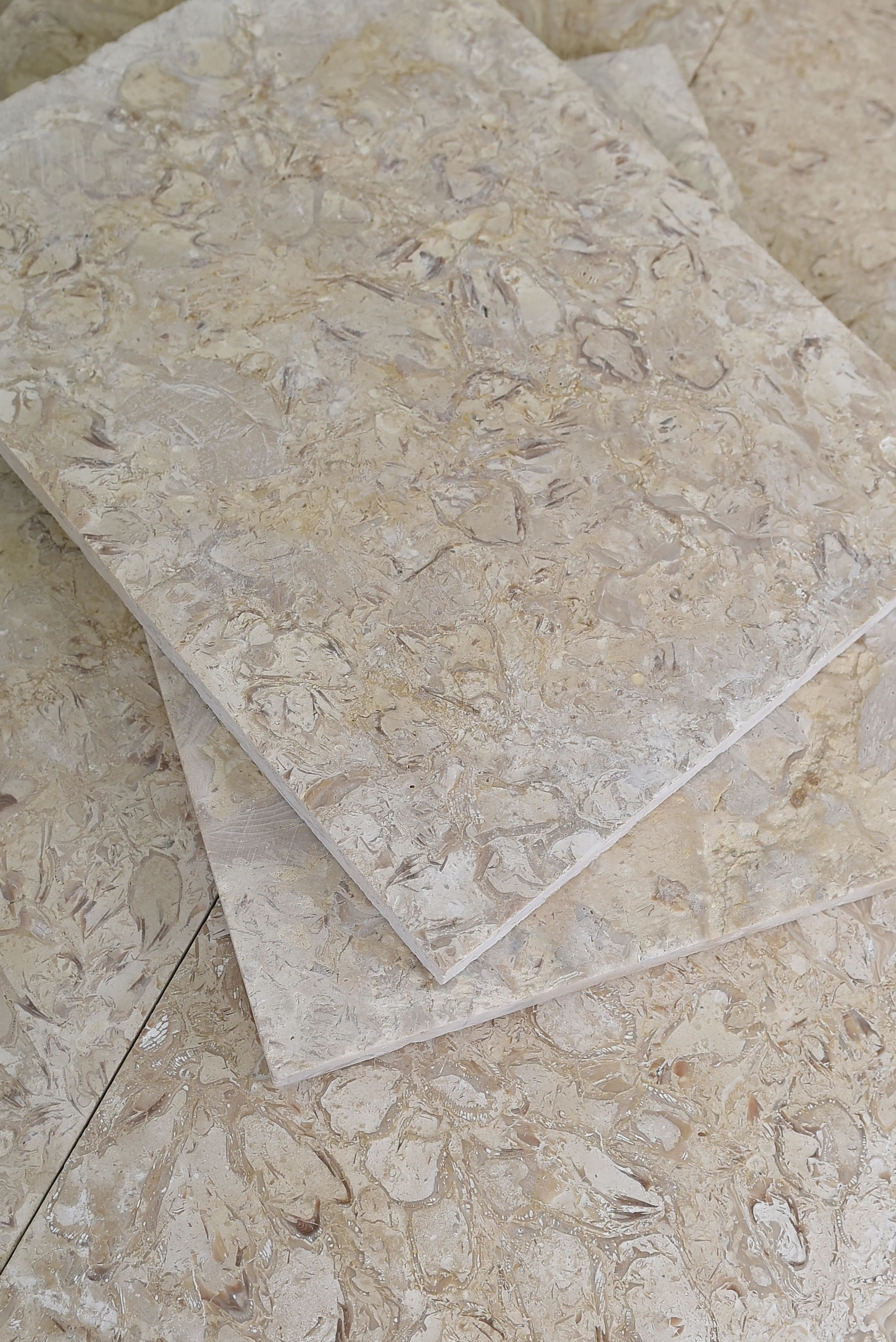
Freeze-Thaw Performance: What Budget Buyers Need to Know
Here’s what most budget patio guides skip entirely: the cheapest paver to buy can become the most expensive paver to own if it fails within five years. Freeze-thaw cycling is the primary failure mechanism for outdoor stone in regions with significant temperature swings. Natural stone absorbs moisture into its pore structure; when that moisture freezes and expands, it creates micro-fractures that accumulate over seasons until the surface spalls or the paver splits.
The Natural Stone Institute outdoor paving durability standards specify an absorption rate below 0.75% as the threshold for reliable freeze-thaw performance in exterior applications. Dense limestone and basalt both meet this threshold — many budget-priced sandstones and softer limestones do not. Cheap patio paver ideas need to account for this specification, or you’ll be re-doing the project in a decade.
- Check the absorption rate on any budget stone before purchase — ask the supplier for test data, not just a verbal assurance
- Thermal expansion in natural stone averages 3-5 × 10⁻⁶ per °F — your joint spacing needs to accommodate this, especially where day-night temperature swings exceed 30°F
- Polymeric sand in joints performs better than plain sand in freeze-thaw environments because it resists washout and maintains joint integrity through repeated expansion-contraction cycles
- A properly compacted 4-6 inch aggregate base is non-negotiable — this protects against heave caused by moisture below the paver bed during freeze cycles
Installing budget patio pavers correctly the first time costs less than repairing or replacing them after two harsh winters. The base preparation and jointing investment protects everything above it.
Layout Patterns That Look Expensive Without the Cost
Your layout choice is the single highest-impact design decision you’ll make — and it costs nothing extra. The same simple paver patio ideas executed in a herringbone or random ashlar pattern read as significantly more intentional and expensive than a simple grid. The labour cost difference between patterns is usually minimal; the visual result is dramatic.
- Random ashlar: uses three or four paver sizes together in an interlocking random pattern — maximises coverage efficiency and minimises waste on irregular footprints
- Herringbone at 45°: the most labour-intensive of the budget-friendly patterns, but produces the most sophisticated visual result with basic rectangular pavers
- Running bond (brick pattern): the simplest and fastest to install — reduces labour cost significantly and still looks intentional with quality natural stone
- Pinwheel: a four-piece pattern using one large centre paver surrounded by four smaller ones — achieves a formal, designed look with minimal cutting
At Citadel Stone, we recommend the random ashlar layout for most first-time budget patio paver projects. It’s the most forgiving pattern for slight size variations that naturally occur in natural stone, and it’s the fastest to adapt when you hit an obstacle like a drain or post footing. Warehouse stock of mixed-size limestone sets is typically available for faster delivery than custom-cut single-size orders, which also helps you hit your project timeline.
Ordering, Logistics, and Planning Ahead
Your budget patio paver project can unravel at the supply chain stage if you don’t plan lead times correctly. Natural stone ships on pallets that require truck access to your site — a standard limestone pallet runs 2,000 to 2,500 lbs. Check your driveway clearance and whether a delivery truck can reach your backyard access point before you finalise your order format.
Citadel Stone ships natural stone pavers nationwide, with warehouse stock on popular limestone and travertine formats typically available for delivery within one to two weeks. Custom-cut or specialty formats can extend that timeline, so for budget projects where cost control matters, staying with in-stock warehouse formats will save you both money and wait time. Factor truck delivery access into your project planning — a restricted access site sometimes requires smaller delivery loads, which can add to your freight cost if not identified early.
Professional Summary
Cheap patio paver ideas become genuinely impressive patios when you combine the right material specification with a smart layout and honest base preparation. The cost savings are real — natural stone in budget formats and mixed sizes can come in well below premium slab pricing without sacrificing durability or visual impact. Your most important decisions happen before you order a single paver: footprint dimensions that minimise waste, a stone specification that meets absorption and density requirements for your climate’s temperature cycling, and a layout pattern that maximises the material’s natural character.
As your patio ages, regular joint sand maintenance and periodic resealing protect your investment across seasonal freeze-thaw cycles and keep the surface performing at spec for decades. For patios that develop issues over time — sunken sections, shifting joints, or drainage problems — understanding the repair pathway matters as much as the original installation. fixing paver drainage and shifting issues is a practical next step for any patio owner dealing with movement after seasonal extremes. Mixing paver sizes from Citadel Stone in a random ashlar layout is one of the most cost-effective ways to cover large patio areas with minimal waste.
Related reading: Limestone Floor Tile: Choosing the Right One · White Limestone Paver: What Buyers Should Know · limestone tiling.