

What Makes Belgian Block Pavers Different
Belgian block pavers achieve compressive strengths that routinely exceed 15,000 PSI — a figure that separates them from virtually every manufactured alternative on the market. That raw density is why you’ll find belgian block pavers under heavy truck traffic, at commercial loading zones, and on driveways that need to outlast two or three cycles of asphalt resurfacing. Understanding what drives that performance is the first step toward specifying them correctly.
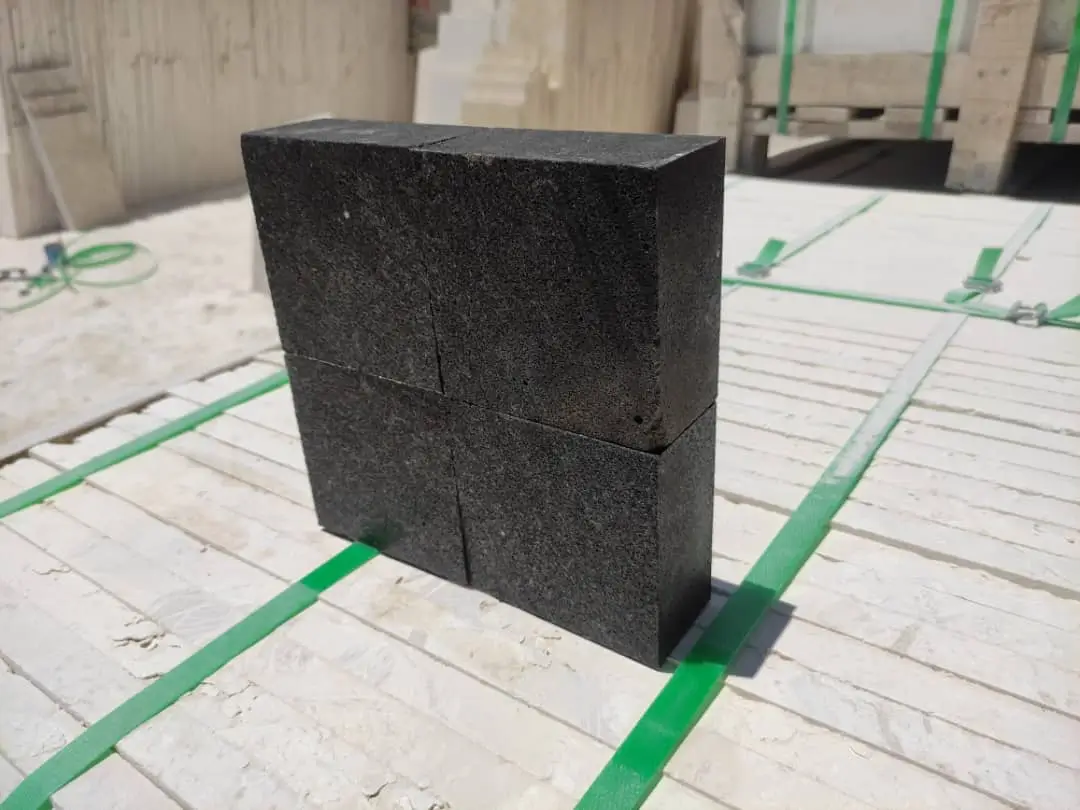
Belgian block paving gets its structural character from the way the stone is quarried and trimmed. Unlike sawn slabs, these blocks are split or rough-cut to expose a crystalline granite face with natural micro-texture. That texture isn’t decorative — it directly affects friction coefficients, drainage behavior, and long-term abrasion resistance. According to NSI granite durability specifications, natural granite block products maintain surface hardness ratings that sustain pedestrian and vehicular traffic without measurable wear over decades of service.
The geometry matters as much as the material. Traditional Belgian block dimensions run 4 × 4 × 5 inches or 4 × 6 × 6 inches, though you’ll encounter regional quarry variations. The depth-to-width ratio — typically near 1:1 — gives each unit the vertical bearing capacity that makes these blocks so effective under point loads. Thinner formats sacrifice that load distribution, which is the first specification error most projects make.
Granite Belgian Block: Material Selection That Holds Up
Granite is the dominant stone type for Belgian block applications, and for good reason. Its interlocking crystalline structure resists freeze-thaw cycling in ways that limestone and sandstone simply cannot match at equivalent thickness. Granite Belgian block sourced from quality quarries will carry a water absorption rate below 0.4%, which directly translates to dimensional stability through seasonal moisture cycles. That low absorption figure is what you’re really paying for when you select premium granite over lower-cost alternatives.
Your stone selection decision should also factor in surface finish. Thermal-finished granite Belgian block carries a COF (coefficient of friction) above 0.6 when wet — the minimum most engineers specify for vehicular applications. Rough-split faces perform even better at 0.7–0.8 wet COF, which matters on inclines and in regions with sustained rainfall seasons. Flame-finished and thermal-finished surfaces both hold these numbers across years of traffic because the texture is structural, not applied.
- Granite Belgian block: compressive strength 15,000–25,000 PSI, absorption below 0.4%, freeze-thaw stable
- Limestone block alternatives: compressive strength 4,000–10,000 PSI, higher absorption — better suited to pedestrian and low-traffic applications
- Basalt block options: compressive strength 18,000–22,000 PSI, extremely dense — appropriate for heavy industrial driveways
- Color consistency: grey and dark charcoal tones hold better across quarry runs; buff and tan tones show more natural variation
- Surface finish selection: rough-split for maximum grip and traditional aesthetics, thermal-finished for a more uniform appearance with maintained traction
Color uniformity is an underappreciated specification factor. Granite quarries produce natural variation run to run, so if your project requires matching an existing installation — a historic street or estate driveway — you’ll need to source all material from a single quarry run. At Citadel Stone, we quality-check each shipment against reference samples before it leaves the warehouse, which helps projects avoid the frustrating mid-installation color mismatch that delays completion.
Base Preparation for Belgian Block Paving
The base system underneath belgian block paving carries more project risk than the stone itself. You can source perfect granite blocks and still produce a failing installation if the compacted aggregate base isn’t engineered for the specific load type and soil conditions beneath it. This is where experienced specifiers separate themselves from those who copy generic guidelines.
For vehicular applications — driveways, commercial entries, truck courts — your compacted aggregate base should sit at a minimum of 8 inches for standard passenger vehicles, stepping up to 12 inches for mixed or heavy vehicle access. Subgrade soil type modifies both those figures. Clay-heavy soils require a geotextile separation fabric between subgrade and aggregate base to prevent subgrade fines from migrating upward and contaminating the base over time. That migration is invisible until settlement appears — usually in the first or second winter after installation.
- Subbase compaction target: 95% Modified Proctor density — confirmed by nuclear densometer testing, not visual inspection
- Aggregate gradation: crushed stone meeting ASTM D2940 gradation for base course — open-graded aggregate passes water and resists frost heave more reliably than dense-graded alternatives
- Bedding layer: 1-inch nominal coarse sand or chip-stone screenings — never fine masonry sand, which migrates under cyclic loading
- Setting depth of blocks: full block depth embedded with a maximum 3–4mm of bedding material compressed under the unit
- Edge restraint: granite curb or steel edging anchored into the base at 24-inch intervals — Belgian block without perimeter restraint migrates laterally within two to three freeze-thaw cycles
One detail that consistently gets overlooked on residential projects: the transition zone where the Belgian block field meets an adjacent concrete apron or asphalt driveway. That transition needs a poured-in-place concrete haunch on the block side, set below finish grade, to prevent the two surfaces from differential settling at different rates. Without it, you’ll have a lip at the transition within three years that becomes both a trip hazard and a drainage problem.
Drainage Design and Water Management
Belgian block installations handle water very differently from monolithic paved surfaces, and understanding that difference lets you turn it into a performance advantage rather than a liability. The open joints between blocks — typically 3/8 to 3/4 inch filled with crushed granite aggregate or polymeric sand — allow a meaningful percentage of surface runoff to infiltrate directly into the base system rather than sheeting off to drains. In high-rainfall environments or areas subject to heavy rain seasons, that infiltration capacity can reduce peak runoff volumes by 30–50% compared to an equivalent impermeable surface.
That said, the drainage benefit only holds if your base aggregate is open-graded and your subgrade has reasonable infiltration capacity. Heavy clay subgrades with permeability below 0.5 inches per hour don’t give the water anywhere to go, and you’ll saturate the base rather than manage the water. In those conditions, install a perforated collector pipe at the base of the aggregate layer — sloped to daylight or tied to a drainage structure — so the base drains laterally rather than retaining water that destabilizes the bedding layer.
Slope is your other critical drainage variable. Belgian block paving should be installed at a minimum 1.5% cross-slope — 2% is better for heavy rainfall zones and monsoon-pattern precipitation regions. Below 1%, water ponds in the joints, keeps the setting bed wet for extended periods, and accelerates joint sand washout in severe storm events. You’ll know a project got slope wrong when you see moss starting at the low end of the installation within the first two years. Check your finished grades with a laser level before setting begins, not after.
- Joint fill for drainage performance: 3/8-inch crushed granite chip holds and allows infiltration — polymeric sand seals joints and manages surface water but reduces infiltration
- Catch basin placement: every Belgian block field larger than 1,000 square feet should have at least one interior drainage structure, regardless of surface slope
- Drought-cycle consideration: open-graded aggregate bases dry out and can shift during extended drought, then re-wet unevenly — biennial joint sand replenishment stabilizes the system through these cycles
- Hurricane and flooding risk zones: use polymeric joint sand and sealed base edges to prevent joint erosion during sustained high-volume rain events
Installation Pattern Options and Joint Spacing
The pattern you choose for belgian block pavers isn’t just aesthetic — it determines how load transfers across the field and how the installation responds to thermal movement. Running bond (offset rows) is the most common pattern for driveways and streets because it distributes axle loads across multiple blocks rather than concentrating stress at a single joint line. Herringbone at 45 degrees performs even better under wheeled traffic because no joint line runs continuously in the direction of travel.
Fan patterns and radial layouts are common in historically inspired projects and estate entrances. These look striking, but they demand significantly more cutting at perimeter edges, which adds labor cost and creates more edge units with reduced bearing area. Factor in 15–20% additional material waste for complex fan layouts compared to running bond — it’s a real project cost that quotes sometimes miss.
- Running bond: best structural performance under vehicular traffic, minimal cutting, efficient material use
- Herringbone (90° or 45°): maximum interlocking under dynamic loads — the standard for commercial truck access
- Fan/radial patterns: superior visual impact for formal entries, higher material and labor cost
- Grid pattern (jack-on-jack): avoid for vehicular use — continuous joint lines in the travel direction create a stress fracture path under repeated loading
Joint spacing deserves more attention than most installation specs give it. Standard open joints at 3/8 to 1/2 inch accommodate thermal movement without the blocks butting against each other during peak summer temperatures. Granite expands at approximately 4.7 × 10⁻⁶ per °F — across a 20-foot run with a 60°F temperature swing, that’s nearly 1/4 inch of cumulative expansion. Close joints too tight and you’ll see blocks lifting at high points as the stone presses against itself with nowhere to move.
Pedestal Pavers and Elevated Applications
Pedestal pavers represent a separate application category that Belgian block isn’t typically associated with — but the intersection is more relevant than most specifiers expect. Belgian block set on adjustable pedestals allows you to create elevated terrace surfaces with concealed drainage underneath, which is an elegant solution for rooftop courtyards, pool decks, and commercial plaza spaces where the structural slab below cannot accommodate a conventional aggregate base.
The critical specification variable in pedestal applications is the block thickness relative to the pedestal head diameter. Standard Belgian block in the 4 × 4 format needs a pedestal head of at least 3.5 inches to provide adequate bearing without bridging stress at the block edge. Use a pedestal system rated for a minimum 1,000 lbs per unit for pedestrian-only applications, stepping up to 3,500 lbs per unit where vehicle access is possible. Verify these load ratings against the pedestal manufacturer’s published data, not the sales sheet figures.
You’ll also want to confirm that the pedestal material is compatible with the drainage chemistry of your site. Plastic pedestals in contact with runoff from copper flashing or zinc roofing components can degrade faster than the rated service life. Specify UV-stabilized polypropylene pedestals with a manufacturer-confirmed resistance to pH ranges of 5.5–9.0 — that covers the full range of precipitation acidity and alkaline runoff conditions you’re likely to encounter.
Specifying Thickness and Load Requirements
Thickness selection for belgian block pavers is a structural decision, not a cost lever. The standard 4-inch depth handles residential driveway and walkway applications with confidence — passenger vehicle axle loads, light delivery trucks, and typical pedestrian traffic all fall within the capacity of a properly bedded 4-inch block. Step down to 2.5 or 3 inches and you introduce risk under anything heavier than a passenger car, particularly as the base compresses over the first 18–24 months of service.
Commercial and mixed-use applications that will see regular delivery vehicle access — panel trucks, box trucks, and occasional semi-trailer movements — should be specified at 5 or 6 inches of block depth. That additional depth increases the load-distribution footprint of each block and dramatically reduces the point stress transferred to the bedding layer. According to USGS dimension stone production data, granite block products used in historic street paving have demonstrated service lives exceeding 80 years in active roadway conditions — a performance benchmark that hinges on thickness and base preparation working together.
- 2.5–3 inch: pedestrian walkways, garden paths, low-traffic residential
- 4 inch: standard residential driveways, light commercial entries — the most common specification
- 5–6 inch: commercial driveways, loading areas, mixed vehicular access
- 6+ inch: historic street restoration, heavy industrial applications — confirm with structural engineer
For projects sourcing through our natural stone block range, thickness options are stocked at standard dimensions with lead times typically running 7–14 days from the warehouse depending on volume. Confirm availability before finalizing your project schedule, particularly for large-volume orders where partial truck deliveries across multiple shipments can affect installation sequencing.
Sealing, Maintenance, and Long-Term Performance
The sealing question for Belgian block paving comes down to what you’re trying to protect and what you’re willing to give up. A penetrating silane-siloxane sealer applied to granite Belgian block will reduce water absorption by 60–80%, which limits staining from oil, organics, and mineral deposits. It does not create a film on the surface, so it doesn’t change the friction characteristics or alter the visual texture of the stone. That’s the sealer type to specify for driveways and commercial applications.
Film-forming sealers — acrylics and urethanes — are occasionally specified for decorative Belgian block installations where the client wants an enhanced wet look. These work in pedestrian contexts but break down under vehicular tire contact faster than manufacturers typically acknowledge. You’ll be reapplying every 18–24 months in high-traffic conditions, and the peeling film can create uneven surface texture that becomes a slip issue. Reserve film-forming sealers for garden path and courtyard applications where traffic is light.

Joint sand maintenance is the most overlooked element of long-term Belgian block performance. Open joints lose material to wind, rain, and traffic vibration — typically at a rate of 5–10% per year in exposed installations. Annual inspection and top-dressing with matching aggregate or polymeric sand keeps the joint system stable, prevents block rocking, and maintains the drainage performance of the base system. According to ASLA permeable surface guidance, maintaining joint fill integrity is the primary maintenance factor for block paving longevity in variable precipitation climates.
- Initial sealer application: 28–30 days after installation, once the bedding layer has consolidated under traffic
- Resealing interval: every 3–5 years for penetrating sealers on granite, more frequent in heavy sun exposure or salt environments
- Joint sand replenishment: annually in high-rainfall zones, every 2 years in drier climates
- Cleaning protocol: low-pressure wash below 1,200 PSI — high-pressure washing dislodges joint fill and can erode softer granite faces over repeated applications
- Efflorescence treatment: diluted phosphoric acid (5–10% solution) applied and immediately rinsed — don’t let acid solutions dwell on granite surfaces
Ordering, Logistics, and Project Planning
Belgian block ordering requires more lead time awareness than most project managers build in. Domestic warehouse stock covers standard grey granite in the 4 × 4 × 5 format reliably, but specialty sizes, brown tones, and custom quarry cuts carry 6–10 week lead times from international quarry sources. Start your material confirmation process at the same time you begin permit applications — not after approval arrives.
Truck delivery logistics for Belgian block are worth planning carefully. A full pallet of 4-inch granite block runs approximately 3,200–3,600 lbs — a standard project consuming 500 square feet at 4-inch depth requires four to six pallets. Confirm that your delivery site has truck access for a flatbed or boom truck, adequate unloading clearance, and a designated staging area that doesn’t obstruct installation sequencing. Tight access points sometimes require phased truck deliveries scheduled around traffic patterns, which adds time to the material receipt schedule.
Citadel Stone ships nationally and maintains working warehouse inventory of standard Belgian block dimensions, which compresses typical lead times significantly compared to ordering direct-import. Factor your project’s volume into the lead time conversation — large orders over 2,000 square feet may require a confirmed production allocation from the quarry rather than drawing from existing warehouse stock.
As you finalize your Belgian block specification, it’s worth considering how complementary natural stone elements — edging, setts, and alternative block formats — fit into the broader project. how cobblestone setts compare to clay pavers covers another dimension of block paving specification that may inform your edging and transition decisions.
Your Action Plan for Belgian Block Pavers
Getting Belgian block right means front-loading the decisions that most projects defer. Nail down your thickness specification before budget is finalized — undersizing the block depth to save on material cost creates a replacement cycle that costs far more than the original upgrade would have. Confirm your base design against actual soil conditions with a probe test or geotechnical review for any project over 1,000 square feet. Resolve your drainage strategy before a single block is set — adding a collector pipe or adjusting cross-slope after installation means pulling up finished work.
Material sourcing deserves the same early attention. Confirm quarry run availability for your chosen color and surface finish, verify that your truck access site can receive pallet deliveries, and build a 10–15% material overage into your order for cutting waste and future repairs. Blocks cut from a different quarry run three years later rarely match closely enough for invisible repairs.
The ASTM C615 standard for granite dimension stone provides the technical baseline for evaluating block quality — ASTM granite dimension stone standards define the compressive strength, absorption, and modulus of rupture minimums that quality Belgian block should exceed. Requesting conformance data from your supplier before placing a large order is standard professional practice, not an unusual ask. Sourced from quarries across the Mediterranean and Middle East, belgian block pavers arrive ready for load-bearing paving work.
Related reading: cobblestone pavers price · tumbled setts vs sawn setts · cobblestone sett settling problems.