

Why Base Preparation Defines Everything
Travertine pool deck pavers tolerate surprisingly little base inconsistency — a lesson that shows up fast when the first rainy season reveals settlement lines across an otherwise beautiful installation. Your compacted aggregate depth needs to reach a minimum of 6 inches for pedestrian-only decks, and 8 inches anywhere cart traffic or heavy equipment will cross during maintenance. Anything thinner and the differential settlement that develops between paver joints and the pool shell edge becomes your biggest long-term headache.
The critical variable most specs underestimate is subgrade bearing capacity. Expansive clay soils common in many regions can shift a travertine pool deck by as much as three-quarters of an inch seasonally, enough to crack mortar joints and loosen pavers near the pool coping transition. You’ll want a geotextile fabric layer between native soil and your compacted base — it costs very little upfront and prevents aggregate migration that undermines even well-compacted bases over time.
Thickness Selection for Pool Deck Travertine
Pool deck travertine typically comes in two nominal thicknesses — 1.25 inches and 2 inches. The thinner profile suits dry-set installations over a well-prepared sand-set base, while the 2-inch nominal handles mortar-set applications and any zone where point loads from furniture legs concentrate stress. Your selection here isn’t just about load — it’s about the finish cut interaction with your drainage slope.
Thinner pavers telegraph base imperfections more aggressively. A 1.25-inch paver laid over a base with a half-inch high spot will rock under foot traffic, and that rocking motion eventually fractures the paver at its thinnest cross-section, usually right along a vein line in the travertine. The ASTM C1527 travertine dimension stone standard provides minimum thickness tolerances for dimension stone — specifiers working to that standard typically call out 2-inch nominal material for outdoor deck applications to provide adequate safety margin.
For travertine pool deck paver installation, thickness calibration matters as much as nominal thickness. Calibrated material — sawn to a consistent back dimension — installs dramatically faster and produces a flatter finished surface than filled-and-honed material that varies by a quarter inch across a pallet. Specify calibrated material in your purchase order and verify it when the truck arrives on site.
Drainage Slope and Joint Layout
Your drainage slope should run at a minimum 1.5% grade away from the pool edge — not the 1% minimum you’ll find in generic paving specs. Travertine’s open pore structure means surface water moves through the face of the stone to some degree, but your deck still needs positive drainage to prevent pooling at the coping transition. A 1.5% slope also gives you practical tolerance for minor base settlement without creating standing water zones.
Joint width is where most pool deck installations compromise unnecessarily. A 3/16-inch joint filled with non-sanded polymer grout keeps the aesthetic clean but provides almost no accommodation for thermal movement. For travertine tiles outdoor in climates with meaningful temperature swings, a quarter-inch joint filled with flexible sanded grout is the safer specification. The thermal expansion coefficient of travertine runs approximately 4.4 × 10⁻⁶ per °F — modest compared to concrete, but across a 20-foot run the movement accumulates to a dimension your grout joints need to absorb.
Plan your expansion joints at 15-foot intervals maximum, filled with a backer rod and compatible sealant rather than grout. This detail is non-negotiable at the perimeter where your travertine deck meets the pool coping, the house foundation, or any fixed structure. Skipping expansion joints at those transitions is the single most predictable cause of cracked pavers in the first two years of service.
Finish Options and UV Performance
Travertine for pool deck use comes in four primary finishes — tumbled, brushed, honed, and unfilled-natural — and the finish you specify directly affects both UV color retention and slip resistance. Tumbled travertine’s micro-rough surface scatters UV light rather than concentrating it on a single plane, which translates to noticeably slower color shift over years of direct sun exposure compared to a honed finish.
Honed travertine develops a subtle amber or rust toning within two to three seasons of intense UV exposure, particularly in the beige and walnut color families. This isn’t damage in a structural sense, but it surprises clients who expected the color to stay consistent with their original sample. The Natural Stone Institute travertine properties guidance notes that iron oxide content in the stone matrix oxidizes under prolonged UV exposure, producing surface toning that deepens progressively without sealing intervention.
Brushed finishes hit a practical middle ground — they offer better UV color stability than honed because the mechanical texture interrupts the oxidation layer at the surface, while still providing a cleaner aesthetic than tumbled edges. For pool decks where appearance consistency matters, brushed finish on a filled travertine is the specification that holds up best visually across a decade of sun exposure. A UV-stabilized penetrating sealer is still required, but the maintenance interval extends meaningfully compared to honed material in the same conditions.
Sealing Schedule for Sun-Exposed Decks
Your sealing schedule for pool deck travertine should be more aggressive than standard exterior stone — plan on annual application for the first three years, then reassess. The combination of UV degradation, pool chemistry splash, and foot traffic strips sealer from travertine faster than almost any other exterior stone application. A simple water-bead test tells you where the surface stands: pour a tablespoon of water onto the stone and watch. If it absorbs within 30 seconds, the sealer is depleted and needs immediate reapplication.
- Use a penetrating impregnating sealer — surface coatings peel under UV and pool chemical exposure and create a worse maintenance situation than no sealer at all
- Apply sealer to clean, dry stone — moisture trapped under sealer causes clouding that’s difficult to reverse without stripping
- A UV-stabilized formula adds meaningful protection against color shift in travertine with high iron oxide content, particularly in the walnut and gold color families
- Two thin coats outperform one heavy coat — allow the first coat to penetrate fully before applying the second
- Seal cut edges and the underside of any coping-adjacent pavers before installation — these surfaces absorb chlorinated water by capillary action and deteriorate faster than the face
For travertine pool deck pavers installed in high-UV regions with minimal cloud cover, consider a lithium silicate densifier applied before the impregnating sealer. The densifier reacts with calcium carbonate in the travertine to harden the pore structure, which reduces the absorption rate and extends the effective sealing cycle. It’s an extra step, but it genuinely extends performance in demanding outdoor installations.
Mortar-Set Versus Sand-Set Methods
The choice between mortar-set and sand-set installation for pool deck travertine comes down to two variables — the structural flexibility of your substrate and your tolerance for future individual paver replacement. Sand-set installations allow you to remove and relay individual pavers without breaking adjacent material, which matters when plumbing access is needed near the pool shell. Mortar-set installations are more rigid and better suited to substrates that don’t flex — concrete slabs, for instance.
Over a concrete slab, use a polymer-modified thin-set mortar rather than standard Type S mortar. Standard Type S doesn’t accommodate the differential movement between the concrete slab and travertine under thermal cycling, and you’ll see bond failures at three to five years that look like random paver loosening across the deck. Polymer-modified thin-set maintains flexibility through a wider temperature range and bonds reliably to the back of filled travertine even where factory-applied filler creates a less-than-ideal bonding surface.
- Back-butter each paver individually — 95% mortar coverage on the paver back is the ANSI minimum for exterior wet-area applications
- Tap each paver with a rubber mallet after setting to collapse any air voids — voids under pool deck travertine fill with water and accelerate deterioration of both the mortar bed and the paver back
- Allow full cure before grouting — minimum 24 hours in normal temperature conditions, 48 hours in cooler weather when mortar hydration slows
- Check level with a straight edge across every third paver during installation, not just at section ends
Slip Resistance Standards for Wet Areas
Pool deck surfaces are specified against the ANSI A326.3 minimum wet DCOF of 0.42 for wet conditions — the current wet-slip standard, alongside the guidance in PHTA pool deck safety standards for residential and commercial pool environments. Unfilled travertine with a natural or tumbled finish typically tests well above this threshold when wet, while honed and polished finishes can fall below 0.60 unless textured or treated.
Tumbled travertine is the safest finish specification for wet pool environments and the one most commonly called out in commercial pool projects for exactly this reason. The rounded edges and micro-textured surface created by the tumbling process maintain traction even with water film present. Specify anti-slip additive in your sealer for honed or brushed finishes used on deck zones immediately adjacent to pool entries and steps — those zones see concentrated wet foot traffic and benefit from additional friction enhancement.
Your specification should also address the pool coping transition zone — the pavers immediately adjacent to the coping are the highest-risk surface for slip-and-fall because that’s where people exit the water. Specify consistent finish across coping and adjacent deck pavers to avoid creating an unexpected texture change underfoot at the pool edge. When selecting our travertine decking materials, reviewing both COF test data and finish options together gives you the clearest path to a specification that meets safety requirements without compromising the deck’s appearance.
Ordering, Logistics, and Project Scheduling
Accurate quantity takeoffs for travertine pool deck pavers need to account for a 10% overage minimum — not the 5% often applied to interior tile work. Pool decks have more irregular perimeters, more cut pieces around skimmers and drains, and more waste from matching vein patterns at joints. Ordering short on a natural stone project creates a real problem: dye lots in travertine shift meaningfully from one quarry pull to the next, and a supplemental order placed weeks later will look noticeably different from your original material.
Verify warehouse stock levels before you commit to a project start date. At Citadel Stone, we recommend confirming that your full quantity — including overage — is available from a single production lot before scheduling your installation crew. Splitting a project across two lots is manageable in some materials but produces visible color variation in travertine that clients notice immediately. Our technical team can confirm lot consistency and pull samples from the same batch your order will ship from.
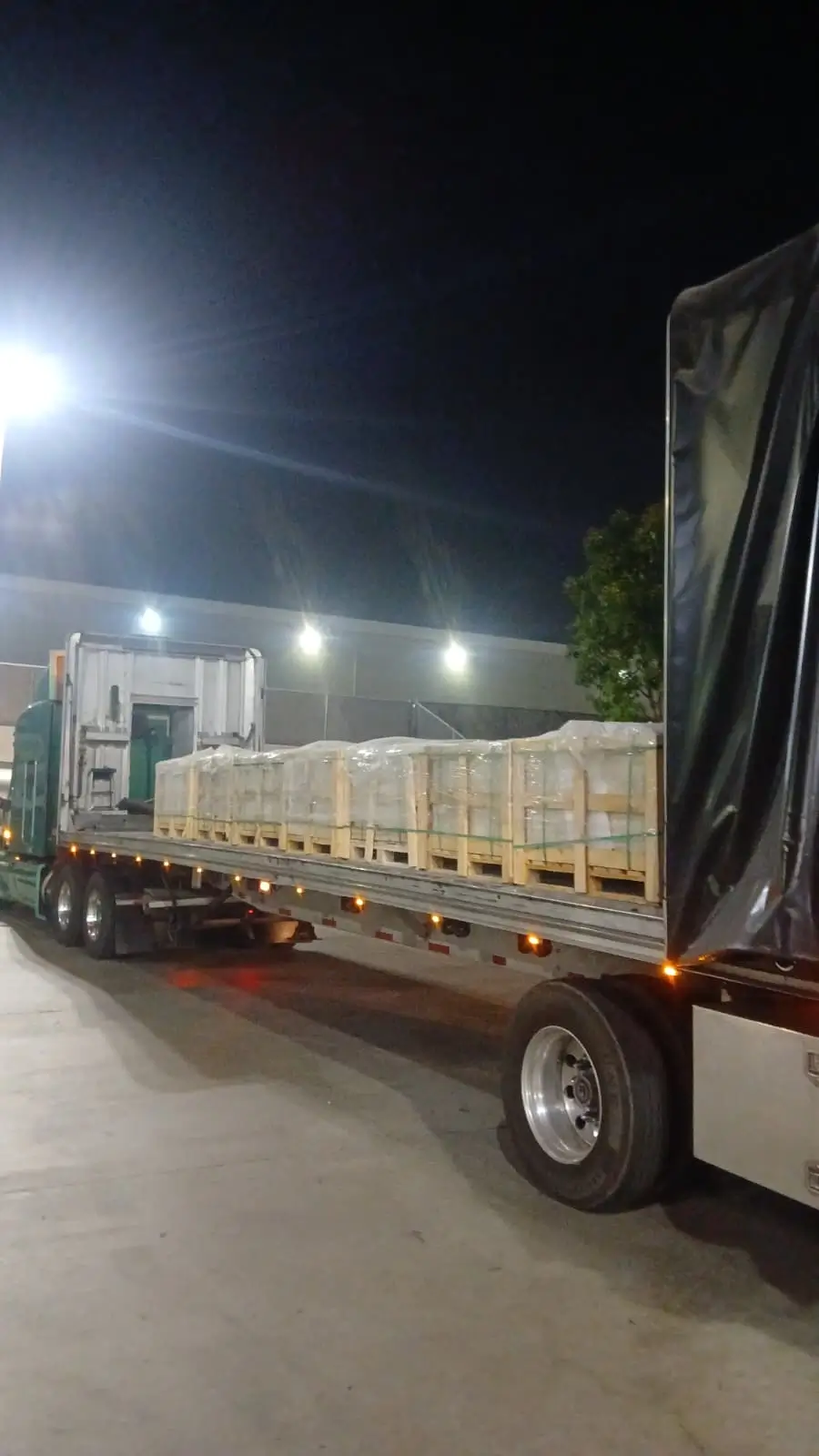
- Check truck access to the installation site before ordering — standard flatbed delivery requires a minimum 14-foot clearance height and a turning radius that many residential pool areas don’t accommodate
- Coordinate delivery timing so material arrives no more than two days before installation — storing travertine outdoors exposes it to moisture that affects thin-set bond strength if the back of the paver stays damp
- Stack pallets off direct ground contact on timber bearers and cover with breathable tarps, not plastic — plastic traps moisture and causes efflorescence on travertine stored longer than a few days
- Inspect every pallet on delivery before signing the freight bill — damage from truck transit is easiest to document and resolve before the driver leaves the site
Getting Travertine Pool Deck Paver Specifications Right
Getting travertine pool deck pavers right is fundamentally about sequencing decisions correctly — base preparation before thickness selection, thickness selection before finish choice, and finish choice before sealer specification. Each decision constrains the next, and reversing the sequence after installation is always more expensive than getting it right upfront. Your joint spacing, expansion joint placement, and drainage slope all need to be resolved on paper before a single paver goes down.
Pool deck installations reward specifiers who think through the full service life, not just the installation day. The UV exposure, pool chemistry, thermal cycling, and constant wet-dry cycles that a pool deck experiences compress the deterioration timeline compared to sheltered stone applications — which means your maintenance specifications need the same attention as your installation details. For homeowners and contractors planning the full perimeter of their pool project, understanding how coping integrates with the deck is just as important as the deck itself; travertine pool coping selection and specification covers that dimension in useful technical detail.
The installations that hold up for 20-plus years aren’t the ones with the most expensive material — they’re the ones where every detail from subgrade to sealer was specified correctly and executed without shortcuts. Your specification is only as strong as the weakest detail in the chain, and on a pool deck, the weakest detail is usually the one that seemed minor enough to skip. Travertine from Citadel Stone arrives from our established selected quarries across multiple continents, giving installers reliable thickness for a level deck base.
Related reading: modern pool tile · Outdoor Travertine Pool Pavers: Finishes & Thickness Guide · travertine pavers pool deck.