

Why Finish Selection Defines Your Pool Deck Performance
Outdoor travertine pool pavers deliver their best long-term performance when finish and thickness decisions are made together — not as separate afterthoughts. Most specification failures trace back to selecting a beautiful finish without accounting for wet-foot safety coefficients, or choosing a thickness category based on aesthetics rather than the actual load path beneath the paver. Your finish choice directly influences surface temperature, slip resistance, water drainage behaviour, and how aggressively the stone will require maintenance over time. Get these two variables aligned at the start of your project and you avoid the costly corrections that show up three years after installation.
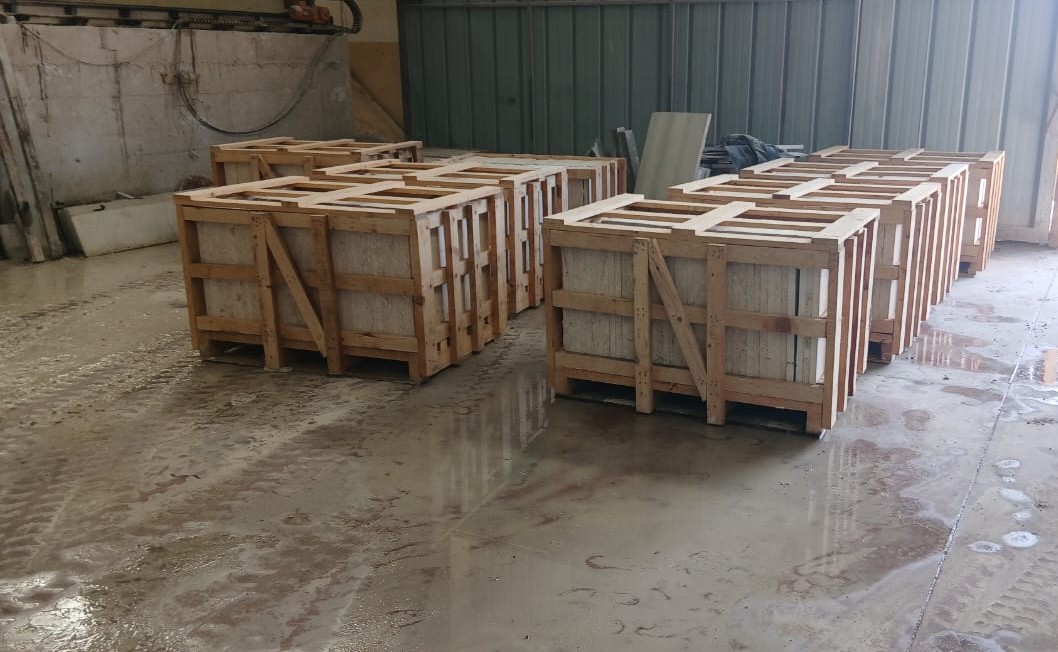
Travertine Finish Types for Pool Environments
The four core finishes available for outdoor travertine pool pavers each serve a distinct performance role — and picking the wrong one for poolside conditions is a common and expensive mistake. Here’s how each finish actually behaves once it’s wet, sun-baked, and under foot traffic day after day.
Tumbled Travertine
Tumbled travertine produces a naturally textured, worn surface with softened edges and irregular micro-relief. That texture is what makes it the most reliable finish for barefoot pool use — wet slip resistance should be verified per ANSI A326.3, which sets a 0.42 wet DCOF minimum. Tumbled finishes also tend to hide minor surface scratches and scuff marks better than polished alternatives, which makes them the lower-maintenance choice for high-traffic pool areas.
Brushed Travertine
Brushed travertine sits between tumbled and honed in terms of texture. The mechanical brushing process opens the stone’s surface slightly, creating linear micro-texture that provides grip while maintaining a cleaner, more contemporary appearance. You’ll find brushed finishes particularly effective at managing poolside water film — the surface channels allow thin water layers to drain away rather than sitting on the surface as a slip hazard. For pool surrounds where the design brief calls for a modern aesthetic without sacrificing safety, brushed is usually the strongest specification choice.
Honed Travertine
Honed travertine has a smooth, matte surface that photographs beautifully and reads as refined in pool design contexts. The challenge is that honed surfaces lose significant wet-slip resistance compared to tumbled or brushed alternatives. In wet pool deck conditions, honed travertine retains far less wet texture, which falls below safe thresholds for barefoot use. The PHTA pool deck safety standards are explicit about slip resistance requirements around water bodies. You can use honed travertine effectively in covered areas adjacent to the pool, or in zones that don’t receive direct splash exposure — just don’t spec it for the primary wet deck without adding a textured anti-slip treatment.
Polished Travertine
Polished travertine is essentially off the table for outdoor travertine pool pavers in wet zones. The polished surface becomes dangerously slick when wet, and UV exposure will degrade the polished sheen within two to three seasons outdoors. Polished finishes are interior-grade for a reason. If a client insists on the look, redirect them toward a honed finish with a textured anti-slip overlay applied to wet zones — that’s the closest you’ll get outdoors while keeping the specification defensible.
Filled vs. Unfilled: A Decision That Affects More Than Aesthetics
Travertine’s characteristic voids and pits are formed during the stone’s natural calcium carbonate deposition process. Whether those voids are filled with grout or epoxy filler before installation significantly affects how your outdoor travertine pool pavers perform under poolside conditions. Explore our filled travertine pool paver range to see how factory-filled options compare to site-filled alternatives in terms of surface consistency and long-term void stability.
Unfilled travertine has its advocates — the open voids provide natural micro-drainage channels, and the rustic character suits certain design aesthetics. But in pool environments, open voids accumulate algae, biofilm, pool chemicals, and debris at an accelerated rate. Cleaning becomes significantly more labour-intensive, and chemical imbalance in pool water can degrade the void edges over time, enlarging pits and creating tripping hazards. For most pool deck applications, factory-filled travertine is the more defensible long-term specification.
- Factory-filled pavers arrive with voids pre-filled under controlled conditions, producing more consistent surface integrity than site-grout applications
- Epoxy-filled voids resist pool chemical exposure better than standard cement grout fills, which can leach and shrink over time
- Filled travertine presents a more uniform surface for sealer application, which is critical for poolside chemical resistance
- Unfilled travertine in pool zones typically requires regrouting every three to five years to maintain surface safety — factor that maintenance cost into your initial specification decision
Thickness Guide for Outdoor Travertine Pool Pavers
Thickness selection isn’t about overbuilding — it’s about matching the paver’s structural capacity to the real loads and base conditions your installation will face. The two primary thickness categories for travertine pavers outdoor are 1.25 inches (30 mm) and 2 inches (50 mm), with specialty formats available at 1.5 inches for specific applications.
1.25-Inch (30mm) Pavers
The 1.25-inch format is appropriate for residential pool decks receiving foot traffic only, where the subbase is properly engineered and the paver will be set on a full mortar bed rather than dry-laid. At this thickness, travertine pool pavers have adequate flexural strength for pedestrian loads — but only when the base provides continuous, uniform support. Any void in the mortar bed beneath a 1.25-inch paver creates a stress concentration point that will crack the stone under repeated foot loading. This thickness format offers no tolerance for base inconsistency.
2-Inch (50mm) Pavers
The 2-inch format is the recommended standard for most outdoor travertine pool pavers, particularly for primary pool deck areas, coping zones, and any surface receiving pool equipment traffic. The additional mass provides meaningfully better flexural strength — travertine tested to ASTM C1527 travertine dimension stone standards at 2 inches typically shows modulus of rupture values 35–40% higher than 1.25-inch equivalents. That structural margin matters when base conditions vary, which they almost always do in real-world installations.
- 2-inch pavers tolerate minor mortar bed inconsistencies that would fracture thinner formats
- The additional thickness provides better thermal mass, moderating surface temperature fluctuations at the pool’s edge
- Heavier pavers resist lateral creep and joint widening better over time, particularly in areas adjacent to the pool shell where soil movement is common
- For pool coping applications, 2-inch thickness is the industry-standard minimum — coping receives significant cantilever stress that thinner formats cannot sustain
How Subgrade and Soil Conditions Affect Thickness and Base Design
Here’s the detail that separates a 20-year pool deck from a 7-year replacement project: the soil beneath your pavers determines your base specification far more than the pavers themselves do. Expansive clay soils — common across large portions of the country — can exert significant upward heave pressure during moisture cycling. That movement telegraphs directly through your aggregate base and into the pavers, opening joints and cracking stones that would perform perfectly on a stable subgrade.
Sandy or highly permeable soils present the opposite challenge. They drain freely, which is desirable for controlling subsurface moisture, but they compact inconsistently and can experience differential settlement under heavy point loads or pool surcharge pressure. On sandy subgrades, your compacted aggregate base depth should increase by 25–30% compared to standard recommendations — typically moving from a 4-inch compacted base to a 6-inch minimum for pool deck applications.
- Expansive clay subgrades require a granular separation layer between the native soil and the compacted aggregate base to interrupt moisture-driven heave
- Caliche subgrade in certain regions creates a hard, variable layer that can cause differential settlement if not uniformly broken and recompacted before base installation
- Rocky subgrades may require hand-compaction verification to confirm uniform bearing capacity — pockets of unconsolidated material between rock formations cause isolated paver failures
- On any subgrade showing seasonal movement history, spec 2-inch travertine and increase base depth — the extra material cost is marginal compared to replacement costs three years later
At Citadel Stone, we consistently advise customers to conduct a simple soil assessment before finalising their thickness specification. The information you gather from a few test holes near the pool shell will save you from an undersized base design — and the callbacks that follow.
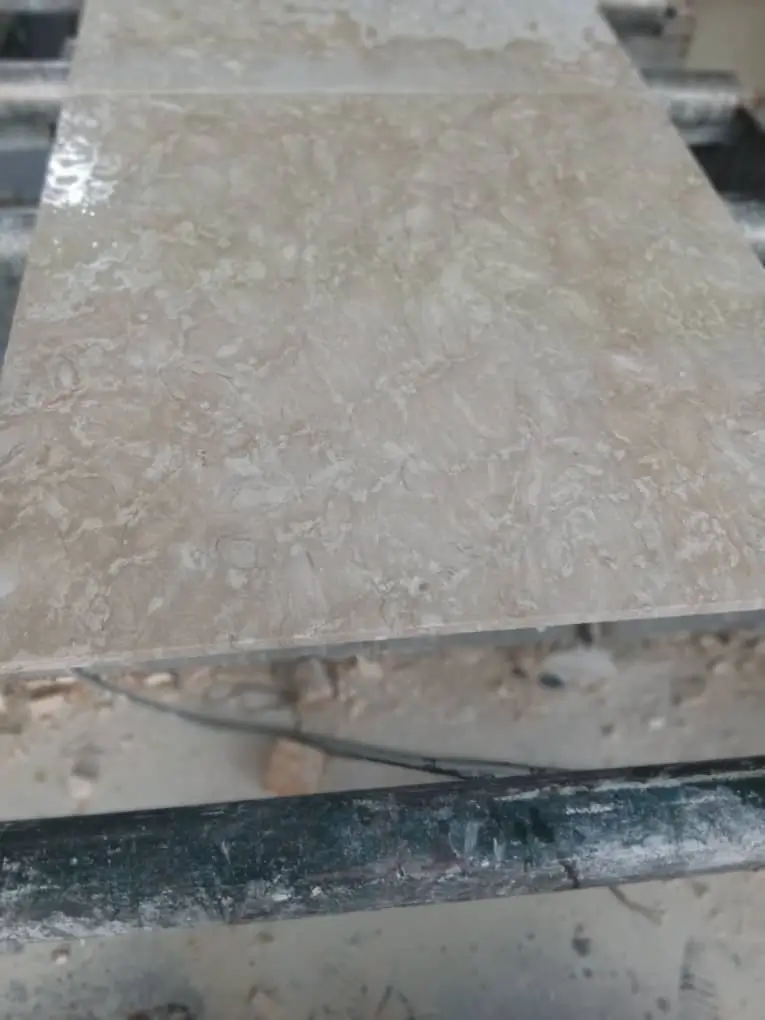
Format and Sizing Considerations for Pool Decks
Travertine pavers outdoor come in a range of formats — from small modular 12×12-inch units to large-format 24×24-inch slabs — and the right choice depends on both visual scale and structural reality. Larger format pavers look proportionally correct on wide pool decks, but they demand a more precise and consistently compacted base because any deviation in base level becomes visible across the larger surface span.
The most popular format combinations for pools with travertine coping include a mix of 16×24-inch field pavers with matching 12-inch-wide coping pieces. This pairing creates visual rhythm along the pool perimeter while keeping individual paver weights manageable for installation. For narrower pool surrounds — decks less than 6 feet wide — 12×24-inch formats often give better proportional results and are easier to lay to pattern without cut-heavy edges.
- 12×12-inch pavers suit curved pool shapes and freeform pool surrounds where tight turning radii require frequent cuts
- 16×24-inch pavers are the standard workhorse format for rectangular and geometric pool decks — they lay quickly, cut cleanly, and scale well visually
- 24×24-inch pavers work best on very large pool decks where the visual scale justifies the base precision required and the stone’s weight necessitates two-person placement
- Random pattern (versailles pattern) mixes multiple sizes and creates an informal aesthetic — plan your warehouse order carefully, as random pattern formats require specific size ratios to work geometrically without excessive cutting
Sealing Protocols for Poolside Travertine
Sealing outdoor travertine pool pavers is non-negotiable — but the type of sealer matters as much as the application frequency. A penetrating impregnator sealer is the correct choice for pool environments. Film-forming topical sealers trap moisture beneath the surface, which causes spalling and surface delamination in the presence of pool chemical splash and freeze-thaw cycling in regions that experience winter temperature drops.
Penetrating sealers allow the stone to breathe while blocking chlorinated water, sunscreen oils, and algae from penetrating into the travertine’s pore structure. Apply your first coat before grouting to seal the stone body, then apply a second coat after grouting to seal the complete installed surface. Poolside travertine typically requires resealing every two years — more frequently in high-use commercial environments or where pool chemical concentrations run high.
- Choose a sealer rated for calcium-based stone — some granite-specific sealers underperform on travertine’s more reactive calcium carbonate surface
- Test the sealer on a sample paver before full application — some sealers darken travertine more than expected, which can surprise clients when the full deck is sealed
- Allow 48–72 hours after installation before sealing to confirm all moisture has evaporated from the mortar bed — sealing over uncured mortar traps moisture and causes haze
- Citadel Stone’s technical team recommends a colour-enhancing penetrating sealer for ivory and walnut travertine tones where clients want to deepen the natural veining without adding surface sheen
Planning Your Order: Warehouse Stock, Lead Times, and Site Logistics
Travertine is a quarried natural stone, which means batch consistency and warehouse availability directly affect your project timeline. Order your complete material quantity from a single warehouse stock allocation — mixing batches from different quarry pulls produces visible tonal variation across the installed deck that no amount of blending fully corrects. Your truck delivery schedule should also account for material acclimation time: travertine arriving from a temperature-controlled warehouse to an outdoor installation site should acclimate for 24 hours before laying begins, particularly in hot, dry conditions where rapid surface drying can affect mortar bond timing.
Citadel Stone maintains national warehouse inventory of core travertine formats, which typically compresses lead times to one to two weeks versus the six to eight week import cycle that site-specific orders face. For large pool deck projects — anything over 800 square feet — confirm warehouse stock levels before finalising your project timeline, as popular formats in 2-inch thickness can move quickly during peak construction seasons. Your truck delivery should be staged so the pallet drop doesn’t block pool equipment access or create a secondary compaction problem on areas of the base already prepared for installation.
Getting Your Travertine Pool Paver Specification Right
Selecting outdoor travertine pool pavers correctly means resolving four interconnected decisions before a single paver is ordered: finish type, filled or unfilled, thickness category, and base specification for your specific subgrade conditions. Your finish determines safety in wet conditions — tumbled and brushed consistently outperform honed and polished for poolside safety coefficients. Your filled-versus-unfilled choice determines your long-term maintenance burden and chemical resistance. Your thickness should default to 2-inch for primary pool deck and coping applications, with the only valid exception being residential foot-traffic zones on impeccably prepared bases. And your base design must reflect what’s actually beneath the ground — not generic standards that assume a subgrade that may not exist on your specific site.
According to Natural Stone Institute travertine properties and performance data, travertine’s calcium carbonate structure and open pore network make it one of the most effective pool deck materials for managing surface temperature and foot comfort — but only when the installation beneath it is engineered correctly. As you finalise your pool deck design, complementary material decisions around tile selection can add refinement to the overall scheme — modern pool tile pairings with travertine explores how waterline and interior tile choices interact visually with travertine deck finishes. For high-traffic poolside conditions, Citadel Stone generally recommends filled travertine pavers at a minimum thickness that resists flexing under foot loads.
Related reading: pool paver sealer guide · silver travertine pool deck · best pool deck tile.