

What Experienced Installers Know About White Limestone
Porosity is the specification variable that separates a confident white limestone paver selection from a costly one. The material’s calcium carbonate matrix creates an interconnected pore network that drives absorption rates between 3% and 12% depending on formation density — and that range determines everything from your sealer schedule to your joint mortar selection. You’ll want that number from your supplier’s test certificate before you commit to a finish spec, not after the pallets are on site.
The other variable most specifiers underestimate is surface reflectivity. White limestone reflects 60–75% of incident solar radiation, which keeps surface temperatures measurably lower than dark igneous alternatives under direct sun. That thermal advantage is genuine, but it comes paired with a glare consideration you need to account for in exposed courtyard and pool surround layouts where occupant sightlines meet the horizontal plane at low angles.
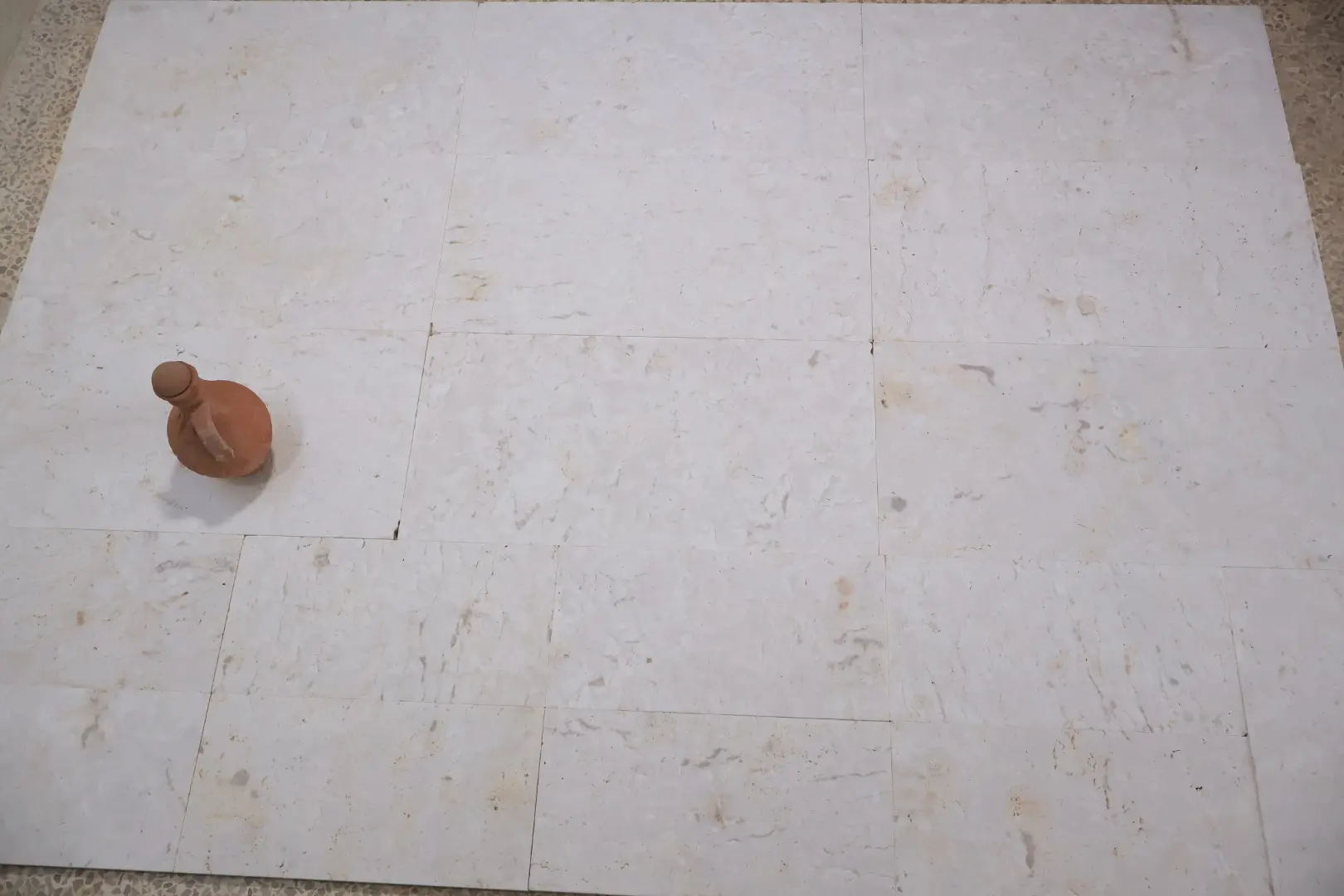
Reading the Material: Formation, Density, and What They Mean for Your Project
Limestone forms through the compaction and cementation of marine shell fragments, coral, and calcareous mud over geological timescales. According to Britannica’s overview of limestone formation and characteristics, the resulting mineral composition is predominantly calcite, with trace dolomite in harder formation beds. That composition profile matters practically — calcite reacts to acidic cleaners, which rules out muriatic acid washes and certain pressure-washing detergents from your maintenance protocol.
Density classification runs from soft sedimentary beds at around 120 lb/ft³ to dense, tightly compacted formations approaching 165 lb/ft³. For a white limestone paver application, you’re targeting the upper half of that range. Dense-bed material handles freeze-thaw cycling with significantly less spalling risk, absorbs less efflorescence-feeding moisture through the face, and holds dimensional tolerances through transit better than porous quarry runs.
- Target a minimum compressive strength of 4,000 PSI for pedestrian applications, 8,000 PSI for vehicular loads
- Request absorption test results per ASTM C97 — anything above 7.5% absorption warrants a penetrating sealer before installation, not after
- Flexural strength above 700 PSI protects against edge cracking in large-format pieces during handling and setting
- Verify the finish: honed finishes open pore structure slightly and require more frequent sealer reapplication than thermal or brushed surfaces
Thickness, Sizing, and Point Load Reality
Standard white limestone paver thickness runs from ¾ inch nominal for interior dry-lay applications up to 2½ inches for heavy pedestrian plazas and light vehicular courts. The sizing decision isn’t about aesthetics alone — it’s a structural one. A 24×24-inch piece in ¾-inch thickness has a dramatically different deflection profile under a concentrated load than the same piece in 1½-inch thickness, and the difference becomes critical over aggregate bases that aren’t perfectly planar.
For most outdoor residential and commercial pedestrian applications, 1¼-inch to 1½-inch thickness in 12×24 or 24×24 formats gives you the best combination of structural margin and manageable piece weight for two-person installation. Going to 24×36 or larger in 1½-inch thickness pushes individual piece weights above 90 lbs on some dense-bed stock — that matters for your installation crew’s productivity and for how the material survives delivery without edge chips.
- 1¼-inch thickness: suitable for pedestrian patios, pool surrounds, and walkways with a well-prepared compacted base
- 1½-inch thickness: recommended for commercial pedestrian plazas and areas with occasional light equipment access
- 2-inch or greater: specify for vehicular courts, driveway aprons, or any application where wheel loads apply
- Oversized formats (30×30 and above) benefit from a mortar bed rather than sand setting for deflection control
Base Preparation: The Layer Nobody Talks About Enough
Your base preparation is doing more work than the paver itself in most installations. A white limestone paver sitting on an undersized or improperly graded aggregate base will fail at the substrate long before the stone itself shows wear. The material’s rigidity — higher than concrete pavers in dense-bed formations — means it transmits stress concentration to the setting bed rather than distributing it, so voids and soft spots telegraph directly into surface cracking and rocking units.
Compacted aggregate base depth should be a minimum of 6 inches for pedestrian applications in stable soil conditions, rising to 10–12 inches where clay-dominant soils create seasonal heave risk. Run a plate compactor over the sub-base in two lifts — never compact the full depth in a single pass. The final surface tolerance before setting bed placement should be within ¼ inch over a 10-foot straightedge. That precision matters more for large-format limestone than for small-unit pavers because there’s no interlock pattern to distribute minor irregularities.
The Natural Stone Institute’s limestone technical specifications outline industry-standard base requirements for different load classifications — a useful benchmark document to reference when specifying base depths for commercial projects where the engineer of record needs documented standards.
Slope, Elevation, and Drainage Engineering for Limestone Paving
Terrain variables fundamentally change your drainage design logic when you’re working with white limestone paver installations. Flat sites demand precision cross-slope grading — typically 1.5% to 2% minimum across the paved surface — because limestone’s low permeability means standing water migrates directly into joints and the setting bed rather than dispersing through the stone face. On flat terrain, that moisture accumulation accelerates efflorescence and, in freeze-thaw regions, drives sub-surface heave that destroys even excellent installations.
Hillside and sloped installations present the opposite challenge: managing water velocity rather than encouraging drainage. On grades above 3%, you need to engineer check drains at intervals to intercept sheet flow before it undermines the setting bed. Catch basin placement at grade breaks — where a hillside installation transitions to a level terrace — is often the difference between a stable installation and one that progressively loses base material through piping failure beneath the surface. A white limestone slab on a sloped site also requires mechanical restraint at the downhill edge; relying on friction and setting bed alone allows creep over time, particularly in installations exposed to thermal cycling.
- Flat sites: maintain 1.5–2% cross-slope minimum, install linear drains at low points before paving begins
- Gentle slopes (1–3%): standard base preparation with perimeter edging restraint is typically sufficient
- Moderate slopes (3–8%): add check drains every 15–20 feet downslope, increase base depth by 2 inches for erosion buffer
- Steep slopes above 8%: require geotechnical assessment, retaining elements, and step-down terracing before any paving specification is finalized
Finish Selection and Long-Term Surface Performance
The finish you specify on a white limestone paver does more than define aesthetics — it sets the maintenance cycle, slip resistance profile, and staining behavior for the installation’s full service life. Honed finishes produce a smooth, matte surface with a reflectance value high enough to be striking in outdoor settings but with a static coefficient of friction that typically falls between 0.50 and 0.60 dry. That range satisfies most pedestrian safety thresholds, but wet conditions drop it significantly, which is why honed white limestone adjacent to water features or in rain-exposed entries needs anti-slip treatment or textural modification.
Thermal (flamed) and brushed finishes open the surface texture, increasing both slip resistance and absorption exposure. You gain traction — static CoF values regularly exceed 0.70 wet on thermal finishes — but you accelerate the sealing requirement cycle. Textured white limestone pavers will stain faster from organic material, iron deposits in irrigation water, and construction-phase contamination than a comparable honed piece. Your sealer specification needs to reflect that trade-off with a penetrating impregnator reapplied every 18–24 months rather than the 36-month cycle a dense honed surface can support.
For applications where you want the visual lightness of white limestone alongside reliable wet traction, a white limestone block with a sawn face on vertical surfaces and a brushed finish on the walking surface gives you the best of both — consistent color, adequate drainage texture, and a sealer-friendly open pore structure.
Ordering, Lead Times, and What Happens Before Delivery
Project planning for white limestone starts earlier than most timelines account for. If you’re sourcing select-grade, consistent-color material, warehouse stock depth matters — you want to confirm the supplier is holding enough of a single lot to cover your project’s square footage plus a 10% overage for cuts and breakage. Mixing lots mid-project creates tonal inconsistency that becomes obvious once the installation is complete and you’re looking across the full field in natural light.
For projects in the 2,000–5,000 square foot range, verify warehouse availability before finalizing your schedule. At Citadel Stone, we recommend clients lock their material reservation at least 3–4 weeks before the anticipated installation start, particularly for premium white selections where inventory turns quickly. Confirm your white crushed limestone requirements for base material separately — it’s a different supply chain than the finished paver stock, and coordinating both orders through the same supplier simplifies delivery scheduling considerably.
White limestone paver guide specifications for patio applications benefit from reviewing tested outdoor formats — the link above covers format options and performance data for outdoor installations that complement the sizing and base preparation decisions outlined in this article.
Sealing Protocols and Realistic Maintenance Expectations
Sealing white limestone is non-negotiable for exterior applications — the question is which sealer chemistry and what reapplication interval. Penetrating siloxane or fluoropolymer impregnators are the correct category for outdoor limestone paving. They reduce absorption without altering the surface appearance, which matters more on white stone than on any other color because topical coatings yellow over time under UV exposure and create an uneven sheen that looks worse than unsealed stone.
Apply your first coat before grouting — penetrating sealers applied to clean stone prior to joint filling prevent grout haze from bonding to the face and simplify the cleanup step significantly. A second application 24 hours after the first maximizes penetration depth in higher-porosity material. After that, test annually using a water bead test: drop a tablespoon of water on the surface and observe. If it absorbs within 30 seconds rather than beading, reapplication is due regardless of what the calendar says.
- Use only pH-neutral cleaners — acidic or alkaline cleaning products etch calcite and permanently damage the surface finish
- Joint sand or mortar grout? For exterior installations, polymeric sand in joints up to ½ inch; mortar bed with grout for large-format pieces on sloped sites
- Iron staining from irrigation systems is the most common maintenance issue on white limestone — address it with oxalic acid poultice only, never bleach
- Pressure washing above 1,500 PSI damages joint material and opens pore structure prematurely — use 1,200 PSI maximum with a fan tip
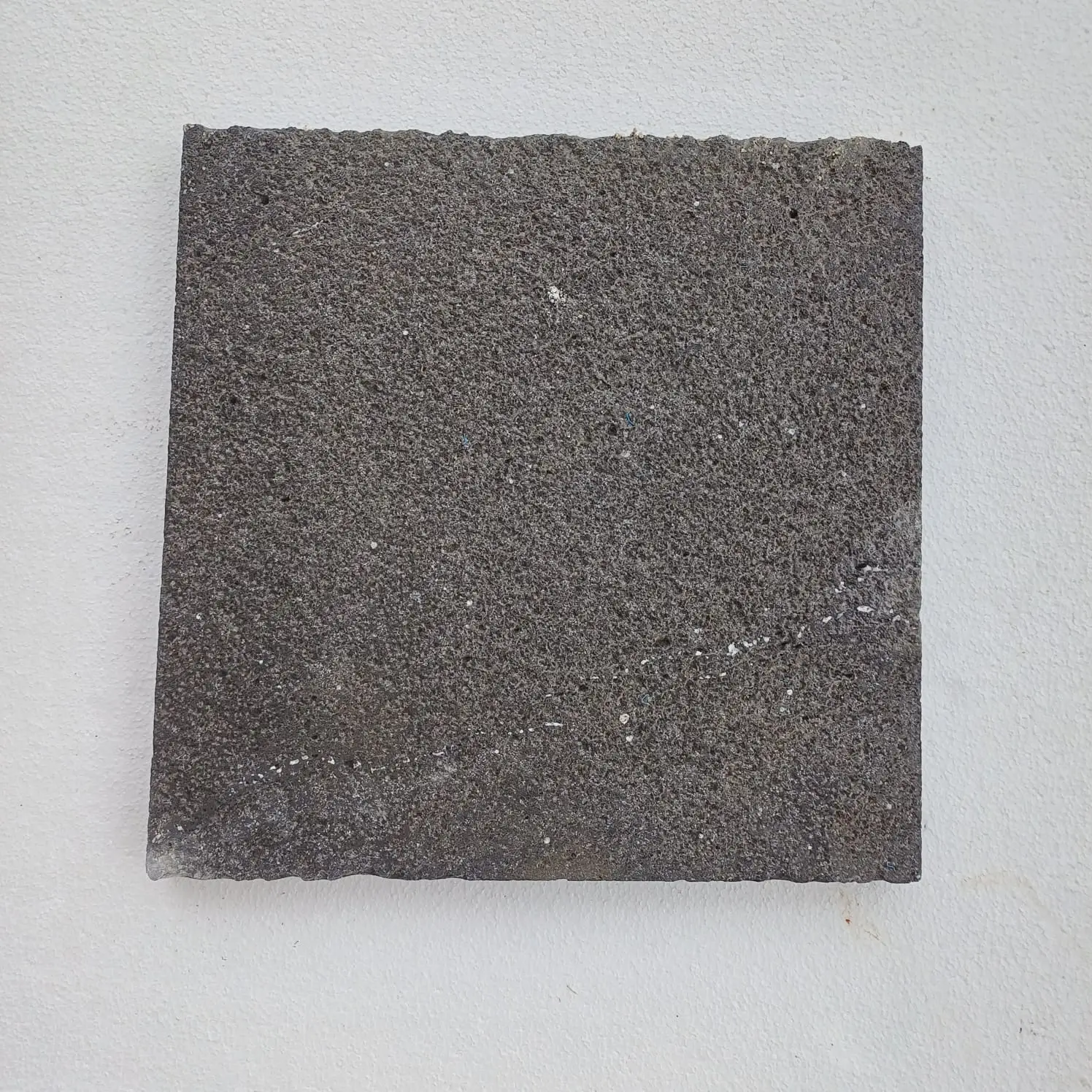
How White Limestone Compares Against Alternative Materials
White limestone paver competes most directly with white travertine, light concrete pavers, and large-format porcelain in the premium outdoor market. Each material has a performance profile that suits different project conditions, and knowing where white limestone wins — and where it doesn’t — is more useful than a blanket recommendation.
Against travertine, dense-bed white limestone typically edges ahead on compressive strength and dimensional consistency. Travertine’s vein-fill holes, while structurally minor in thicker pieces, can trap debris and require more intensive maintenance in high-pollen or coastal environments. Limestone’s more uniform face also produces better color consistency across a large installation — travertine’s dramatic veining is an aesthetic advantage but a coordination challenge when matching lots across multiple deliveries.
- White limestone vs. concrete pavers: limestone wins on surface temperature (lower), aesthetic longevity, and resale appeal; concrete wins on unit cost and installation speed
- White limestone vs. large-format porcelain: porcelain wins on stain resistance and zero maintenance; limestone wins on natural texture, thermal mass, and slip resistance on textured finishes
- White limestone vs. travertine: limestone wins on density consistency and dimensional uniformity; travertine wins on open-pore drainage and fill-hole texture variety
- White limestone vs. granite: granite wins on hardness and scratch resistance; limestone wins on surface temperature, visual warmth, and easier field cutting
The USGS data on limestone composition and construction applications provides useful comparative context on physical property ranges across limestone types — helpful when a project engineer asks for documented material benchmarks.
Getting Your White Limestone Paver Specification Right
A white limestone paver installation that performs for 25-plus years comes down to a few decisions made before a single stone is set: the right density and absorption class for your site conditions, a base preparation depth and drainage grade matched to your terrain, a finish selected with wet traction in mind, and a sealer protocol locked in before the job starts. The material itself is forgiving of minor variations in those decisions; it’s unforgiving of ignoring them entirely. Projects that fail at year 8 almost always trace back to a compromised base or an unaddressed drainage problem — not to the stone.
Your specification process should also account for how the material travels. Dense-bed white limestone ships and stores well, but lot consistency requires coordinating your full square footage from a single warehouse inventory pull. Verifying that availability early protects your timeline from the 4–6 week restock gaps that can appear mid-project when demand on premium white stock spikes. As you develop your complete natural stone specification, the broader range of limestone applications is worth exploring — how limestone performs as interior floor tile covers an adjacent application that many exterior limestone projects eventually connect to through threshold and transition detailing. The ASTM stone dimension and testing standards remain the authoritative reference for compressive strength, absorption, and slip resistance benchmarks when your project requires documented specification support. From premium quarries in Turkey and the broader Middle East region, Citadel Stone sources white limestone pavers with even, light tones.
Related reading: how to build a paver patio · crushed limestone patio comparison · how limestone weathers outdoors.