

Understanding the Core Difference
Quarry tile and natural stone occupy completely different positions in the patio specification hierarchy — and conflating them at the planning stage creates headaches that compound through installation and maintenance cycles. Quarry tile is a fired ceramic product, extruded from shale or clay and kiln-hardened to consistent dimensions and absorption rates. Natural stone is sedimentary, metamorphic, or igneous material quarried directly from the earth, with performance characteristics that vary by seam, batch, and finish. That distinction matters more than most project owners realize, especially when you’re committing to an outdoor patio surface that needs to perform across decades of thermal cycling, moisture exposure, and foot traffic.
The comparison gets nuanced fast. Quarry tiles flooring applications in commercial kitchens and industrial environments established the material’s reputation for durability — but those same properties translate differently to residential and architectural outdoor patios where aesthetics carry equal weight with performance. Natural stone brings inherent variation, thermal mass, and a visual depth that no kiln-fired product fully replicates. Your project’s priorities will ultimately drive the decision, but understanding how each material behaves under real conditions gives you the foundation to specify with confidence.
What Are Quarry Tiles and How Are They Made
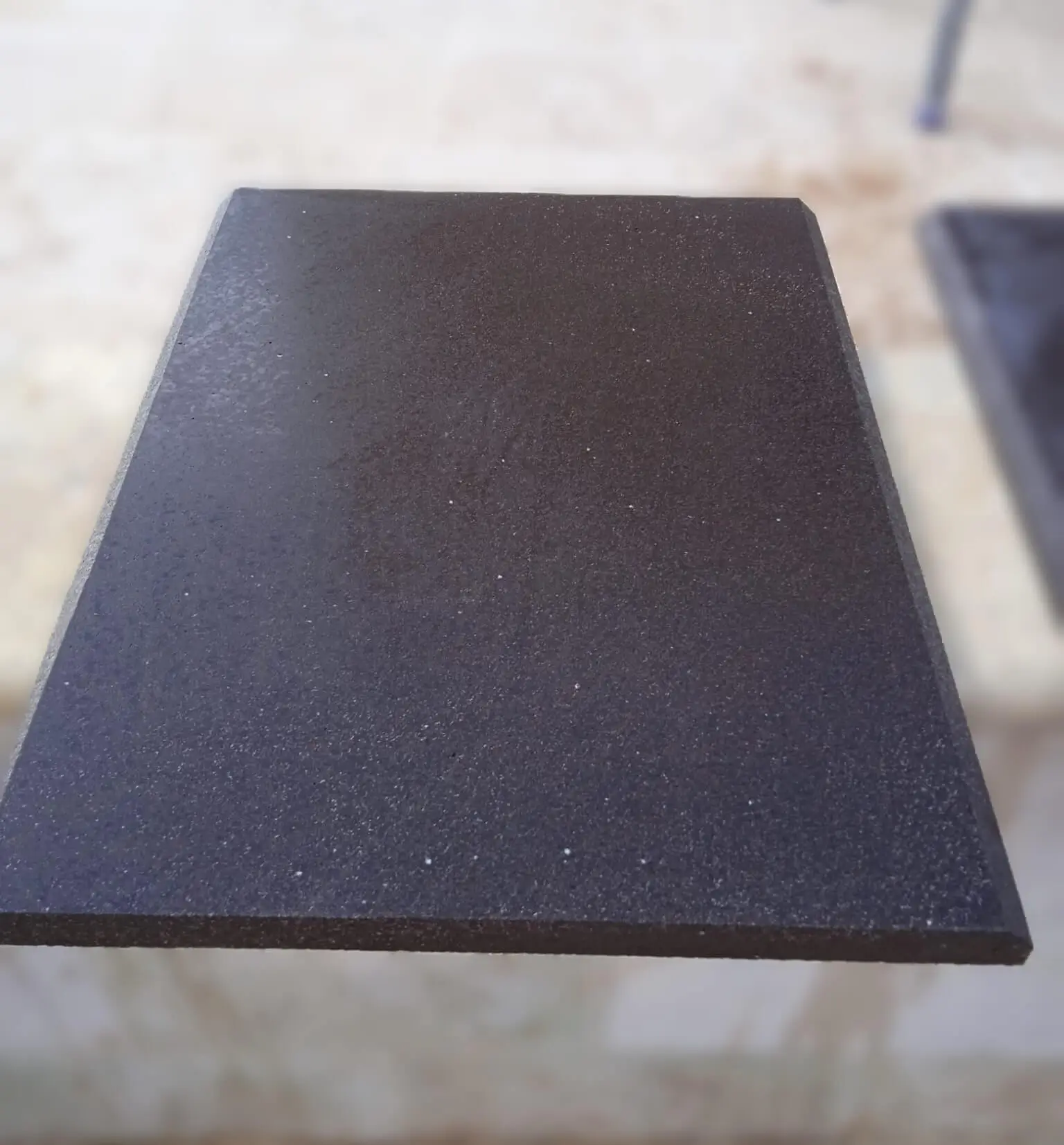
So what are quarry tiles, exactly? The name is slightly misleading — these aren’t quarried from the ground. They’re manufactured by extruding natural clay or shale mixtures through a die, then firing at temperatures above 2000°F. The result is a through-body product with a consistent color matrix, low water absorption (typically 0.5–5% by weight), and compressive strength in the 8,000–12,000 PSI range. The firing process eliminates most of the porosity that makes natural materials vulnerable to freeze-thaw cycling, which is part of why quarry tile found favor in demanding commercial environments.
The surface texture is usually unglazed and slightly abrasive — a deliberate design choice for slip resistance in wet conditions. According to TCNA installation standards, these installations require specific mortar bed preparations and grout joint specifications that differ from natural stone tile work, particularly in outdoor settings where thermal movement plays a larger role. Tile thicknesses typically run between 8mm and 12mm, which affects the load-bearing profile and the type of substrate preparation required.
Natural Stone Patio Performance: What the Numbers Tell You
Natural stone brings a performance envelope that is simultaneously broader and more variable than quarry tile. Compressive strength ranges from around 8,000 PSI for some softer limestones up to 30,000+ PSI for dense granites and basalts. That range matters because outdoor patio installations encounter point loads — furniture legs, planters, concentrated foot traffic — that expose weak material to failure modes that flat compressive data doesn’t fully predict. Matching material density to your expected load profile, rather than aesthetic preference alone, is the more reliable specification approach.
Thermal expansion coefficients also diverge significantly between stone types. Limestone runs approximately 4–8 × 10⁻⁶/°F; granite sits closer to 4–5 × 10⁻⁶/°F; and the fired ceramic product typically ranges 3–4 × 10⁻⁶/°F. These differences matter when you’re sizing expansion joints across large patio surfaces — a detail that most DIY specs undervalue until differential movement creates grout failure or edge lifting. Natural stone’s thermal mass also creates a radically different surface temperature experience: dense stone absorbs and re-radiates heat in patterns that thinner-profile ceramic tiles, with their faster thermal response, don’t replicate.
The Natural Stone Institute outdoor patio stone selection guide provides detailed absorption and strength benchmarks across stone varieties — a useful cross-reference when you’re narrowing your specification to a specific material family and finish combination.
- Compressive strength: 8,000–12,000 PSI for quarry tile; 8,000–30,000+ PSI across natural stone varieties
- Water absorption: 0.5–5% for fired ceramic tile; 0.2–7% depending on stone type and finish
- Thermal expansion: ceramic tile 3–4 × 10⁻⁶/°F; limestone 4–8 × 10⁻⁶/°F; granite 4–5 × 10⁻⁶/°F
- Surface finish options: natural stone offers flamed, honed, polished, and brushed profiles; quarry tile surface character is fixed at manufacture
- Batch variation: ceramic tile is dimensionally consistent batch to batch; natural stone varies by seam and quarry location
Drainage, Water Management, and Base Preparation
This is where the comparison gets particularly consequential for outdoor patio applications. Your base system is doing most of the structural and hydrological work — the surface tile or stone is the finish layer, not the foundation. Both materials interact with moisture differently, and that affects your base specification at a meaningful level.
Quarry tile’s low absorption rate (typically under 3%) means water stays at the surface and moves via surface slope rather than infiltrating the tile itself. That’s efficient for drainage as long as your patio slope is correctly executed — a minimum 1/8 inch per foot fall toward drainage outlets, with no low points that pool during heavy rain events. In regions that experience intense precipitation seasons — monsoon cycles, late-summer storm surges, or sustained rainfall periods — standing water on the fired ceramic surface can become a slip hazard faster than it would on a more porous natural stone that wicks small amounts away from the surface.
Natural stone with moderate porosity — honed limestone in the 3–7% absorption range, for example — provides a degree of surface moisture management that the ceramic alternative doesn’t. That said, porosity becomes a liability in sustained saturation conditions: water trapped in stone during freeze-thaw cycles expands approximately 9% in volume, and repeated cycles work fine fractures into the material over time. Your base preparation must account for this. A well-compacted 4–6 inch aggregate base with positive drainage slope away from structures is non-negotiable regardless of material choice, but natural stone installations in flood-risk zones or high-water-table sites benefit from a geotextile fabric layer below the aggregate to prevent subgrade migration. Permeable base systems paired with natural stone significantly reduce surface runoff and improve long-term installation stability — a well-documented advantage in architectural landscape specifications.
- Minimum patio slope: 1/8 inch per foot for quarry tile, 1/8 to 1/4 inch per foot for natural stone in high-rainfall zones
- Aggregate base depth: 4 inches minimum for residential patios, 6 inches in areas with expansive or clay-heavy soils
- Geotextile fabric: recommended under the aggregate base in sites with seasonal flooding risk or poor native drainage
- Drainage outlets: size and position channels before laying any surface material — retrofitting drainage is expensive and often structurally disruptive
- Mortar bed vs. dry-lay: quarry tile typically requires a bonded mortar bed; natural stone can use either method, with dry-lay permeable systems increasingly preferred for patio drainage performance
Aesthetic Comparison: Surface Character and Visual Depth
Aesthetics often drive the initial decision, and it’s worth being direct here: the two materials are genuinely different visual propositions. Quarry tile offers dimensional consistency — every unit runs to tight tolerances, joint lines stay uniform, and the color remains predictable from batch to batch. For contemporary design language that prioritizes clean geometry and repeating grids, that consistency is a feature. You’ll get exactly what you saw in the sample, reproduced across the full patio area without variation.
Natural stone works differently. The color, veining, and surface character vary within a single order and across different warehouse batches. That variation is the material — it’s not a quality defect, it’s geological authenticity. Experienced specifiers account for this by ordering 10–15% overage and blending units during installation to distribute variation evenly across the surface. Skipping that step produces patchy results where clusters of similar-looking units draw the eye in the wrong direction.
For residential patios where the design goal is organic integration with landscaping, natural stone’s variation typically reads as a significant visual asset over time. The material weathers and develops patina in ways quarry tiles flooring products don’t — surface textures soften, color tones deepen, and the patio increasingly looks like it belongs to the site rather than being installed onto it. That’s a hard quality to specify in a product sheet, but it’s a real long-term aesthetic dividend that projects investing in natural stone consistently report.
Slip Resistance and Outdoor Safety Standards
Both materials can achieve appropriate slip resistance for patio applications — but the path to that performance differs. Quarry tile’s unglazed surface typically achieves a dynamic coefficient of friction (DCOF) above 0.42 wet, which meets commercial threshold requirements and performs well in residential outdoor settings. That number is built into the product through the manufacturing process — no finish application or surface treatment required.
Natural stone’s slip resistance depends entirely on the finish specification. A polished limestone offers DCOF values below 0.30 wet — completely unsuitable for an outdoor patio without anti-slip treatment. A flamed, brushed, or sawn-face finish on the same stone leaves a coarse, open face, unlike the closed, smooth face of fired ceramic alternatives. Your finish selection is therefore a safety decision, not just an aesthetic one. Honed finishes occupy the middle ground, typically 0.35–0.50 wet depending on stone density and texture depth — acceptable for low-traffic residential patios with controlled drainage, but worth verifying with a project-specific DCOF test on your chosen material. The ANSI A326.3 provides the current methodology used to verify surface performance across both material types.
- Polished finish: very little underfoot texture — not suitable for outdoor patio use without anti-slip treatment
- Honed finish: smooth — acceptable for residential patios with managed drainage
- Flamed or brushed finish: the most texture of the three — strong performance in outdoor exposed conditions
- Quarry tile unglazed: useful inherent texture — reliable outdoor performance built into the product
- Anti-slip sealers: can improve wet traction but require reapplication every 2–3 years
Installation Cost, Lead Times, and Project Logistics
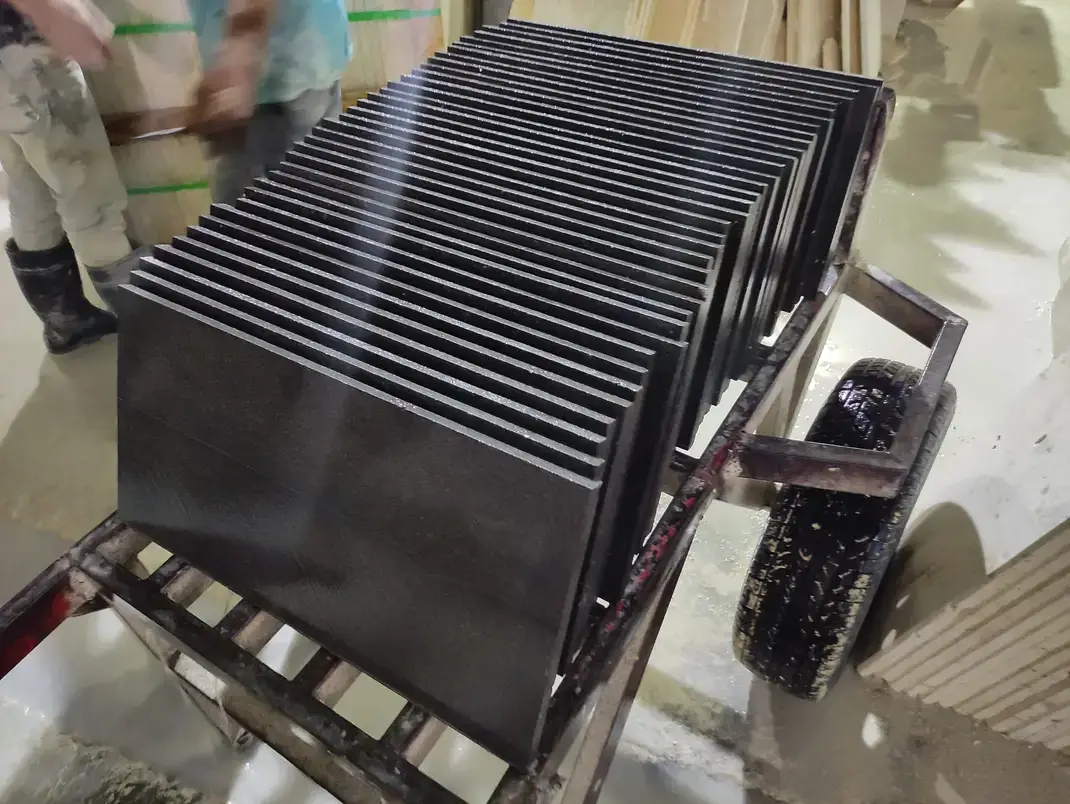
Project logistics often tip the decision in ways that pure performance comparisons don’t capture. Quarry tile ships in consistent box quantities, stores flat with minimal warehouse footprint, and can typically be sourced on short lead times from domestic distributors. Natural stone requires more careful storage — units must be kept dry, stacked with spacers to prevent edge chipping, and protected from temperature extremes during transit to maintain dimensional stability. Truck delivery logistics for large stone orders are worth planning early: access constraints, offloading equipment requirements, and staging area needs vary significantly from quarry tile deliveries that can be broken into manageable pallet loads.
Citadel Stone maintains warehouse inventory across its national network, which typically allows order fulfillment within 1–2 weeks for stocked natural stone products — a meaningful advantage over the 6–8 week import cycle that uncatalogued stone orders often require. That lead time difference has real schedule implications, particularly for projects with tight completion windows or sequential trades waiting on the patio surface to be completed before finishing work can proceed.
Installation labor rates also diverge. Ceramic tile installation, with its consistent dimensions and standard mortar bed requirements, typically runs $8–$15 per square foot for labor in most markets. Natural stone installation, particularly with irregular flagstone formats or through stone that requires on-site cutting and blending, commonly runs $15–$30 per square foot depending on pattern complexity. That differential is real, but it needs to be weighed against the 30–50 year expected service life of quality natural stone versus the 15–25 year typical cycle for fired ceramic tile before significant refurbishment is needed. For the Citadel Stone outdoor tile collection, verified stock levels and current lead times are available directly from the technical sales team before you commit to project scheduling.
Long-Term Maintenance: What Each Material Actually Requires
Maintenance is frequently underweighted in the initial specification decision. Fired ceramic tile is genuinely low-maintenance: the kiln-hardened body resists staining, acid etching doesn’t penetrate deeply, and joint repointing is the primary recurring task. A well-installed quarry tile patio can run 5–7 years between significant maintenance interventions if drainage is properly managed. That’s a legitimate advantage for commercial applications or homeowners who prioritize minimal upkeep.
Natural stone requires a more active maintenance protocol, particularly for softer, more porous materials like limestone boulders used as feature elements alongside patio paving, or honed limestone tiles in the field. Sealing on a 2–3 year cycle is standard practice for limestone and travertine outdoor applications. Skipping a sealing cycle doesn’t immediately damage the material, but it allows progressive staining from organic debris, tannins, and iron-bearing water to work into the surface matrix — stains that become increasingly difficult to remove as penetration depth increases. Incorporating limestone boulders as accent elements within the patio layout requires the same sealing discipline as the primary field stone, since exposed surface area on feature boulders tends to collect organic material at a higher rate.
- Quarry tile maintenance: annual cleaning, joint inspection and repointing every 5–7 years, no sealing required
- Honed limestone maintenance: sealing every 2–3 years, annual cleaning with pH-neutral product, prompt removal of organic debris
- Flamed granite maintenance: sealing every 3–5 years due to lower porosity, minimal staining risk from most organic sources
- Travertine maintenance: fill and seal voids every 3–4 years, reseal annually in heavily used areas, monitor for calcite migration in wet zones
- Joint sand in dry-lay systems: top up annually, especially after drought cycles that allow sand migration and joint loosening
Quarry Tile vs. Natural Stone: Final Recommendations for Patio Projects
Your decision comes down to three intersecting variables: aesthetic intent, long-term ownership expectations, and site-specific performance demands. The fired ceramic option earns its place on projects that prioritize dimensional consistency, minimal maintenance cycles, and predictable cost control — particularly in commercial or rental settings where aesthetics are secondary to operational simplicity. Its slip resistance and low absorption profile also make it a defensible choice for covered patios in high-rainfall environments where consistent drainage geometry is difficult to guarantee.
Natural stone wins on virtually every aesthetic and longevity measure when properly specified and maintained. The key qualifiers are proper base preparation for your site’s drainage profile, finish selection matched to your slip-resistance requirements, and a sealing schedule you’ll actually maintain. Projects that commit to those three variables consistently report 30+ year service life with surfaces that improve visually over time rather than dating. For projects where walling or vertical stone elements are part of the broader hardscape scheme, exploring black limestone walling options can help you align surface and wall material specifications cohesively across the full project scope. Unlike fired quarry tile, natural stone from Citadel Stone offers color running through the full 20mm depth of each unit.
Related reading: paver patio · deck tiles · fixing black stains on limestone.