

The specification gap between stone tiles vs deck tiles isn’t just a product category question — it’s a structural one that determines how your outdoor surface performs across seasons, loads, and subgrade conditions. Most projects fail not because the wrong tile was chosen, but because the wrong tile was installed over the wrong base system. Understanding the mechanical and dimensional differences between these two product families before you commit to a layout is what separates a clean 25-year installation from a replacement job at year eight.
What Separates Stone Tiles from Deck Tiles
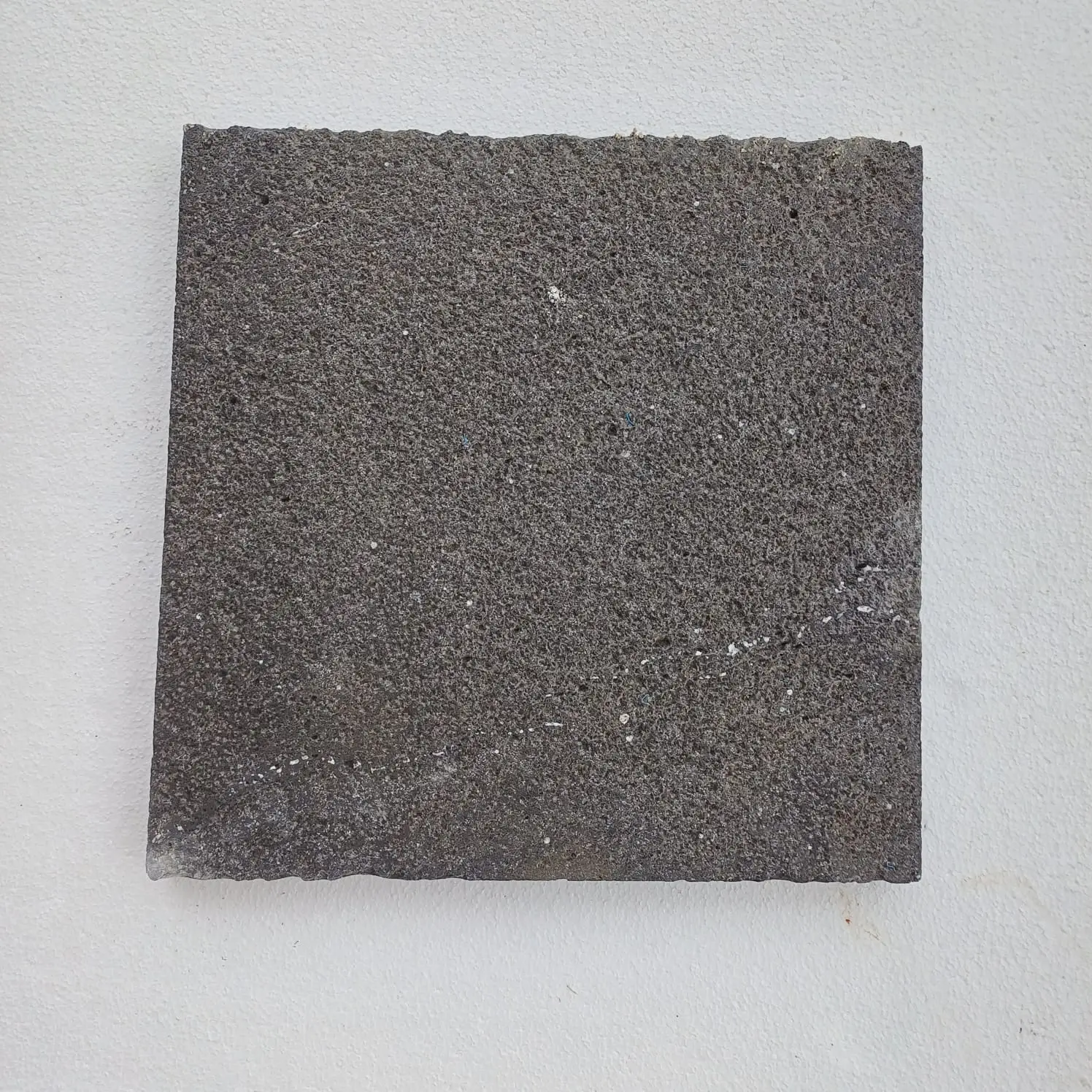
Natural stone tiles are dimensionally cut slabs of quarried material — limestone, travertine, basalt, granite — processed to a calibrated thickness, typically 3/4 inch to 1-1/4 inches, and finished for outdoor use. Deck tiles, by contrast, are modular interlocking units (most commonly 12×12 or 12×24 inch formats) designed to sit on top of an existing surface, often with raised feet or grid bases. They’re two fundamentally different installation systems, not just two aesthetic options.
The performance distinction matters enormously in practice. Natural stone patio tiles are bonded or dry-laid into a prepared base system — compacted aggregate, sand setting bed, or mortar — and become part of the structural surface. Deck tiles rest on top. That elevation difference changes how water drains, how load transfers to the subgrade, and how the surface tolerates ground movement over time. You can’t treat them as interchangeable without accepting different long-term outcomes.
Stone tiles demand a properly engineered substrate. Deck tiles are often marketed as a DIY-friendly surface upgrade, but that positioning comes with performance trade-offs that aren’t always disclosed upfront.
Thickness, Weight, and Structural Load
Your choice between outdoor stone tiles and modular deck tiles has direct structural implications that ripple through every layer of your project. Natural stone tiles in the 3/4-inch to 1-inch range carry significant dead load — a standard 24×24-inch limestone tile at 1 inch nominal thickness weighs approximately 18 to 22 pounds per square foot depending on density. That weight, properly distributed into a prepared base, creates surface stability. The mass resists frost heave, reduces lateral movement, and contributes to thermal stability across diurnal temperature swings.
Deck tiles, typically made from composite, porcelain, or thin-cut natural stone over a plastic grid, run considerably lighter — often 4 to 7 pounds per square foot. That reduced weight makes installation faster and easier, but it also means the units are more susceptible to wind displacement, edge lifting, and shifting under point loads. On a rooftop terrace or elevated deck where weight limits are a genuine engineering constraint, deck tiles have a clear functional role. On a ground-level patio where you’re building over native soil, the weight advantage disappears and the stability trade-off works against you.
- Natural stone tiles bonded or dry-laid into aggregate typically achieve surface deflection tolerance under 1/8 inch per 10 feet — consistent with normal flatness expectations for exterior paving
- Modular deck tiles over hard substrates (concrete, pavers) can perform well, but tile-to-tile elevation variation accumulates quickly without a perfectly flat base
- On ground-level applications over prepared subgrade, stone tiles outperform deck tiles on long-term settlement resistance
- Point load capacity for 3/4-inch natural stone tiles in mortar bed installations typically exceeds 800 PSI — adequate for outdoor furniture, vehicle tire loads on edge courses, and heavy planters
Subgrade and Soil Conditions: The Hidden Variable
Here’s what most patio specifications overlook until it’s too late: the soil beneath your installation is the single most influential variable in long-term performance, and it affects stone tiles and deck tiles very differently. Natural stone tiles installed in a dry-set or mortar system require a stable, compacted subgrade with adequate base depth — typically 4 to 6 inches of compacted aggregate over undisturbed or compacted native soil. That system can tolerate minor seasonal movement, but it has limits.
Expansive clay soils present the most challenging scenario for bonded stone tile installations. Clay with a plasticity index above 15 can generate vertical movement of 1 to 3 inches across a typical patio footprint during wet-dry cycles — enough to crack grout joints, displace tiles, and undermine mortar bonds within two to three seasons. For these soil conditions, your base design needs to extend well past standard depth recommendations. A 6-inch compacted crushed stone base with a geotextile separation layer is the minimum starting point; 8 inches is more defensible in high-plasticity clay regions.
Sandy or rocky subgrades represent the opposite condition. In sandy soils with low fines content, drainage is excellent but bearing capacity can be inconsistent, particularly under dynamic loads. You’ll need to verify compaction density — 95% Standard Proctor density is the target — before committing to a mortar-set stone tile system. Rocky subgrades with shallow soil cover require saw-cutting or mechanical preparation to establish a consistent bearing plane; uneven rocky substrate under a sand-set stone tile system will telegraph surface irregularity within a season.
- Conduct a soil classification test (sieve analysis and Atterberg limits) on any project where soil type is unknown — this is a 2-hour field test that prevents costly remediation
- Caliche subgrades common in arid regions require mechanical breaking and removal to 6 inches below finish grade — the calcified layer has inconsistent bearing capacity and drains poorly
- For clay soils, specify a geosynthetic stabilization layer between native soil and aggregate base to prevent clay migration into the drainage bed
- Deck tiles over concrete or pavers effectively bypass the subgrade problem — but only if the hard substrate beneath them is structurally sound and properly sloped for drainage
According to Natural Stone Institute stone specifications, base preparation standards vary by stone type and application — denser igneous stones tolerate greater base variability than porous sedimentary materials like limestone or travertine, making soil assessment even more critical when specifying the latter.
Drainage Performance and Water Management
Drainage geometry is where the stone tiles vs deck tiles comparison becomes a practical engineering decision rather than an aesthetic one. Natural stone patio tiles laid in a dry-set system with open-swept joints allow surface water to percolate through the joint matrix into the aggregate base, provided joint width is maintained at 3/8 inch or wider and the base aggregate has adequate void ratio. This semi-permeable system handles heavy rainfall events without pooling when installed at a minimum 1% cross-slope, but it requires annual joint sand maintenance to keep permeability intact.
Deck tiles with raised-foot frames create an air gap between the tile surface and the substrate below, which provides a continuous drainage plane — in theory. In practice, debris accumulation in the frame channels reduces drainage efficiency over 2 to 3 seasons, particularly under trees or in sheltered courtyards. You’ll need to lift and clear deck tile sections annually if you want to maintain designed drainage performance. That’s not a prohibitive maintenance burden, but it’s one many homeowners don’t anticipate at specification time.
For any outdoor stone tiles installation over impermeable substrates — existing concrete slabs or bonded pavers — drainage relies entirely on surface slope. A 1.5% slope minimum is the field standard for outdoor stone tile over non-permeable bases. Less than 1% will produce standing water at low points within 18 months as tile edges settle and grout joints develop micro-depressions.
Finish Selection and Slip Resistance
Finish specification for outdoor stone tiles directly governs slip resistance, surface temperature, and long-term maintenance load. Honed finishes — achieved by grinding to a 400-grit surface — produce a smoother surface than brushed or tumbled finishes; verify wet performance per ANSI A326.3. That range satisfies the 0.5 minimum for pedestrian surfaces. Polished finishes drop to 0.4 to 0.5 dry and can fall below 0.4 wet — a meaningful risk in any location where morning dew, irrigation overspray, or rainfall creates surface moisture.
Tumbled finishes on natural stone tiles deliver the highest slip resistance of the standard finish options. The irregular micro-texture created during tumbling produces SCOF values consistently above 0.7 dry and above 0.6 wet. For pool surrounds, shaded patios that stay damp longer, and areas with heavy barefoot traffic, tumbled or bush-hammered finishes are the defensible specification choice. According to ASTM stone tile testing standards, wet SCOF is the governing metric for outdoor paving — not dry SCOF, which is the figure most commonly cited in product data sheets.
- Honed: SCOF 0.6–0.8 dry, 0.5–0.65 wet — appropriate for covered patios and low-moisture zones
- Tumbled: SCOF 0.7–0.9 dry, 0.65–0.8 wet — appropriate for pool surrounds, shaded areas, and high-traffic zones
- Polished: SCOF 0.4–0.5 dry, below 0.4 wet — not appropriate for any outdoor application exposed to precipitation or irrigation
- Sandblasted or flamed: SCOF above 0.8 — suitable for commercial outdoor applications with high slip-liability exposure
Deck tiles typically ship with a factory-set surface texture that isn’t field-adjustable. You accept whatever finish the manufacturer specified — which is a meaningful limitation if your site conditions call for higher slip resistance than the product provides.
Natural Stone Patio Tile Materials Compared
Material selection within the natural stone category matters as much as the tile-versus-deck-tile decision itself. Different stone types bring different porosity, thermal expansion, and hardness profiles that should inform your specification before you lock in a layout.
Limestone in the 3/4-inch to 1-inch nominal range is the most commonly specified outdoor stone tile for residential patios. Its compressive strength typically runs 4,000 to 12,000 PSI depending on formation — dense blue limestone sits near the top of that range, while softer cream limestones sit lower. Porosity ranges from 0.5% to 15% depending on variety, which directly affects sealing frequency requirements. You should expect to reseal porous limestone every 2 to 3 years in high-UV, high-rainfall exposures to maintain stain resistance. You can explore our outdoor stone tile collection to see the specific limestone formats and finishes available for patio applications.
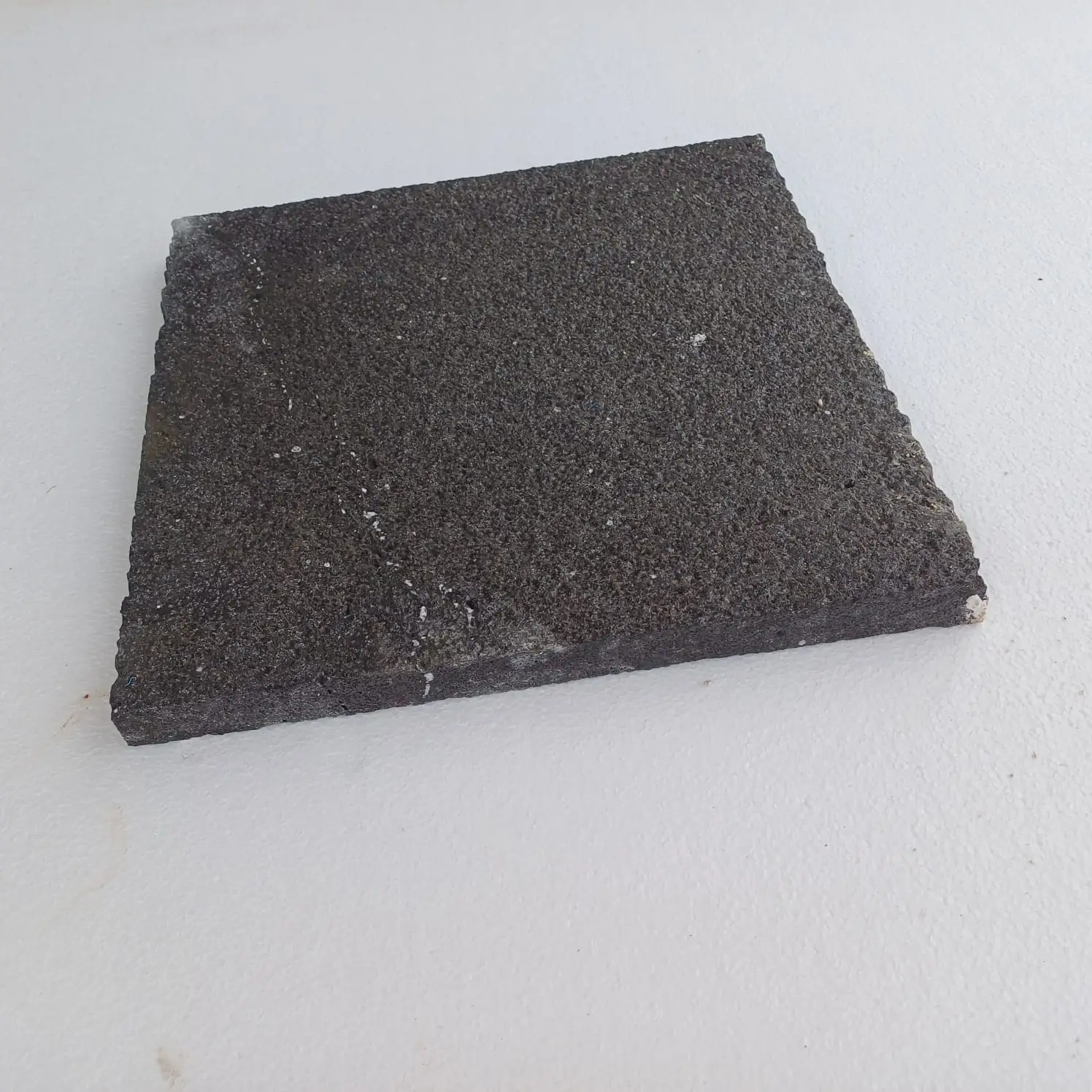
Basalt and granite bring higher density (compressive strength above 15,000 PSI is standard) and near-zero porosity in their unfinished state. These materials resist staining without sealing better than limestone, but they run heavier — factor that into your subgrade loading calculations, particularly for second-floor terrace applications. Travertine’s open-pore structure requires fill-and-seal treatment for outdoor use, but properly treated travertine delivers excellent barefoot comfort from its thermal mass characteristics.
- Limestone: compressive strength 4,000–12,000 PSI, porosity 0.5–15%, reseal every 2–3 years
- Basalt: compressive strength 15,000–25,000 PSI, porosity under 1%, minimal sealing required
- Travertine: compressive strength 3,500–8,000 PSI, fill-and-seal required prior to outdoor installation
- Granite: compressive strength 15,000–30,000 PSI, freeze-thaw resistance excellent, sealing optional for polished finish only
Installation Base Requirements by Application
The base system specification for outdoor stone tiles changes significantly depending on whether you’re installing over native ground, existing concrete, or an elevated deck structure. Over native ground, a 4-inch minimum compacted crushed aggregate base (3/4-inch clean stone or crusher run, compacted to 95% Proctor) under a 1-inch sand setting bed is the standard dry-set system for residential stone tiles in stable soil conditions. For clay-heavy subgrades, extend the aggregate base to 6 to 8 inches and add a 4-oz non-woven geotextile between native soil and aggregate.
Mortar-set systems over concrete are the correct approach for any outdoor stone tile installation where joint width needs to be tight (under 1/4 inch) or where the tile size exceeds 24 inches in either dimension. Full back-butter coverage with polymer-modified thinset is mandatory — large-format stone tiles with voids behind them will crack under foot traffic within 6 to 12 months regardless of how strong the tile itself is. The back-butter step adds 15 to 20 minutes per square foot versus unbuttered installation, but it’s not negotiable for large-format outdoor stone tiles.
Deck tiles over existing concrete or pavers require that the substrate surface be within 3/16-inch tolerance across any 10-foot span. Warped or cracked concrete beneath deck tiles produces rocking units that break frame connectors within one or two seasons. Grinding high spots and filling low spots with concrete patching compound before deck tile installation is a step that significantly extends the life of the finished surface.
Long-Term Maintenance and Lifecycle Cost
Lifecycle cost is where the stone tiles vs deck tiles comparison often surprises people who focus only on initial installation price. Natural stone patio tiles installed correctly over a properly prepared base have a realistic 25 to 40-year service life with standard maintenance — biennial resealing on porous stones, periodic joint sand replenishment on dry-set installations, and pressure washing on a 3 to 5-year cycle to remove algae and mineral deposits. The tile itself rarely fails; installation and base failures drive most premature replacements.
Deck tiles have a shorter structural lifespan. The plastic grid frames that support most modular deck tile products are rated for 10 to 15 years of UV exposure before they become brittle and start fracturing. The stone or composite surface material often outlasts the frame system it rests on, which means you’re replacing the entire assembly — stone and frame — even when the stone surface itself is still serviceable. Factor that replacement cycle into your 20-year project cost calculation before committing to the deck tile system based on lower initial price.
For projects where ordering decisions are time-sensitive, Citadel Stone maintains warehouse inventory across its national network, which reduces lead times to 1 to 2 weeks for standard stone tile formats — a meaningful advantage when contractor schedules are tight and a 6 to 8-week import cycle would delay project start. According to ASLA outdoor patio material selection guidance, natural stone consistently outperforms engineered alternatives on lifecycle cost when base preparation is executed to specification — the key qualifier most cost comparisons overlook.
- Natural stone tiles: 25–40 year service life with proper base and biennial sealing
- Deck tile plastic frames: 10–15 year structural rating before UV degradation compromises integrity
- Mortar-set stone tile systems: essentially permanent when substrate integrity is maintained
- Dry-set stone tiles over aggregate: re-leveling every 10 to 15 years is typical in freeze-thaw regions, less frequent in stable soil conditions
When Deck Tiles Are the Right Call
Deck tiles serve genuine functions in specific scenarios that natural stone patio tiles can’t match without significant structural modification. Rooftop terraces with structural weight limits are the clearest use case. When a structural engineer’s report caps your dead load at 15 pounds per square foot, a 3/4-inch natural stone tile installation over a mortar bed isn’t feasible without exceeding that limit. Modular deck tiles at 4 to 7 pounds per square foot, resting directly on a waterproofing membrane with no mortar or aggregate bed, fit within the constraint.
Rental properties and commercial spaces where tenant turnover drives surface replacement cycles also benefit from deck tile’s reversibility. A deck tile installation can be lifted, inspected, reconfigured, and re-laid without the demolition cost that removing a mortar-set stone tile system requires. If your project has a defined replacement schedule built into the asset management plan, deck tiles’ replaceability is a real operational advantage — not just a feature on a spec sheet.
Temporary installations over protected substrates — balconies over occupied spaces, courtyard installations above basement structures — represent another legitimate deck tile scenario. Running full mortar-set outdoor stone tiles over a waterproofing membrane without the right drainage mat and root barrier system risks membrane damage that’s extremely costly to remediate. Deck tile’s air gap preserves the membrane and makes inspection straightforward.
- Rooftop and elevated structures with dead load limits below 20 PSF — deck tiles are often the only viable option
- Tenant-occupied properties where surface replacement is a planned maintenance event
- Installations over waterproofing membranes where membrane access must be preserved
- Temporary event or exhibition surfaces where portability is required
Ordering, Logistics, and Project Planning
Truck delivery logistics need to be resolved before you finalize your tile selection — not after. Standard stone tile deliveries arrive on pallets via flatbed or freight truck, and pallet weights for natural stone tiles commonly run 2,000 to 3,500 pounds. Job-site accessibility for a standard delivery truck — typically a 48-foot flatbed requiring a 60-foot turning radius — is a non-negotiable early checkpoint. If your site can’t accommodate a standard freight truck, coordinate liftgate delivery or partial offload at a staging area before finalizing your order quantity in a single delivery.
Material quantity calculations for outdoor stone tiles should include a 10% overage allowance for cuts, breakage, and pattern matching. For irregular formats — opus incertum layouts or mixed-size patio tile patterns — increase that allowance to 15%. Running short on a stone tile project after installation has started is a specification risk that’s difficult to recover from if warehouse stock of your specific material has moved. Confirm current warehouse inventory depth before finalizing your cut list, and lock in your allocation at the time of order rather than treating it as a rolling purchase.
Deck tiles ordered online or in-store are generally more forgiving on reorder speed — most formats are in stock from multiple distribution points with 3 to 5-day replenishment lead times. That flexibility is part of the product’s value proposition for projects with uncertain scope or phased installation schedules.
Making the Right Call on Stone Tiles vs Deck Tiles
The stone tiles vs deck tiles decision comes down to three factors you need to resolve before anything else: what your subgrade can support, what structural constraints your substrate imposes, and what performance lifecycle you’re designing toward. Natural stone patio tiles installed over a properly prepared base — with subgrade conditions assessed and base depth engineered for your soil type — deliver the best long-term performance, surface stability, and lifecycle cost of any patio surface option. Deck tiles fill a real niche for constrained applications, but they’re a system compromise, not a system upgrade, in ground-level patio applications where a full stone tile installation is feasible.
For your next project, the base preparation decisions are worth more of your specification time than the tile selection itself. Get the subgrade, aggregate depth, and drainage geometry right first — then specify your outdoor stone tiles to match the surface performance and finish requirements your site demands. As you plan the full installation sequence for your stone project, patio paver base and drainage installation covers the technical steps in detail. Citadel Stone’s outdoor stone tiles are selected for slip-resistance ratings suited to wet pool surrounds and shaded patio areas where porcelain alternatives often underperform.
Related reading: why does limestone turn black · black limestone rock · outdoor patio tiles cost guide.