

Why Stone Building Problems Start Before Installation
Stone building problems rarely originate at the point of failure — they trace back to decisions made weeks or months before the first stone is set. Specifying the wrong density class for your load application, skipping a compressive strength check, or ordering material without confirming warehouse availability for your project window are the upstream choices that create downstream failures. Understanding this cause-and-effect chain is what separates a 25-year installation from a 10-year replacement cycle.
The material itself is rarely the culprit. Dense natural stone sourced from quality quarries performs consistently across decades. What creates stone building problems is the gap between a stone’s inherent capacity and the conditions you place it under — whether that’s hydrostatic pressure beneath an improperly drained slab, point-load stress from vehicle traffic on an undersized base, or mortar bond failure driven by thermal cycling at inadequately spaced joints.
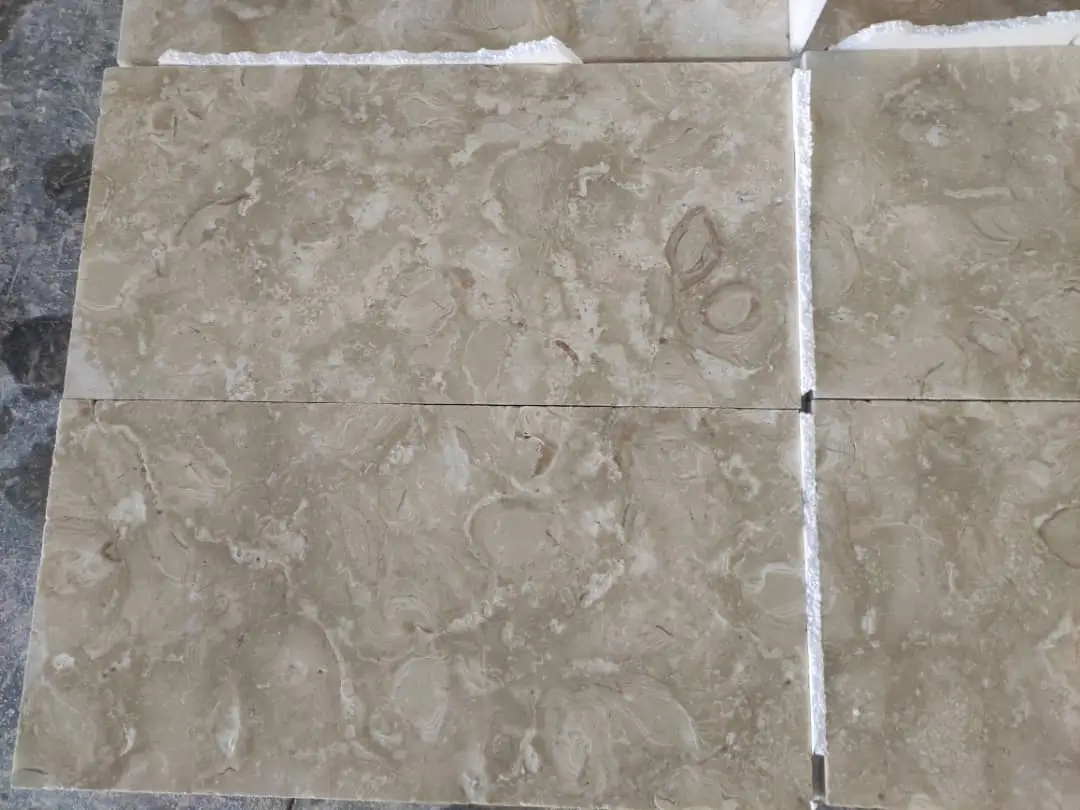
Diagnosing Common Stone Building Problems by Failure Type
Effective troubleshooting of stone building problems requires you to read the evidence the installation is leaving behind. Cracking patterns, efflorescence staining, and surface delamination each point to different root causes, and treating the symptom without identifying the cause guarantees recurrence.
- Diagonal cracking across a field — typically signals base settlement or insufficient compressive strength in your substrate, not a material defect
- Efflorescence (white powder deposits) on vertical surfaces — indicates water migration through the wall assembly, pulling soluble salts to the surface
- Horizontal cracking at consistent intervals — points to inadequate expansion joint spacing, especially in exterior applications experiencing seasonal temperature swings
- Delamination or spalling on surface layers — often linked to freeze-thaw cycling in stone with absorption rates above 3%, or to acid-based cleaning agents that degrade calcium carbonate binders
- Mortar joint deterioration without stone damage — usually a mix design issue, with mortar that is either too rigid (causing stress transfer to the stone face) or too weak to handle movement
- Hollow-sounding tiles or slabs — indicates bond failure beneath the stone, frequently caused by insufficient back-buttering coverage below the 95% contact threshold required for wet areas
Each failure mode demands a different remediation path. Diagonal cracking requires base reconstruction, not surface patching. Efflorescence needs waterproofing at the source, not surface washing. Getting the diagnosis right before ordering replacement material saves you both time and project cost.
Building a House From Stone: Structural Requirements You Can’t Skip
Building a house from stone introduces structural variables that masonry veneer projects don’t face. Load-bearing natural stone walls must be specified to meet the requirements set by the International Building Code Chapter 21, which governs masonry construction and establishes minimum wall thickness, reinforcement requirements, and compressive strength thresholds. For unreinforced natural stone masonry, the IBC typically requires a minimum wall thickness of 12 inches for single-story applications, with increases for taller structures or seismic design categories.
Frost line depth directly affects foundation specification when building a house from stone. In freeze-thaw regions, footings must extend below the frost line — which can range from 12 inches in mild climates to 48 inches or more in colder zones — to prevent heave forces from transmitting through the foundation into the stone wall system above. This is a code compliance issue, not just a performance preference, and local building departments will require documentation before issuing permits.
- Confirm your seismic design category before finalizing wall construction details — SDC C and above require reinforced masonry that changes your material and mortar specification entirely
- Load path continuity must be engineered from roof to foundation, with bearing capacity verified at each stone course supporting point loads from beams or lintels
- Mortar type must match the application: Type S mortar (1,800 PSI minimum compressive strength) is the standard for below-grade and exterior exposure; Type N suits above-grade interior walls
- Thermal mass calculations should be completed before finalizing wall thickness — thicker walls increase thermal performance but also increase dead load, which cascades through your structural calculations
The IBC Chapter 21 masonry requirements provide the baseline, but always cross-reference with your local amendments — jurisdictions in high-seismic or high-wind zones frequently adopt stricter standards that supersede the base code.
Stone Masonry Tools and Their Role in Preventing Installation Failure
Using the correct stone masonry tools isn’t a matter of convenience — it’s a quality control mechanism. Underpowered angle grinders leave ragged cuts that create stress concentration points at the cut edge, which then become fracture initiation sites under load. The right wet-saw blade for your specific stone type — diamond-segmented for granite, continuous-rim for limestone and travertine — produces a clean, stable edge that maintains dimensional accuracy across your coursing.
- Wet saw with a 10-inch diamond blade: essential for dimensioned cut work; maintains water flow to prevent thermal fracture at the cut line
- Rubber mallet and setting block: distributes impact evenly across the stone face during placement; prevents point-load cracking at the corners
- Spirit level (48-inch minimum) and laser level: catches plane deviations above 1/8 inch over 10 feet — the threshold at which surface drainage fails and water pools
- Margin trowel and notched trowel (3/8-inch V-notch for standard tile, 1/2-inch square notch for large-format slabs): controls mortar coverage consistently
- Tile spacers in 1/8-inch and 3/16-inch sizes: maintains joint consistency for grout performance
- Angle grinder with a grinding disc (not a cutting disc): removes high spots on irregular stone faces without fracturing the substrate
Selecting the right stone masonry tools extends beyond cutting equipment. A torque wrench for anchor bolt applications in stone cladding is one of the most underused items on natural stone projects. Overtightening anchors in limestone or travertine veneer creates micro-fractures radiating from the anchor point — fractures you won’t see until the panel cracks under thermal expansion stress two winters later.
Mortar Mix Failures: What Goes Wrong and Why
The majority of stone building problems that manifest as bond failure or joint deterioration originate in the mortar specification, not the stone. A common field mistake is using a mortar mix designed for brick or concrete block masonry on natural stone — particularly calcium carbonate stones like limestone or travertine. These stones are sensitive to high-alkali mortars, which can cause efflorescence migration and surface staining that is extremely difficult to remediate without acid treatment (which then further damages the stone face).
For calcium carbonate-based stone building problem solutions, specify a Portland cement-based mortar with a low alkali content — below 0.6% equivalent Na₂O — and a water-cement ratio not exceeding 0.45. This controls workability while maintaining bond integrity. Adding more water to the mix on hot days is the single most common field decision that degrades long-term mortar performance: every 1% increase in water-cement ratio above the design mix reduces compressive strength by approximately 5 MPa.
Confirm that your mortar is polymer-modified for exterior applications. Plain cement mortars in exterior stone assemblies tend to perform adequately for the first few seasons, then begin to degrade at the joint face as freeze-thaw cycles cause differential movement between the mortar and stone. Polymer modification improves flexibility and adhesion without compromising compressive strength — the Masonry Society construction standards address this in detail within their natural stone wall construction guidance.
Drainage and Waterproofing: The Invisible Causes of Visible Problems
Poor drainage is responsible for more stone building problems than any other single factor, and it’s the one most consistently underspecified. For exterior stone masonry, you need a minimum 2% slope away from the structure at the base, a continuous weather barrier behind the stone assembly, and weep holes at the base course at 24-inch centers — not 36-inch, which is the minimum many builders default to.
Interior drainage within the stone wall cavity is equally critical. For stone veneer over wood-frame construction, you need a drainage mat or drainage plane that creates a capillary break between the back face of the stone and the weather barrier. Without this, capillary action draws water up through the stone’s pore structure and into the wall assembly — a process that happens regardless of how dense or low-absorption your selected stone is. At Citadel Stone, we consistently see this detail omitted on residential projects, and it almost always produces efflorescence or mortar degradation within the first two to three years.
For paving applications, base drainage deserves equal attention. A crushed aggregate base compacted to 98% Standard Proctor density provides both load distribution and drainage capacity. In high-moisture environments, installing a perforated drain pipe at the perimeter of the base course eliminates the hydrostatic pressure that causes frost heave and settlement. This detail adds minimal cost at the construction phase but removes the most common cause of long-term slab failure.
Code Compliance and Load Specifications for Stone Projects
Regional building codes create binding requirements that affect your material selection, not just your construction sequence. Stone thickness specifications that work aesthetically may not satisfy the structural requirements in your jurisdiction — particularly for load-bearing applications, elevated decks, or commercial projects where third-party engineering review is mandatory.
For stone paving applications, the critical specification variable is flexural strength, not just compressive strength. A stone with excellent compressive capacity can still fail under the concentrated bending load of a vehicle wheel or a point load from furniture legs. The NSI ASTM stone specifications define minimum flexural strength thresholds by application type — exterior pedestrian paving typically requires a minimum modulus of rupture of 1,200 PSI, while vehicular applications should meet 2,000 PSI or higher. You’ll need these numbers when preparing specification documentation for permit applications. Verifying that your chosen material meets both the compressive and flexural thresholds for your specific application is a non-negotiable step in any stone building problem solutions framework.
- Minimum stone thickness for pedestrian paving: 3/4 inch for supported slab applications; 1.25 inches for sand-set or open-joint installations
- Vehicular-rated stone paving: minimum 2-inch nominal thickness for passenger vehicles, 3-inch for light commercial traffic
- Edge restraint requirements: positively restrained edges (concrete curb or mechanical restraint) on all four sides for sand-set applications — unrestrained edges migrate under load and create panel gaps that accelerate failure
- Base depth: varies by jurisdiction and frost line; confirm the local frost line depth and add 4–6 inches of compacted aggregate above it as a minimum
For projects requiring an engineer of record, you’ll need to provide the stone’s certified test data — absorption rate, compressive strength, flexural strength, and abrasion resistance — from an ASTM-accredited laboratory. Verify with your supplier that this documentation is available before material selection is finalized; sourcing it after purchase adds lead time you may not have.
Surface Finish Selection and Long-Term Maintenance Problems
The surface finish you specify on natural stone has a direct relationship to the maintenance problems you’ll encounter over the installation’s life. Polished finishes on exterior stone are one of the most consistent sources of stone building problems — not because polishing weakens the stone, but because it closes the surface pores, which then causes moisture to sheet across the surface rather than absorb into the material. In freeze-thaw conditions, this surface moisture freezes and expands against the stone face, initiating surface spalling that is essentially irreversible without complete resurfacing.
Honed, brushed, or thermal finishes maintain enough surface texture to manage both moisture and slip resistance effectively. For exterior applications, the ANSI A326.3 wet DCOF threshold (0.42) should be your baseline. Requesting test data from your supplier before purchase confirms this specification is met. For projects governed by ADA requirements, confirm that the surface meets accessibility standards for firmness and stability in addition to slip resistance. Reviewing ASTM stone testing standards provides the framework for validating these finish performance claims with documented data.
Sealing strategy is the other major maintenance variable. Dense igneous stones like granite require resealing every 3–5 years under normal exterior exposure. Sedimentary stones — limestone, travertine — typically need annual or biennial sealing in wet climates to maintain their absorption resistance. Skipping a sealing cycle doesn’t cause immediate failure, but it allows cumulative moisture penetration that accelerates internal mineral migration and eventually produces staining that penetrates too deeply for surface cleaning to address. For Citadel Stone material advice on sealing schedules specific to your stone type and application, confirming the recommended protocol at the point of material selection prevents guesswork later in the project lifecycle.
Ordering, Logistics, and Project Planning to Avoid Supply Problems
Supply chain decisions contribute to stone building problems more often than project managers account for. Ordering stone in multiple batches from the same quarry — even from the same supplier — introduces color variation risk. Natural stone is quarried in sequential layers, and the mineral composition shifts as extraction depth increases. Your safest approach is to order the full project quantity from a single production run, confirmed by batch number, and to add a 10–12% overage for cuts, waste, and future repairs.
Verify warehouse stock levels before finalizing your project schedule. Citadel Stone maintains national warehouse inventory across multiple product lines, which typically allows lead times of 1–2 weeks for in-stock material — considerably shorter than the 6–8 week import cycle that custom orders or low-stock products require. If your stone of choice is a specialty item, confirm the truck delivery schedule and plan your site preparation to receive the material at the right phase of construction. Stone delivered too early sits exposed to site conditions; delivered too late, it delays downstream trades and compresses your installation timeline.
- Order full project quantity in one batch — specify batch number confirmation in writing
- Add 10–12% overage: 10% for standard rectangular layouts, 12% for diagonal or herringbone patterns with higher cut waste
- Confirm truck access dimensions for your site before delivery scheduling — articulated delivery trucks typically require a 45-foot clear turning radius
- Inspect material on delivery for dimensional consistency, color uniformity, and surface defects before signing the delivery receipt — claims are significantly harder to process after material is installed
- Store uninstalled stone flat on a stable surface, covered with breathable sheeting — never on soil or in direct contact with standing water
Resolving Stone Building Problems: The Right Starting Point
Resolving stone building problems starts with honest forensic analysis — reading what the installation is telling you before reaching for a repair kit. The most durable outcomes come from getting the diagnosis right, matching your stone’s performance data to your actual application demands, and treating code compliance as a specification input rather than an afterthought. As you plan your stone project and consider complementary applications, natural stone hardscape design ideas can help you see how stone performs across a broader range of outdoor applications. Sourced from premium quarries in Turkey and the broader Middle East region, dense stone limits moisture uptake in wet regions.
Related reading: natural stone hardscape uses compared · natural stone building materials cost · What Makes Building Stone Durable? Key Properties.