

What Actually Drives Natural Stone Building Materials Cost
Natural stone building materials cost rarely breaks down the way most buyers expect — the material line item on your quote is just the beginning, and sometimes not even the largest number by the time your project closes. The gap between a rough per-square-foot price and your actual installed budget can run 60–120%, depending on stone type, slab thickness, finish specification, and the logistics chain connecting the quarry to your jobsite. Understanding where that gap comes from puts you in a far stronger position to make decisions that hold up over time.
Stone species is the most visible cost variable, but it’s rarely the most impactful one. Yield rates at the quarrying and fabrication stages, freight distances, regional labor markets, and the availability of matching material for future repairs all shape your true cost-of-ownership in ways that a material price list won’t reveal.
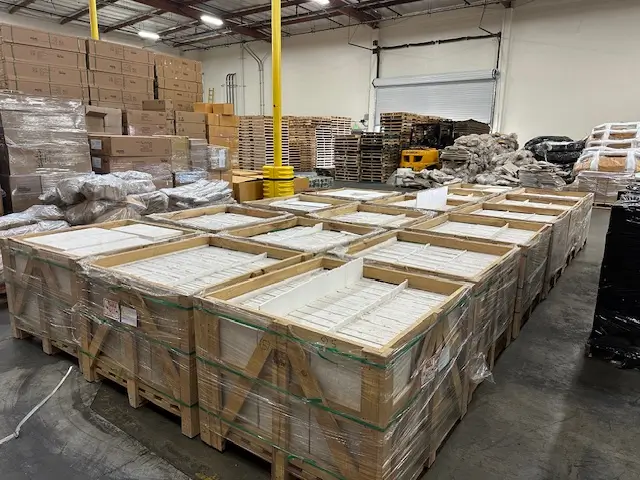
Stone Species and Base Material Pricing
Your first decision — which stone type — sets the cost floor for everything that follows. Limestone sits at the accessible end of the spectrum, with raw material pricing typically ranging from $8–$22 per square foot depending on finish and thickness. Travertine occupies similar territory, though highly uniform fills and premium grades push toward the upper end. Granite runs $15–$40 per square foot for standard building grades, while marble and quartzite can climb well beyond that for premium selections with consistent veining.
According to Natural Stone Institute stone variety specifications, the physical properties of each stone type — density, porosity, compressive strength, and absorption rate — directly inform where it can be used structurally and what finish options are achievable. These properties also determine fabrication difficulty, which is a direct cost input your fabricator will price into the job.
- Limestone: $8–$22/sq ft raw material; easier to cut, moderate density, ideal for wall cladding and flooring
- Granite: $15–$40/sq ft; high density and hardness increases blade wear and fabrication time
- Travertine: $10–$25/sq ft; natural voids require filling decisions that add material and labor cost
- Marble: $18–$55/sq ft; veining matching on large installations significantly increases material waste
- Quartzite: $20–$60/sq ft; extreme hardness creates fabrication premiums that buyers often underestimate
These ranges assume standard 3/4-inch to 1.25-inch slab thickness. Structural applications requiring 2-inch or 3-inch material can push raw costs 30–50% higher before a single labor dollar is spent.
Thickness, Finish, and Specification Cost Multipliers
Thickness is one of the most under-examined cost variables in natural stone building materials. Most suppliers quote on a nominal thickness, but actual slab variation of ±3mm across a large lot is common — and that variation has real consequences for installation labor and substrate requirements. Tighter thickness tolerances cost more at the mill but save significant labor hours during installation, which often more than offsets the premium.
Finish selection multiplies your base cost in ways that compound with stone type. A honed finish on granite is relatively straightforward. A hand-brushed or leather finish on the same material requires multiple passes and specialized tooling, adding 15–30% to the fabrication cost. Tumbled finishes on limestone or travertine add process time but reduce surface hardness slightly, which affects long-term wear performance in high-traffic applications.
- Polished finish: highest reflectivity, shows micro-scratches over time, requires periodic re-polish in flooring applications
- Honed finish: matte surface, hides wear better, slightly higher slip resistance than polished
- Brushed or antiqued: adds fabrication cost, produces natural-looking texture, good for exterior wall applications
- Flamed finish: thermal process that opens surface texture significantly, used for textured exterior paving, increases waste from thermal shock
- Sandblasted finish: removes surface layer uniformly, good for weather-exposed applications in freeze-thaw regions
Your specification should lock in the finish before pricing is finalized — switching finishes after a mill quote has been issued typically triggers re-pricing and minimum order adjustments.
Quarry Sourcing, Yield Rates, and Hidden Cost Drivers
Here’s a cost variable that rarely appears on any quote sheet: quarry yield rates. Not every block pulled from a quarry produces usable slabs at the rate you’d expect. A granite quarry running a 60% usable yield is generating 40% waste material that still costs money to extract, handle, and dispose of — and that cost flows downstream into your per-square-foot price. Higher-yield quarries generally produce more consistent material at lower effective cost, but the yield data isn’t always transparent in the supply chain.
Stone from quarries with consistent block sizing and low internal fracture rates produces better slab-to-slab color and veining consistency, which matters enormously on projects where large wall or floor panels need to match across rooms or facades. Inconsistent quarry blocks force fabricators to pull from multiple extraction runs, and that’s where color drift becomes a real project risk.
At Citadel Stone, we source directly from selected quarries with documented yield performance, which lets us give buyers realistic material availability data before a project commitment is made — not after the order is placed and stock turns out to be limited. Checking warehouse inventory levels before finalizing your specification schedule prevents the costly mid-project substitutions that derail timelines. For a more detailed breakdown of how sourcing affects budget, the Citadel Stone building stone cost guide walks through the full cost stack from quarry to installation.
According to USGS dimension stone production and use data, domestic quarrying accounts for a significant portion of building stone supply, but import volumes for premium marble, certain granites, and specialty limestones remain high — which directly affects lead time risk and landed cost. Factor that import cycle into your project timeline when sourcing material that isn’t stocked domestically.
Freight Distance and Regional Market Pricing Dynamics
Natural stone building materials cost is shaped significantly by freight — a fact that compounds the further your project sits from a stocking warehouse. A 2-inch granite slab weighs roughly 30 pounds per square foot. Truck freight for a full pallet load of stone can add $2–$8 per square foot to your landed cost depending on distance, and that range isn’t evenly distributed across the country. Projects in areas well-served by regional stone distributors have a structural cost advantage over projects that require long-haul delivery or multiple transfer points.
Regional market conditions create additional pricing variability beyond freight. Labor costs for skilled stone installers vary significantly across different parts of the country, with some markets showing a 40–60% spread in installed labor rates for comparable work. This means the material-to-labor ratio on your budget can shift substantially depending on where the project is located — a material that represents 45% of total cost in one market might represent only 30% in a labor-intensive market, which changes the value engineering calculus entirely.
- Freight adds $2–$8/sq ft depending on distance from warehouse to jobsite
- Liftgate, inside delivery, or job-site crane offloading adds $150–$400 per truck delivery
- Split deliveries to match installation phases increase per-delivery overhead
- Regional labor markets can shift installed cost by 40–60% for identical material specifications
- Projects in high-labor-cost markets benefit more from premium materials with longer service life — the material-to-labor ratio favors quality selection
Value engineering in natural stone building materials doesn’t always mean selecting a less expensive material. Sometimes it means selecting a slightly more expensive material that requires less maintenance, fewer repairs, and simpler installation detailing — which can reduce total installed cost even when the raw material price is higher.
Fabrication and Installation Cost Breakdown
Fabrication cost is where the biggest surprises tend to surface for buyers who’ve only reviewed raw material pricing. Stone requires cutting, edge profiling, surface finishing, and in many applications, custom cuts for penetrations, reveals, and transitions — all of which are priced by the linear foot or by complexity tier, not by the square foot of your overall area.
Complex edge profiles — ogee, dupont, waterfall — can cost $25–$65 per linear foot on top of the slab cost. Mitered corners for furniture-style installations or thick-look countertop edges require precise angle cuts and strong adhesive bonding, which adds both material waste and skilled labor time. For wall cladding applications, back-rod and sealant joint detailing adds another cost layer that’s easy to underestimate in early budgeting.
- Basic eased or beveled edge: $8–$15 per linear foot
- Ogee or dupont profile: $25–$45 per linear foot
- Mitered corner detail: $35–$65 per linear foot plus material waste
- Custom cutouts for fixtures and penetrations: $50–$150 each depending on geometry
- Installation of natural stone building materials on vertical surfaces adds 20–35% to labor versus horizontal applications
Installation rates for stone vary by application type. Floor installations on well-prepared substrates with consistent material thickness run more efficiently than wall cladding, which requires continuous adhesive coverage and temporary support while mortar sets. Exterior cladding in freeze-thaw regions requires additional attention to anchor and drainage detailing, which adds both labor time and specialty hardware cost.
Maintenance and Long-Term Cost of Ownership
The purchase price of natural stone building materials is a one-time event — but maintenance cost recurs across the life of the installation, and it’s a variable that smart buyers factor into their material selection. Sealing costs, cleaning protocols, repair accessibility, and the availability of matching material for future touch-ups all contribute to the true cost picture.
Porous stones like limestone and travertine require penetrating sealer application every 1–3 years depending on traffic intensity and exposure conditions. A quality penetrating sealer for a 1,000-square-foot installation costs $200–$600 in materials alone, with professional application adding labor cost on top. Dense granites and quartzites require sealing far less frequently — sometimes as infrequently as every 5–7 years — which reduces the maintenance cost delta significantly over a 20-year ownership period.
- Limestone and travertine: seal every 1–3 years; higher long-term maintenance cost
- Granite and quartzite: seal every 3–7 years; lower maintenance frequency
- Polished marble: requires pH-neutral cleaning products exclusively; acidic cleaners etch the surface permanently
- Exterior natural stone for house building: factor in re-pointing of mortar joints every 8–12 years for wall cladding
- Replacement material matching: specifying 10–15% overage at purchase ensures matching material is available for future repairs
The repair matching issue is one that experienced specifiers take seriously. Stone from a specific quarry run has a unique color and veining profile that can shift meaningfully from one extraction period to the next. Ordering matching repair material years later from a new quarry run is frequently impossible, which makes the upfront overage purchase a genuinely cost-effective decision — not just a cautious one.
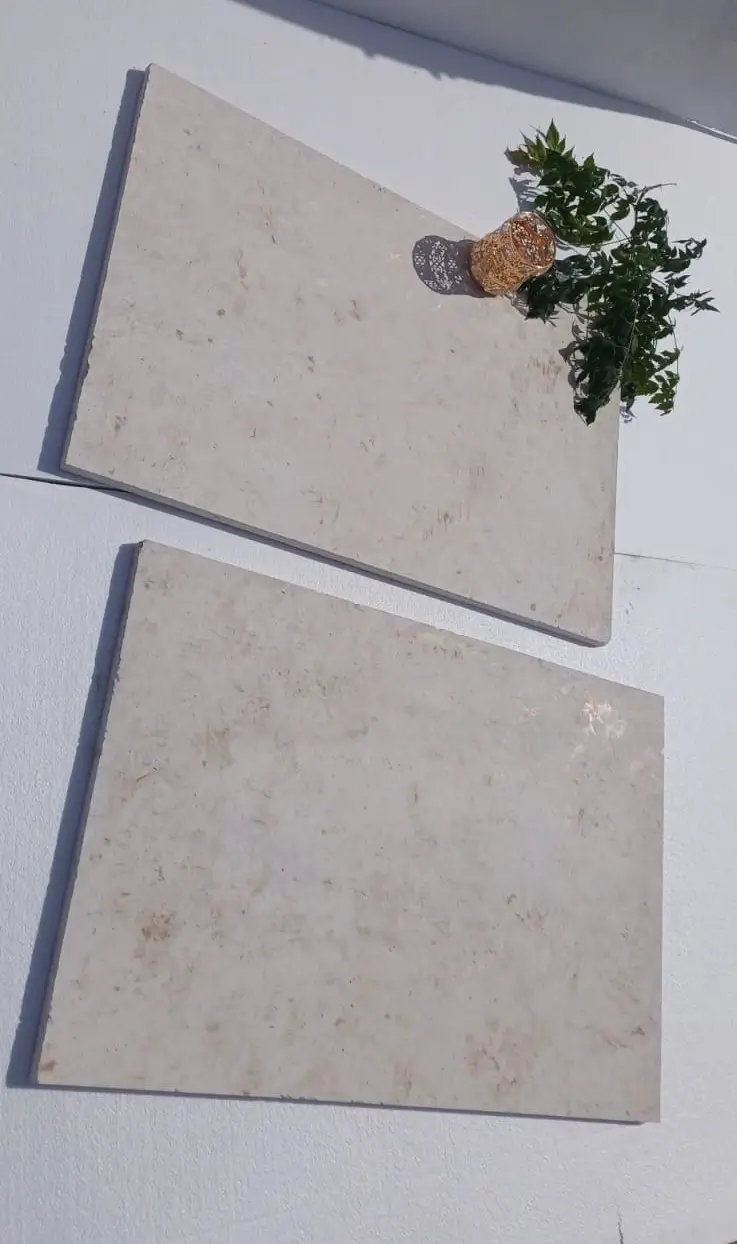
Budgeting for Natural Stone in House Building Projects
Stone for house building introduces a budgeting complexity that renovation or commercial fit-out projects don’t always encounter to the same degree: you’re typically specifying multiple stone applications simultaneously — flooring, countertops, feature walls, exterior cladding, steps — and each application has its own material grade, thickness, finish, and installation requirement. Coordinating those specifications so they read as a coherent design while hitting a total budget target requires a structured approach.
The most reliable budgeting method starts with a square-footage takeoff by application, then applies a fully-loaded cost rate for each application type that includes material, fabrication, freight, installation labor, substrate preparation, and a 10–15% contingency. Buyers who budget only on raw material cost consistently run into shortfalls when fabrication and freight invoices arrive. The ASTM dimension stone quality and testing standards that govern material grade classification are worth understanding at a specification level — they directly affect what grade of stone your application requires and, therefore, what your material cost floor is.
Natural stone building materials sourced through a national supplier with stocked warehouse inventory typically offer more predictable pricing than spot-purchasing from import brokers, where currency fluctuation and shipping cost volatility can shift your material cost by 10–20% between quote and delivery. Citadel Stone maintains consistent national pricing with transparent freight cost built into quotes, which makes budget-to-actual reconciliation substantially more straightforward on large projects.
- Build your budget with a fully-loaded rate: material + fabrication + freight + installation + substrate
- Apply 10–15% contingency on material quantities to cover cuts, breakage, and future repairs
- Lock pricing with a confirmed purchase order before mobilizing installation crews
- Confirm warehouse stock availability for your full quantity before finalizing the installation schedule
- Request material samples from the actual production lot, not generic catalog samples, before final approval
Value Engineering Without Compromising Natural Stone Building Materials Cost
Value engineering on natural stone building materials cost doesn’t mean automatically defaulting to lower-priced stone. The more productive approach is identifying where in the cost stack you have genuine flexibility without compromising the performance or aesthetic outcome that justified using natural stone in the first place.
Thickness is often a legitimate value engineering target. Many interior flooring applications spec 3/4-inch material when 5/8-inch would perform identically with proper substrate preparation — a 15–20% material cost reduction with zero performance trade-off. Similarly, selecting a honed finish over polished on a high-traffic commercial floor isn’t a downgrade — it’s often the technically superior choice for wear performance, and it costs less to produce.
- Consider honed over polished for high-traffic flooring — better wear performance, lower fabrication cost
- Evaluate 5/8-inch versus 3/4-inch thickness on interior floors with properly prepared substrates
- Use premium stone selectively on feature surfaces; coordinate with more cost-effective stone on secondary areas
- Batch your truck delivery schedule to consolidate freight costs — multiple small deliveries cost significantly more than one or two full loads
- Source natural stone building materials from a supplier with national warehouse stock to avoid spot-market premiums
The material-to-labor cost ratio is a useful value engineering lens. In high labor cost markets, spending more on a material that installs faster — better thickness consistency, pre-finished edges, pre-sorted for color — can reduce total installed cost even when the material itself is more expensive per square foot. That counterintuitive calculation is one that experienced project managers learn to run on every stone specification.
Final Recommendations
Natural stone building materials cost is a multi-layer equation, and the buyers who navigate it most successfully are the ones who work through each layer deliberately rather than anchoring on a raw material price and hoping the rest works out. Your specification decisions on species, thickness, finish, and edge detail all feed directly into fabrication cost. Your sourcing decisions on supplier proximity, warehouse stock depth, and freight scheduling feed directly into delivered cost. And your installation planning decisions on substrate quality, material handling, and crew coordination feed directly into labor cost.
The detail that separates well-managed natural stone budgets from over-run ones is almost always in the logistics and yield variables — not the stone price itself. Confirm your full material quantity is available from a single production lot before committing your installation schedule, lock your freight cost in writing before mobilizing crews, and treat the 10–15% overage as a non-negotiable line item rather than a hedge you’ll cut if the budget gets tight. Citadel Stone’s work across premium stone for house building projects — including complex multi-application specifications — is illustrated in the custom marble fabrication details, which shows how premium stone specification decisions translate into finished project outcomes at the highest level of detail.
Sourcing through a national supplier with documented quarry relationships and consistent warehouse inventory gives you price predictability and material traceability that spot-market purchasing simply can’t match on projects where consistency matters. Material buyers working with Citadel Stone often find that quarry access and slab yield rates are among the least visible yet most significant cost drivers in a natural stone budget.
Related reading: How to Solve Common Stone Building Problems · hardscape stone cost · How to Order Building Stone for Sale Right.