

Stone texture is where specification decisions get real — the finish you choose determines not just how a surface looks on day one, but how it performs under foot traffic, UV exposure, moisture cycling, and maintenance routines over decades. Most specifiers focus on stone type and color, then treat finish as a secondary detail. That sequencing is backwards. The texture applied to a stone surface affects its slip resistance coefficient, absorption rate, thermal gain, and long-term maintenance burden more than the stone variety itself in many installations.
Understanding Stone Texture and What It Actually Changes
Natural stone arrives from the quarry with a raw, uneven surface. Every finish applied after that — honed, polished, brushed, tumbled, flamed, sandblasted — fundamentally alters the stone’s surface profile at a microscopic level. That altered profile changes how light interacts with the material, how water sheets off or absorbs in, and how the surface feels and grips underfoot. For indoor flooring applications, your stone texture decision governs maintenance frequency and sheen levels. For outdoor applications, it’s the primary safety variable you need to resolve before anything else goes on the spec sheet.
Natural stone flooring texture affects foot traffic performance in ways that aren’t always obvious from samples. A polished travertine tile and a brushed travertine tile cut from the same block will test at dramatically different slip resistance values — the difference between a COF reading of 0.42 and 0.68 is meaningful when you’re specifying a commercial entryway. You need to understand what each finish does structurally, not just visually, before you commit.
What Is Honed Stone and Why Specifiers Reach for It First
If you’ve asked yourself what is honed stone, the short answer is that it’s a stone surface that has been ground flat and smooth using progressively finer abrasive pads, then stopped before the final polishing stage that would create gloss. The result is a matte or satin surface — smooth to the touch but without reflective sheen. What does honed stone mean in practical terms? It means you get a surface that hides scratches better than polished finishes, shows fewer water spots, and maintains a more consistent appearance under heavy use.
Honed stone is the specification default for interior flooring in high-traffic commercial environments for sound reasons. The surface texture interrupts light uniformly rather than reflecting it, which means scuffs, heel marks, and surface wear don’t telegraph the way they do on polished stone. For residential applications, honed finishes on limestone and marble maintain their appearance through daily use without requiring the buffing cycles polished stone demands.
- Slip resistance is improved over polished finishes — typical COF values for honed limestone run 0.55–0.65 on dry surfaces
- Surface porosity is slightly higher than polished, meaning sealing schedules need more attention
- Maintenance involves damp mopping rather than periodic re-polishing
- Honed finishes suit both contemporary minimalist interiors and traditional architectural styles
- Color saturation appears deeper than polished because light doesn’t scatter off the surface the same way
One detail that often gets missed: honed stone finishes show etching from acidic cleaners more visibly than polished surfaces on calcite-based stones like marble and limestone. Your maintenance specification needs to call out pH-neutral cleaning products explicitly — this isn’t a generic caution, it’s a real field problem. According to NSI stone tile specifications, surface finish selection directly influences long-term performance and maintenance requirements for calcite-based stones.
Polished Stone: Where Aesthetics and Maintenance Intersect
The polished finish takes the honing process through its final stages — typically progressing through 400, 800, 1500, and 3000-grit abrasive sequences — until the stone surface develops full crystalline reflectivity. For granite, this process closes the micro-pores on the surface, reducing absorption to near-zero and creating the hardest, most resistant surface granite can offer. For marble and limestone, polishing reveals depth and veining in a way no other finish matches aesthetically.
Specifying polished stone requires an honest account of the slip-resistance trade-off. Polished surfaces test at COF values of 0.35–0.50 on dry surfaces — acceptable for interior applications with controlled foot traffic, but inappropriate for exterior paving, pool surrounds, or any wet-area application. The ASTM stone and tile testing standards are clear on minimum COF thresholds for different application categories, and polished finishes frequently fall below outdoor safety benchmarks without additional anti-slip treatment.
- Interior luxury applications — lobbies, feature floors, bathroom walls — are where polished stone earns its specification
- Granite holds polish longer than softer stones; expect marble to require re-polishing every 3–5 years in commercial settings
- Polished surfaces show water marks and fingerprints more readily — this is a real maintenance issue in humid environments
- Surface hardness tests higher for polished granite compared to honed — the final polishing stage compresses surface crystals
Brushed and Antiqued Finishes for Texture Depth
Brushed stone finishes are produced by running wire or abrasive brushes across the surface under pressure, creating a soft linear texture that preserves natural mineral variations while adding tactile depth. You’ll see this finish described as “brushed,” “antique brushed,” or “antiqued” depending on the intensity of the process. The result is a surface that looks aged and organic rather than processed — a quality that suits traditional architectural styles, rustic landscape design, and heritage property work particularly well.
The practical performance of brushed finishes is genuinely strong for outdoor stone texture applications. Slip resistance improves significantly over honed finishes because the linear brush marks create drainage channels that direct water away from contact points underfoot. For stone texture selection in covered outdoor spaces — loggia floors, sheltered terraces, transitional indoor-outdoor zones — brushed limestone and brushed basalt consistently perform well across high-traffic scenarios without the maintenance demands of flamed or sandblasted alternatives.
- Brushed travertine fills surface voids with grout during installation rather than leaving them exposed — your installation team needs to plan for this step
- Brushed finishes on darker stones like basalt reveal the mineral crystalline structure at a scale visible to the eye
- Long-term wear on brushed surfaces tends to occur gradually and aesthetically rather than as sudden surface failure
- Antiqued limestone pairs naturally with desert xeriscaping, tropical garden planting, and formal colonial landscape design styles
Flamed Stone: The Finish Built for Demanding Outdoor Use
Flame finishing involves passing an intense oxy-acetylene flame across the stone surface rapidly, causing the mineral crystals to fracture and spall at the surface level. The result is an aggressive, coarse stone texture with significant surface relief — you’re looking at COF values of 0.75–0.90 or higher on well-executed flame-finished granite. This is the finish of choice for public paving, commercial plazas, wet zones, and anywhere foot traffic safety is the primary specification driver.
Flamed stone texture selection for outdoor projects comes with one underappreciated side effect: the thermal fracturing that creates the anti-slip profile also opens the stone’s pore structure significantly. Flamed granite absorbs more water than honed granite from the same slab. In freeze-thaw regions, this increased absorption means your waterproofing and drainage details need to be solid before the stone goes down — not a problem you want to solve after installation. At Citadel Stone, we recommend specifying a penetrating silane-siloxane sealer on flamed granite in any climate zone that sees temperatures below 28°F regularly.
The coarse surface profile of flamed stone also changes the maintenance approach. Debris lodges in the surface texture more readily than it does on smooth finishes. For residential courtyards and driveways, a periodic power wash is straightforward and effective. For public and commercial installations, your cleaning spec needs to account for the higher surface area that harbors biological growth in wet climates.
Tumbled Stone Texture and Its Place in Landscape Design
Tumbled stone achieves its character differently from the other finishes — instead of mechanical abrasion applied to a flat slab, individual tiles or pavers are loaded into a rotating drum with abrasive media and allowed to knock against each other. The edges round, corners soften, and the surface develops a naturally irregular, worn appearance that’s virtually impossible to distinguish from centuries of genuine foot traffic. For landscape design work where authenticity and visual warmth matter, tumbled stone texture delivers a quality no manufactured product matches.
Natural stone flooring texture in tumbled form suits specific design vocabularies well — Mediterranean courtyard gardens, Tuscan-inspired landscape schemes, cottage garden pathways, and traditional colonial estate grounds all benefit from the aged quality of tumbled limestone or travertine. The irregular surface and rounded edges read as genuinely old in context, which matters when you’re integrating new stonework into a heritage property or a period-appropriate landscape.
The performance caveat with tumbled stone is joint width management. Because the edges of tumbled pieces are irregular rather than precisely cut, your joint spacing will vary across the installation. Setting this material in a mortar bed with consistent joint enforcement requires more skilled labor than laying machine-cut tiles. Budget for it — rushing the setting process with tumbled stone produces inconsistent joint lines that undermine the very aesthetic the material is supposed to create. You can explore the full range of available surface options through Citadel Stone surface finishes to compare tumbled, honed, and brushed options side by side.
Sandblasted and Sawn Finishes for Specific Applications
Sandblasted stone involves blasting abrasive media at high pressure across the surface, creating a uniformly matte, slightly coarse texture that’s gentler than flame finishing but more aggressive than honing. The finish works particularly well on softer stones that don’t respond to flame finishing — limestone, sandstone, and certain travertines produce excellent results. You get improved slip resistance, a clean and contemporary appearance, and a surface profile that accepts natural patina gradually over time.
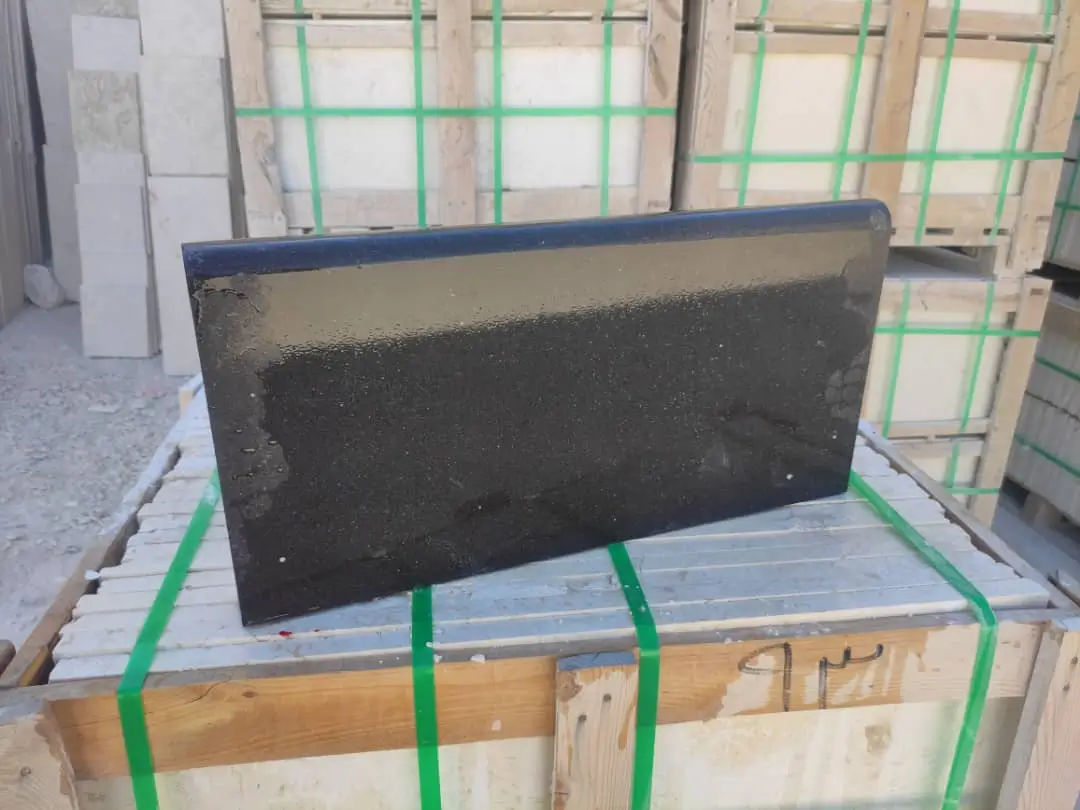
Sawn finishes — sometimes called “sawn cut” or “raw sawn” — represent the least processed end of the spectrum. After primary quarry cutting, the stone receives no further surface treatment. Sawn limestone shows the raw cut marks of the gang saw or wire saw as parallel lines across the surface. For contemporary minimalist architecture and modern landscape design, this industrial quality can be a deliberate aesthetic choice rather than an unfinished one. The surface is flat and true, which makes laying straightforward, and the low-intervention finish means warehouse lead times are typically shorter for sawn products than for finishes requiring multiple processing passes.
Slip Resistance Standards and How Finish Drives Safety Specification
Slip resistance isn’t a single value — it’s a range that varies with surface condition, contamination type, footwear, and measurement method. The key standard for natural stone is the wet DCOF measurement under ANSI A326.3; the pendulum test (ASTM E303) is also used in commercial specifications. You need to know which test method your project specification references before finalizing your stone texture selection — a finish that passed the withdrawn static-COF test may test differently under wet DCOF protocols. The CDC NIOSH guidance on outdoor surface slip prevention provides context on fall risk thresholds that inform specification decisions for public-access paving.
The practical finish hierarchy for slip resistance, from highest to lowest COF, runs roughly: flamed › sandblasted › tumbled › brushed › honed › polished. That sequence holds across most stone varieties, though the absolute values shift depending on the stone’s mineral composition and surface density. Granite flame finishes consistently outperform limestone flame finishes on absolute COF because the harder feldspar and quartz crystals fracture more aggressively and create deeper surface relief.
- Pool deck and wet-area paving: specify flamed or brushed finishes meeting the ANSI A326.3 minimum wet DCOF of 0.42
- Commercial interior high-traffic zones: honed finishes with 0.55–0.65 dry COF are the standard working range
- Residential interior feature floors: polished finishes are acceptable with appropriate anti-slip area rugs at transition zones
- Covered outdoor terraces: brushed or tumbled finishes are commonly specified, with wet DCOF confirmed against ANSI A326.3
- Driveway and heavy-vehicle zones: flamed or heavily textured sawn finishes only — smooth finishes are inappropriate regardless of COF claims
How Stone Type Interacts with Finish Selection
The finish you can achieve — and how it performs — depends fundamentally on the stone’s mineral makeup. Not every texture option works on every stone type, and understanding the interaction saves you from specifying a finish that the material can’t actually deliver at the quality level you’re expecting.
Granite’s high silica and feldspar content makes it the most finish-versatile stone available. You can flame it, hone it, polish it, brush it, or sandblast it and get a professional result each time. Limestone’s calcite structure responds well to honing, brushing, and tumbling but tends to produce uneven results when flame finished — the softer mineral matrix doesn’t fracture consistently the way granite does. Marble polishes to an exceptionally high sheen because of its recrystallized calcite structure, but the same softness that creates brilliant polish also makes it vulnerable to scratching and acid etching — a trade-off you need to communicate clearly to project owners before specifying it for high-traffic zones.
- Basalt: dense and low-absorption; honed basalt is one of the most durable interior floor options available when properly sealed
- Travertine: the voids in unfilled travertine require careful finish matching — polished unfilled travertine is technically possible but creates maintenance nightmares in commercial settings
- Sandstone: responds best to sawn, sandblasted, or natural split finishes; polishing sandstone is generally not recommended due to friable surface structure
- Slate: natural cleft finish (the stone’s own split surface) is its defining characteristic; honing removes this and changes the stone’s identity
For stone texture selection across a multi-material project — say a landscape scheme that combines limestone pavers, a basalt water feature, and granite steps — consistency in finish level matters more than matching exact finish names. Honed limestone and honed basalt read as a cohesive palette; honed limestone alongside polished basalt creates visual friction that’s rarely intentional.
Project Planning, Warehouse Stock, and Lead Times
Finish availability from warehouse stock varies significantly across stone types. Honed and polished finishes in standard formats are typically held as warehouse inventory for common materials — honed limestone and polished granite in 12×24 and 24×24 formats are the workhorses of the industry and usually ship within one to two weeks from domestic warehouse locations. Specialty finishes — antique brushed, hand-chiseled edges, or bespoke sandblasted profiles — often require fabrication runs of four to eight weeks from origin quarries.
Your project planning timeline needs to account for finish-specific lead times early, not at the ordering stage. Truck delivery scheduling is also influenced by your finish selection in ways that aren’t always obvious — flamed thick-format pavers for outdoor paving are significantly heavier per pallet than thin honed interior tiles, which affects truck load configuration and whether your site requires a crane-offload or straight floor-level delivery. Citadel Stone maintains national warehouse inventory for the highest-demand finishes and can confirm available stock before you finalize your specification, which eliminates the finish-substitution problem that derails projects when specifiers wait until procurement stage to verify availability.
Matching Stone Texture to Project Requirements
Stone texture decisions sit at the intersection of safety, aesthetics, material science, and long-term maintenance — and the right finish for one project is often wrong for the next one. Your starting point should always be application context: where is the stone going, what are the wet-weather and foot-traffic conditions, and what maintenance commitment is realistic for the building or property owner? From that baseline, finish selection becomes a process of matching performance requirements to the available texture options for your chosen material. The TCNA installation standards offer a useful cross-reference for finish suitability by application category, particularly for interior tile and stone flooring specifications. Landscape design intent — whether that’s a contemporary minimalist outdoor room, a warm Mediterranean terrace, or a naturalistic garden pathway — refines the shortlist further by eliminating finishes that don’t serve the visual language of the project. For projects that span multiple stone materials and finish types, reviewing related natural stone applications can sharpen your specification instincts — comparing how slate and lava stone perform illustrates how dramatically two natural stones can differ in finish suitability and surface behavior, and how those differences inform stone texture decisions across a broader project palette. Textured stone from Citadel Stone ships from quarries across the Mediterranean and Middle East, finished for consistent surface feel.
Related reading: stone edging for landscaping · Pebble Stone Patio Ideas to Transform Outdoors · smooth stone.