

What Wholesale Stone Procurement Actually Demands
Experienced building stone suppliers will tell you that the gap between a well-priced quote and a well-executed project often comes down to specification discipline — not cost. Your procurement decisions set the performance ceiling for every square foot of installed stone, and the variables that determine long-term success are locked in long before a truck leaves the warehouse. Material origin, density classification, finish tolerance, and packing method all interact in ways that surface only when you’re three weeks from completion and dealing with a substandard delivery.
The project manager’s role in wholesale stone procurement extends well beyond unit pricing. You’re managing material lead times against installation windows, coordinating stone fabrication timelines with subcontractor schedules, and ensuring that every slab or paver arriving on-site matches what you specified — not what a supplier assumed you meant. According to Natural Stone Institute technical stone specifications, dimension stone performance varies significantly by material type, extraction method, and finishing process — all variables that a project manager needs to understand at the procurement stage, not after installation begins.
Reading Supplier Capabilities Before You Commit
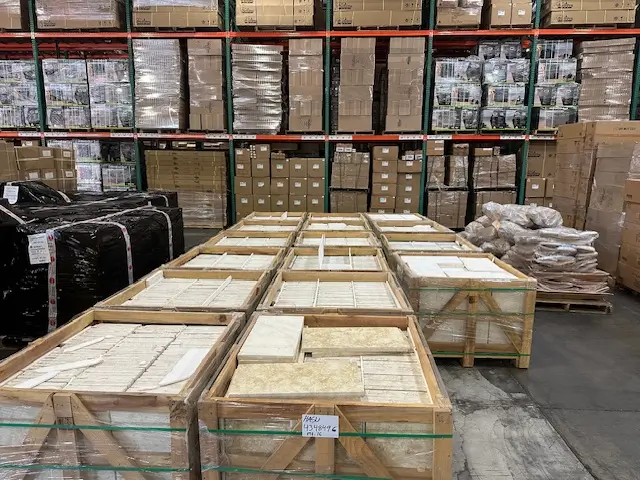
Not every building stone supplier operates at the same depth of capability, and the difference shows up in ways that aren’t obvious from a product catalog. The critical questions to ask center on warehouse inventory depth, fabrication capacity, and origin documentation — because these three factors determine whether your project runs on time or absorbs costly delays.
- Ask specifically how much of your required material is in domestic warehouse stock versus on back-order from an overseas quarry
- Request material test data — absorption rates, compressive strength, and flexural modulus — not just a general product description
- Confirm whether stone fabrication (cutting to custom dimensions, edge profiling, drilling) is handled in-house or subcontracted, since each layer adds lead time
- Verify that the supplier can provide lot consistency documentation — large projects need material from the same quarry batch to avoid tonal variation across elevations
- Clarify truck delivery logistics: flatbed versus curtain-sided, maximum pallet height, and unloading requirements at your site
At Citadel Stone, we source directly from quarry operations and maintain warehouse inventory that lets project managers confirm stock availability before submitting purchase orders — a step that eliminates the most common cause of schedule slippage on large stone projects.
Stone Fabrication Specifications That Protect Your Installation
Stone fabrication is where most wholesale procurement agreements get underspecified. You need to define tolerances in writing — not assume that “standard” means what you think it means. A 3mm thickness variance might be acceptable for a rough fieldstone application but will create visible lippage on a polished interior floor. Your specification document needs to address dimensional tolerance, surface finish consistency, and edge treatment before any material enters production.
The fabrication sequence also matters for scheduling. Custom stone fabrication adds 2–4 weeks to lead times depending on the complexity of the profile and the supplier’s current production load. For projects with hard installation deadlines, you need to factor this into your procurement timeline — not treat fabrication as a parallel process that can happen simultaneously with site prep. Pull your procurement trigger early enough that fabricated stone arrives at the warehouse with at least a one-week buffer before your installation crew mobilizes. According to ASTM dimension stone quality and testing standards, dimensional tolerances for cut stone are defined by material type and application — reviewing these before writing your spec will prevent disputes at delivery.
- Honed finishes require tighter thickness tolerances than split-face or tumbled finishes — specify accordingly
- Edge profiles (eased, bullnose, ogee) add production complexity and must be confirmed with template approval before full production runs
- Calibrated versus non-calibrated stone affects installation adhesive depth and setting time — ensure your installer is aware of which specification applies
- For large-format pieces over 24 inches, request a pre-shipment inspection photograph to confirm that fabrication meets spec before material is loaded onto a truck
Evaluating Natural Stone Material Grades at the Procurement Stage
Your specification documents should define grade explicitly — commercial, select, or rustic — because each tier carries different expectations for surface variation, vein pattern, and tonal consistency. Building stone suppliers often use these terms differently, so your purchase order needs to reference specific acceptance criteria rather than just a grade label. Define what percentage of surface area with natural fissures, pitting, or color variation is acceptable, and include rejection criteria in writing.
Density and porosity data matter more than most project managers realize at the procurement stage. A stone merchant who can provide absorption test results (ASTM C97) is telling you something important about how the material will perform in freeze-thaw regions, wet environments, or heavily trafficked areas. Material with absorption above 0.75% for exterior applications in areas subject to freeze-thaw cycling will require more aggressive sealing schedules and may underperform over a 20-year horizon. Request this data before committing to a material — don’t assume that a product labeled “exterior grade” has been tested to your project’s specific performance requirements.
Wholesale stone procurement for natural stone pavers specifically requires that you distinguish between nominal and actual dimensions. A “2-inch” paver is rarely exactly 50mm — the actual thickness typically runs 48–52mm depending on the quarry’s cutting equipment. Your base preparation and adhesive bed depth need to account for this variation, not assume exact nominal thickness throughout the installation.
Seasonal Scheduling and Installation Timing for Stone Projects
Procurement timing and installation timing are linked more tightly than most project plans acknowledge. Your material needs to arrive at the site during a window that aligns with optimal installation conditions — because even perfectly specified stone will underperform if it’s installed outside the temperature and curing ranges that adhesives and grouts require.
- Polymer-modified mortars typically require substrate and ambient temperatures between 40°F and 90°F — installations outside this range risk bond failure regardless of material quality
- Early morning installation sessions, particularly in warmer months, give your crew the most workable conditions: adhesive open times are longest in cooler morning air, and you can avoid the premature skinning that happens when mortar is exposed to afternoon direct sun
- In periods where overnight temperatures are dropping toward freezing, plan your truck deliveries for mid-morning so pallets aren’t sitting on a cold slab overnight before installation begins
- High-humidity periods slow adhesive cure and can extend wait times before grouting by 24–48 hours — build this into your schedule rather than discovering it after the grout fails
- Spring installation windows (roughly March through May in temperate zones) offer the most consistent conditions for large-format stone setting because temperature swings are moderate and precipitation is manageable with basic site protection
Your procurement schedule should work backward from the optimal installation window. If your project targets a spring installation, stone fabrication orders need to be placed no later than late winter, accounting for production and shipping lead times. Missing that window often pushes a project into summer’s challenging afternoon heat cycles or autumn’s unpredictable weather patterns — both of which complicate installation and add cost.
Understanding Volume Ordering and Material Calculations
Accurate quantity takeoffs are where wholesale procurement either saves or wastes significant budget. The standard rule of adding 10% overage to square footage calculations is a starting point, not a formula — the actual waste factor depends on the laying pattern, the cut complexity at perimeters, and the degree of natural stone variation that will require field rejection of individual pieces.
For running bond or straight-set patterns with square or rectangular pavers, 10–12% overage is realistic. Diagonal patterns typically require 15–18% because the perimeter cuts generate more waste. Irregular patterns with custom-cut perimeter work can push waste factors to 20% or beyond. Getting this calculation wrong means either a critical shortage mid-project or an excess order that erodes your procurement savings. For projects requiring precise takeoffs, reviewing USGS dimension stone production and use data can help contextualize material yield ranges by stone type. When you’re ready to place your volume order, understanding our stone volume ordering process will help you structure your purchase correctly from the first inquiry.
Volume thresholds also affect pricing tiers and lead times — most building stone suppliers apply quantity breaks at 500 square feet, 1,000 square feet, and full-container load equivalents. If your project sits just below a pricing threshold, it may be worth coordinating with other projects or phases to consolidate orders and capture the price advantage.
Delivery Logistics and Site Readiness for Stone Deliveries
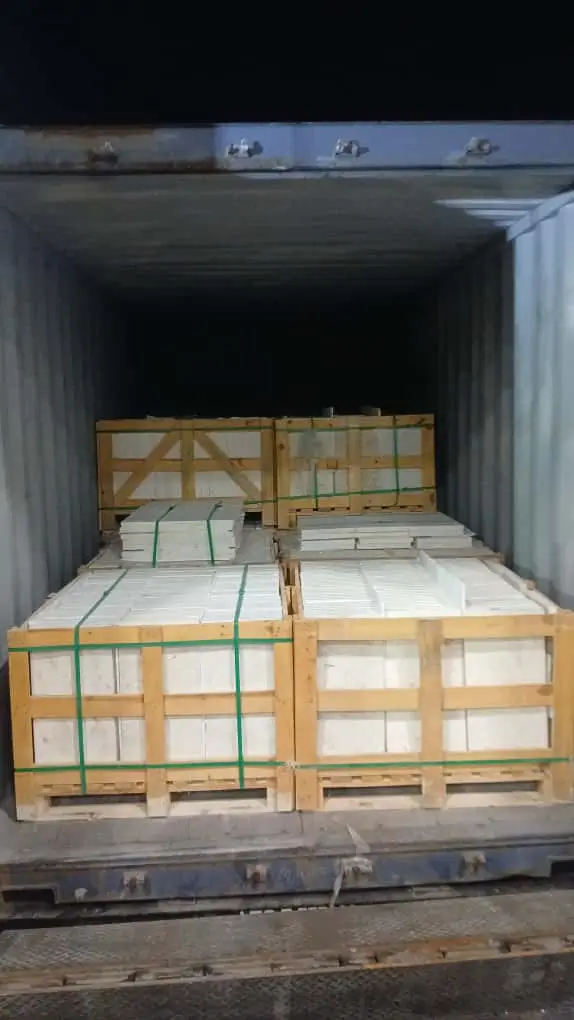
A stone delivery arriving at an unprepared site is one of the most expensive mistakes in project management. Palletized natural stone is dense — a standard pallet of 2-inch pavers typically weighs 2,500–3,500 lbs — and requires either a forklift on-site or a truck-mounted crane for safe unloading. Confirm your delivery vehicle type with the supplier in advance, and ensure your site access accommodates the truck’s turning radius and weight rating on any paved surfaces it must cross.
- Confirm whether the supplier’s truck includes a tail-lift or crane, or whether you need to arrange unloading equipment independently
- Stone pallets should be stored on firm, level ground away from the installation area to avoid double-handling — plan your staging zone before delivery, not after
- Outdoor stone storage for extended periods needs protective covering if precipitation is expected, particularly for honed or polished finishes that can develop surface staining from runoff
- Split deliveries for large projects (multiple truck loads) should be scheduled in sequence with installation progress — avoid accumulating excess inventory on-site where it can be damaged or create access problems
- Warehouse lead times for in-stock material typically run 5–10 business days to most delivery points; fabricated or special-order material adds 2–4 weeks regardless of geographic proximity to the warehouse
Documentation and Compliance Requirements for Stone Procurement
Reputable building stone suppliers provide material documentation that goes beyond a basic invoice. For commercial projects, you may need origin certificates, material test reports, and safety data sheets — particularly for imported stone where customs documentation accompanies the shipment. Specifying these documents as part of your purchase order, not as an afterthought, ensures they’re available when your project inspector, architect, or client requests them.
A stone merchant operating at a professional level maintains traceability records that link each delivery to its quarry source and production batch. This matters most when you need to re-order material mid-project and need to ensure tonal consistency with what’s already installed. Without batch documentation, matching material from a later delivery to an earlier installation is largely guesswork — and the visual discrepancy on a finished elevation is difficult to explain to a client.
- Request material certifications at the time of purchase order confirmation, not at delivery — this gives the supplier time to compile documentation without delaying your receipt of goods
- For projects subject to LEED or sustainability reporting, quarry origin and transportation distance data may be required for materials credits
- Retain all test reports and origin documents in the project file — they become relevant if warranty claims or performance disputes arise years after installation
Moving Forward with Wholesale Stone Procurement
Wholesale stone procurement rewards project managers who treat it as a technical discipline rather than a purchasing transaction. Your decisions at the specification and ordering stage — material grade, fabrication tolerances, volume calculations, delivery logistics, and documentation requirements — determine whether your installation team works efficiently and whether the finished project performs to its design intent over a 20-year horizon. Building stone suppliers who operate at a national scale give you access to consistent inventory, documented origin, and technical support that regional yards often can’t match. As you assess the full scope of your natural stone specification, related maintenance planning is equally important — natural stone exterior maintenance guidance covers what your installed stone will need to sustain performance after the project closes out. Direct from quarries in Turkey, the Mediterranean, and beyond, Citadel Stone fulfills wholesale stone orders with documented origin and material data for each product line.
Related reading: types of stone for building · finding natural stone suppliers · types of stone for building houses.