

What the Joint Material Actually Does
Stone dust for paver joints is the overlooked variable that determines whether a natural stone installation stays flat and locked for two decades or starts shifting and rocking within three years — yet most installers spend considerable time selecting the right paver and almost no time thinking critically about it. The joint filler isn’t decorative fill; it’s an active structural component that transfers lateral load between units, resists weed intrusion, and manages how water moves through the surface. Get it wrong, and no amount of quality stone or careful bedding work saves you.
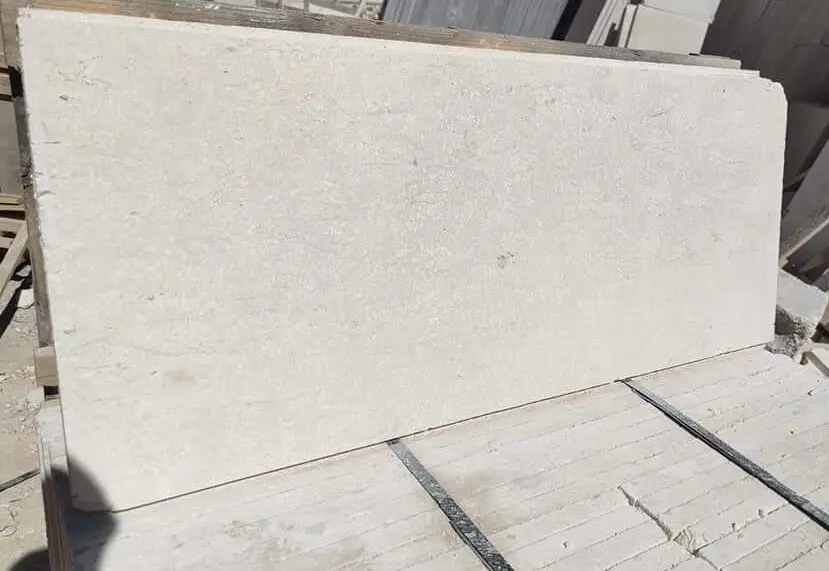
There are two mainstream choices for natural stone paver jointing: unbound stone dust swept into open joints, and polymeric sand — a kiln-dried blend with activated silica and polymer binders that cure into a semi-rigid mass when wetted. Both work. Neither is universally superior. The right call depends on your paver material, joint width, drainage design, and how the surface will be used over its service life. Understanding the performance differences between them is where most specifiers fall short.
Stone Dust for Paver Joints: How It Performs
Stone dust — also called crusher dust or quarry screenings — is the fine material that remains after stone is crushed and screened for aggregate production. When swept into paver joints, it compacts under traffic and moisture cycling into a firm, dense fill that holds pavers in lateral alignment while allowing water to drain freely through the joint. That permeability is its defining characteristic, and it’s either your biggest advantage or your biggest liability depending on the application.
For natural stone paver jointing material, particularly with irregular or wide joints common in flagstone and tumbled limestone work, stone dust performs exceptionally well. The fine particles conform to irregular joint profiles that polymeric sand sometimes bridges imperfectly, filling the full depth of the joint without voids. Joints tighter than 3/8 inch are where stone dust starts to underperform — it simply doesn’t compact into narrow gaps as effectively as wider, rougher-sided joints allow.
- Drains freely, making it ideal for permeable paving designs and base systems built for infiltration
- Easy to re-sweep and top up after settling — no activation process required
- Does not crack or delaminate as polymeric binders can in wide joints under thermal cycling
- Works well with textured, tumbled, and irregular stone edges where binder adhesion is inconsistent
- Lower material cost per square foot compared to quality polymeric sand products
- Compatible with natural stone that requires periodic re-sanding without surface damage risk
The limitation worth acknowledging honestly: stone dust does not resist weed germination as well as cured polymeric sand. In organic-rich environments or where blown debris accumulates in joints, organic matter settles into the porous fill and provides a seedbed. This can be managed with appropriate sealing of the surface, but in heavily shaded areas where sealer breaks down faster, expect annual joint maintenance to remain part of the picture.
Polymeric Sand vs Stone Dust Pavers: What the Comparison Actually Reveals
The polymeric sand vs stone dust pavers debate tends to get oversimplified into “modern vs traditional” — which misses the point entirely. These two materials solve different jointing problems, and the better question is always: what does this specific installation need from its joint fill?
Polymeric sand’s polymer binder activates when wetted and cures into a semi-flexible solid that resists weed intrusion, insect burrowing, and joint wash-out under rainfall and irrigation. For uniform-cut pavers with consistent 3/16-inch to 3/8-inch joints installed on a traditional compacted aggregate base, polymeric sand delivers a cleaner long-term result with lower ongoing maintenance. According to Natural Stone Institute stone specifications, consistent joint dimensions are critical to achieving even load distribution across natural stone installations — and polymeric sand’s rigid cure rewards that dimensional consistency.
However, polymeric sand has failure modes that stone dust for paver joints avoids. In joints wider than 1/2 inch, the polymer binder can shrink as it cures, leaving a hardened surface crust over a voided core — a condition that cracks under load and accelerates settlement. Wide-joint irregular work, where joint widths vary between 1/4 inch and 1 inch across the same installation, is genuinely unsuitable for polymeric sand as the primary joint fill. The result is inconsistent cure, cracked ridges, and joints that need to be completely cleared and redone within two to three years.
- Polymeric sand suits: uniform cut stone, 3/16–3/8 inch joints, high-traffic surfaces, areas with heavy weed pressure
- Stone dust suits: irregular flagstone, tumbled stone, wide joints, permeable systems, drainage-sensitive installations
- Polymeric sand fails predictably in: wide joints over 1/2 inch, freeze-thaw regions with active heave cycles, and installations over flexible bases
- Stone dust requires maintenance in: shaded organic environments, surfaces without a sealer regimen, and joints that experience repeated washout from surface drainage
One detail that rarely makes it into product datasheets: polymeric sand generates significant haze if activated incorrectly. If residual polymeric dust isn’t blown completely off paver faces before wetting, it cures onto the surface and requires aggressive cleaning that can damage honed and polished stone finishes permanently. With stone dust, that risk doesn’t exist.
Limestone Paver Joint Filler Options: What the Material Demands
Limestone is calcium carbonate, and its surface chemistry interacts differently with jointing materials than dense igneous stones do. Limestone paver joint filler selection needs to account for the stone’s porosity, surface finish, and the specific profile of its cut edges — because all three affect how well the joint fill keys in and stays put.
For tumbled or antiqued limestone — the most common format for outdoor patio and walkway applications — the rough, pitted edge profile makes stone dust the technically superior choice among limestone paver joint filler options. Those irregular edge faces create mechanical interlock with compacted stone dust fill in a way that polymeric sand’s smooth cure surface cannot replicate. The stone dust conforms to micro-voids and undulations in the edge profile, creating friction that resists lateral movement under load. The result is a joint that behaves as part of the paving system rather than just filling the gap between units.
Honed limestone with clean, sawn edges is a different story. The smooth, consistent edge profile is exactly where polymeric sand earns its cost premium. The tight dimensional tolerances of honed cut stone mean joints stay within the range where polymeric sand cures reliably — and the clean surface makes post-installation cleanup of any residual binder straightforward. For honed limestone in a driveway or high-traffic entrance application, polymeric sand’s resistance to joint displacement under vehicle loads is worth the additional specification requirement.
At Citadel Stone, we see the most consistent results with tumbled limestone installations using a stone dust base fill topped with a fine-grade limestone screening to match the stone’s color profile — the finishing layer bridges the visual gap between joint and paver face more naturally than grey polymeric sand against warm-toned limestone. According to USGS limestone composition data, limestone’s calcium carbonate structure exhibits specific porosity characteristics that influence how surface treatments and joint materials interact with the stone over time — a factor worth accounting for in your sealing schedule after jointing is complete.
Paver Base Material and Jointing: The Substrate Connection
Joint fill selection doesn’t exist in isolation — it’s the top expression of a base system that either supports it or undermines it. The paver base material and jointing guide principle that most installation failures trace back to is this: the joint fill can only be as stable as the base beneath it. A rigid polymeric sand joint over an unstable aggregate base that shifts seasonally will crack and delaminate within a year. Stone dust over a well-compacted, properly graded base on stable soil performs reliably for ten-plus years with minimal intervention.
The bedding layer — typically a 1-inch screed of concrete sand or coarse bedding sand over a compacted aggregate base — has direct implications for joint fill choice. Concrete sand bedding layers compact under traffic over time, and as the pavers settle slightly, joint widths change. Stone dust for paver joints accommodates that micro-settlement by re-compacting with the movement. Polymeric sand, once cured, is rigid — and joint width changes induced by base settlement create the stress points where the cured binder fractures.
- Aggregate base depth for foot-traffic paving: minimum 4 inches compacted Class II aggregate, 6 inches for driveway or vehicle access
- Bedding layer: 1-inch screeded sand — do not exceed this depth, as thicker bedding increases settlement potential that stresses rigid joint fills
- Base compaction: target 95% Proctor density — inadequately compacted bases are the primary cause of joint fill failure regardless of product used
- Drainage slope: minimum 1/4 inch per foot away from structures — slope directly affects whether stone dust joints experience washout under surface flow
For installations over expansive clay subgrades in regions that experience pronounced wet-dry soil cycles, stone dust’s flexibility as a jointing medium provides a meaningful advantage. As the base moves slightly through moisture cycling, stone dust re-keys into the joint rather than fracturing — a property that rigid polymer binders simply don’t offer. The ASLA permeable paving guidance reflects this consideration, noting that jointing materials compatible with base movement and drainage infiltration produce longer-performing permeable systems in variable soil conditions.
UV Exposure, Sealing, and Long-Term Joint Performance
Sun-exposed paver installations introduce a dimension to joint fill selection that installers in shaded environments don’t deal with: UV degradation of the joint material itself. Polymeric sand binders are organic polymer compounds, and prolonged direct UV exposure breaks down those polymer chains over time — a process that accelerates surface chalking and cracking in the joint face within three to five years on fully unshaded installations.
Stone dust doesn’t carry that UV vulnerability because there’s no organic binder compound to degrade. Its performance in high-UV sun-exposed installations is structurally inert — the material itself doesn’t change in response to light exposure. What UV does affect with stone dust-jointed surfaces is the paver material above: limestone and lighter-toned natural stones fade gradually as UV oxidizes surface minerals, and the sealing schedule established for the stone also protects the joint fill area by binding surface particles and slowing the erosion of fine material from the joint face under rainfall impact.
For sun-exposed natural stone paver jointing material applications, consider this sealing approach: apply a penetrating impregnator sealer to the full paver surface including joints at installation, then re-apply on a two-to-three-year cycle. The sealer migrates slightly into the stone dust joint during application, binding the top layer of fines and providing modest UV and rain-erosion resistance without sealing the joint to the point of blocking drainage. Permeability is preserved while significantly extending the maintenance interval for the joint itself.
- Polymeric sand in full-sun exposure: expect visible surface chalking by year three to five — factor in re-sanding cycles when specifying maintenance budgets
- Stone dust in full-sun exposure: structurally stable, but top-layer fines erode faster under UV-driven surface heating and rainfall impact — seal on a biennial schedule
- Finish selection on the paver itself affects UV performance: textured and tumbled finishes retain appearance better than honed surfaces in extended sun exposure because micro-relief masks early-stage oxidation
- Color-matching stone dust to the paver tone improves long-term visual performance as both materials weather — matching grey stone dust to warm limestone reads as a mismatch within two years of sun exposure
Natural Stone Installation Substrate Tips That Change the Outcome
Beyond base depth and compaction, several substrate-level decisions directly affect which joint fill performs better on a given project. These natural stone installation substrate tips don’t make it into most product installation guides because they’re context-specific — they come from watching installations fail and tracing the failure back to decisions made before the first paver was set.
Joint width control during installation is the single most actionable variable. Working with natural stone that has dimensional variation — which is essentially all natural stone — setting consistent spacers between units rather than eyeballing joints produces the uniform joint width that polymeric sand demands. Without spacers, joint widths drift between 1/4 inch and 3/4 inch across the same installation, and the result lands in the failure zone for polymeric sand where cure consistency breaks down. Stone dust tolerates that variation; polymeric sand does not. For our paver jointing guidance, consistent joint width targeting 3/8 to 1/2 inch for most natural stone applications gives you the flexibility to use either material with confidence.
Edge restraint is the other substrate decision that determines joint fill longevity. Without rigid perimeter containment — either a concrete haunching, a mechanically pinned plastic edging, or a mortared border course — lateral forces from traffic gradually push the installation outward at the perimeter, widening joints progressively from the edges inward. Stone dust fill in an unsecured installation doesn’t prevent that movement; it just accommodates it without cracking. Polymeric sand in the same scenario fails harder — the joint faces fracture as the pavers shift, leaving cracked ridges proud of the paver surface.
- Install edge restraint before laying any pavers — retrofitting it after the fact means disturbing the bedding layer and accepting settlement risk
- Screed your bedding sand on a dry day — moisture-saturated bedding compresses inconsistently and creates the micro-settlement that fractures rigid joint fills
- Check for low spots in your base before screeding — any depression greater than 3/16 inch in the base surface telegraphs through to uneven paver faces regardless of joint fill quality
- Allow the installation to settle under light foot traffic for 48 hours before final joint fill application — this seats the pavers into the bedding layer and prevents the joint width changes that compromise cure consistency
Planning Supply and Project Logistics
Getting the joint fill material right on paper doesn’t help if it’s not available when the installation crew is ready. Stone dust is generally available through regional quarry operations and aggregates suppliers, but quality consistency varies significantly — the particle size distribution of crusher dust from one quarry can differ enough from another source to affect how well it compacts in narrow joints. Specifying a maximum particle size of 1/4 inch with a fines content of 20–30 percent passing the No. 200 sieve gives you a practical performance standard that filters out the coarser crusher dust blends that don’t compact effectively in joint widths under 3/4 inch.
Polymeric sand requires warehouse storage in dry conditions — moisture contamination before installation partially activates the polymer binder, producing a product that won’t cure properly in the field. Verify that the supplier’s warehouse storage environment is controlled before ordering pallets for a large project. Citadel Stone maintains inventory in climate-controlled warehouse conditions, which is particularly relevant for polymeric materials that degrade in storage when humidity management is inadequate.
Truck access logistics affect delivery timing more than most project schedules anticipate. For large residential or commercial paver installations where both base aggregate and jointing material are being delivered, coordinating truck deliveries to arrive in the correct sequence — aggregate base first, jointing material staged for the installation phase — prevents material from sitting in the wrong conditions on site. Stone dust stored on a tarp is reasonably forgiving; polymeric sand pallets left open to rain on a job site are not. Factor that staging requirement into your project schedule and site logistics plan early.
Choosing the Right Joint Fill for Your Stone Paver Project
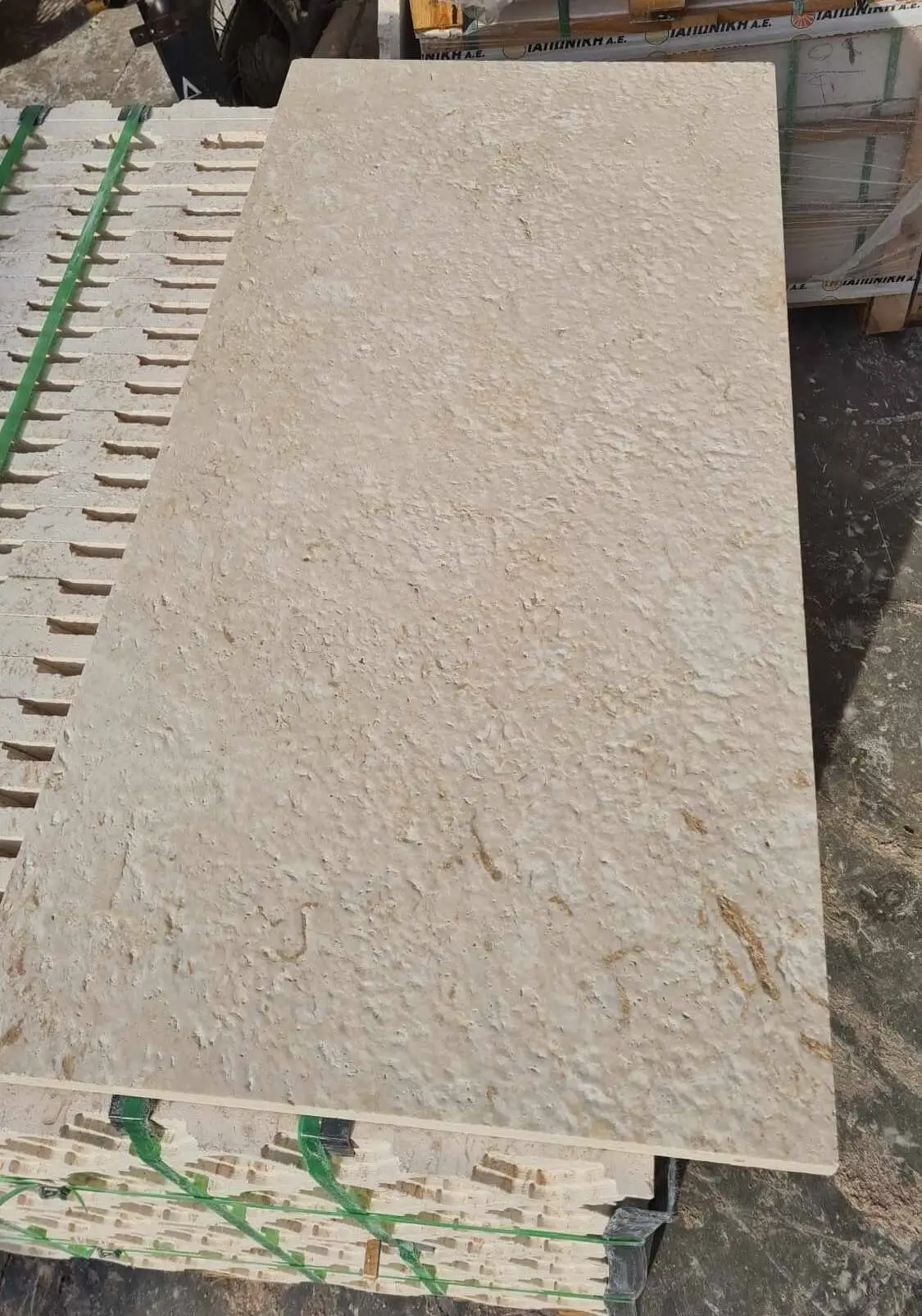
The decision between stone dust for paver joints and polymeric sand comes down to reading your specific project conditions accurately — joint width consistency, base flexibility, drainage design, paver surface finish, and the maintenance commitment the end user will realistically maintain. Neither material is a universal default. Stone dust delivers superior performance in wide-joint irregular stone work, permeable systems, and installations over bases with movement potential. Polymeric sand earns its premium in tight-joint cut-stone applications where weed resistance and low maintenance are the priority. Beyond the hardscape being specified, if natural stone walkway design is part of the project scope, flagstone walkway design approaches offer a complementary perspective on material selection and layout decisions that inform the full project specification. For white limestone installations, Citadel Stone advises installers to account for joint width and drainage slope when choosing between stone dust and polymeric sand.
Related reading: polished white limestone uses and drawbacks · white limestone paver installation steps · white stone pavers for pool decks.