

Polished white limestone uses and drawbacks trace back to a single material reality: the glossy finish that makes this stone so visually compelling is produced by mechanically closing the surface pores, and every performance advantage or limitation flows directly from that change. You’re working with a material that has genuinely outstanding compressive strength — typically 4,000 to 8,000 PSI depending on the quarry formation — but whose surface behavior shifts dramatically once it’s been taken from honed to polished. Understanding where that shift works in your favor and where it creates problems is what separates installations that age gracefully from those that become specification regrets within five years.
What Polishing Actually Does to the Stone
The polishing process removes micro-irregularities from the surface through progressively finer abrasives, ultimately closing the open pore network that raw or honed limestone exposes. The result is a light-reflective surface with a coefficient of friction that typically drops to 0.3–0.4 dry versus the 0.5–0.6 range you’d get from a honed finish on the same material. That gap matters more than most specifiers initially expect.
The closed surface also changes how the stone interacts with moisture, sealers, and contaminants. Liquids that would absorb quickly through a honed finish sit on a polished surface long enough to be noticed — and wiped up — before they penetrate. That’s genuinely useful indoors. Outdoors, in rain or splash zones, the same characteristic becomes a hazard. The stone doesn’t have time to drain, and the wet surface offers far less grip — request the wet DCOF test report and compare it with the 0.42 minimum for level wet surfaces in ANSI A326.3. According to NSI limestone finish specifications, finish selection is one of the most consequential decisions in stone specification precisely because it governs surface behavior across the material’s full service life.
You’ll also find that the polished surface picks up surface scratches more visibly than honed or brushed alternatives. Microscopic abrasion from foot traffic, grit tracked in from outdoors, or even cleaning equipment shows up as dull patches that interrupt the reflective uniformity. In high-traffic corridors, the polish starts to fade unevenly within 18–24 months without professional re-polishing — something that rarely gets factored into the maintenance budget at specification time.
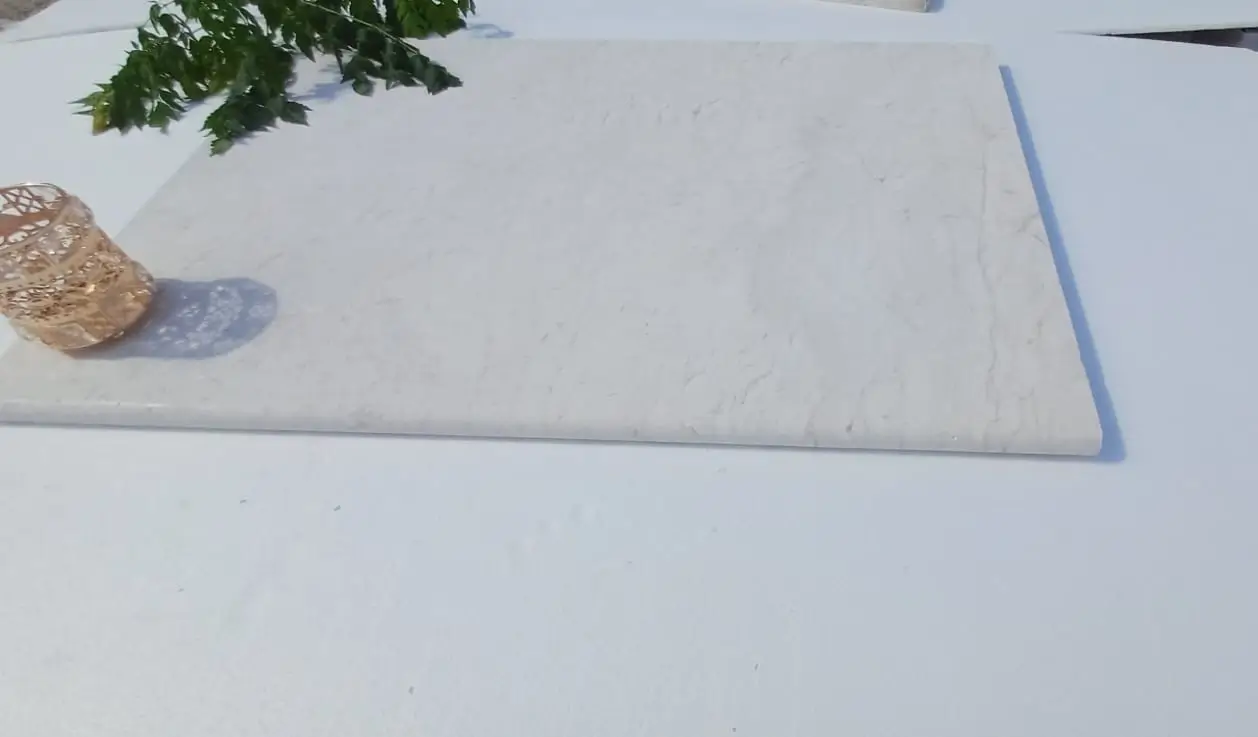
Where Polished White Limestone Genuinely Performs
There are specific applications where the polished finish earns its place, and the key is matching the finish’s behavior to the environment rather than fighting against it.
- Interior flooring in low-traffic residential zones — master bedrooms, formal dining rooms, entry foyers with controlled access — where reflectivity enhances ambient light and maintenance is manageable
- Feature walls, fireplace surrounds, and vertical cladding applications where slip resistance is irrelevant and the mirror-like surface adds visual depth
- Commercial reception areas and hotel lobbies with professional cleaning protocols in place and dedicated maintenance staff
- Bathroom vanity tops and countertops in dry-use zones, where the closed surface naturally resists staining from toiletries and cosmetics
- Window sills and interior architectural detailing where the finish’s brightness draws attention to design intent
- Covered outdoor spaces — loggia, portico, or roofed terrace areas — where direct rain exposure is eliminated and drainage geometry doesn’t create standing water
The polished white limestone pavers that perform best in these contexts share one characteristic: the environment controls moisture contact. Your specification confidence goes up significantly the moment you can confirm the installation won’t see recurring wet conditions at the surface level. In dry, controlled indoor environments, this finish delivers aesthetic results that no other limestone finish can replicate — the color depth, the reflectivity, and the almost architectural formality of a fully polished surface are genuinely distinctive. Polished stone paver indoor outdoor suitability ultimately hinges on that single moisture-control question more than any other factor.
The Drawbacks in Wet Areas and High-Traffic Zones
Limestone polish durability in wet areas is the issue that drives most of the post-installation complaints. The physics are straightforward: polished limestone has a closed, low-friction surface that’s been optimized for light reflection rather than grip, and water functions as a lubricant on that surface rather than draining away as it would from a rougher profile.
- Polished limestone loses almost all of its texture when wet — well below the 0.42 wet DCOF threshold that ANSI A326.3 sets for pedestrian surfaces
- Pool surrounds, outdoor shower areas, and uncovered terraces that see rainfall are definitively wrong applications regardless of sealer type — sealers improve stain resistance but don’t meaningfully restore wet COF on polished surfaces
- Kitchen floors present a specific risk because of the combination of water, oils, and the heavy traffic pattern that runs from sink to refrigerator to stove — the polish degrades fastest exactly where hazard risk is highest
- Freeze-thaw regions introduce an additional complication: the closed surface allows minimal water infiltration but edge joints and grout lines can still trap moisture, which cycles through expansion and contraction and progressively compromises the installation at its perimeter boundaries
- Commercial kitchens and food service environments are ruled out entirely — the combination of wet floors, grease, and cleaning chemical exposure accelerates surface deterioration and creates liability exposure that no specification should accept
The smooth stone surface slip risk and care requirements that come with polished limestone aren’t a maintenance problem you can engineer away with sealer choice. They’re a fundamental characteristic of the finish, and they need to shape application decisions before the stone is ever ordered. According to ANSI A326.3 slip resistance testing standards, the wet dynamic coefficient of friction is the governing metric for safety in any pedestrian environment — and polished limestone routinely fails that threshold in realistic wet conditions.
UV Exposure and Long-Term Appearance in Sun-Exposed Installations
For polished white limestone pavers used in covered or semi-exposed outdoor settings, UV degradation is a real and underappreciated performance factor. The calcium carbonate matrix in limestone doesn’t absorb UV radiation the way some synthetic materials do, but the sealer system applied over the polished surface does — and that matters more than most installers account for at specification time.
Most penetrating and topical sealers used on polished limestone are formulated from acrylic or silicone-based chemistries that begin to yellow or cloud under sustained UV exposure. In strong-sun environments, you’re typically looking at a 2–3 year resealing cycle to maintain the optical clarity that makes polished limestone visually distinctive. Beyond that window, the sealer begins to degrade in a way that creates a hazy, uneven appearance that no amount of buffing will correct — you’re re-sealing or stripping and reapplying, not simply buffing. The high-gloss limestone finish performance that looks exceptional on installation day depends on maintaining that sealer system with discipline, and the UV cycle is what drives the maintenance schedule more than foot traffic in outdoor-adjacent settings.
Color fading in polished white limestone is more nuanced than it appears. The stone itself doesn’t bleach in the way some pigmented materials do — white limestone is inherently light in tone because of its calcite composition, not a surface treatment. What changes under UV exposure is the sealer’s refractive index, which affects how the polished surface reflects light and how deep the color appears. A freshly sealed polished surface has genuine visual depth. After 18 months of UV exposure without resealing, that depth starts to flatten, and the surface reads as paler and more uniform even though the stone hasn’t changed. The fix is sealer maintenance, not stone replacement — but you need to build that schedule into your project’s maintenance plan from day one. For installations where you want to explore finish and product options before committing, our polished natural stone options give you a clear sense of the material range and finish variables available across our full limestone inventory.
Indoor vs. Outdoor Suitability: A Side-by-Side Assessment
Polished stone paver indoor outdoor suitability is where most specification decisions either sharpen or collapse. The finish that excels indoors creates measurable risk outdoors, and the honest side-by-side assessment looks like this:
- Indoor dry applications: excellent — high visual return, manageable maintenance, closed surface reduces staining risk from most household contaminants
- Indoor wet applications (bathrooms, laundry, utility areas): poor — COF in wet conditions creates slip liability regardless of sealer application
- Covered outdoor applications: conditional — suitable when rain exposure is genuinely eliminated and UV sealer maintenance schedule is in place
- Open outdoor applications: unsuitable — wet COF, UV sealer degradation, and freeze-thaw edge behavior combine to produce premature failure and safety liability
- Pool surrounds: definitively unsuitable — the combination of constant water, chemical exposure from pool treatment products, and barefoot traffic makes polished limestone a wrong specification at the pool edge regardless of climate
- Commercial high-traffic interiors: conditional — suitable with professional maintenance contracts in place; unsuitable where cleaning chemistry involves acidic products that etch the polished surface over time
This honest assessment shows that polished white limestone’s best applications occupy a relatively narrow band of conditions compared to its visual impact and price point. That’s not a condemnation of the material — it’s a specification accuracy issue. Used in the right context, it’s exceptional. Used in the wrong one, it’s a liability and a replacement cost within a decade.
Sealing Protocols for Polished Limestone
Sealing polished white limestone pavers correctly starts with understanding what the sealer actually does on a closed-pore surface. Penetrating sealers — the type most appropriate for honed or tumbled stone — have limited penetration depth on a polished surface because the pore structure they depend on for mechanical adhesion has been closed during the polishing process. You’re predominantly relying on a topical chemistry that bonds to the surface rather than anchoring into it.
That distinction changes your maintenance approach significantly. Topical sealers on polished limestone require more frequent reapplication — every 1–3 years depending on traffic and UV exposure — and they’re more sensitive to the cleaning products used between applications. Acidic cleaners, even diluted vinegar-based solutions, will etch both the polished surface and degrade the sealer chemistry faster than most homeowners realize. Your cleaning protocol needs to specify pH-neutral stone cleaners exclusively, and that guidance needs to be communicated clearly to whoever manages the space.
For indoor polished limestone installations, a solvent-based impregnating sealer applied at the time of installation, followed by a compatible topical enhancer, gives you the best combination of stain protection and optical clarity. Reapply the topical layer every 12–18 months in kitchen-adjacent areas and every 24–36 months in lower-traffic residential spaces. At Citadel Stone, we recommend having the sealer type confirmed against the specific stone batch before application — limestone porosity varies between quarry formations, and a sealer that performs well on one white limestone may sit incorrectly on another. Our technical team can advise on sealer compatibility based on the specific product you’re working with.
Honed and Brushed Alternatives: When to Change the Specification
Understanding polished white limestone uses and drawbacks is genuinely more useful when you have a clear picture of what honed and brushed finishes offer as alternatives, because the switch between finishes is often the right specification decision rather than abandoning white limestone altogether.
- Honed limestone retains the same mineralogy and color range as polished, but the matte surface reads with a soft warmth rather than high reflectivity — and wet COF climbs back to 0.5–0.55, well within safe pedestrian thresholds
- Brushed limestone uses mechanical wire brushing to create a slightly textured surface that increases grip further while maintaining a refined aesthetic — COF values in the 0.6–0.7 range are typical, making it appropriate for pool surrounds and outdoor terraces
- Honed finishes are significantly more forgiving of maintenance lapses — surface scratches don’t interrupt a reflective plane the way they do on polished stone, so everyday traffic doesn’t create visual degradation at the same rate
- In freeze-thaw regions, both honed and brushed finishes perform better than polished because the open-pore surface allows the controlled moisture movement that prevents surface spalling under repeated freeze cycles
- The aesthetic trade-off is real but often smaller than specifiers initially assume — high-quality white limestone in a honed finish has a quiet elegance that many designers find more versatile across a wider range of project aesthetics than the formal, reflective polish
According to limestone formation and characteristics, the calcium carbonate mineral structure that gives white limestone its characteristic appearance remains consistent across finish types — it’s the surface preparation, not the underlying stone, that determines finish behavior. That means switching from polished to honed doesn’t mean choosing a lesser material. It means choosing the same material in a form better matched to the application conditions. Smooth stone surface slip risk and care demands shift meaningfully between these finish categories, and that difference alone is often enough to drive the specification change.
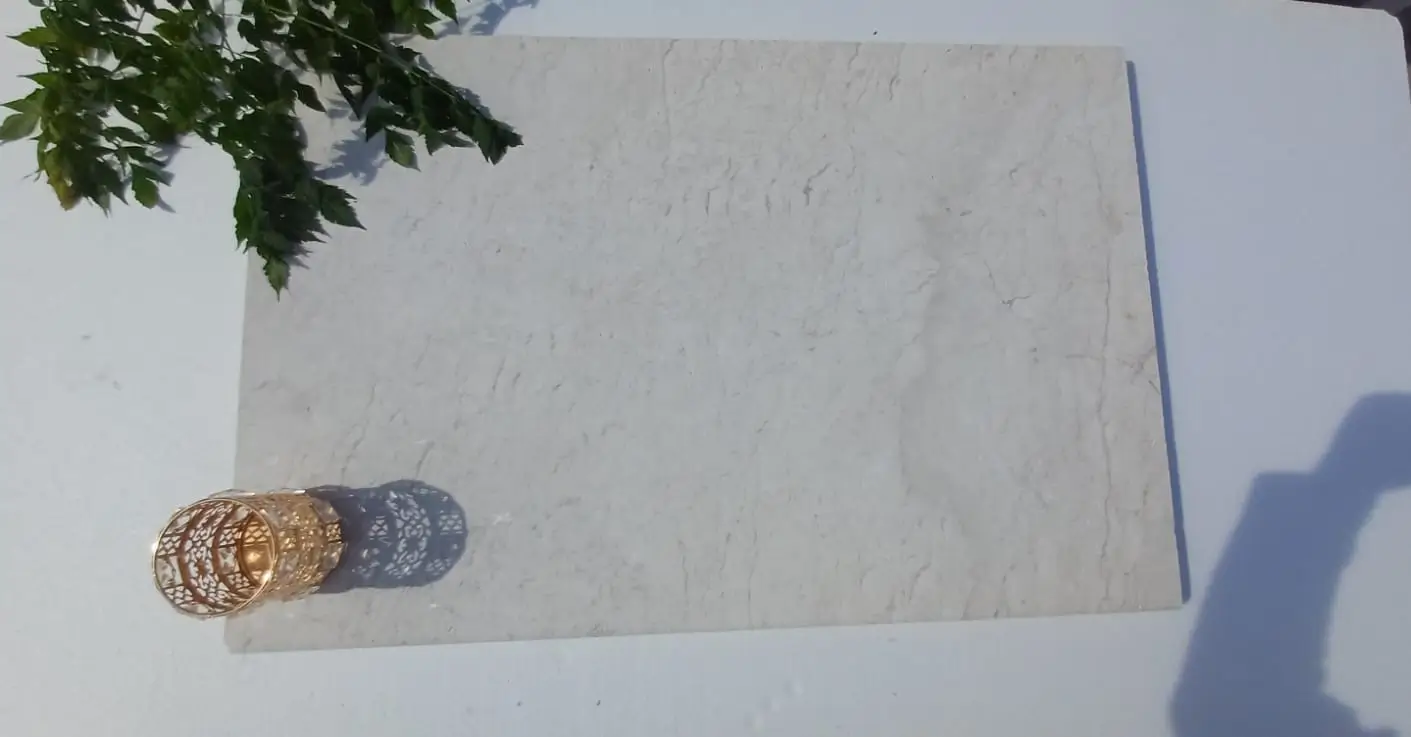
Project Planning, Lead Times, and Material Consistency
Polished white limestone pavers require tighter material management than most other stone finishes because the high-gloss surface amplifies every variation in tone, veining, and reflectivity. A batch mismatch that would be invisible in a tumbled finish reads clearly on a polished installation because the mirror-like surface makes color variation immediately obvious under light.
Your specification should lock in the quarry batch and slab selection before committing to project start dates. Polished limestone sourced from two different production runs — even from the same quarry — can show enough tonal variation to require replacement of the mismatched tiles at significant cost. Confirm warehouse availability for your full project quantity before setting the installation schedule, not partway through. Citadel Stone maintains warehouse inventory that covers most project scales without the 6–8 week import lead time you’d face with direct overseas sourcing, which gives you better schedule flexibility — but confirming stock against your quantity before groundbreaking is still the right practice.
Truck access and delivery sequencing also matter more for polished limestone than for rougher finishes. The polished surface is vulnerable to abrasion during handling, and pallets need to be stored under cover and kept dry before installation. If your site requires extended staging time between truck delivery and installation, you need protected storage — not covered with a tarp on exposed aggregate, but genuinely sheltered from moisture and debris that could scratch the surface before it’s set. High-gloss limestone finish performance begins at the handling stage, not just after installation, and the logistics plan needs to reflect that.
Getting Polished White Limestone Specifications Right
The specification decisions around polished white limestone uses and drawbacks ultimately come down to one test: does your application control the moisture and traffic conditions that this finish requires, or does it expose the finish to the conditions it can’t handle? In the right environment, you’re working with one of the most visually striking natural stone finishes available — a material that genuinely rewards careful application and diligent maintenance with a surface quality that holds up beautifully for 20 years or more. In the wrong environment, you’re creating a slip hazard, an accelerated maintenance burden, and a replacement timeline that no client budget accounts for at sign-off.
Your project likely involves multiple stone decisions beyond the finish question — thickness selection for the substrate and load conditions matters just as much as finish for long-term performance. The guidance on flagstone paver thickness basics covers how to approach that dimension of your natural stone specification in detail. Take the time to get both decisions right, and your white limestone installation will deliver on everything the material promises. Citadel Stone generally advises against polished limestone in wet outdoor zones, recommending honed or brushed finishes where slip resistance is the primary concern.
Related reading: white limestone paver installation steps · white stone pavers for pool decks · white limestone vs sandstone pavers.