

Base preparation accounts for roughly 80% of white limestone paver installation failures — and most of those failures trace back to decisions made before a single stone touches the ground. Getting your sub-base depth, compaction sequence, and bedding layer thickness right determines whether your white limestone paver installation holds for two decades or starts rocking within two seasons. This step-by-step guide walks you through every critical phase of white limestone paver installation, with the specific numbers and field-tested sequences that separate permanent results from expensive callbacks.
Understanding Your Site Conditions Before You Start
Your site assessment drives every subsequent decision in this installation. Soil bearing capacity, drainage patterns, and expected load type all feed into your base specification — skip this step and you’re guessing at thicknesses that should be calculated.
- Probe your native soil to 18 inches minimum — expansive clay soils require an additional 2–3 inches of compacted aggregate beyond standard residential specs
- Map your drainage flow lines before excavation — white limestone paver installations need a 1–2% cross-fall to prevent standing water and subsurface saturation
- Identify any underground utilities, tree root zones, or irrigation lines within the work area before breaking ground
- Assess vehicle load requirements — pedestrian-only areas can tolerate a 4-inch aggregate base, while occasional vehicle access demands 6–8 inches minimum
- Check for seasonal frost depth in your region — freeze-thaw regions require deeper aggregate bases to prevent heaving cycles from disrupting the finished surface
The detail that matters most at this stage is soil classification. Sandy loam soils compact reliably and drain well, but heavy clay soil requires geotextile fabric at the base of your excavation to prevent aggregate migration downward over time. Place the fabric before any aggregate goes in — not as an afterthought.
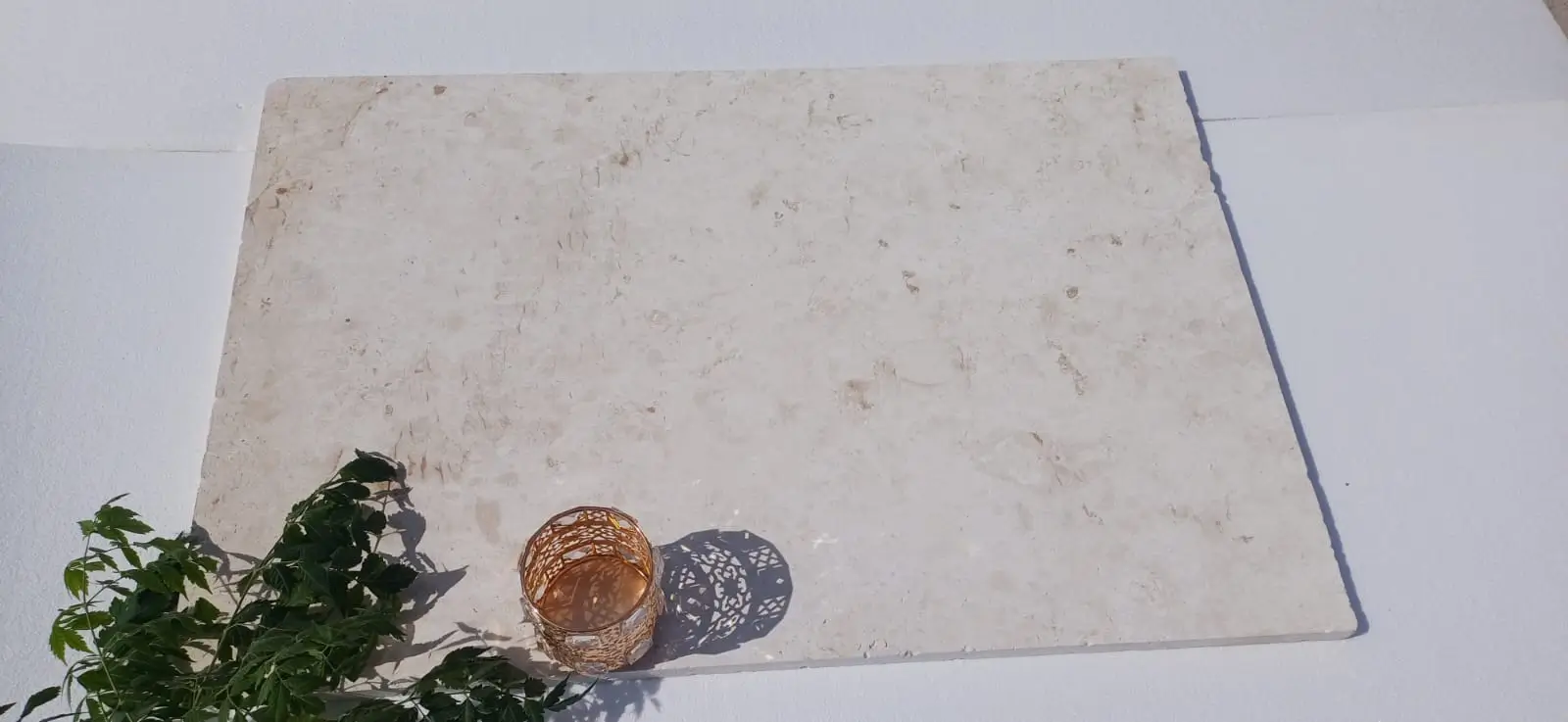
Building the Right Sub-Base and Bedding Layer
The limestone paver sub-base and bedding layer are two distinct structural components that most DIY guides incorrectly treat as one. Your sub-base is the compacted aggregate that distributes load to native soil. Your bedding layer is the screeded material on which the pavers actually sit. They serve different functions and require different materials.
For the sub-base, use 3/4-inch crushed aggregate (compactable road base or crusher run). Spread it in 3-inch lifts and compact each lift to 95% Proctor density using a plate compactor — never try to compact more than 3 inches at once or you’ll get density at the surface with loose material underneath. Field compaction testing with a nuclear densometer or sand cone test will confirm you’ve hit target density. According to NSI limestone installation standards, adequate sub-base compaction is the single most critical variable in natural stone paver performance longevity.
Your bedding layer sits directly beneath the pavers and should be 1 inch of coarse concrete sand (not mason sand, not stone dust). Coarse concrete sand — ASTM C33 gradation — won’t compact under the paver weight the way fine sand does, which means your pavers stay level. Screed it to a consistent 1-inch depth using temporary rails or pipes as guides, then don’t walk on it before laying stone. Getting the limestone paver sub-base and bedding layer sequence right at this stage is what separates installations that last from ones that require remedial work within a few seasons.
Setting Natural Stone Pavers on Sand: Technique Matters
Setting natural stone pavers on sand correctly requires a specific hand placement sequence that most installation guides gloss over. You don’t slide pavers into position — you lower them straight down onto the screeded sand bed, then tap them level with a rubber mallet. Sliding drags sand up along the paver edge and creates voids that cause rocking.
- Start from a fixed edge — a wall, a step, or a permanent border — and work outward so you’re never stepping on already-set pavers
- Maintain consistent joint spacing of 1/8 to 3/16 inch using plastic spacers — this spacing accommodates the minor dimensional variation in natural limestone without creating noticeably uneven gaps
- Check level every 4–5 pavers in both directions using a 4-foot straightedge — don’t wait until you’ve laid a full row to discover a low spot
- For white limestone paver installation specifically, handle each piece at the edges to avoid transferring oils from your hands onto the face — these oils can cause uneven sealer absorption later
- Keep a bucket of coarse sand nearby to add small amounts beneath low pavers rather than lifting and rescreeding large areas
The USGS limestone composition data confirms that limestone’s calcium carbonate matrix creates moderate water absorption rates — typically 3–7% by weight for dense varieties. This means your white limestone pavers will absorb moisture from the sand bed during installation, which is completely normal but explains why over-wetting the sand before setting natural stone pavers on sand causes surface efflorescence problems down the track.
Outdoor Stone Paver Leveling and Compaction After Laying
Outdoor stone paver leveling and compaction after the field is laid is the step that locks everything together — and it’s where the most damage gets done by rushing. You need to seat the pavers into the sand bed using a plate compactor fitted with a rubber pad or a protective sheet of 3/4-inch plywood. Running a bare steel compactor plate across white limestone will chip edges and scratch faces.
Make two compaction passes over the laid field — once immediately after laying, and a second pass after you’ve swept joint sand into the gaps. Your target is uniform seating depth with no rocking or hollow-sounding stones. Tap every paver with a rubber mallet after the final compaction pass — a hollow sound indicates a void in the sand bed that will cause cracking under foot traffic. Lift those pieces, add sand, re-screed, and relay them before you consider the job done. At Citadel Stone, we recommend confirming seating consistency across the full field before moving to jointing — it’s a 20-minute check that prevents costly stone replacements six months later.
Level tolerance for a finished white limestone paver installation should be ±1/8 inch over any 10-foot span. Tighter than that isn’t always achievable with natural stone due to thickness variation inherent in quarried material, but exceeding that tolerance creates trip hazards and drainage problems. Completing outdoor stone paver leveling and compaction methodically at this stage protects every hour of work you’ve invested in the layers below.
Cutting Limestone Pavers Without Cracking
Cutting limestone pavers without cracking comes down to blade selection, cutting speed, and water supply — get any one of these wrong and you’ll end up with fracture lines running through your field cuts. Use a continuous-rim diamond blade rated for natural stone, not a segmented blade designed for concrete. Segmented blades create micro-fractures in limestone’s crystalline structure that don’t show up immediately but become visible after the first wet season.
- Keep water flowing continuously across the cutting face — dry cutting generates heat that causes thermal shock cracking in calcium carbonate stone
- Score your cut line with a light first pass at 1/4-inch depth before committing to the full cut — this prevents chipping at the cut edge on the face side
- Support both sides of the cut with your workbench or a piece of scrap plywood — unsupported stone vibrates during cutting and fractures unpredictably
- Mark cut lines with a white china marker, not a pencil — pencil graphite can embed in the porous limestone surface and appear as a grey smear after sealing
- For cuts within 2 inches of a corner, clamp a sacrificial piece of limestone to the edge — this prevents corner breakout on your finish piece
Angle grinders with 4-inch diamond blades work well for curved cuts and notches around obstacles. Keep your RPM below 8,500 for limestone — higher speeds generate enough heat to discolor the white surface, leaving a yellowish burn line along the cut edge that doesn’t sand out easily. Cutting limestone pavers without cracking also means not rushing the pace of your passes; slow, steady feed pressure through the blade produces cleaner edges than forcing the cut.
Jointing and Sealing Your White Limestone Paver Installation
Your joint material choice affects both aesthetics and long-term performance. For white limestone paver installation, you have three practical options: kiln-dried jointing sand, polymeric sand, or a dry cement-sand mortar mix. Each suits different conditions.
Kiln-dried sand is the most forgiving for natural stone installations because it accommodates minor movement without transferring stress to the pavers. Polymeric sand locks firmly once activated with water — it resists ant activity and weed growth but can crack if your base allows any settlement. Dry mortar mix (4:1 sand to cement) creates a semi-rigid joint that works well in high-traffic areas but requires more precision to keep off the face of white limestone, as cement staining on light stone is difficult to remove once cured. Sweep your chosen jointing material across the surface in multiple passes, then use a leaf blower on low to remove excess from the faces before any moisture activates it.
Sealing white limestone pavers requires a penetrating impregnator sealer — not a topical coating. Topical sealers trap moisture beneath the surface and cause spalling in freeze-thaw regions. A quality lithium silicate or silane-siloxane impregnator penetrates 3–8mm into the stone matrix and bonds to the calcium carbonate without forming a surface film. Apply it in two thin coats 20–30 minutes apart, and wipe off any excess before it flashes — pooled sealer on white limestone leaves a glossy patch that stands out against the matte field. Review the limestone formation and characteristics data if you want to understand exactly why penetrating sealers outperform topical products for porous calcium carbonate stone — the interconnected pore network creates capillary pathways that topical films can’t reliably bridge.
Design Integration and Aesthetic Considerations
Your paver layout pattern dramatically affects both the visual scale of the space and the amount of cutting required at field edges. Running bond (brick pattern) creates a traditional, elongated feel that suits formal garden settings and colonial architectural styles. Stacked bond (grid pattern) reads as more contemporary and works well with modern minimalist landscaping where clean geometry drives the design. Herringbone delivers structural interlocking that resists lateral movement — it’s the pattern of choice for driveways and areas with vehicle access, not just for aesthetics but for engineering performance.
White limestone pairs exceptionally well with drought-adapted planting schemes and low-water landscape designs, where its high reflectivity creates visual contrast against silver-grey foliage and warm-toned mulch. In more lush garden settings, the pale stone reads as a neutral foil against deep greens and flowering borders. Border detailing also matters — a single course of tumbled limestone cobble at the perimeter gives the installation a finished, intentional edge that plain concrete edging can’t achieve. For detailed product selection guidance that matches your design direction, the Citadel Stone paver laying guidance covers pattern options and finish combinations worth considering before you finalize your specification.
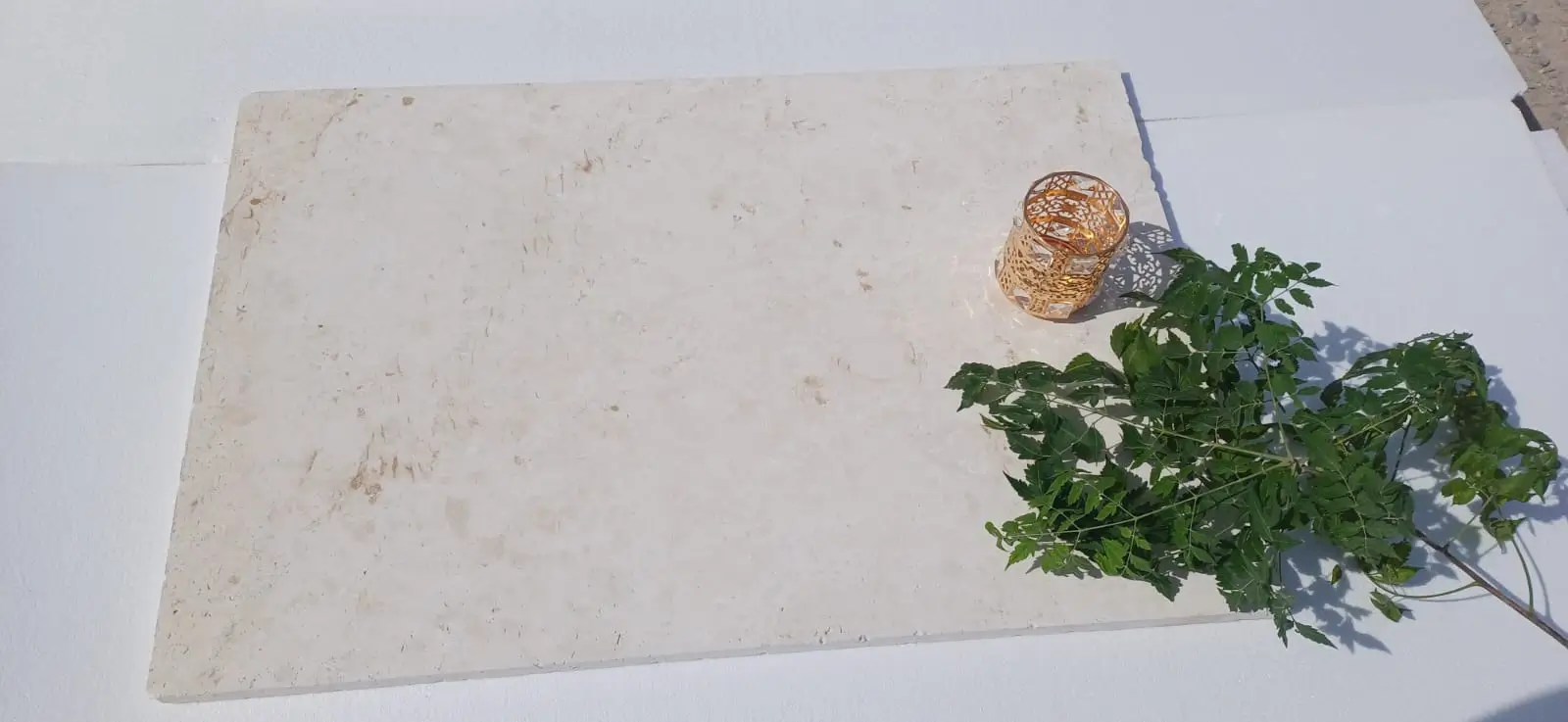
Ordering, Logistics, and Material Planning
Accurate material calculation prevents two of the most common project headaches: running short mid-installation (which causes shade variation between deliveries) and over-ordering material that sits in your truck bed until you find somewhere to offload it. Calculate your square footage, add 10% for cuts and breakage on standard rectangular fields, and add 15% if you’re running a diagonal or herringbone pattern — those angles generate significantly more offcut waste.
Because each order is cut to specification at our selected quarries, lead times are confirmed when the order is placed rather than estimated in advance. Confirm warehouse stock levels before finalizing your project timeline — white limestone in specific finishes (honed, brushed, tumbled) can have tighter inventory windows than standard sawn material. Your truck access and delivery method also affect timing: full pallet delivery on a flatbed requires a reasonably level access point and enough clearance for the driver to position the load near the work area, while crane-offload or boom delivery adds cost but gives you placement flexibility on restricted sites.
- Order all pavers for your project from a single production batch where possible — shade variation between batches in white limestone can be noticeable in side-by-side installation
- Inspect each pallet on delivery before the truck leaves — damaged stone during transit is a supplier responsibility, but only if documented at time of delivery
- Store pavers flat on a solid surface and cover them if rain is expected — extended moisture exposure before installation can cause temporary darkening that clears during drying
- Check paver thickness consistency across the delivery — natural stone carries +/- 1/8-inch tolerance and consistent thickness makes screeding and leveling significantly easier
Final Recommendations for a Lasting White Limestone Paver Installation
A successful white limestone paver installation comes down to precision at every layer — from compacted sub-base depth through to sealer selection. You can’t compensate for a poorly prepared base with technique at the laying stage, and you can’t rescue a carelessly jointed field with a premium sealer. The sequence matters as much as the individual steps. Work through each phase methodically, verify compaction before adding layers, and don’t rush the curing window after sealing. As you plan your broader hardscape project, exploring complementary natural stone applications can round out your design — flagstone paver options and characteristics offers a useful reference for adjacent areas where irregular formats might complement your limestone field.
Your installation will reward careful prep with a surface that holds its appearance and structural integrity for 20 years or more, provided joint sand is maintained at adequate depth and the sealer is refreshed on a 3–5 year cycle. Citadel Stone recommends allowing freshly laid white limestone to cure for at least 48 hours before foot traffic, particularly in warm and dry climate conditions.