

This comprehensive analysis examines why honed basalt represents one of the most intelligent material investments for luxury residential projects. From design versatility and performance data to realistic maintenance expectations and ROI calculations, you’ll discover concrete evidence for making this premium choice with confidence.
Unless cited to our S.N.S laboratory certificates, figures in this guide are indicative planning values — confirm project-specific numbers with your quote.
Design & Aesthetic Advantages of Honed Basalt
Visual Character — Color Depth, Subtle Sheen, Architecture Enhancement
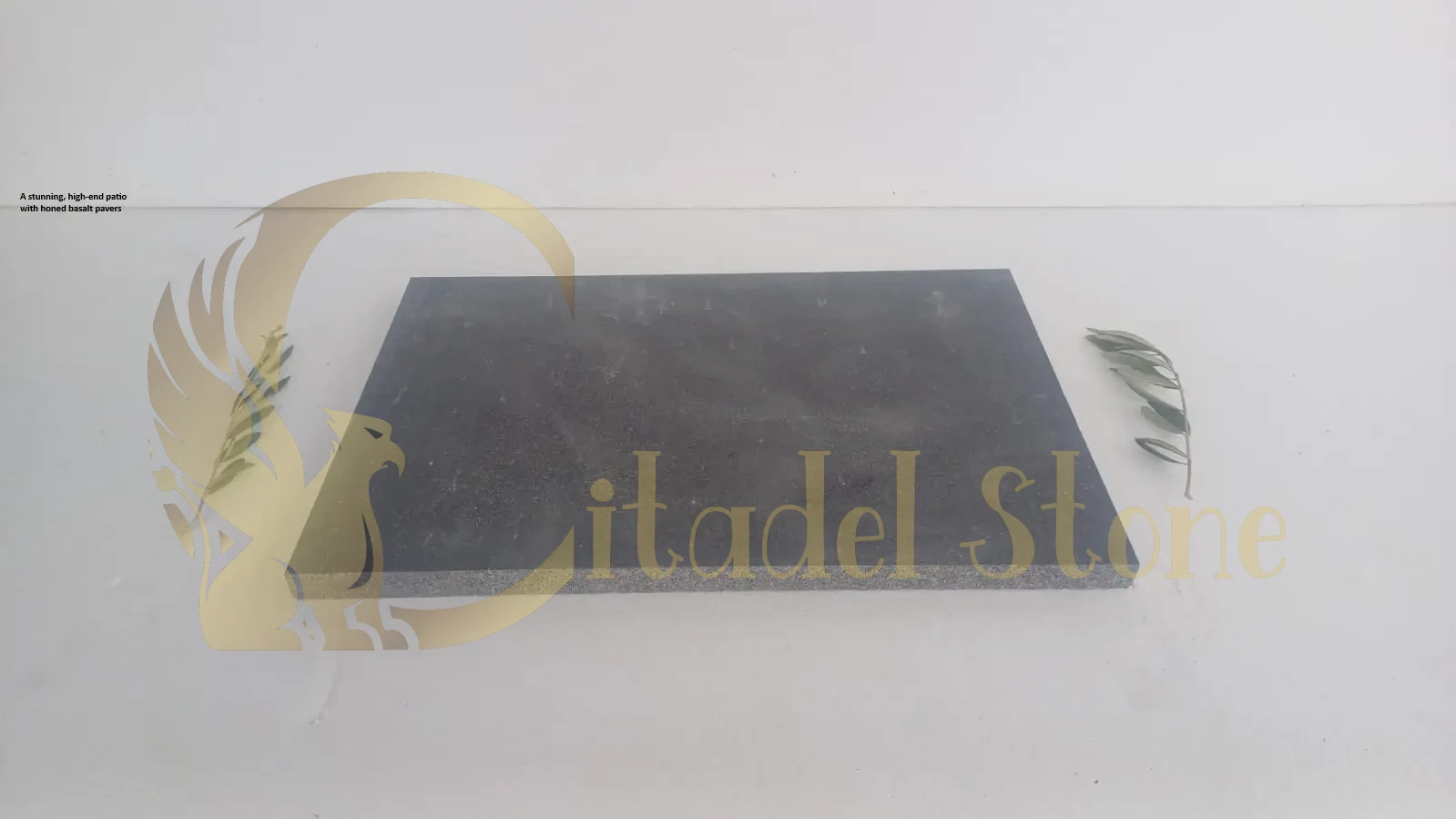
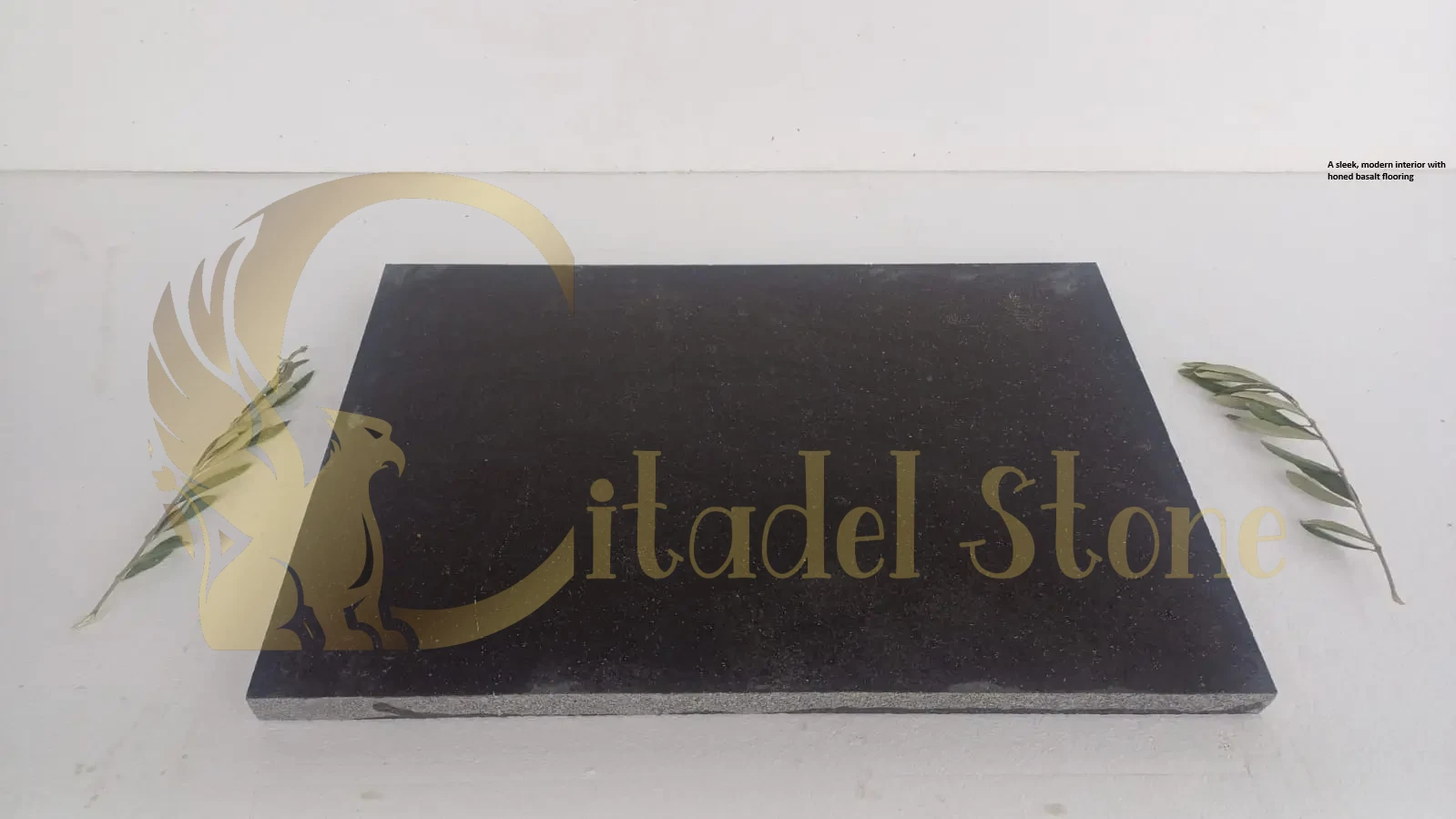
Honed basalt delivers a sophisticated visual presence that distinguishes luxury homes from merely expensive ones. The honing process creates a smooth, matte finish that reveals the stone’s inherent depth without the high-gloss reflection of polished surfaces. This luxury basalt finish exhibits rich charcoal to deep gray tones with subtle mineral variations that add organic complexity to any space.
The refined surface catches and diffuses light beautifully, creating visual interest without overwhelming architectural details or competing with carefully curated furnishings. Unlike manufactured materials that can appear flat or artificial under different lighting conditions, basalt honed‘s natural depth ensures it looks equally stunning under morning sunlight, evening ambient lighting, or dramatic architectural illumination.
Versatility — Seamless Indoor/Outdoor Integration and Design Flexibility
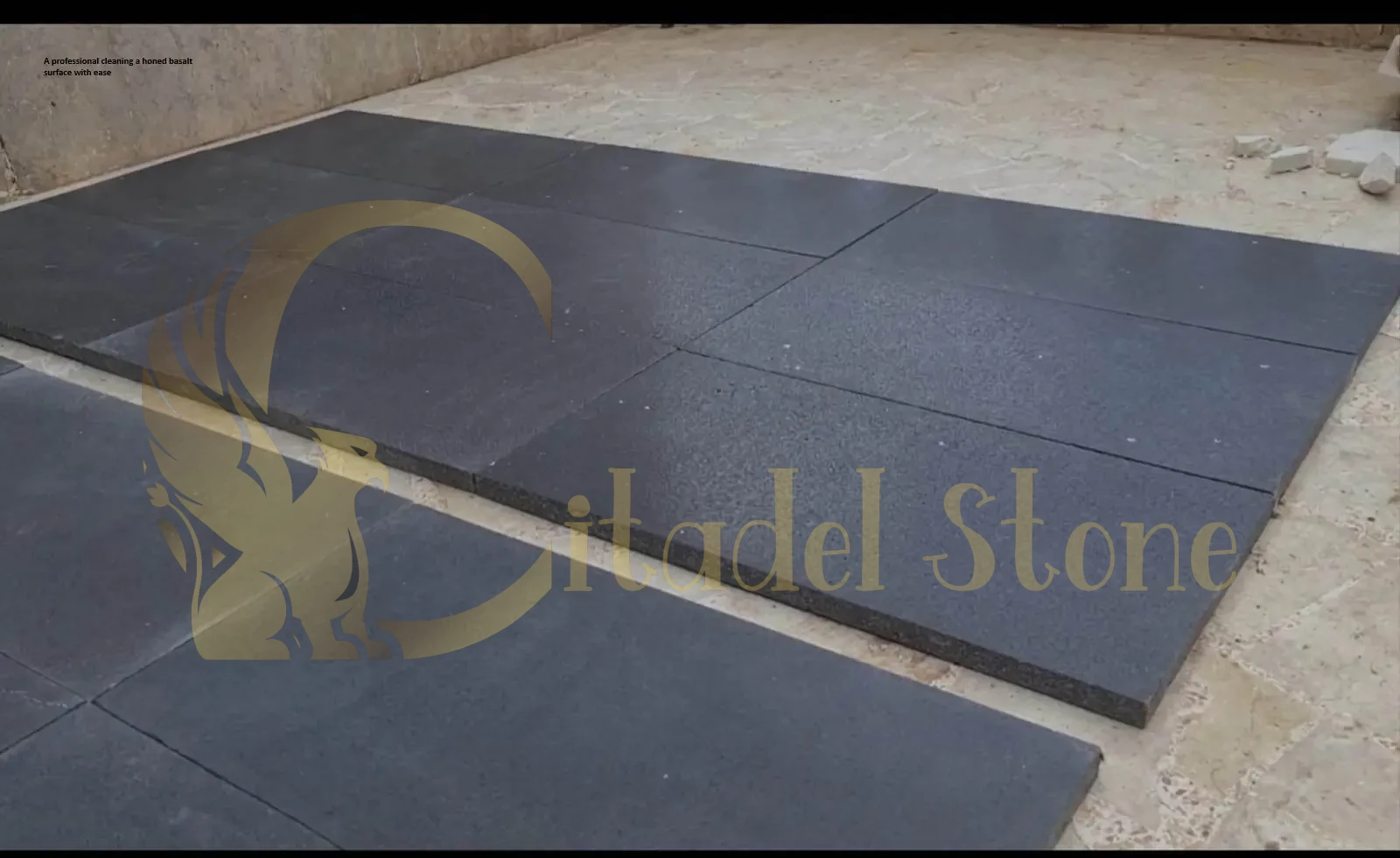
One of honed basalt’s greatest strengths lies in its seamless integration capabilities. Honed basalt flooring creates continuous visual flow from interior spaces to covered terraces, poolside areas, and formal gardens. This continuity is particularly valuable in luxury homes where indoor-outdoor living represents a significant lifestyle and resale advantage.
The material’s neutral palette serves as an elegant foundation for diverse design schemes. Whether paired with warm wood tones in contemporary settings, contrasted against white Carrara marble in transitional spaces, or complemented by blackened steel in modern architectural contexts, honed basalt provides sophisticated grounding without limiting future design evolution.
Large-format honed basalt pavers can create striking geometric patterns, while smaller modules allow for intricate inlay work with contrasting materials. This flexibility enables designers to create signature looks that enhance the home’s unique character while maintaining broad market appeal.
Designer Examples & Use-Cases
Premium residential applications showcase honed basalt’s versatility across multiple zones. Grand entry halls benefit from the material’s ability to handle high foot traffic while making an immediate impression of quality and permanence. The stone’s slip-resistant properties when properly finished make it ideal for formal dining areas where spills are inevitable but safety cannot be compromised.
Master suite applications demonstrate honed basalt’s luxury credentials, particularly in spa-like bathroom environments where the material’s water resistance and easy maintenance align with daily use demands. Covered terraces and loggia spaces showcase the stone’s weather resistance while maintaining visual continuity with interior spaces.
Kitchen applications, particularly in butler’s pantries and formal entertaining areas, highlight the material’s stain resistance and easy cleaning properties. Fireplace surrounds and hearth areas benefit from basalt’s heat resistance and dramatic visual presence, creating focal points that anchor living spaces without overwhelming them.
Performance & Durability — Why Honed Basalt Lasts
Physical Properties Relevant to Homeowners
Honed basalt’s exceptional performance stems from its volcanic origin and dense crystalline structure. With a compressive strength of approximately 35,000-50,000 PSI, the material significantly outperforms most natural stones commonly used in luxury residential applications. This density translates to superior resistance against everyday wear patterns that gradually degrade lesser materials.
Water absorption rates typically measure less than 0.5%, making properly sealed honed basalt highly resistant to staining, freeze-thaw damage, and moisture-related deterioration. The material’s Mohs hardness rating of approximately 6-7 provides excellent scratch resistance against normal household activities while remaining workable for professional repairs when needed.
These technical specifications translate to real-world durability that luxury homeowners can rely upon. Unlike softer stones that show wear patterns within the first few years, properly specified honed basalt maintains its appearance and structural integrity for decades of normal residential use.
Resistance to Everyday Wear and Environmental Stressors
Daily household activities that gradually compromise lesser materials have minimal impact on properly maintained honed basalt. Pet claws, dropped objects, furniture movement, and high-heel traffic create surface scratches on many luxury flooring options, but basalt’s hardness provides superior resistance to these common issues.
Environmental stressors present additional challenges for natural stone installations. UV exposure gradually fades many materials, but basalt’s mineral composition provides excellent color stability over time. For coastal properties, salt air exposure can accelerate deterioration in many stone types, but basalt’s low porosity and chemical stability offer superior resistance to these harsh conditions.
Temperature fluctuations, particularly important for outdoor applications and homes with large glass exposures, demonstrate basalt’s exceptional thermal stability. The material’s volcanic origin means it can handle significant temperature swings without the expansion-contraction stresses that cause cracking in other natural stones.
How Finish Choice Affects Stain Behavior and Repairability
The honed finish provides an optimal balance between performance and repairability that luxury homeowners should understand. While polished surfaces may show scratches more readily, honed finishes can disguise minor surface damage while maintaining their sophisticated appearance. Stains that penetrate the surface can often be addressed through professional spot-honing techniques that restore the original finish without requiring wholesale replacement.
This repairability factor significantly impacts long-term cost of ownership. Rather than living with permanent staining or replacing entire sections, honed stone for homes can often be restored to original condition through targeted professional intervention. This capability becomes particularly valuable in high-use areas where occasional deep staining is inevitable despite proper maintenance.
Order basalt honed tiles now for a modern, robust upgrade that combines natural elegance with engineered resilience—available nationwide.
Maintenance & Long-Term Costs — Real Expectations
Typical Maintenance Tasks and Practical Scheduling
Understanding realistic maintenance requirements enables informed decision-making about long-term ownership costs. Honed basalt maintenance luxury applications require consistent but manageable care routines that preserve both appearance and protective treatments.
Daily maintenance involves simple dust mopping or vacuuming to remove abrasive particles that can gradually dull the surface. Weekly care includes damp mopping with pH-neutral cleaners specifically formulated for natural stone. These routine tasks require no special skills or equipment beyond what luxury homeowners typically maintain for other premium surfaces.
Monthly maintenance should include inspection for potential staining, particularly in high-use areas like kitchen work zones or entryway transitions. Quarterly deep cleaning with professional-grade stone cleaners helps maintain the honed finish’s subtle sheen while removing accumulated residues that regular mopping cannot address.
Annual professional evaluation and resealing ensures continued stain resistance and optimal performance. This professional service typically costs $3-8 per square foot depending on access complexity and total square footage, representing a modest investment in preserving a premium material installation.
Common Repair Scenarios and Restoration Options
Even premium materials occasionally require professional attention, and understanding typical repair scenarios helps budget for long-term ownership. Surface etching from acidic spills (wine, citrus, cleaning products) represents the most common issue requiring professional intervention. Spot-honing techniques can typically address these problems within 2-4 hours per incident with costs ranging $200-600 per repair area.
Deep scratches from furniture movement or dropped objects may require more extensive restoration involving re-honing and re-sealing of affected areas. These repairs typically require 1-2 days for proper completion, including cure time for sealers, with costs ranging $500-1,500 per repair area depending on size and access complexity.
Chip repairs, while less common due to basalt’s toughness, can often be addressed through professional stone repair compounds and spot-finishing techniques. These specialized repairs maintain visual continuity while avoiding the expense and disruption of replacing entire pieces.
Comparative Maintenance Cost Analysis
Understanding long-term maintenance costs relative to alternative luxury materials provides crucial context for initial investment decisions. The following illustrative comparison examines 15-year maintenance costs for a 2,000 square foot luxury installation:
| Material Type | Initial Premium | Annual Maintenance | 15-Year Total |
|---|---|---|---|
| Honed Basalt | $15,000 | $800 | $27,000 |
| Honed Limestone | $10,000 | $1,200 | $28,000 |
| Premium Porcelain | $8,000 | $400 | $14,000 |
These illustrative figures demonstrate that while honed basalt commands an initial premium, its maintenance requirements fall between ultra-premium natural stones and high-end manufactured alternatives, providing excellent value for discerning homeowners seeking natural material authenticity.
Purchase black basalt honed flooring now for a design solution that merges contemporary aesthetics with natural durability—shipped U.S.-wide.
Lifespan, Resale & ROI Arguments
Resale Value Enhancement and Market Perception
Basalt ROI considerations extend beyond maintenance savings to encompass measurable resale value enhancement. Luxury home appraisers and real estate professionals recognize premium natural stone installations as significant value drivers, particularly when materials demonstrate both aesthetic appeal and proven durability.
Market research suggests that high-quality natural stone flooring can contribute 10-15% to overall property valuation in luxury home segments, with honed basalt installations often exceeding these benchmarks due to their rarity and perceived permanence. Buyers in luxury markets frequently prioritize homes with premium materials that won’t require immediate replacement or upgrading.
The material’s timeless aesthetic appeal provides additional resale protection against changing design trends. While specific color palettes or decorative patterns may fall out of favor, honed basalt’s neutral sophistication transcends temporary style shifts, ensuring continued market appeal throughout ownership cycles.
Illustrative Lifecycle Cost Analysis
A comprehensive lifecycle model demonstrates honed basalt’s financial advantages over extended ownership periods. Consider a 3,000 square foot installation with the following assumptions:
Initial Investment: Honed basalt premium over standard luxury alternatives: $20,000 Annual Maintenance: Professional cleaning and sealing: $1,200 Major Refinishing: Every 10 years: $8,000 Replacement Avoidance: 20-year lifecycle vs. 10-year alternatives: $35,000 savings Resale Premium: Enhanced property value: $25,000
Using a 6% discount rate, the net present value calculation shows positive returns within 8-12 years for most luxury residential applications, with substantial additional value creation through enhanced resale potential.
Homeowner Archetypes Who Benefit Most
Three distinct homeowner profiles realize maximum value from honed basalt investments. Lifelong luxury homeowners who plan 15+ year residence periods benefit most significantly from the material’s durability and low lifecycle costs. These homeowners can amortize initial premiums over extended periods while enjoying superior daily performance.
Premium rental operators managing high-end short-term or corporate rental properties find honed basalt’s durability and easy maintenance particularly valuable. The material’s ability to maintain luxury appearance despite heavy guest turnover provides competitive advantages while minimizing replacement costs that erode rental income.
Luxury home developers and flippers working in premium market segments use honed basalt to differentiate properties and command higher sale prices. The material’s immediate visual impact and perceived permanence appeal to affluent buyers seeking move-in ready properties with premium finishes.
Where Honed Basalt Excels — Best Applications in Luxury Homes
Strategic placement maximizes honed basalt’s performance advantages while optimizing budget allocation:
- Grand entry halls and foyers – High-impact first impressions with superior durability for heavy foot traffic
- Formal dining areas – Elegant appearance with practical stain resistance for entertaining
- Master suite bathrooms – Spa-like luxury with excellent water resistance and easy maintenance
- Covered outdoor terraces – Seamless indoor-outdoor flow with weather resistance
- Indoor pool enclosures – Slip-resistant properties with humidity and chemical resistance
- Kitchen butler’s pantries – Professional appearance with commercial-grade durability
- Fireplace surrounds and hearths – Heat resistance with dramatic visual presence
- Wine cellar floors – Climate stability with luxury aesthetics for storage areas
Areas requiring special consideration or alternative materials:
- Uncovered pool perimeters without proper sealing and drainage
- Industrial-style kitchens without adequate protection from commercial equipment
- High-sun exposure areas without UV-stable sealing systems
- Outdoor steps in freeze-thaw climates without proper installation techniques.
Specification & Buying Guidance — How to Get It Right
Essential Basalt Tiles Supplier Requirements and Documentation
Professional specification requires detailed documentation to ensure successful installations. Request comprehensive finish descriptions including surface texture measurements, gloss level specifications, and color variation parameters. Demand physical mockup panels showing actual material appearance under various lighting conditions rather than relying on small samples or photographs.
Certificate of Origin and lot traceability documentation ensures material consistency across delivery schedules while providing recourse for quality issues. Laboratory testing documentation should include water absorption rates, abrasion resistance (ASTM C241), and wet dynamic coefficient of friction (ANSI A326.3) – verify specific test methods and acceptance criteria with your design professional.
Quarry certifications for dimensional stability, freeze-thaw resistance, and chemical compatibility with proposed sealing systems provide additional quality assurance for exterior applications or demanding interior environments.
Recommended Acceptance and Quality Control Steps
Successful installations require systematic quality control beginning with mockup panel approval. Install and evaluate a minimum 4×4 foot mockup panel in actual lighting conditions, allowing 48-72 hours for proper assessment under different natural and artificial lighting scenarios.
In-situ sampling involves installing several pieces in their final locations before proceeding with full installation. This step reveals any unforeseen compatibility issues with existing materials, mechanical systems, or environmental conditions that could affect long-term performance.
Sealing and test patch procedures validate proposed protective treatments before full application. Test patches should include stain resistance evaluation using common household substances (red wine, coffee, cooking oils) to confirm adequate protection levels.
Installer certification ensures proper installation techniques that maximize material performance and longevity. Verify installer experience with similar projects and request references from recent luxury residential installations.
Cost Drivers & Budget Planning — What Raises or Lowers Price
Primary Cost Factors and Their Impact
Understanding cost drivers enables strategic budget optimization without compromising long-term value. Quarry origin and transportation significantly impact delivered costs, with domestic sources typically 20-40% less expensive than imported alternatives, though exotic origins may provide unique aesthetic advantages worth the premium.
Finish labor intensity directly affects pricing, with honing requiring 15-25% more processing time than standard surface preparations. However, this investment in surface preparation delivers the sophisticated appearance that justifies the overall material selection.
Slab yield and waste factors impact project costs significantly, particularly for large installations requiring specific piece sizes. Standard sizes and layouts can achieve 85-90% yield rates, while custom cuts and complex patterns may reduce yields to 70-75%, requiring additional material orders.
Custom fabrication requirements including CNC cutting, edge profiling, and specialized drainage features can increase costs 50-100% over standard installations. However, these custom elements often provide the signature details that distinguish luxury projects.
Strategic Budget Optimization Techniques
Smart dimensional planning can significantly reduce costs without sacrificing quality. Standardizing on quarry-standard sizes minimizes custom cutting while optimizing material yield. Planning layouts to minimize waste during installation reduces both material and labor costs.
Pre-planning mockup requirements and approval processes prevents costly changes during installation. Establishing clear acceptance criteria and approval procedures before material ordering avoids disputes and delays that increase project costs.
Scheduling installations during optimal weather conditions for exterior work prevents weather-related delays and potential damage to materials during installation. Coordinating with other trades to minimize staging and protection requirements reduces overall project costs.
Invest in basalt DoFinish pavers today and enjoy a product that provides a sleek, modern finish while withstanding the rigors of outdoor use—available nationwide.
FAQs — Concise Answers
Q: Will honed basalt scratch from normal household use? A: Honed basalt’s hardness rating of 6-7 provides excellent scratch resistance against normal household activities. While extreme abuse can cause surface damage, typical pet claws, furniture movement, and dropped objects rarely cause visible scratching with proper maintenance.
Q: How often should I re-seal honed basalt floors? A: Professional resealing every 12-18 months maintains optimal stain resistance, though actual frequency depends on use intensity and sealer quality. High-traffic areas may require more frequent attention, while formal spaces often extend longer between treatments.
Q: Is honed basalt suitable for underfloor heating systems? A: Yes, basalt’s thermal stability makes it excellent for radiant heating applications. The material’s density provides efficient heat transfer while its dimensional stability prevents thermal expansion issues common with other natural stones.
Q: How can I prevent etching from acidic spills? A: Immediate cleanup of acidic substances (wine, citrus, vinegar) prevents most etching issues. Quality sealing provides additional protection, but prompt attention to spills remains the best prevention. Professional spot-honing can restore etched areas when needed.
Q: Will honed basalt become uncomfortably hot in outdoor applications? A: Honed basalt absorbs and retains heat like most dark stones, potentially becoming hot in direct sunlight. Consider lighter color variations for high-sun exposures, or plan shade structures for comfort in outdoor entertaining areas.
Q: How much extra material should I order for future repairs? A: Order 10-15% extra material beyond installation requirements and store it properly for future repairs. This ensures color and finish matching while avoiding the expense and uncertainty of sourcing matching material years later.
Maintenance Schedule Table
| Frequency | Task | Time Required | Notes |
|---|---|---|---|
| Daily | Dust mop/vacuum | 5-10 minutes | Remove abrasive particles |
| Weekly | Damp mop with pH-neutral cleaner | 15-20 minutes | Use stone-specific products only |
| Monthly | Deep inspection for stains/damage | 10-15 minutes | Early detection prevents major issues |
| Quarterly | Professional-grade deep cleaning | 30-45 minutes | Maintains surface appearance |
| Annually | Professional evaluation and resealing | 4-6 hours | Preserves stain resistance |
All time estimates are illustrative and may vary based on installation size and complexity.
15-Year Cost Comparison Table
| Material | Initial Cost | Annual Maintenance | Major Refinishing | 15-Year Total |
|---|---|---|---|---|
| Honed Basalt | $45/sq ft | $0.40/sq ft | $8/sq ft @ year 10 | $59/sq ft |
| Honed Limestone | $35/sq ft | $0.60/sq ft | $12/sq ft @ year 8 | $56/sq ft |
| Premium Porcelain | $25/sq ft | $0.20/sq ft | $25/sq ft @ year 12 | $53/sq ft |
All figures are illustrative estimates for a 2,000 square foot installation and should be verified with local suppliers and service providers.
Real Orders, Real Deliveries
We only publish projects we have actually supplied. See our Las Vegas white limestone delivery — two containers, 6,884 sq ft, 32 crates, shipped door to door — and how we supplied Creative Environments in Arizona with 21 containers across a 70,000+ sq ft installation: white limestone pavers and tiles, shellstone and Ocean Reef pavers.
Had Citadel Stone material installed on your project? Send us your photos and we will feature the work here, with your permission.
Conclusion & Next Steps — How to Move Forward Confidently
Making the investment in honed basalt luxury homes requires confidence in both material selection and implementation strategy. The evidence presented demonstrates that while honed basalt commands an initial premium, its combination of timeless aesthetics, superior durability, and manageable maintenance requirements delivers exceptional long-term value for luxury residential applications.
Immediate action steps for moving forward:
- Request physical mockup panels from qualified suppliers showing actual finish quality and color variation under your specific lighting conditions
- Schedule test patch installations in planned locations to verify compatibility with existing materials and environmental conditions
- Develop comprehensive maintenance plans with qualified stone care professionals before installation begins
- Compare detailed lifecycle cost analyses using your specific project parameters and local service costs
- Verify installer qualifications through recent luxury residential project references and industry certifications
- Establish clear specification criteria including acceptance standards and quality control procedures
Ready to explore how honed basalt can transform your luxury home project? Start with professional consultation and material samples to experience the quality difference firsthand. Request Samples & Consultation to begin your journey toward a premium stone investment that delivers lasting value and sophisticated beauty.
For comprehensive product information and technical specifications, visit our complete Basalt Pavers Product Page to explore the full range of possibilities for your luxury residential project.