

The result demonstrates why honed basalt countertops and flooring represent such compelling choices for homeowners seeking luxury materials that perform as beautifully as they look.
Unless marked as a certified mill test of our stone, figures in this guide are indicative planning values — confirm project-specific numbers with your quote.
Design Brief & Inspiration
The homeowners approached this renovation with clear priorities: create a kitchen that could handle serious cooking while maintaining the clean, minimalist aesthetic that defined their home’s overall design language. They frequently entertained large groups and needed surfaces that could withstand heavy use without showing wear or requiring constant maintenance.
Seamless interior-exterior basalt connectivity emerged as a key design driver. The kitchen opens directly onto a covered terrace through expansive sliding glass doors, and the design team wanted to blur the boundary between inside and outside living spaces. Traditional materials like granite or quartz would have created visual interruption at this crucial threshold.
The moodboard emphasized tactile luxury over flashy finishes. Natural materials with subtle variations, matte surfaces that invite touch, and monochromatic palettes that let architectural details shine. Honed basalt checked every box while offering practical advantages that aligned perfectly with the family’s lifestyle demands.
Why Honed Basalt for Counters AND Floors — Technical Rationale
Visual & Tactile Consistency
Honed stone kitchen applications excel when material consistency creates visual calm across large surfaces. Using the same basalt for both horizontal planes eliminated the typical visual competition between counter and floor materials that can make kitchens feel busy or disjointed.
The honed finish provides subtle texture variation that adds visual interest without creating busy patterns that compete with cabinet details or architectural elements. Under both natural and artificial lighting, the matte surface maintains consistent appearance, avoiding the hot spots and glare issues common with polished stone surfaces.
Color depth remains remarkably consistent across the stone’s natural variation range. Even with eight linear feet of countertop and 450 square feet of flooring, the material maintained harmonious appearance while showcasing natural character through subtle mineral variations.
Performance Reasons
Basalt kitchen renovation projects benefit from the material’s exceptional technical properties. With compressive strength in the 100–300 N/mm² range published for basalt as a rock type and water absorption of 0.59–0.69% (certified mill test, two production batches), honed basalt delivers commercial-grade durability in residential applications.
Heat resistance proved crucial for this cooking-focused household. The homeowners regularly use high-output gas burners and frequently place hot cookware directly on surfaces. Basalt’s thermal stability up to 1,800°F provides peace of mind that occasional direct heat contact won’t cause damage or discoloration.
Böhme abrasion loss of 0.87–0.91 mm (DIN 52108; certified mill test, two production batches) is the thickness worn away in the abrasion test. Lower is better.
Practical Benefits
Seam minimization became possible through careful slab selection and layout planning. 12-foot slabs allowed the island countertop to install as a single piece, while perimeter counters required only two strategically placed seams in less visible locations.
Basalt countertop care benefits from the material’s repairability. Unlike engineered surfaces that require professional replacement when damaged, basalt flooring tiles with honed finish can be spot-honed and re-sealed to restore original appearance. This capability provides long-term value protection that justified the material investment.
Long-term appearance retention sets basalt apart from materials that show wear patterns or develop patina that changes their character. Properly maintained honed basalt looks virtually identical after years of use, protecting the kitchen’s design investment.
Material Selection & Fabrication Decisions
Quarry and Origin Considerations
Material sourcing focused on domestic quarries to minimize transportation carbon footprint while ensuring reliable supply chain access for future repairs or additions. Lot matching protocols guaranteed color consistency across all pieces, with 15% additional material reserved from the same production run.
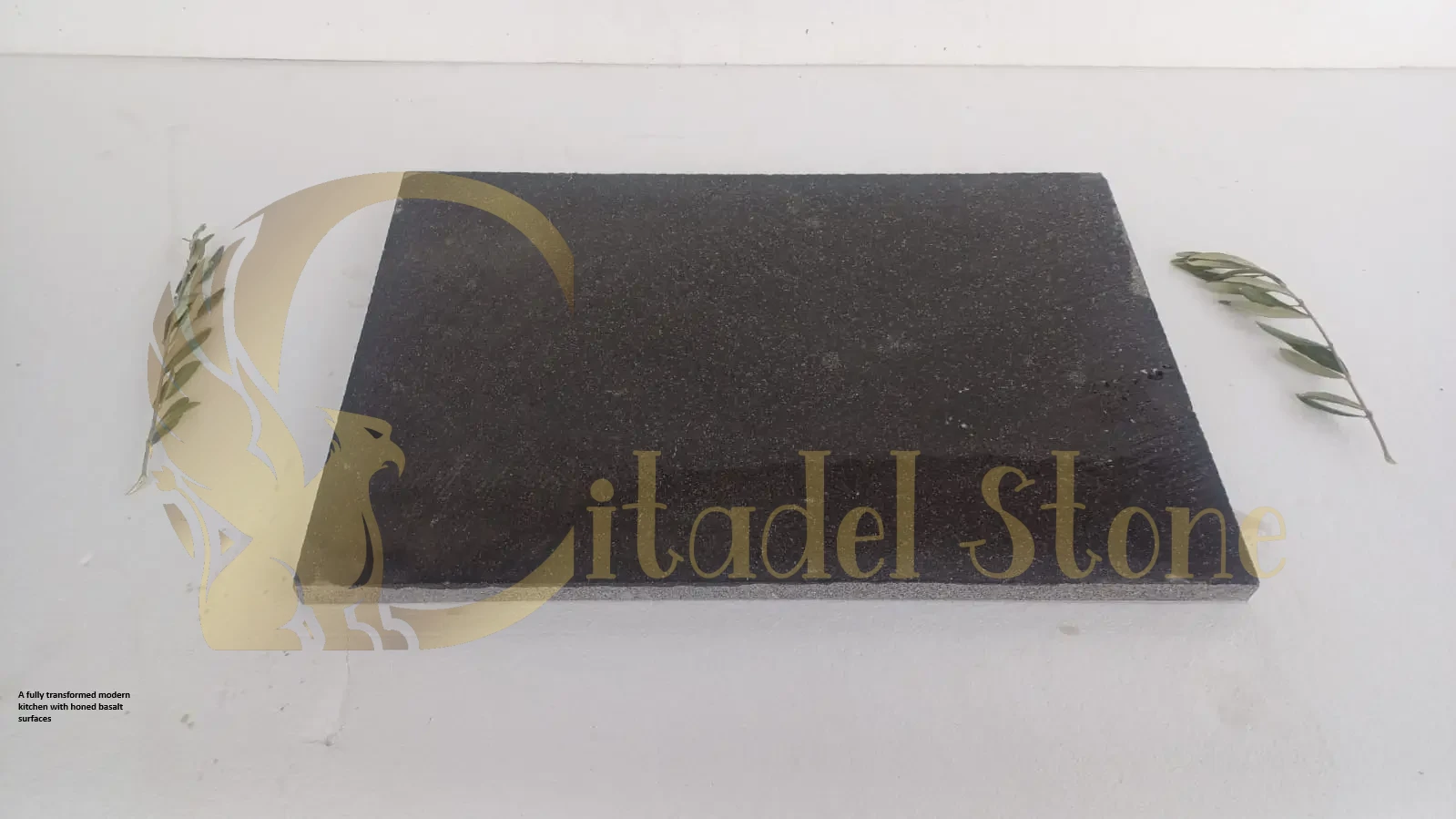
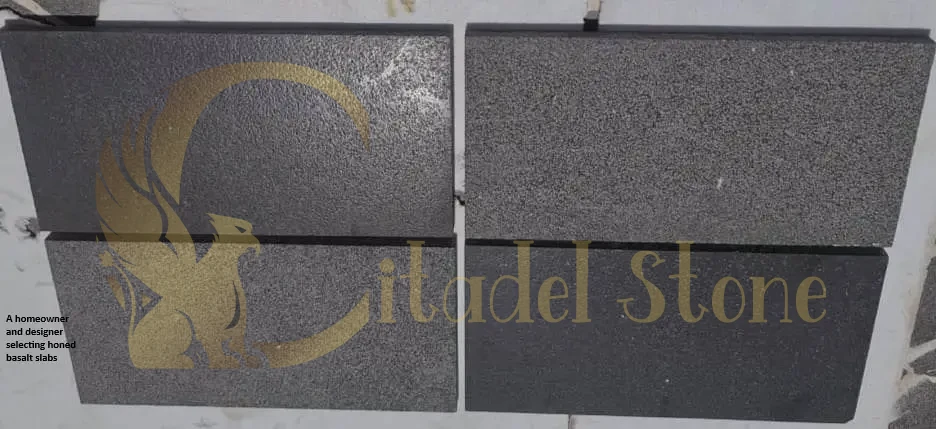
Slab selection emphasized consistent mineral distribution and minimal vein variation to maintain the monochromatic aesthetic. Each slab underwent digital photography documentation before fabrication to ensure optimal piece placement and grain matching across seams.
Countertop Fabrication Details
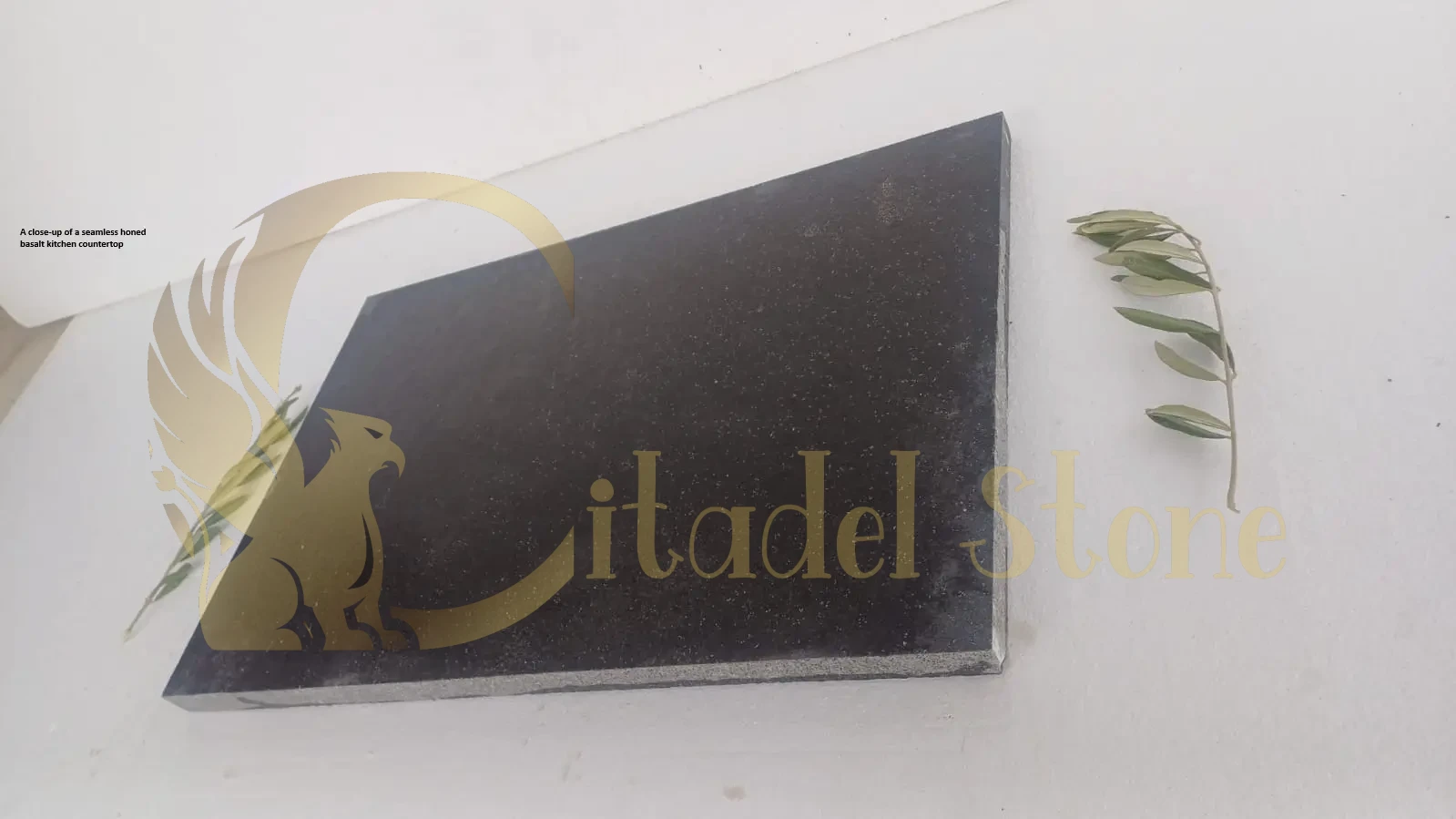
30mm slab thickness provided substantial appearance while supporting undermount sink installation without additional reinforcement. The eased edge profile offered comfortable tactile experience while minimizing chip potential compared to sharper edge treatments.
Undermount sink integration required precise fabrication to ensure perfect fit with the selected stainless steel model. Cooktop clearances of 6 inches exceeded manufacturer requirements while providing practical workspace around high-heat appliances.
Breathable penetrating sealer selection prioritized stain protection while allowing moisture vapor transmission to prevent substrate issues. This approach avoided the plastic appearance of topical sealers while providing excellent protection against kitchen spills and staining.
Flooring Installation Specifications
24×12 inch pavers created substantial scale appropriate for the kitchen’s generous dimensions while minimizing grout lines that could collect debris. 2mm joint width provided installation tolerance while maintaining nearly seamless appearance.
Uncoupling membrane substrate preparation prevented crack transmission from the concrete slab while providing waterproofing protection. Modified thinset adhesive ensured secure bonding while accommodating potential substrate movement.
Matching grout color made joints virtually disappear, enhancing the monolithic appearance that reinforced the design’s minimalist intentions.
The inherent properties of basalt DuoFinish Pavers that these pavers offer superior resistance to wear, making them a lasting investment for American homes.
Mockups, QA & On-Site Trials
The approval process began with two separate mockup panels: a countertop sample showing edge detail and sealer application, and a flooring section demonstrating joint width and grout color matching. Both panels remained on-site throughout the project as quality standards for contractor reference.
Acceptance criteria included color variation within acceptable ranges, consistent honed finish appearance, and grout color match within one shade of approved samples. Natural lighting evaluation occurred at different times of day to ensure appearance consistency under varying conditions.
Installation QA checklist included surface flatness within 3mm over 2 meters, seam alignment within 1mm, and joint width consistency within 0.5mm. These standards ensured professional appearance while accommodating practical installation tolerances.
Installation Highlights & Challenges
Slab protection protocols required padded supports and edge guards throughout the installation process. Sequence coordination ensured countertop installation occurred after flooring completion to prevent damage during heavy slab maneuvering.
Seam management presented the project’s most critical challenge. Color-matched epoxy filling and precision grinding rendered seams nearly invisible while maintaining structural integrity. Template verification before final cuts prevented costly fabrication errors.
Wet zone transitions required waterproofing membrane extension beneath sink and dishwasher areas. Appliance coordination ensured proper clearances while maintaining design aesthetics, particularly around the built-in espresso machine that required precise cutout work.
Electrical outlet integration demanded precise measurement and cutting to maintain clean lines while providing necessary functionality. Support brackets for overhangs ensured structural integrity at seating areas without compromising the floating appearance.
Buy basalt honed tiles today and upgrade your outdoor living space with a sleek, high-quality stone solution—shipped U.S.-wide.
Costs, Lead Times & Budgeting
Project Cost Breakdown
| Item | Cost per sq ft | Cost per sq m | Total Project Cost |
|---|---|---|---|
| Honed Basalt Countertops | $85-125 | $915-1,345 | $8,500 |
| Honed Basalt Flooring | $45-75 | $485-810 | $27,000 |
| Total Material & Installation | N/A | N/A | $35,500 |
All figures are illustrative estimates and vary significantly based on location, complexity, and specific requirements.
Lead time expectations ranged 8-12 weeks from order to installation, with mockup approval adding 2-3 weeks to the overall timeline. Early mockup sign-off and reserve batch ordering helped minimize potential delays while ensuring material consistency.
Budget optimization strategies included standardizing on quarry-standard sizes, minimizing custom edge profiles, and coordinating delivery timing to reduce handling and storage costs.
Maintenance & Long-Term Care — What the Homeowner Should Expect
Routine Care Protocol
Daily cleaning involves simple dust mopping and damp cleaning with pH-neutral stone cleaners. Avoid acidic cleaners, vinegar-based products, and abrasive scrubbers that can damage the honed finish or degrade sealer protection.
Weekly deep cleaning with professional stone cleaning products maintains the surface’s subtle sheen while removing cooking residues that daily cleaning might miss. Immediate spill cleanup prevents staining, particularly from wine, coffee, and cooking oils.
Sealer reapplication every 12-18 months maintains optimal stain protection. Professional application ensures even coverage and proper penetration, though DIY application is possible with proper preparation and technique.
Minor Repair Workflow
Spot honing techniques can address minor scratches and etching without replacing entire sections. Professional stone restoration services typically complete spot repairs in 2-4 hours with costs ranging $200-500 per incident.
Stain response protocols begin with immediate cleanup and assessment. Poultice treatments using appropriate drawing agents can remove most organic stains, while professional intervention may be required for oil-based or mineral stains.
Practical Guidelines
Always use cutting boards to prevent scratches from knife work. Trivets and hot pads protect against thermal shock from extremely hot cookware, though occasional moderate heat contact won’t cause damage. Coasters under glasses prevent etching from acidic beverages.
Avoid standing on counters or placing excessive point loads that could cause cracking. Regular inspection of seams and edges helps identify potential issues before they require major repairs.
Client Outcome & Designer Reflections
“The kitchen exceeded our expectations in every way. After eighteen months of daily cooking and entertaining, the surfaces still look brand new. The decision to use the same material throughout was brilliant—it makes the space feel so much larger and more cohesive.” — Homeowner testimonial
Post-occupancy evaluation after 12 months revealed excellent satisfaction with both aesthetic performance and practical functionality. The seamless indoor-outdoor connection proved particularly valuable during entertaining, while daily maintenance requirements met expectations for busy family life.
Heat resistance performed as specified, with no damage from normal cooking activities. Stain resistance proved excellent with only two minor incidents requiring professional attention over the evaluation period.
The designer’s reflection emphasized how material consistency simplified decision-making throughout the project while delivering sophisticated results that enhanced property value and daily living experience.
8-Item Purchaser Checklist
- Request and approve mockup panels for both countertop and flooring applications
- Order 15% reserve material from same production lot for future repairs
- Verify installer certification and request references from similar projects
- Schedule sealer test patch to confirm compatibility and appearance
- Coordinate delivery timing with installation sequence to minimize handling
- Document slab selection with photos showing grain matching and placement
- Confirm edge profile details and review all fabrication drawings before cutting
- Establish maintenance protocol with recommended products and service providers.
With their exceptional density and minimal porosity, black basalt flooring tiles with honed finish provide reliable performance and a refined aesthetic across the United States.
Charming Outdoor Spaces Enhanced by Basalt Pavers
Real Orders, Real Deliveries
We only publish projects we have actually supplied. See our Las Vegas white limestone delivery — two containers, 6,884 sq ft, 32 crates, shipped door to door — and how we supplied Creative Environments in Arizona with 21 containers across a 70,000+ sq ft installation: white limestone pavers and tiles, shellstone and Ocean Reef pavers.
Had Citadel Stone material installed on your project? Send us your photos and we will feature the work here, with your permission.
FAQs — Short Answers
Q: Will honed basalt stain in a kitchen environment? A: Properly sealed honed basalt resists most kitchen stains effectively. Immediate cleanup of spills and routine sealer maintenance every 12-18 months provide excellent protection. Oil-based stains may require poultice treatment, but most organic stains clean easily with appropriate products.
Q: How hot can I place cookware directly on honed basalt? A: Honed basalt withstands temperatures up to 1,800°F without damage. Normal cooking temperatures pose no risk to the material, though extremely hot cast iron or steel pans should use trivets as a precaution to prevent thermal shock.
Q: Is honed basalt slip-prone when wet in kitchen applications? A: Honed finish provides excellent slip resistance with coefficient values typically exceeding 0.6 (illustrative test reference) under wet conditions. Textural variation inherent in honing creates superior traction compared to polished surfaces.
Q: How often should I re-seal counters and floors? A: Countertops require resealing every 12-18 months due to higher use intensity, while flooring may extend to 18-24 months. Water absorption testing helps determine optimal resealing intervals based on actual use patterns.
Q: Can I match indoor basalt to an outdoor terrace? A: Yes, with proper planning and lot coordination. Order all material from single production run to ensure color consistency. Outdoor applications may require enhanced sealer systems for weather protection, but visual matching is highly achievable.
Conclusion & Call to Action
This honed basalt kitchen transformation demonstrates why thoughtful material selection delivers both immediate satisfaction and long-term value. The combination of sophisticated aesthetics, exceptional durability, and practical maintenance creates kitchens that enhance daily life while protecting design investments.
The seamless material approach proved particularly successful, eliminating visual clutter while maximizing impact through consistent luxury. Performance expectations were exceeded across all categories, from heat resistance to stain protection to long-term appearance retention.
Ready to explore how honed basalt can transform your kitchen renovation? Professional consultation and hands-on material samples provide the foundation for confident specification decisions. Request Honed Basalt Samples to experience the quality difference that defines exceptional kitchen design.
For comprehensive project planning and technical guidance, Schedule a Consultation with our design and specification experts who can help you navigate every detail from initial selection to final installation.
Cost & Lead Time Table
| Application | Material Cost per sq ft | Installation Cost per sq ft | Total per sq ft | Lead Time |
|---|---|---|---|---|
| Honed Basalt Countertops | $45-70 | $40-55 | $85-125 | 8-10 weeks |
| Honed Basalt Flooring | $25-45 | $20-30 | $45-75 | 6-8 weeks |
All figures are illustrative estimates for planning purposes only. Actual costs vary significantly based on location, complexity, and specific project requirements.