One Island, Two Climates
Barbados sits further east than any other Caribbean island, and that position does something unusual to its coastlines. The Atlantic arrives on the windward side unbroken, carrying salt-laden wind and airborne sand that never really stops. Cross to the leeward side and the same day is calm, the water is flat, and the sea is a view rather than a force. Two coasts, two sets of physics, and no reason at all why one paving document should serve both. The specification should follow the exposure, not the island name.
Exposure, not address, is the variable. A property tucked behind a ridge on the east side can behave like a sheltered plot, and an unusually open stretch of the south coast can take more spray than its neighbors on the same road. Walk the ground on a windy afternoon and write the specification from what you saw rather than from the map.
The East Coast Brief
On the windward coast around Bathsheba and the parishes facing the open Atlantic, the enemy is not a storm. It is constant, patient exposure.
- Salt behaves as a permanent film, not an occasional event, so it never fully rinses away between wettings.
- Airborne sand is abrasive and works as a slow polisher, softening texture over time on exposed runs.
- Wind-driven rain arrives horizontally, wetting faces and joints that a drawing assumes stay dry.
- Fixings and any metal in the assembly need specifying for a genuinely marine environment.
- Texture must be chosen knowing it will change, so start with more grip than the finished look requires.
The West and South Coast Brief
Along the Platinum Coast villas and the south coast hotel strip, the conditions relax and the priorities move.
- Comfort underfoot leads, because these surfaces are walked barefoot between shade, sand and water.
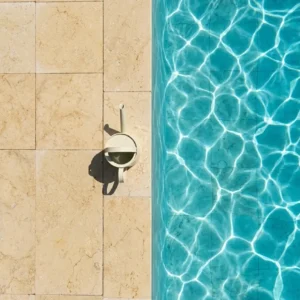
- Finish quality is read closely, since people stand still on these terraces rather than crossing them.
- Pool chemistry and irrigation splash matter more than open ocean spray does.
- Furniture, service traffic and event loading shape the layout more than weather.
- Continuity with interior floors matters, as living space runs out through open louvered walls to the terrace.
Finish Is Where the Two Documents Split
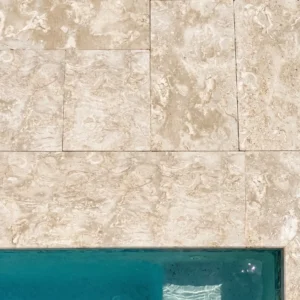
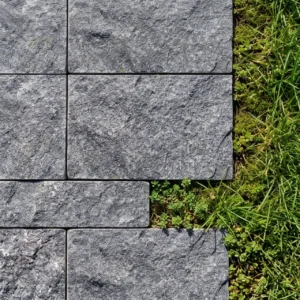
Everything above converges on surface treatment. A windward terrace wants texture in reserve, because abrasion will take some of it and salt will sit in what remains. A leeward terrace can afford a calmer, more refined face, because nothing is scouring it daily. This is the single most consequential choice on either coast, and it is why our east and west coast paving recommendations start with exposure before they ever reach appearance. Coral limestone cut on the island has weathered both exposures for generations, so a nearby wall or step is the cheapest research available.
Joints, Falls and What Sits Underneath
Exposure changes the assembly, not only the top face. Windward details are tested harder and more often, while leeward details can be tuned for appearance because nothing is scouring them daily.
- Joints: harder-working material and tighter workmanship on the windward side, where wetting and drying never let up.
- Falls: sized to shed a downpour decisively rather than to look elegant on a drawing.
- Edge restraint: continuous along exposed boundaries, since wind-driven water finds any free edge first.
- Bedding: matched to duty, with hillside fill consolidated in layers before a single unit is laid.
- Metalwork: gratings, fixings and thresholds specified for a genuinely marine setting on the Atlantic side.
Both coasts sit on the same limestone island and both benefit from its drainage, but a hillside plot above either coast still needs its fill consolidated properly before anything is bedded on it.
Maintenance Belongs in the Specification
Windward paving needs fresh water rinsing as routine housekeeping, because that is what interrupts the salt film. Leeward paving needs far less. Write the regime into the handover document rather than leaving the owner to discover it.
- Rinse windward surfaces with fresh water on a set interval, not only when they start to look dull.
- Clear windblown sand out of joints before it is walked across the face.
- Check edge restraints, thresholds and drainage outlets at the end of every storm season.
- Keep any cleaning product mild, because the island draws its supply through the limestone aquifer.
Remember where that water goes. Rainwater harvesting into on-lot storage is normal practice here, so what is applied to a paved surface sitting in a catchment path is a genuine consideration, not a footnote.
The Easternmost Position and Storms
Sitting furthest east reduces hurricane frequency compared with islands deeper in the arc, and it is a real advantage. It is not immunity. Elsa in 2021 and Beryl in 2024 both reached the island. Design coastal work for the event that does arrive rather than for the average year.
- Restrain every edge, and leave nothing loose within reach of an exposed seaward boundary.
- Size drainage for volume, because the rain that matters arrives in bursts rather than in averages.
- Move planters, furniture and stacked spare units well back before a system approaches.
- Check coastal setbacks early with the Town and Country Development Planning Office, before drawings harden.
Writing Two Documents Instead of One
If a client owns property on both coasts, resist the instinct to standardize. Choose one family of stone for coherence, then let format, thickness and above all surface treatment differ by exposure, using the finish options for outdoor stone to do the adapting. Coral limestone has served both coasts for three centuries and imported stone should complement that tradition, never compete with it. Same island, same client, same material family, two specifications, and both of them right.