
The critical variable most driveway expansion projects underestimate is unit matching — widening driveway with pavers almost always means sourcing units that align in thickness, face dimension, and finish with whatever is already in place, and that constraint shapes every other decision you make. Get the blend wrong and the joint lines won’t run, the surface plane will step, and the whole drive will read as two separate projects. Get it right and the extension disappears into the original installation so completely that even you’ll forget where one ends and the other begins. Here’s how to approach that challenge systematically, from stone selection through base prep and final jointing.
Why Unit Matching Is Harder Than It Looks
Natural stone isn’t manufactured to a fixed dimensional tolerance the way concrete pavers are. Even within a single quarry, the nominal face size can drift slightly between production runs, and the calibrated thickness tolerance compounds that drift. Your first task when expanding driveway with pavers is to pull one or two existing units from an inconspicuous spot and measure them precisely — not the nominal size listed on the original invoice, but the actual face dimensions and the calibrated thickness of the stone you have in the ground today.
What you’re looking for is whether the existing material was cut to a true nominal or whether it ran slightly long or short on one axis. A 12 × 24 in (305 × 610 mm) paver that actually measures 11⅞ × 23⅞ in is normal — that’s a standard calibrated cut. The problem arises when the original stone ran 12 × 24⅛ in because of a loose saw setting, and your new stone runs true at 12 × 24 in. Over five or six courses, that eighth-inch accumulates and your joint lines diverge. Know your actual unit before you order anything.
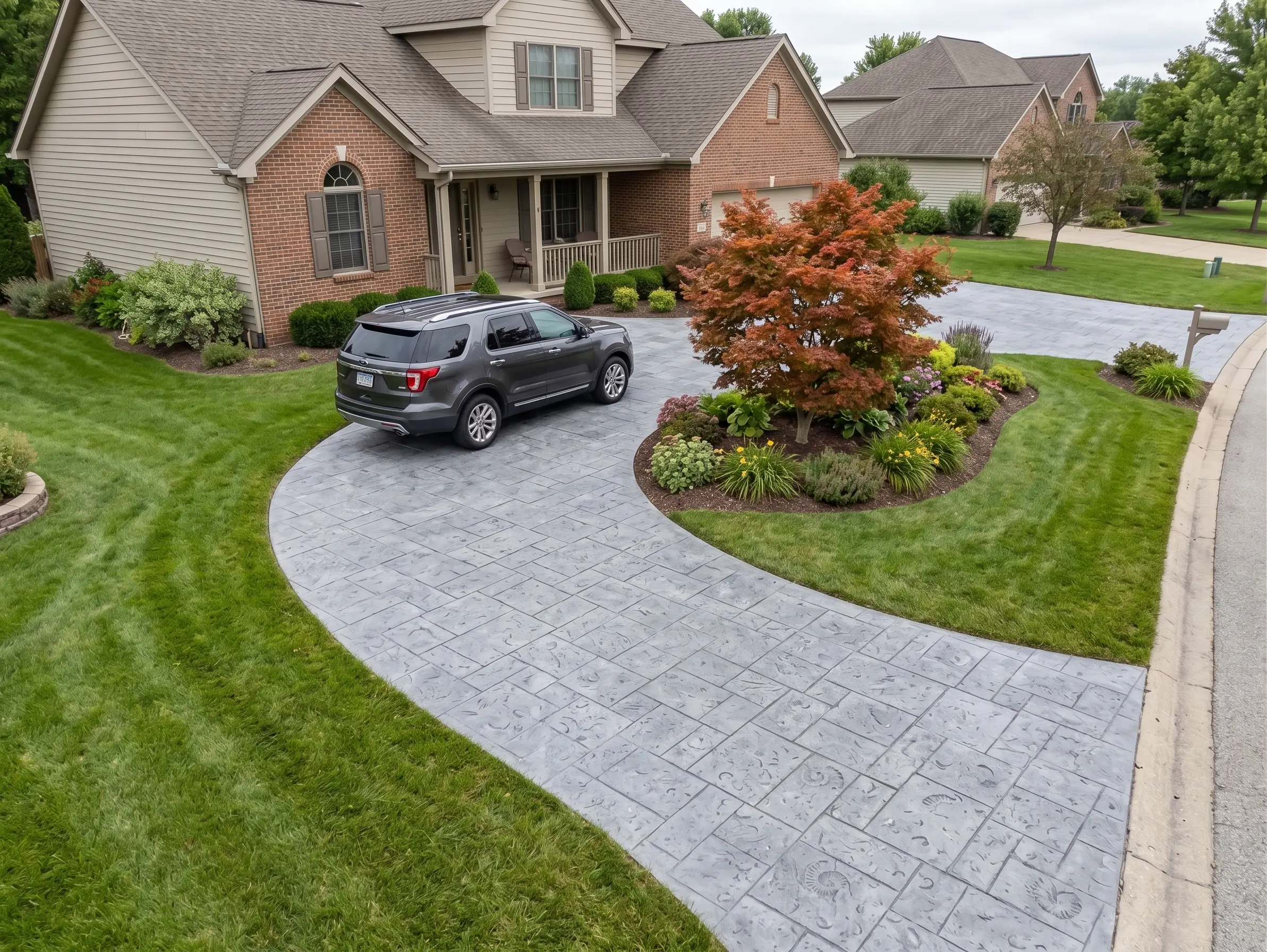
Choosing the Right Stone for the Extension
The stone type governs which ASTM standard covers its dimensional and structural properties. For granite driveway pavers — the most common choice for vehicle-loaded surfaces — that’s ASTM C615 (Standard Specification for Granite Dimension Stone). For limestone-based formats, ASTM C568 (Limestone Dimension Stone) applies. Sandstone or quartzite formats fall under ASTM C616 (Quartz-Based Dimension Stone). Name the standard in your specification so your supplier knows what test regime you’re referencing for properties like absorption and compressive behavior.
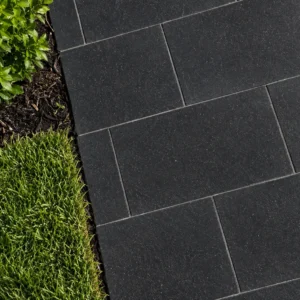
- Match stone type first — granite to granite, limestone to limestone; mixing stone types in a single plane creates differential movement and uneven weathering over time
- Match finish category second — a honed face and a bush-hammered face read as different materials even if the stone type is identical
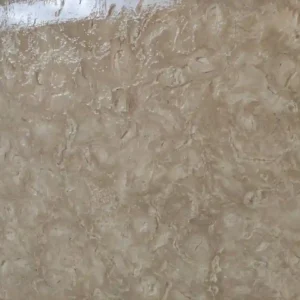
- Match color range third — natural stone has inherent color variation within a single quarry, so request samples from the same production lot as your order, or accept and design around the variation deliberately
- Confirm calibrated thickness last — specify the same nominal thickness and ask for the tolerance band; driveway formats typically run 3.5 in (about 90 mm) or thicker for setts and cobbles on a compacted base
For driveway applications specifically, the format matters as much as the stone type. Thin pavers and tiles are not appropriate for vehicle loading. For driveways, use setts or cobbles at least 3.5 in (4 in standard) thick on a compacted base, or pavers 2 in (5 cm) or thicker mortar-bonded to a reinforced concrete slab. This isn’t a conservative recommendation — it’s the minimum that keeps units from rocking under repeated axle loading.
Base Preparation: Where Soil Conditions Decide Everything
The ground beneath your extension is the variable that controls long-term performance more than any stone selection decision. Pavers to extend a driveway are only as stable as the subgrade they rest on, and that subgrade varies enormously across the country. Expansive clay soils — common across gulf coast plains, pacific coast ranges, and interior plains — swell when wet and shrink when dry, and they’ll work a unit out of plane faster than any surface load will. Sandy or gravelly soils drain freely and compact reliably, but they can also migrate laterally under heavy point loading if the base isn’t properly contained. Rocky or caliche subgrades require mechanical excavation but deliver a naturally stable bearing layer once exposed.
- In expansive clay zones, excavate deeper than the standard base depth and replace the upper clay layer with compacted crushed-stone base to break the clay’s capillary connection to the surface
- In sandy soils, use a geotextile separation fabric between native soil and the aggregate base to prevent sand migration into the base layer over time
- In caliche or hardpan areas, confirm the bearing capacity before sizing your base — you may need less aggregate depth than you expect, but drainage provisions become more critical because caliche doesn’t absorb water
- In freeze-thaw regions, excavate below the local frost depth for the base aggregate; inadequately deep bases heave unevenly and shift units out of plane across a single winter
The ASLA driveway paving material guidance addresses how base composition and drainage geometry interact with surface performance — worth reviewing when you’re specifying aggregate depth for the extension’s subbase. What most installers miss on clay subgrades is that the compacted crushed-stone base needs to extend at least 12 in (305 mm) laterally beyond the paved area’s edge to prevent lateral clay migration from undermining the base from the sides.
The Art of Matching New Pavers to an Old Driveway
Matching new pavers to an old driveway involves three variables working simultaneously: color, texture, and the patina that weathered stone develops over years of UV exposure, traffic, and seasonal cycling. You can match the stone type and the finish category exactly and still end up with an obvious seam if the new material reads dramatically lighter or sharper-edged than the existing installation.
Color drift is the most predictable challenge. Most natural stone lightens slightly with UV exposure over the first few years, then stabilizes. Your existing driveway stone has already completed that lightening cycle; new stone hasn’t. Two practical approaches: first, order a sample and leave it in full sun for several weeks before committing to the full order, to preview the weathered direction. Second, apply a penetrating sealer to both old and new material simultaneously after installation — sealer evens out the surface moisture and color relationship across both zones and minimizes the visual seam while the new material weathers in.
The USGS dimension stone production data provides context for how different stone types are quarried and processed, which explains why color consistency varies between quarry lots. For granite specifically, even consecutive quarry blocks can show meaningful color shift because the mineral banding runs at angles through the stone. Request a sample from the specific lot you’ll receive, not a generic sample from the product line.
Layout Planning for a Seamless Extension
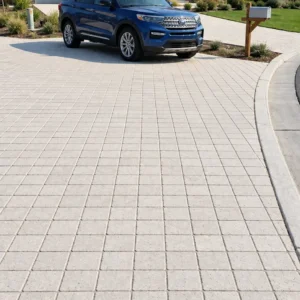
Your joint layout is what visually connects the extension to the original drive, and it needs to be planned before a single unit is set. Stand at the street and look at the existing driveway — identify whether the primary joint lines run parallel to the house, parallel to the street, or at a diagonal. The extension needs to continue those same lines, which means you may need to cut partial units at the transition edge to maintain the grid.
- Snap chalk lines from the existing joints across the transition zone before setting any base material — this establishes your joint grid independent of the edge restraint
- Plan for a continuous expansion joint at the transition line between old and new work, filled with a flexible joint material, to accommodate any differential settlement between the two zones
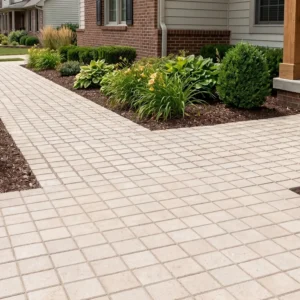
- If the existing installation used a running bond, continue the offset into the extension; if it used a stack bond, continue that — never switch patterns at the transition, it will read as a repair, not an extension
- Account for any grade change across the extension area; the new section needs to drain toward the same low points as the original drive, which sometimes requires adjusting base depth across the width of the extension
Our Driveway Pavers page lists stone formats that work for vehicle-loaded applications — check it when you’re confirming which thickness and format will continue your existing installation’s profile.
Setting Methods for the Extension Zone
The setting method you choose for widening driveway with pavers depends on what the original installation used and what the subgrade in the extension zone demands. Dry-laid setts and cobbles on a compacted crushed-stone base can be extended with dry-laid work provided the subgrade is stable and consistent with the original installation zone. Mortar-bedded work requires mortar-bedded extension — you can’t mix the two methods across a transition and expect the two zones to move together under load.
Mortar-bonded work over a reinforced concrete slab gives you the most control over joint alignment and surface plane, and it’s the right approach when the extension zone’s subgrade is softer or less consistent than the original area’s. The slab ties the surface behavior of the extension to the slab’s movement rather than to the native soil’s — which is an advantage in clay-dominant subgrades where the native soil moves differently across wet and dry seasons. Specify the slab reinforcement to the structural engineer’s recommendation for the site’s soil conditions, not to a generic detail.
Citadel Stone cuts stone to order from our selected quarries, which means the face dimensions and calibrated thickness can be specified to match what you’ve already got in the ground — a critical advantage when pavers to extend a driveway need to align precisely with an existing grid. Lead times are quoted with the order, so factor that into your project schedule well before the subgrade prep is finished.
Jointing and Edge Restraint for Longevity
The joint system and edge restraint are the two details that determine whether an expanded driveway stays integrated over time or begins to read as two separate installations within a few seasons. Edge restraint at the outer perimeter of the extension needs to be the same type and depth as the original installation’s restraint — if the original used buried concrete soldier courses, the extension should too. Switching to a surface-pinned plastic restraint at the extension perimeter while the original used a buried concrete border creates a differential restraint condition that allows the new work to migrate outward while the original stays put.
- For dry-laid work, sand-swept or polymeric joint fill needs to be applied and compacted immediately after setting, then re-swept after the first rain cycle settles the base
- For mortar-bedded work, joint width should match the existing installation — measure the original joints, not a generic specification
- At the transition joint between old and new work, use a backer rod and a flexible polyurethane sealant rather than a rigid mortar joint; this allows the two zones to move independently without cracking the joint
- Check edge restraint at the transition annually for the first two years; differential settlement between the two zones is most active during the first wet-dry or freeze-thaw cycle after installation
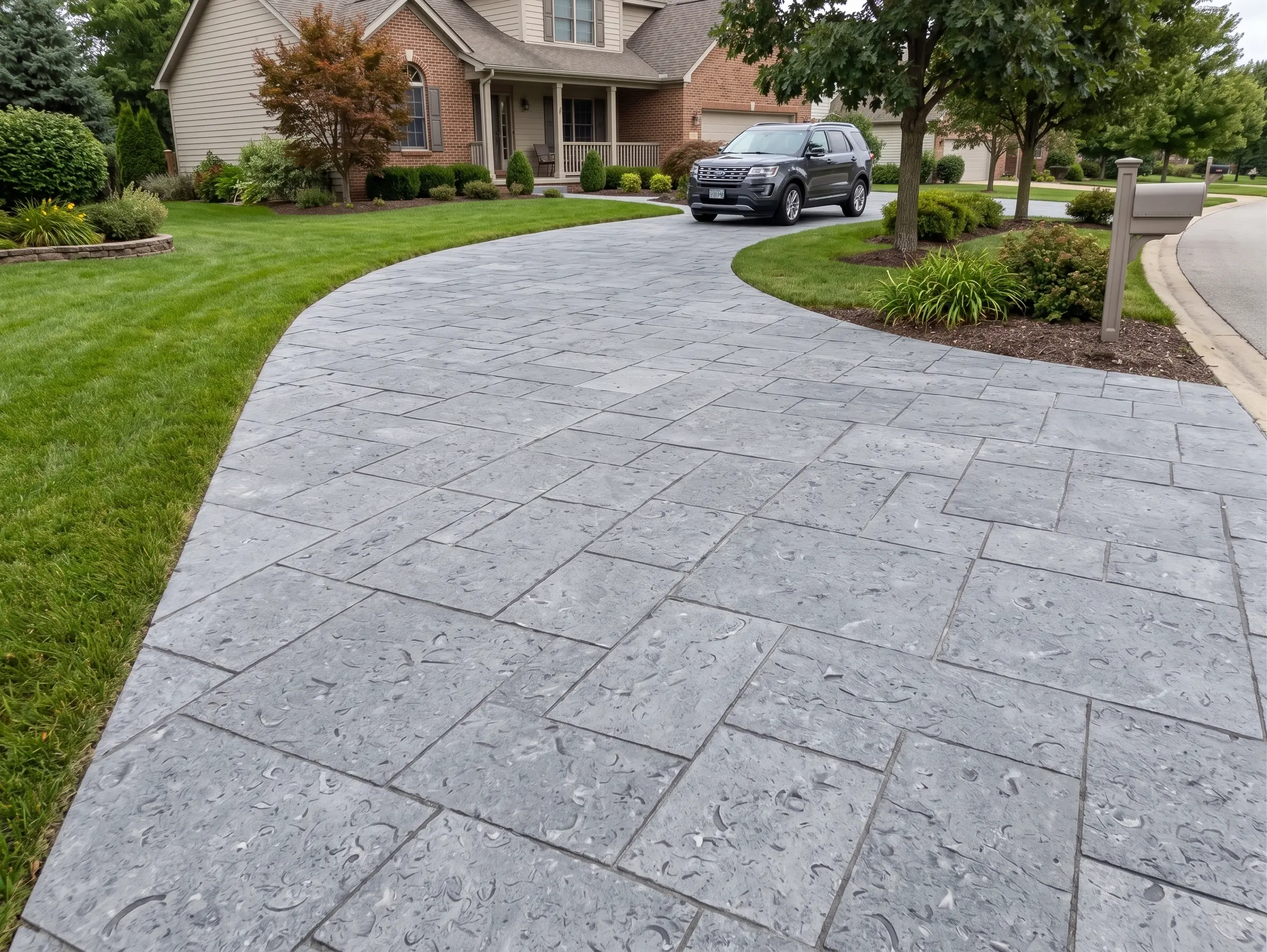
Sealing the Expanded Drive for Consistent Appearance
Sealing deserves its own discussion because it’s the one post-installation step that has the most influence on how unified the expanded drive looks from day one. Strip and reseal the entire driveway surface — old and new sections together — within a few weeks of completing the extension. A penetrating impregnating sealer applied uniformly across both zones evens out the surface’s moisture response and closes the visual gap between weathered original stone and fresh new stone. The Natural Stone Institute outlines granite durability and application specifications that inform how granite responds to sealing, absorption and long-term surface maintenance.
Reapplication frequency depends on the sealer manufacturer’s stated interval for the stone type and traffic level, not on a generic annual schedule. High-traffic driveway surfaces in full sun go through sealers faster than shaded or low-traffic zones. Test the existing sealer by dropping a few tablespoons of water on the surface — if it beads, the sealer is still working; if it soaks in within a few seconds, it’s time to reseal. Apply that same test across both the old and new sections when you’re evaluating reapplication timing.
Getting Your Driveway Extension Right
Widening driveway with pavers is as much a logistical and specification exercise as it is an installation one — the stone selection, the unit matching, the base preparation, and the jointing system all need to align before the first unit is set. The projects that look seamless five years after the extension was added are the ones where the specifier measured what was in the ground, matched the material with precision, and gave the subgrade the attention it deserved. Soil conditions are the hidden variable that most homeowners discover too late; address them in the excavation phase, not after the stone is down. Your stone finish selection shapes the long-term appearance of the expanded drive, too — for pool decks, wet steps and slopes, choose a bush-hammered finish; for the driveway surface itself, a Brushed 16 Grit or Split Face format suits the heavier traffic and outdoor exposure. As you plan your full hardscape, related applications can inform your material decisions — cool-toned pool paver options explores how lighter-toned natural stone performs in an adjacent outdoor application. Stone cut to order from our selected quarries in the Middle East lets you match unit sizes when adding width to an existing drive.