What the Numbers Reveal About Each Material
The travertine vs ceramic tile decision hinges on a performance gap that most buyers underestimate until they’re already mid-project. Travertine is a sedimentary calcium carbonate stone formed through mineral-rich spring deposits, with compressive strength typically ranging from 3,500 to 7,000 PSI depending on quarry density and fill quality. Ceramic tile, by contrast, is a kiln-fired clay body that achieves strength through manufacturing control rather than geological formation — and those two paths to durability behave very differently in real-world installations. Understanding that distinction upfront saves you from making a specification decision based on aesthetics alone.
Surface Performance: How Each Material Behaves Under Load
Travertine’s pore structure is what separates it from dense ceramic alternatives. The interconnected voids within unfilled travertine allow for minor flexion under load — a property that actually reduces cracking risk when subfloor movement occurs. Filled and honed travertine closes those voids with grout or resin, giving you a tighter surface that’s easier to maintain while retaining the stone’s inherent thermal regulation. Ceramic tile, being vitrified or semi-vitrified, offers zero flexibility — any significant subfloor deflection translates directly into cracked tiles or failed grout joints.
Your subfloor’s condition matters far more with ceramic tile than with travertine. Ceramic requires deflection no greater than L/360 under load per standard tile industry guidelines, which means you’ll need a stiffer subassembly to avoid callbacks. Travertine’s slightly greater tolerance for minor movement makes it a more forgiving specification on older substrates — though neither material forgives truly inadequate base preparation. The TCNA installation standards provide deflection criteria that apply to both materials and are worth reviewing before you commit to either specification.
Travertine Tile vs Ceramic: Aesthetic Differences That Affect Specification
The visual character of travertine tile vs ceramic goes well beyond surface pattern. Travertine delivers natural variation — no two pieces share the same vein movement, cloud formation, or fill density — which creates an organic visual rhythm that designers rely on for warmth and authenticity. That variation also means you’ll want to dry-lay your material before setting, pulling from multiple boxes to blend tonal ranges across the field. Ceramic tile offers precise repeatability: every piece from the same production batch matches within tight dimensional tolerances, which simplifies installation significantly on large, open floor planes.
For backsplash applications, the travertine backsplash specification requires a different approach than a standard ceramic installation. Travertine’s open pore structure means grease and cooking oils can penetrate unsealed areas quickly — you’ll want a penetrating sealer applied before grouting, not after, to prevent staining at the grout joint edges. Ceramic tile’s glazed surface is highly resistant by default, making it a lower-maintenance choice in high-splatter environments. The trade-off is that ceramic can read as flat and manufactured next to the natural depth travertine provides.
Slip Resistance and Finish Options
Finish selection drives slip resistance more than material type in this comparison. Travertine comes in honed, tumbled, brushed, and polished finishes — each with meaningfully different coefficient of friction values. A tumbled travertine achieves a dynamic coefficient of friction above 0.60, comfortably meeting the threshold recommended for wet applications. Polished travertine drops below 0.40 when wet, making it unsuitable for bathrooms or pool surrounds without an anti-slip treatment. According to ASTM natural stone tile absorption strength and slip resistance testing, surface texture is the primary determinant of wet-condition traction across both natural and manufactured stone products.
- Tumbled travertine: the most heavily textured finish, commonly specified for wet zones and outdoor terraces
- Honed travertine: balanced finish for interior floors — flat matt surface, easier cleaning than tumbled
- Polished travertine: interior accent and wall use only — not recommended for wet floor applications
- Ceramic matte glaze: reliable wet-area performance, consistent across entire production run
- Ceramic polished glaze: decorative wall tile only — becomes dangerously slick when wet
- Ceramic textured surface: engineered for outdoor and commercial wet-area compliance
Durability and Longevity Across Applications
The ceramic tile vs travertine durability comparison shifts depending on the application environment. In freeze-thaw regions, travertine’s absorption rate becomes the critical variable. Dense-fill travertine with absorption below 3% performs well in exterior applications where freeze-thaw cycling occurs — the tight pore structure limits water ingress and the resulting expansion pressure. Standard ceramic tile with water absorption above 7% (wall tile grade) will fail outdoors in freezing conditions, while porcelain-body ceramic below 0.5% absorption handles freeze-thaw exposure reliably. Verify absorption ratings against your specific application before specifying either material outdoors.
Interior longevity favors travertine when properly maintained. A well-sealed travertine floor — resealed every 18 to 24 months with a quality penetrating sealer — realistically delivers 30 to 50 years of service without replacement. Ceramic tile at similar quality levels performs in the same range structurally, but glazed surfaces show wear patterns on high-traffic paths over 15 to 20 years as the glaze scratches and dulls. Natural stone like travertine can be honed or repolished to restore surface appearance — ceramic tile cannot be refinished once the glaze wears through. According to NSI ASTM tile stone specifications, travertine classified under ASTM C1527 standards meets dimensional and performance criteria that support long-term installation quality.
Installation Requirements and Complexity
Here’s what most buyers overlook when comparing these two materials: the installation complexity gap is significant, and it affects both labor cost and timeline. Ceramic tile installation is more straightforward for most tile setters — consistent dimensions, predictable absorption, and no requirement to fill or seal before setting. Travertine requires additional prep steps: dry-laying for tonal blending, pre-grouting open voids on unfilled material, applying penetrating sealer before final grouting, and adjusting mortar consistency to account for the stone’s back absorption during the set window.
- Travertine requires back-buttering with modified thinset to ensure full coverage — minimum 95% contact on wet areas, 80% on dry interior floors
- Ceramic tile accepts standard unmodified thinset on most substrates, reducing material cost per square foot
- Travertine’s slight dimensional variation (±1–2mm on tumbled product) requires experienced setters who can absorb variation in joint width
- Ceramic tile’s tight tolerances (±0.5mm on rectified product) allow for minimal grout joints and faster layout work
- Both materials require a flat substrate — no more than 3mm variation in 3 meters — but travertine’s natural texture partially masks minor lippage that would be visible in a polished ceramic installation
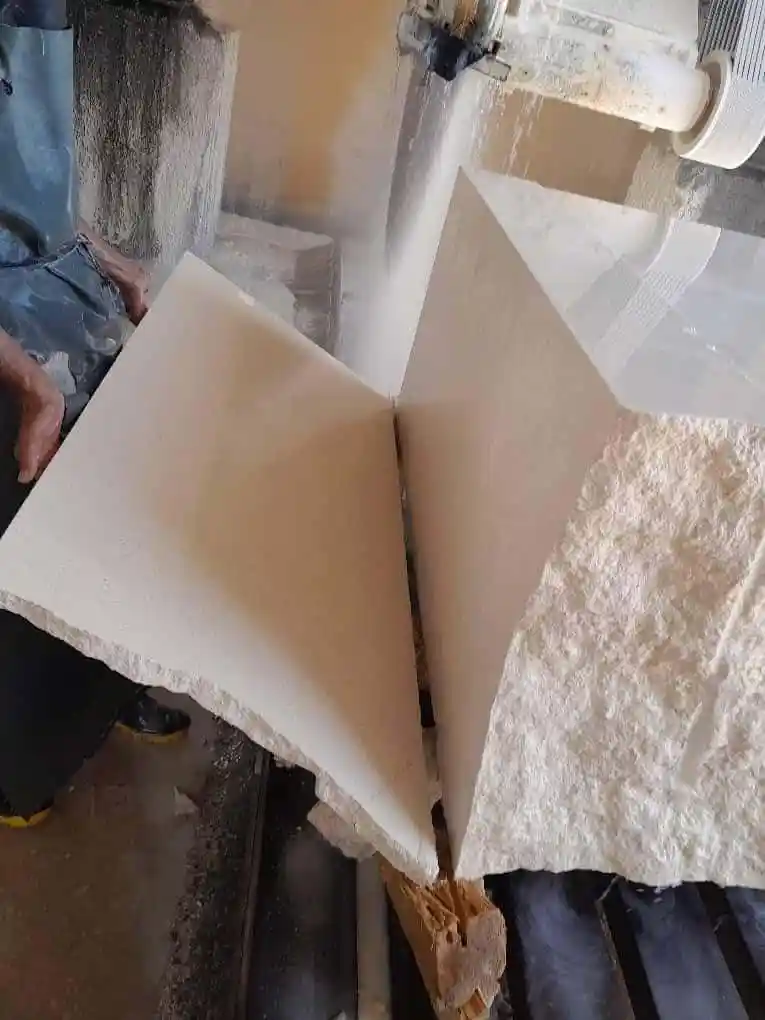
For travertine projects specifically, the Citadel Stone travertine tile range comes graded for consistent fill density, which meaningfully reduces on-site prep time compared to lower-grade material with irregular void distribution. At Citadel Stone, we inspect material at the warehouse level before it ships — grading for fill consistency, surface flatness, and tonal range — so your installer isn’t sorting through mixed-grade material on the job site.
Cost Factors and Project Budgeting
Material cost is only one line in your budget — and often not the controlling one. Travertine tile typically runs $4 to $12 per square foot depending on grade, finish, and origin, while ceramic tile ranges from $1 to $8 per square foot across quality tiers. On that raw number, ceramic appears more economical. But your total project cost includes labor, setting materials, sealing products, and logistics — and travertine’s longer service life and refinishability change the cost-per-year calculation significantly when you run the numbers over a 30-year horizon.
Freight distance and regional market conditions add another layer to this budget equation. Natural stone like travertine is heavy — typically 13 to 15 pounds per square foot at standard thickness — and truck delivery costs from the nearest warehouse to your project site factor into your landed cost. Buyers in markets far from major distribution hubs will see a larger freight delta between travertine vs ceramic tile, since ceramic is manufactured domestically at a much wider range of facilities and often ships shorter distances. Factor truck delivery costs into your material comparison, not just the per-square-foot price listed at point of purchase. Citadel Stone maintains national warehouse inventory that reduces lead times to one to two weeks on stocked travertine products, which can meaningfully improve your project scheduling compared to the six to eight week import cycle on special-order material.
- Labor rates for experienced natural stone setters run 15–30% higher than standard tile labor in most markets — factor this into your material-to-labor ratio
- Sealing adds $0.50 to $1.50 per square foot at installation, with recurring maintenance cost every 18–24 months
- Ceramic tile’s lower labor cost partially offsets its shorter refinishing lifespan — but replacement cost at year 15 must be included in a true lifecycle comparison
- Value engineering opportunity: specify honed travertine (lower material cost than polished) with a penetrating sealer — you get the stone’s durability at a more accessible price point
- Waste factor: order 10–12% overage on travertine for pattern cuts and tonal blending; 8–10% overage suffices for standard ceramic field tile
Maintenance and Long-Term Care
Your maintenance commitment differs substantially between these two materials, and it’s worth being direct about what each one demands. Travertine requires a disciplined sealing schedule — penetrating sealers applied on the correct interval protect against acid etching from common household cleaners and acidic foods. Use only pH-neutral cleaners on travertine; standard tile cleaners often contain acids that etch the calcium carbonate surface and dull honed finishes over time. Ceramic tile’s glazed surface resists most household chemicals and requires only routine cleaning — there’s no sealing requirement and minimal sensitivity to cleaning product chemistry.
The trade-off is textural. Grout joints on ceramic floors show discoloration over time in high-traffic areas, and re-grouting is the primary maintenance intervention. Travertine’s filled joints behave similarly, but the stone’s surface can be refreshed through light honing — an option that doesn’t exist with ceramic. In hot, dry climates where UV exposure accelerates sealer breakdown, travertine’s maintenance interval shortens to 12 to 18 months on exterior applications. Plan your maintenance schedule before you specify the material, not after installation.
Where Each Material Belongs in Your Project
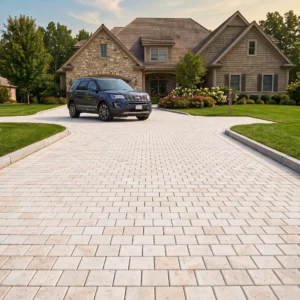
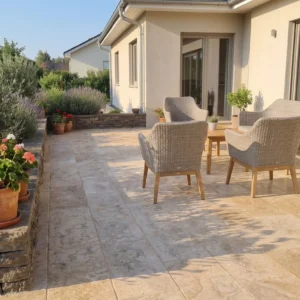
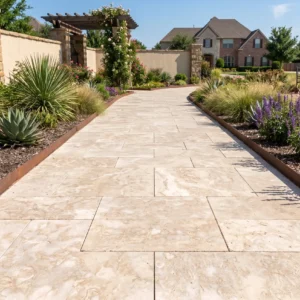
The strongest case for travertine is in applications where warmth, natural character, and long-term refinishability matter more than lowest upfront cost. Living room floors, master bathroom surrounds, travertine backsplash features, and exterior terraces in moderate climates are where travertine consistently outperforms ceramic on both aesthetics and lifecycle value. The travertine tile vs ceramic question in these contexts almost always resolves in travertine’s favor when the buyer understands what they’re getting for the premium.
- Travertine performs best: living spaces, master baths, entry halls, covered exterior terraces, feature walls
- Ceramic performs best: utility rooms, secondary bathrooms, commercial kitchens, areas requiring precise pattern repeatability or very low maintenance
- Both work well: kitchen floors (with appropriate finish selection), laundry rooms, mudrooms with correct sealer maintenance
- Avoid travertine: high-acid environments (wine cellars, commercial kitchens), uncovered exterior slabs in freeze-thaw regions without verified low absorption rating
- Avoid polished ceramic: any wet-area floor application — the glaze becomes a slip hazard regardless of material grade
Making the Right Call on Travertine vs Ceramic Tile
The ceramic tile vs travertine comparison doesn’t have a universal winner — it has context-dependent answers that depend on your application, your maintenance commitment, and your budget horizon. Travertine tile brings irreplaceable natural character, refinishability, and thermal regulation that ceramic simply cannot replicate. Ceramic tile delivers manufacturing precision, chemical resistance, and lower upfront cost that suit specific applications very well. The decision becomes straightforward once you’ve honestly assessed which performance priorities matter most for your specific project conditions.
As you finalize your specification, reviewing the installation process in detail will sharpen your expectations and help you brief your installer accurately. ivory travertine tile installation steps covers the sequencing and setting details specific to this material — a useful reference as you move from material selection into active project planning. Travertine from Citadel Stone is sourced direct from quarries in Turkey, the Mediterranean, and beyond, graded for dense, even fill.
Related reading: ivory travertine vs porcelain tile · porcelain pool tile vs travertine · ivory travertine pool deck guide.