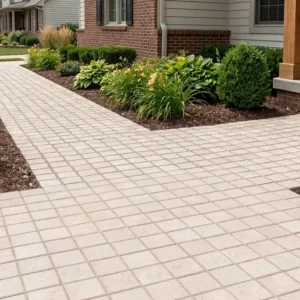
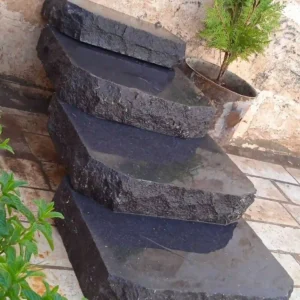
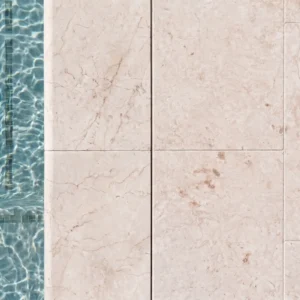
Travertine’s open-pore calcium carbonate matrix means your countertop or sink will behave differently under daily use than almost any other natural stone — and that distinction shapes every specification decision you’ll make. This travertine stone sink and countertop guide addresses the micro-level variables that actually determine long-term satisfaction: fill type, honed versus polished finish, and the sealing interval that matches your household’s water exposure. Understanding those details before you select your slab prevents costly surprises six months after installation. What follows covers the full picture, from material properties through finish options to the maintenance schedule that keeps travertine performing the way it should.
Why Travertine Works in Kitchens and Bathrooms
Travertine’s thermal conductivity is lower than granite’s, which gives it a perceptibly warmer feel underhand — a detail that matters at a bathroom vanity where you’re working with bare skin contact every morning. The material’s compressive strength typically ranges from 4,500 to 8,000 PSI depending on density and quarry origin, making it structurally appropriate for countertops that support typical kitchen loads. Slabs sourced from Middle East quarries tend toward the denser, cream-to-walnut end of the colour spectrum and carry tighter void distributions than many European-origin alternatives. That tighter void pattern translates directly to easier maintenance because there are fewer unfilled pores for grease and soap to penetrate.
- Thermal mass keeps the surface temperate — never as cold as marble or granite in winter
- Calcium carbonate composition means acid sensitivity is real — citrus and vinegar require immediate wipe-down
- Natural veining and tonal variation reduce the visual impact of minor surface wear over time
- Available in cross-cut and vein-cut orientations, each with a distinct pattern character and porosity profile
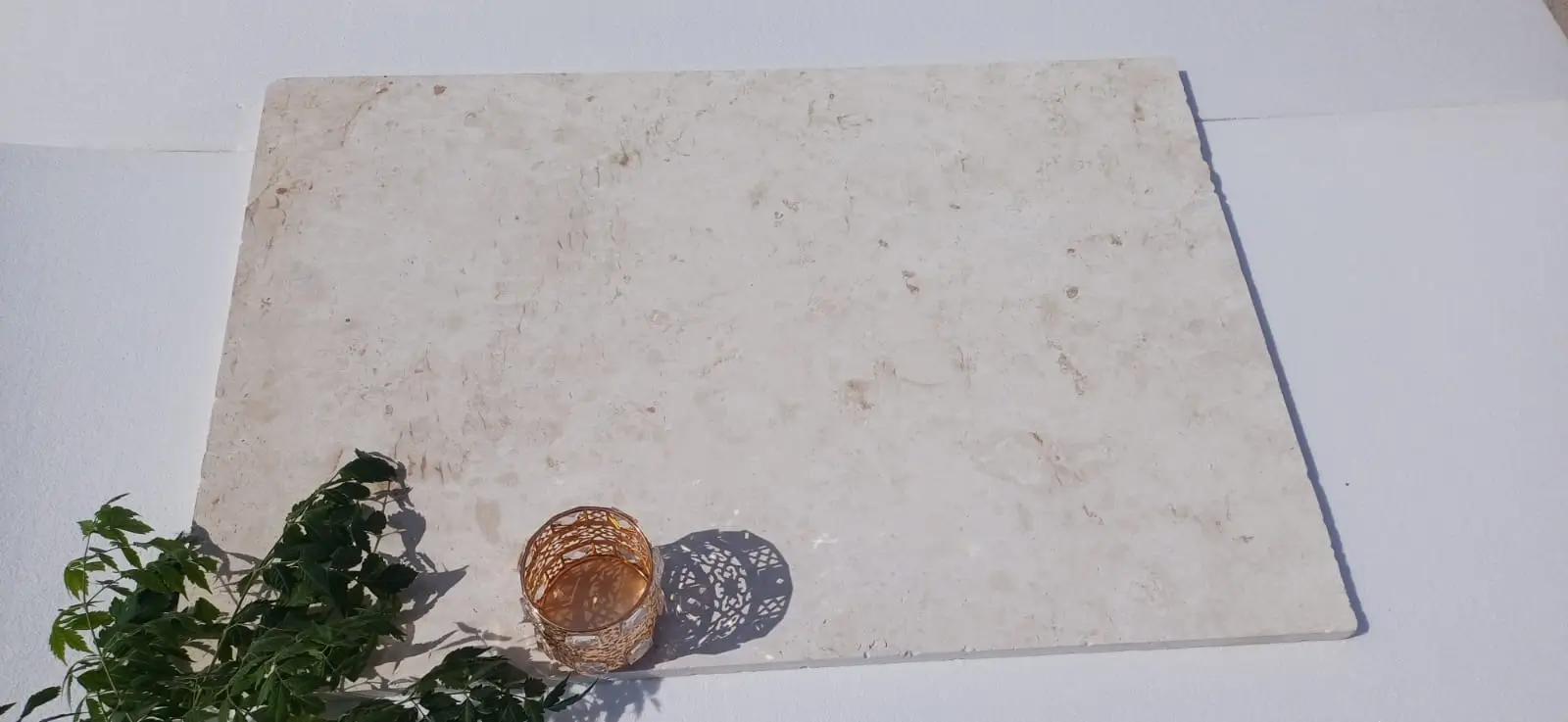
Travertine Stone Sink Selection
The travertine stone sink category breaks into two structural types: vessel sinks carved from a single block and undermount-compatible slab cutouts reinforced at the rim. Vessel sinks — the carved bowl-on-counter format — are the more common application because a single block carving sidesteps the edge-chipping risk that undermount profiles carry at the cutout lip. You’ll want a minimum wall thickness of 1.25 inches on any vessel sink; thinner walls develop hairline fractures at the drain penetration point within a few years of daily thermal cycling from hot and cold water alternating across the stone mass.
According to ASTM C1527 travertine dimension stone standard specifications, travertine used in architectural and decorative applications — including sinks — must meet absorption and compressive strength benchmarks that confirm structural suitability for wet environments. Verify that any travertine stone bowl you’re specifying carries documentation against this standard before finalising the purchase. Suppliers who can’t provide that documentation are typically moving decorative-grade material that hasn’t been tested for dimensional stability under water exposure.
- Vessel sinks work best on counters with a finished overhang of at least 2 inches for structural support
- Drain fittings should use silicone sealant only — no plumber’s putty, which stains unfilled travertine permanently
- Polished interior bowl finishes resist soap film better than honed, but show scratch marks more readily
- Pre-filled (resin-filled) voids on sink blanks are standard; confirm fill colour matches your slab before ordering
Travertine Stone Countertops: Thickness and Edge Profiles
Your countertop thickness specification sets the stage for everything else — structural performance, edge profile options, and fabrication cost. The industry standard for travertine stone countertops is 3/4-inch (2 cm) for lighter-use bathroom applications and 1.25-inch (3 cm) for kitchen surfaces that handle significant point loading from appliances and prep work. A 2 cm slab on a kitchen island without full perimeter support will flex under dynamic load and develop stress fractures at sink cutouts within three to five years. Spend the extra fabrication cost upfront on 3 cm for any kitchen application — it’s not optional.
Edge profiles on travertine require more care than on granite because the material chips at sharp corners under impact. Eased, bevelled, and ogee profiles all work well because they soften the arris, distributing impact force rather than concentrating it at a 90-degree corner. Bullnose profiles are technically fine but expose the stone’s cross-section at the rounded edge, which means any unfilled void on the edge face becomes a visual and hygiene problem. Laminated edges — where a strip of matching travertine is bonded to the underside to simulate a thicker slab — can disguise 2 cm material as 3 cm, but the bond line is a vulnerability in high-humidity environments. Specify solid 3 cm instead.
Filled Versus Unfilled Travertine: The Decision That Defines Maintenance
Most buyers don’t understand until after installation: unfilled travertine on a countertop or sink surround is not a design choice — it’s a maintenance commitment. The natural voids that give travertine its distinctive pitted texture collect food debris, soap residue, and hard water deposits constantly, and they require regular cleaning with a soft brush rather than a simple wipe. Filled travertine, where factory-applied resin or cement grout is used to close the voids, creates a surface that cleans like any polished stone. The trade-off is that the fill can discolour over time if it wasn’t colour-matched carefully at the factory.
For kitchen counters, always specify filled travertine — the hygiene argument alone is decisive. Bathroom vanities can tolerate unfilled material if the owner understands the maintenance commitment and prefers the rustic visual character. For a travertine stone bowl application, the interior surface should always be filled and sealed regardless of the installation context; water pooling inside an unfilled bowl’s voids creates ongoing moisture penetration that undermines the stone’s structural integrity. You can browse our travertine countertop and bowl range to see how filled and unfilled finishes compare across specific colour families before making your selection.
- Cement-fill is more breathable but discolours faster in wet environments — resin-fill is preferable for sinks
- Factory-filled slabs are more consistent than site-filled material; insist on factory fill for countertops
- Unfilled travertine on countertops will require re-grouting the voids every 5 to 8 years
- Inspect fill colour under the same lighting conditions as your installation before approving the slab
Finish Options: Honed, Polished, and Brushed
The finish you select affects maintenance frequency, slip safety at the basin, and the material’s response to acid exposure. Polished travertine has a closed surface with a reflective sheen — it resists water infiltration better in the short term, but once the polish layer degrades from daily use (typically three to five years without repolishing), the surface becomes more porous than a maintained honed finish. Honed travertine offers a matte to satin appearance with a consistent absorption rate that’s easier to manage with regular sealing.
Brushed travertine — a textured finish created by wire brushing after cutting — provides a tactile surface with moderate slip resistance at the basin edge, making it a useful choice for countertops that extend around a wet sink zone. The Natural Stone Institute notes that surface finish directly affects the long-term performance of natural stone in wet applications, a finding that aligns with field experience showing brushed and honed finishes outperforming polished surfaces in bathroom countertop durability over the 10-year mark. According to Natural Stone Institute travertine properties and outdoor suitability, the material’s absorption characteristics and pore structure vary significantly by finish and should inform sealing frequency. Plan your sealing schedule based on finish type, not just material type.
Sealing Schedule and Long-Term Care
Travertine’s absorption rate — typically 0.5% to 2.5% by weight depending on density — means that an unsealed or under-sealed surface will wick water, oils, and cleaning products into the stone matrix. The practical consequence in a kitchen is staining that can’t be removed without poulticing. For kitchen travertine stone countertops, an impregnating penetrating sealer applied every 12 months is the minimum. Bathroom vanities with less cooking-oil exposure can extend to 18-month intervals, but only if the surface passes the water-bead test: a few drops of water beading on the surface confirms the sealer is still active.
Avoid topical film-forming sealers on travertine countertops — they trap moisture beneath the film, leading to efflorescence and spalling on filled voids over time. Penetrating silicone or fluoropolymer-based sealers work with the stone’s pore structure rather than coating over it. For sinks, apply sealer to the interior bowl and all exposed surfaces after every cleaning cycle in the first year, then transition to the standard annual schedule once the stone has stabilised its absorption pattern. Temperature cycling in the stone — from cold water running over a warm countertop surface in winter, for example — creates micro-expansion and contraction at the crystal boundaries that can open micro-fissures in an under-sealed slab, so consistent sealer coverage is protective rather than merely cosmetic.
Thermal Cycling and Material Stability
Travertine’s thermal expansion coefficient sits around 4.6 to 5.2 × 10⁻⁶ per °F — lower than most ceramics but high enough to matter in certain installation scenarios. For indoor countertops, the temperature differential between a cold winter morning and a hot surface after the oven runs rarely exceeds 40°F, producing manageable expansion of roughly 0.002 inches per linear foot across a standard kitchen island. That movement is absorbed at the perimeter silicone joint between counter and backsplash without structural consequence, provided the joint is correctly specified at 3/16 to 1/4 inch and maintained with flexible sealant rather than rigid grout.
The more critical thermal cycling scenario for travertine stone countertops is the rapid change from a pot of boiling water placed directly on the surface. The sudden localised heat spike — potentially 200°F above ambient — creates point-stress at the contact zone that filled voids handle poorly, because the resin fill and stone expand at different rates. Always use trivets. Beyond countertop use, installers who have worked with travertine in climates with significant day-to-night temperature swings — common in high-elevation or desert-adjacent regions — know that outdoor travertine elements like windowsills and ledges adjacent to kitchens need expansion relief built into the anchoring detail. The freeze-thaw cycle adds another dimension: water infiltrating an unsealed void, freezing, and expanding by roughly 9% in volume, generates tensile forces that fracture fill material and can propagate into the stone body itself over multiple seasons. Indoor countertops are protected from freeze-thaw by definition, but any travertine installed in an outdoor kitchen or semi-enclosed space needs full-void filling and a higher-viscosity sealer rated for freeze-thaw conditions.
Sourcing and Ordering Logistics
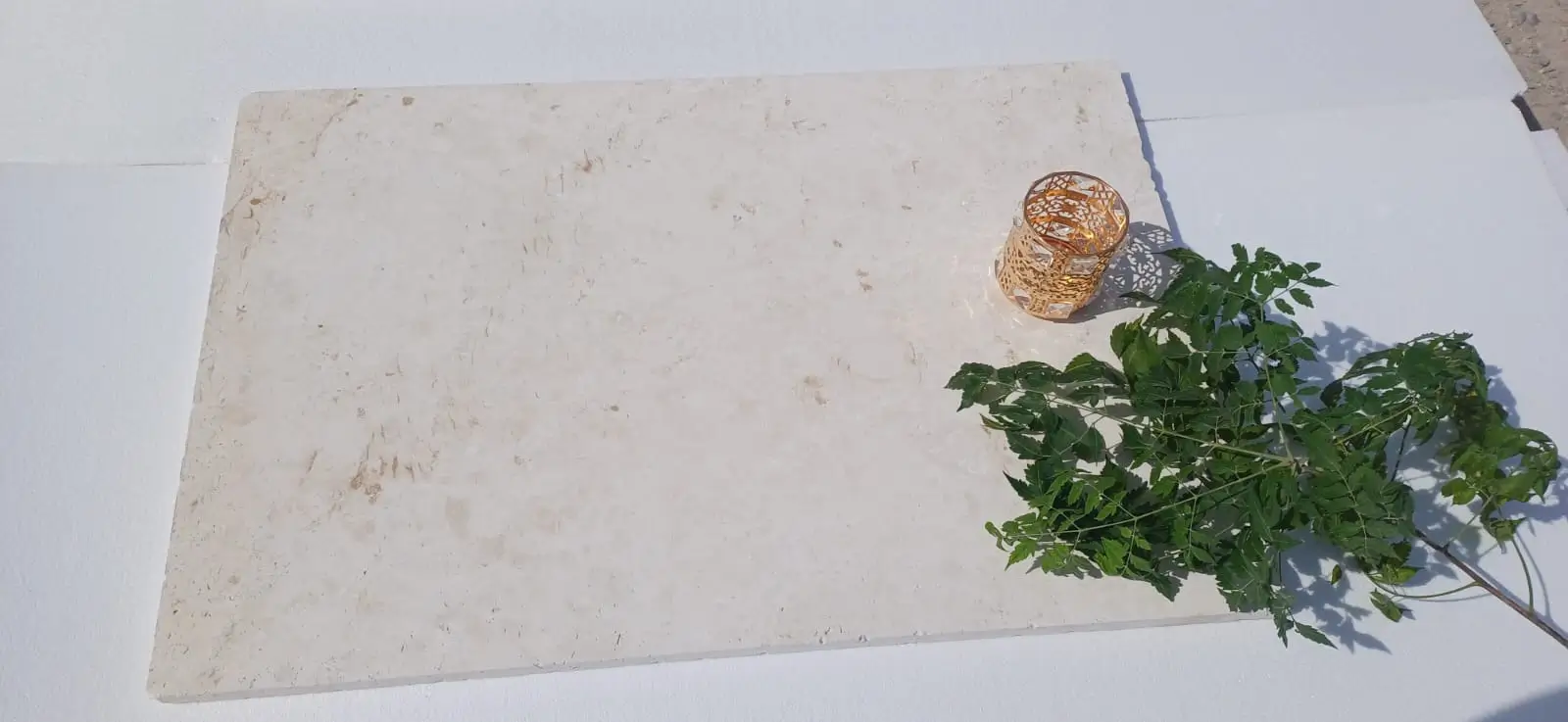
Slab selection is where travertine countertop projects most commonly go wrong. Unlike tile, where batch consistency is managed by the manufacturer, natural stone slabs each carry their own unique void distribution, vein character, and colour range within the stated variety. The only way to know what you’re getting is to physically select the slab — or have someone with stone experience select it on your behalf from warehouse inventory. Matching a travertine stone sink bowl to a countertop slab requires pulling from the same block or at minimum the same quarry run; colour variation between different production runs in the same variety can be significant enough to read as two different materials once installed side by side.
Citadel Stone maintains warehouse inventory that allows slab-level selection for countertop and sink projects, which reduces the lead time risk associated with importing to order. Typical warehouse-to-delivery timelines run 1 to 2 weeks for in-stock material — a meaningful advantage over the 6 to 8 week import cycle that occurs when a specific slab isn’t available domestically. Confirm your truck delivery access before finalising your order; full slabs require a truck with a boom or forklift assist for offloading, and residential access constraints can complicate scheduling if not addressed in advance. Your fabricator will need to take templating measurements before the slab is cut, so coordinate the delivery timing to align with their shop schedule. According to USGS limestone and travertine natural mineral formation data, travertine forms through mineral-rich groundwater deposition — a geological process that inherently produces variation between quarry runs, which is why slab-selection protocols matter more for travertine than for more homogeneous materials.
- Order 10–15% overage beyond net countertop area to account for fabrication waste and offcuts at sinks
- Request the slab thickness tolerance certificate — industry standard allows ±1/8 inch, but tighter fabrication requires ±1/16 inch stock
- Confirm fill type (resin vs. cement) and fill colour on the physical slab, not just on the specification sheet
- Arrange fabricator access to the warehouse for templating before cutting to prevent measurement errors
Getting Travertine Sink and Countertop Specifications Right
The travertine stone sink and countertop guide framework only works if the specification decisions compound correctly — fill type, finish, sealing schedule, and thermal management each build on the previous one, and a gap at any stage cascades into maintenance problems that are expensive to remediate. Your countertop will perform at its best when filled and sealed to a standard that matches your actual use intensity, not the minimum the installer suggests. At Citadel Stone, we recommend treating the first year post-installation as an active calibration period: seal on schedule, test the surface regularly with the water-bead method, and adjust frequency if the stone shows any signs of increased absorption. For those using travertine beyond interior surfaces, understanding how the material responds to outdoor conditions is equally worthwhile — travertine pool and outdoor care guidance covers how the same material performs in fully exposed environments. Buyers working with Citadel Stone on bathroom or kitchen surfaces learn that travertine’s softness relative to granite requires a consistent sealing schedule for daily-use areas.
Related reading: what type of stone is travertine · travertine stone colors · how to clean travertine stone.