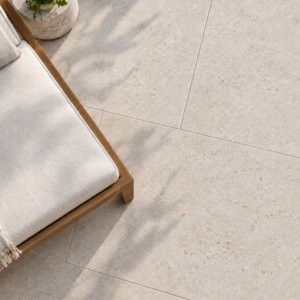
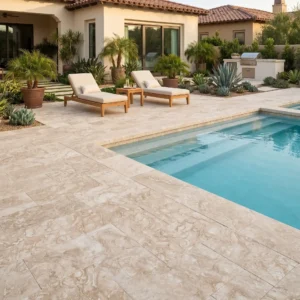
Travertine stone around pool care breaks down into fewer moving parts than most people expect — but the parts that matter are easy to get wrong in ways that don’t show up until year three or four. The real performance variables aren’t about which cleaning product you use; they’re about sealer selection, finish compatibility with poolside moisture, and how the stone’s natural porosity interacts with chlorinated water over time. Get those three right, and you’re looking at a travertine stone pool deck that holds up beautifully for two decades.
What Makes Travertine Behave Differently Poolside
Travertine’s open-pore cellular structure — the same characteristic that gives it its distinctive look — is also the reason its care requirements differ from denser igneous stones. Those voids absorb water, pool chemicals, and organic matter faster than granite or basalt would. You’re not dealing with surface staining alone; you’re managing what’s happening inside the stone. Understanding that distinction changes how you approach every aspect of maintenance.
The calcium carbonate base also makes travertine reactive to acidic cleaners. This catches a lot of pool owners off-guard because many standard outdoor degreasers and tile cleaners are acid-based. Even a few applications of the wrong product will start etching the surface — softening the finish in patches that collect more dirt and eventually compromise the sealer layer. Stick to pH-neutral stone cleaners rated specifically for calcium-based stone.
- Travertine’s absorption rate typically ranges from 1.5% to 3.5% by weight, making sealer penetration essential — not optional
- Calcium carbonate reacts with acids at pH levels below 6.0, meaning standard pool deck cleaners can cause cumulative surface damage
- The cellular voids that define travertine’s appearance also trap chlorine residue, sunscreen oils, and algae spores if left unsealed
- Poolside thermal cycling — stone heating through the day and cooling at night — causes minor dimensional movement that well-maintained joints handle easily, but neglected joints amplify
Sealing Schedule: The Real Numbers
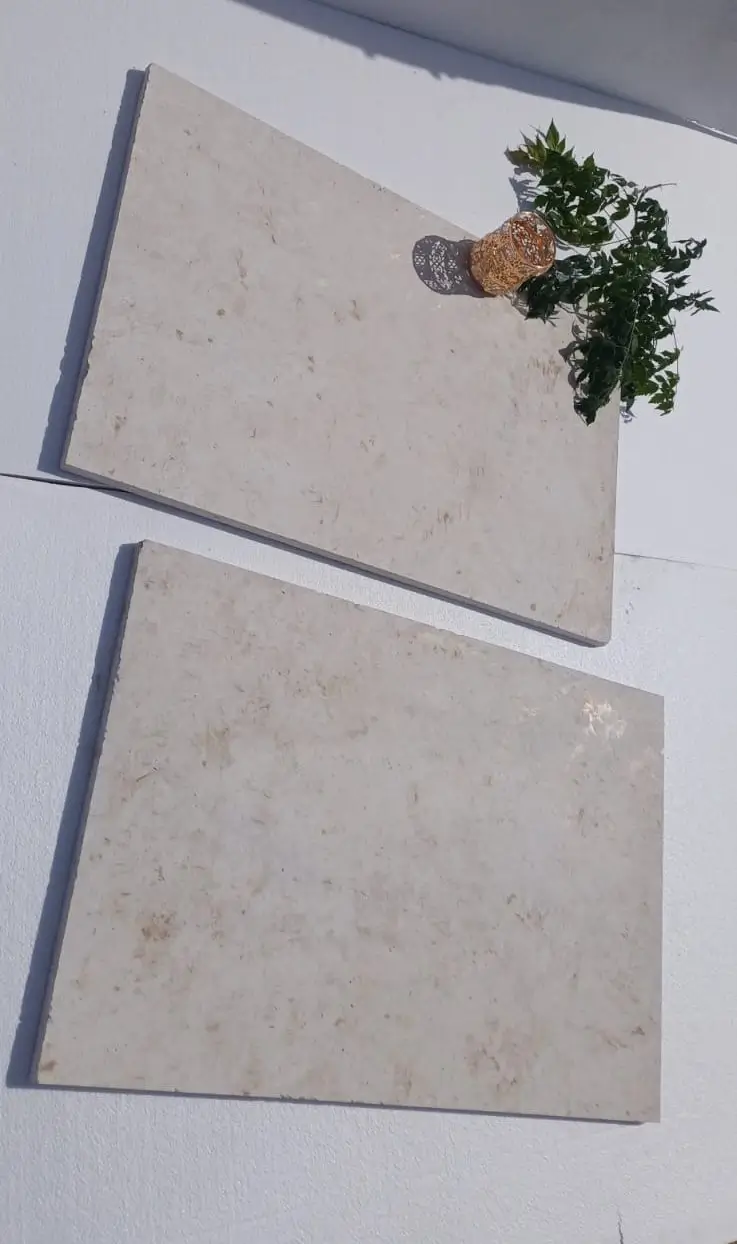
Most generic guidance says “seal annually” and leaves it there. The actual interval depends on finish type, sun exposure, and how heavily the deck is used. For travertine stone around pool installations in a high-traffic residential setting with strong UV exposure, the honest answer is every 18 months on the upper field and every 12 months on coping and edge pieces that take direct splash and foot traffic. Waiting until the stone looks thirsty means the sealer has already been breached for months.
The test that actually works in the field: pour a small amount of water on the surface and watch the absorption rate. Sealed stone beads water for at least 30 seconds. If the water soaks in within 5–10 seconds, you’re overdue. This simple check takes 30 seconds and tells you more than any calendar date.
UV exposure plays a direct role in sealer degradation that most maintenance guides underplay. Prolonged UV radiation breaks down the polymer chains in solvent-based sealers faster than moisture alone does — particularly on south-facing or west-facing pool decks that receive four or more hours of direct afternoon sun. According to Natural Stone Institute travertine properties and outdoor suitability, travertine’s open structure makes surface sealer integrity especially critical in high-UV outdoor applications. In practice, this means a poolside installation in a sun-intense climate may need resealing closer to the 12-month mark even for field areas, not just coping.
- Use a penetrating impregnating sealer (silane-siloxane base) rather than a topical coating — topical sealers peel under poolside UV and moisture cycling
- Apply sealer to completely dry stone — 72 hours minimum after any rain or pressure washing before application
- Two thin coats outperform one heavy coat every time; the second coat catches what the first missed without creating surface buildup
- Coping pieces need more frequent attention than field stone because they face both the pool water and direct sun simultaneously
- After chlorine splash events or pool chemical treatments, rinse the stone surface within a few hours to prevent residue buildup that attacks sealer chemistry
Finish Selection and UV Performance
Your finish choice does more work than most homeowners realize — not just for aesthetics, but for long-term surface performance under UV. A polished travertine finish looks striking, but it’s the worst performer for outdoor pool use. The reflective surface amplifies glare, the smooth face becomes dangerously slippery when wet, and UV oxidation causes uneven sheen loss that’s nearly impossible to restore without professional re-polishing.
Tumbled and brushed finishes hold up far better under sustained UV exposure. The textured surface scatters light rather than reflecting it directly, which means fading and oxidation occur more evenly across the face — you won’t see the patchy discoloration that shows up on polished stone after a few seasons. Honed finishes sit in the middle: reasonable for pool applications but still showing UV-related color shift more visibly than a tumbled surface. The natural variation in a tumbled finish essentially disguises the gradual weathering that sun exposure creates in any stone.
- Tumbled finish: best UV performance, most pronounced surface texture, easiest ongoing maintenance — the standard recommendation for travertine stone pool decks
- Brushed finish: good UV performance, visible surface texture, slightly more uniform appearance than tumbled — works well for contemporary pool designs
- Honed finish: moderate UV durability, lower slip resistance when wet — acceptable if a penetrating sealer with a slip-resistant additive is specified
- Polished finish: not recommended for pool deck surfaces — UV degradation, slip risk, and refinishing costs make it a poor long-term value outdoors
Color tone matters here too. Lighter travertine shades — ivory, walnut cream, and classic beige — are forgiving of UV weathering because the natural stone color is already close to the bleached tone that sun exposure produces over time. Darker filled travertines show color change more visibly, particularly in the filled areas where the filler material may weather at a different rate than the stone body itself.
Cleaning Protocols That Protect the Stone
Routine cleaning is where most long-term damage either accumulates or gets prevented. The sequence matters more than the product. Start with a thorough rinse to float loose debris off the surface before any scrubbing — dragging grit across travertine under foot or a brush is one of the fastest ways to micro-scratch the finish over time.
For regular cleaning, a diluted pH-neutral stone soap applied with a soft-bristle brush handles 95% of what a pool deck accumulates — sunscreen residue, organic material, and general dirt. Rinse thoroughly afterward. For deeper cleaning of algae or mold that develops in shaded areas or gaps around coping, a diluted hydrogen peroxide solution (3% concentration) is effective without attacking the calcium carbonate. Never use bleach directly on travertine — even brief contact can lighten the stone unevenly and accelerate surface degradation.
- Pressure washing: keep the nozzle at 1,200–1,500 PSI maximum for travertine pool stone; higher pressure drives water into voids and can dislodge grout and filler material
- Efflorescence — the white mineral deposits that appear as salt migration — requires a specific efflorescence remover rated for natural stone, not acid-based treatments
- Organic stains from leaves or pool chemicals respond well to a poultice treatment (diatomaceous earth mixed with hydrogen peroxide) left on the stain for 24 hours
- Oil-based stains from sunscreen require a poultice with an acetone or mineral spirits base rather than a water-based approach
- After any chemical treatment, a fresh water rinse and 48-hour drying period before resealing gives the stone chemistry time to fully neutralize
Joint Maintenance and Grout Care
Here’s what most maintenance guides skip entirely: the joints between travertine stone pool deck pavers are doing as much structural work as the stone itself. Compromised joints allow water to track underneath the installation, destabilize the setting bed, and create freeze-thaw damage potential in regions where temperatures drop. Pool decks are particularly vulnerable because they’re wet far more often than a patio or walkway.
Sanded epoxy grout holds up better in pool applications than standard cement grout because it resists the chlorine chemistry and temperature cycling that poolside conditions create. If your installation used standard sanded grout, you’ll see earlier joint degradation — typically starting as hairline cracking at the 4–6 year mark in heavily used installations. Re-grouting before the joint completely fails is the right move; waiting until water is visibly tracking below the stone means you’ve already got a drainage and substrate problem to solve alongside the joint repair.
The joint width for travertine stone around pool applications should be 3/16 to 1/4 inch — not the 1/8-inch joints sometimes used for interior tile. The additional width accommodates the minor dimensional movement from thermal cycling and makes cleaning the joints more effective during routine maintenance.
Travertine Pool Stone: Ordering and Logistics
Planning your material order correctly saves you from the most common project headache — running short mid-installation with no matching material available. Travertine is a natural stone quarried from selected quarries across the Middle East and other regions, and lot consistency matters. Stone from the same quarry run will have consistent color tone and veining; mixing lots from different shipments often produces visible color variation across a finished deck.
Order a minimum 10% overage above your measured square footage for travertine stone pool deck projects. Pool shapes involve curves, coping cuts, and angles that generate more cut waste than a simple rectangular patio. A 10% buffer also gives you material for future repairs without having to source a new lot. Explore our exterior travertine pool options to review available lot sizes and confirm warehouse stock before committing to your project schedule.
Citadel Stone maintains consistent warehouse inventory of travertine in the most common pool deck formats, which means you’re typically looking at a 1–2 week lead time rather than the 6–8 week import cycle that comes with sourcing directly from overseas. That inventory buffer also lets you order the repair material you need in smaller quantities later, rather than committing to a full pallet just to replace a few damaged pieces.
- Standard pool deck formats: 18×18, 16×16, and 12×24 inch are the most common for field areas — coping pieces require specific bullnose or drop-face profiles that must be ordered as a separate item
- Confirm lot numbers with your supplier before placing the order — note them on your project file so future repair orders can reference the same production run
- Truck delivery access should be confirmed before your order ships — travertine on pallets is heavy, and limited access sites may require off-loading at the street rather than driveway-side
- ASTM C1527 provides the dimensional stone standard specification for travertine used in construction, including requirements for thickness tolerance and surface finish consistency
Common Mistakes That Shorten Deck Lifespan
Experience with poolside travertine installations reveals a consistent set of errors that account for the majority of premature failures. Most of them happen during installation or in the first year of maintenance — not from material defects.
- Skipping the initial sealing before grouting: travertine needs to be sealed before grout is applied; grouting unsealed stone drives pigment into the open pores, creating permanent staining in the surface voids
- Using acidic pool shock products directly on the stone surface: granular pool shock dropped on wet travertine causes immediate etching — dissolve shock treatments fully in the pool water before allowing any contact with the deck surface
- Neglecting drainage slope: a minimum 1/8-inch per foot slope away from the pool edge is needed — flat sections allow water to pond and accelerate chlorine chemistry damage
- Using the wrong mortar: standard gray Portland cement mortar shows through lighter travertine at the joints; white polymer-modified mortar is the correct spec for ivory and cream-toned stone
- Over-filling the natural voids: many travertine tiles arrive unfilled (open-vein style); filling all voids with grout is a choice, but partially filled surfaces collect more debris in outdoor applications than fully filled surfaces — specify consistently across the installation
- Applying sealer to damp stone: sealer applied to stone with residual moisture traps that moisture below the surface, leading to cloudiness and eventual sealer delamination
The PHTA maintains pool deck safety and material standards that address surface requirements for pool coping and deck areas, including coefficient of friction minimums for wet stone surfaces. Referencing PHTA pool deck and coping standards during specification helps ensure the material and finish combination you select meets safety thresholds — particularly relevant if you’re specifying for a commercial or multi-family application where compliance documentation is required.
Long-Term Appearance Retention
Travertine pool stone ages gracefully when maintained correctly — and that’s one of the reasons it remains a preferred material over concrete alternatives that often look their worst at year eight or ten. The natural color variation in travertine actually works in your favor as the stone weathers: the gradual lightening from UV exposure blends into the stone’s existing tonal range rather than creating the stark bleaching you see with synthetic materials.
Irregular sealing is what most compromises long-term appearance — sections that are resealed consistently develop a slightly different sheen and tonal depth than neglected areas. This shows up most obviously at the transition between coping pieces (which take more maintenance attention) and field pavers (which are easier to ignore until they’re visibly dry). Treat the whole deck as a single system when you reseal, not as individual zones.
Color-enhancing sealers are an option if you want to deepen the natural tone of the stone over time. According to ASTM C1527 travertine dimension stone specifications, travertine’s natural color range and variation are characteristics of the material class — meaning some tonal shift over time is expected and within normal performance. A color-enhancing penetrating sealer can counteract that gradual lightening, but test it on a spare tile first; the enhancement effect varies by lot and can look oversaturated on some stone tones.
Travertine Stone Around Pool: Spec Wrap-Up
The decisions that determine how your travertine stone around pool installation performs long-term mostly happen before the stone is even ordered: finish selection, sealer type, joint specification, and drainage planning. Maintenance from that point is straightforward — pH-neutral cleaning, consistent resealing on a schedule informed by actual absorption tests rather than arbitrary calendar dates, and prompt attention to joint integrity before water intrusion becomes a substrate problem. Beyond the deck itself, if your project extends to vertical stone elements or feature walls, it’s worth exploring how different travertine formats behave in those applications — travertine veneer versus stacked stone wall options covers material performance in those vertical contexts in detail.
At Citadel Stone, we work through the material specification details with contractors and homeowners before orders ship — confirming lot consistency, finish compatibility with the intended use, and delivery logistics that match the project schedule. That pre-order conversation prevents most of the errors that show up in the field later. Travertine sourced through Citadel Stone for pool decks is generally chosen in a tumbled or brushed finish, which maintains traction even when the surface is wet.
Related reading: what type of stone is travertine · travertine stone colors · how do you clean travertine stone.